
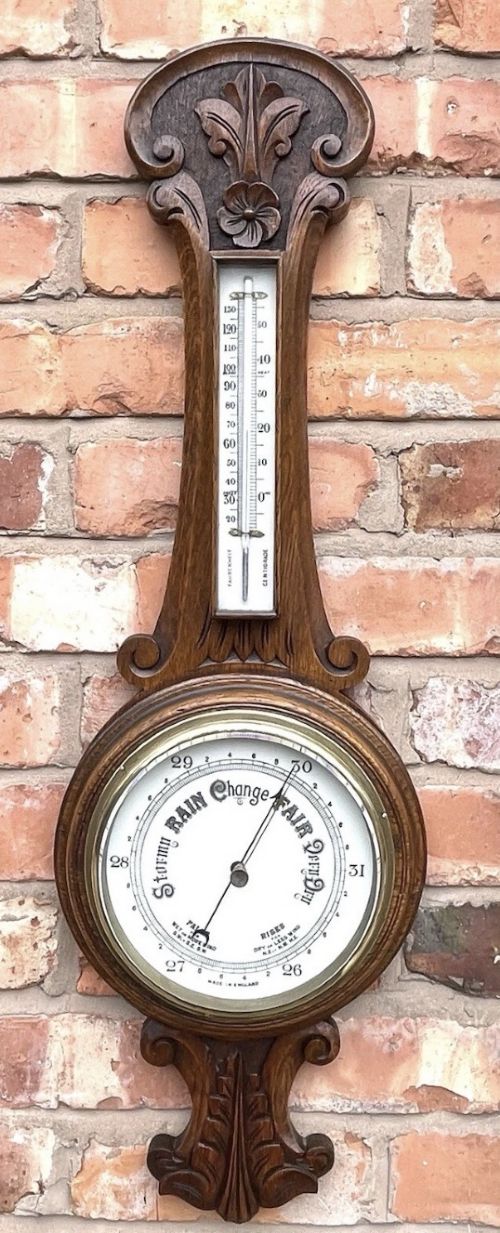


Antique Clock and Barometer
An antique clock and barometer combines timekeeping and weather forecasting in a single fitted case, offering practical utility and striking decorative presence.
Antique Clock and Barometer
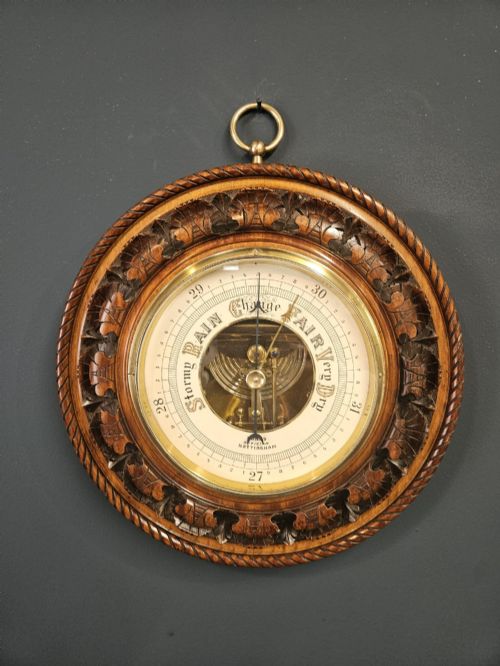
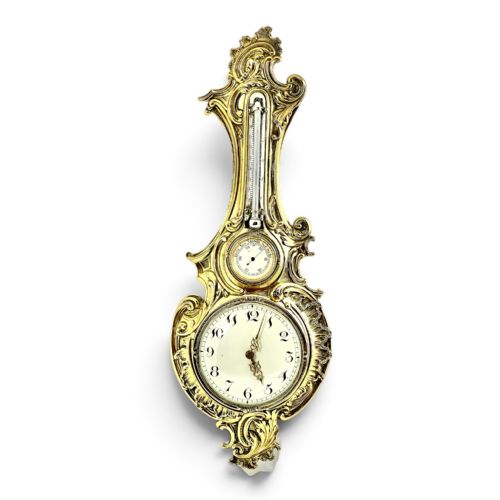
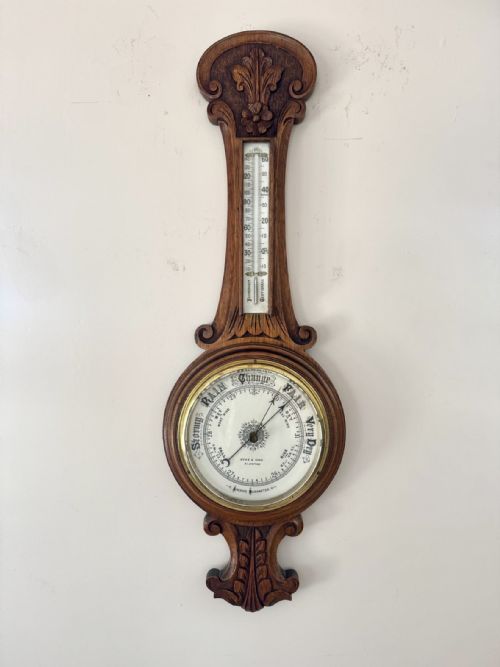
An antique clock and barometer brings together timekeeping dials and meteorological instruments within a single housing. Buyers exploring this category encounter a diverse mix of wall-hanging banjo instruments, mantel pieces, and desk compendiums.
The most common examples on this page date from the nineteenth century and the Edwardian era, constructed from woods like oak, mahogany, and walnut. These instruments served functional roles in domestic interiors, recording atmospheric pressure alongside the hours.
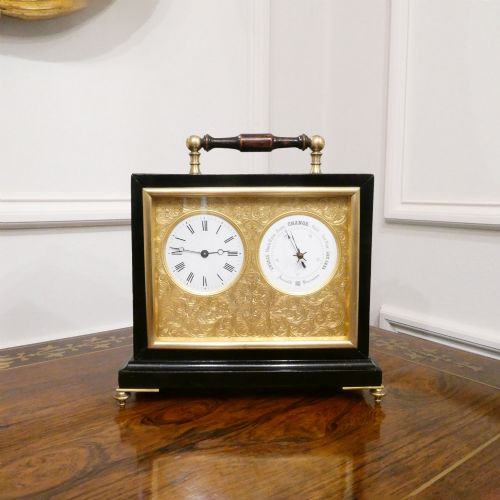
Beyond standard domestic wall and mantel formats, the selections include architectural desk clocks, bulkhead sets, and combined weather stations. These variations reflect how makers adapted mechanical movements and weather glasses for different rooms and desks.
Materials and Construction
Makers utilised dense cabinet timbers such as mahogany, oak, and walnut to house delicate brass movements and barometer tubes. Carved wood details, gilt accents, and enamel dials frequently complement these primary materials.
The construction relies on precision metalwork for the internal clock gears and aneroid or mercurial barometer mechanisms. Glass panels protect the dials, while carved or turned wooden frames provide structural support and aesthetic weight.
Several pieces double as foxes, caduceus rods, or ships' bulkheads.
Evaluating the Pieces
Quality rests in the crispness of the wood carving, the legibility of the enamel or silvered dials, and the integration of multiple instruments. Superior examples display harmonious proportions between the clock face and the barometer scale.
The distinction between standard production and finer work lies in the mechanical finish and the cabinetmaker's attention to detail. Signed dials and complex combined weather stations represent a higher tier of domestic instrument making.
Hyde & Sons Sleaford·Ganthony of London·H Marks High Street Bloomsbury·Negretti & Zambra·Russell of Liverpool
The Antique Clock and Barometer Glossary
- Aneroid barometer
- An instrument that measures atmospheric pressure using a flexible metal box without liquid. Changes in pressure cause the box to expand or contract, moving a pointer across a dial.
- Banjo barometer
- A wall barometer shaped like a banjo, typically featuring a hygrometer or thermometer at the top and a large dial at the base. This form became popular during the nineteenth century.
- Desk compendium
- A multi-instrument desk set that houses a clock, barometer, and thermometer in a shared frame. These items were designed for professional offices and libraries.
- Fusee movement
- A clock mechanism driven by a cord or chain wound around a cone-shaped pulley, ensuring even force as the mainspring unwinds. This mechanism improves timekeeping accuracy.
- Mercurial barometer
- A weather glass that measures atmospheric pressure by balancing the weight of mercury against the pressure of the air. These sensitive instruments require careful handling.
Antique Clock and Barometer: Frequently Asked Questions
How do I read an aneroid barometer?
Read the main pointer to see the current atmospheric pressure indicated on the dial face. Many instruments include a secondary manual pointer that you set over the main hand to track whether pressure rises or falls.
Rising pressure generally indicates improving weather conditions, while falling pressure suggests approaching rain or wind. Tapping the glass gently before reading helps settle the internal mechanism.
Where should I hang a wall barometer?
Position the instrument on an interior wall away from direct sunlight, radiators, and draughty doors. Sudden temperature shifts affect the internal metal components and wood cases.
Sturdy fixings are essential, particularly for heavy carved wood or oak banjo instruments. Ensure the wall mount supports the full weight securely.
How do I care for the wooden case?
Dust the carved oak, mahogany, or walnut surfaces regularly with a soft, dry cloth. Avoid chemical polishes that can build up and dull the finish over time.
Maintaining stable room humidity prevents the wood from warping and protects the joints of the case. Occasional application of suitable wax helps preserve the timber.
Why does the clock need professional service?
Mechanical clock movements contain intricate brass gears and springs that accumulate dust and dry oils over the decades. Running a dry movement causes friction and wears down the metal components.
A specialist clock restorer cleans, inspects, and re-oils the mechanism to ensure reliable timekeeping. Periodic professional attention keeps these older movements operating correctly.