

Antique Classical Clock
An antique classical clock brings architectural proportion, gilt bronze, and marble into a room, anchoring the interior with nineteenth-century French and English horology.
Antique Classical Clock
The search for an antique classical clock leads directly to nineteenth-century mantel clocks, wall clocks, and garniture sets originating from French workshops and English makers.
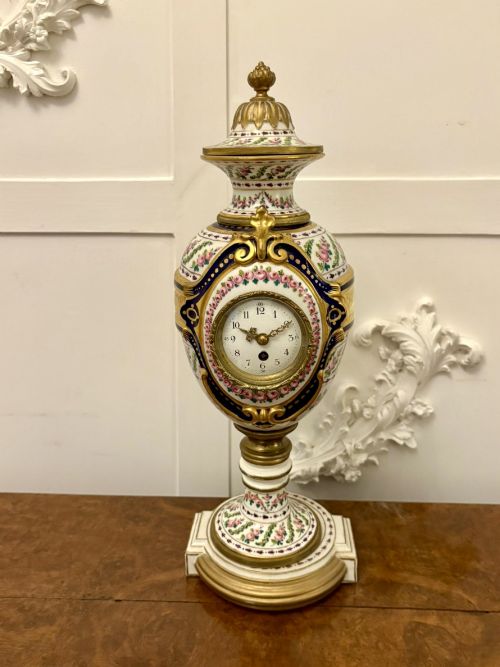
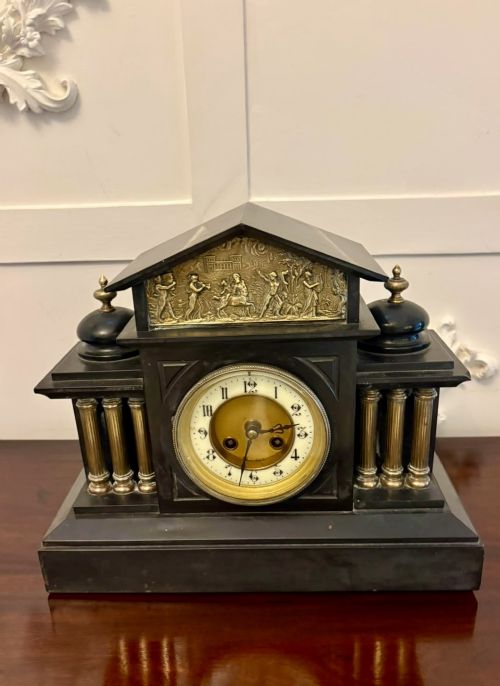
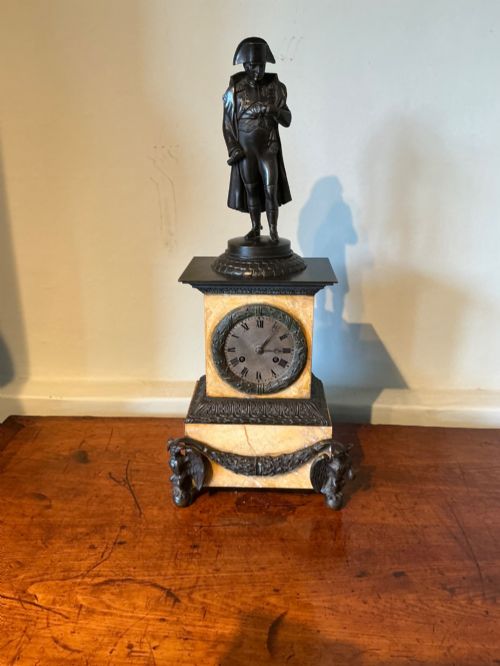
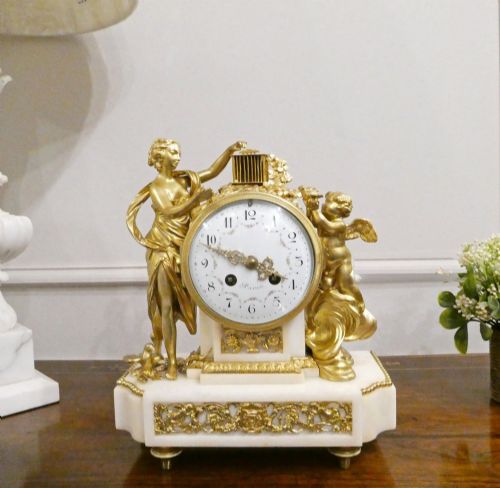
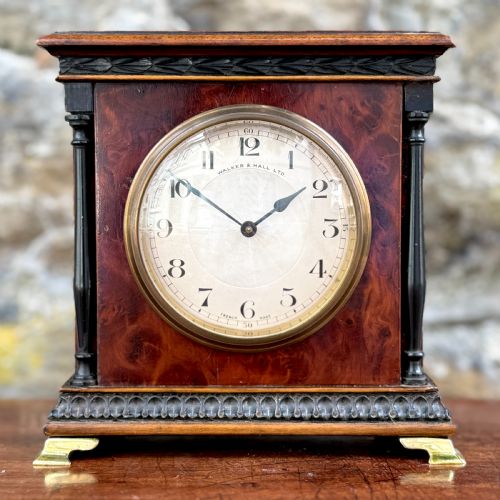
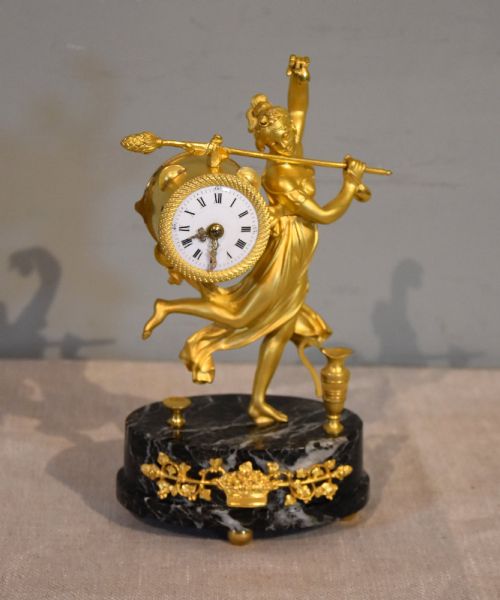
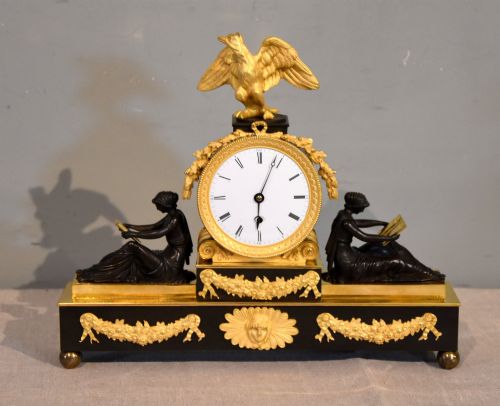
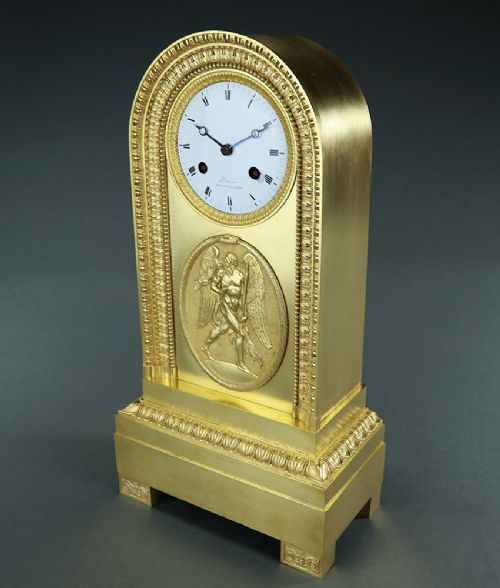
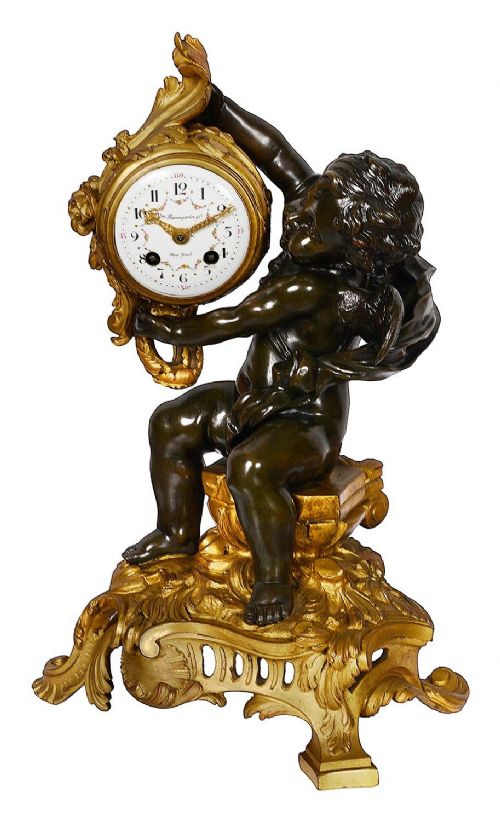
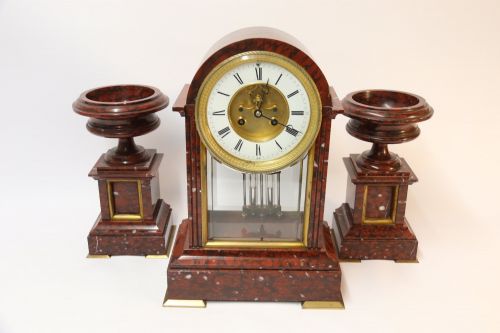
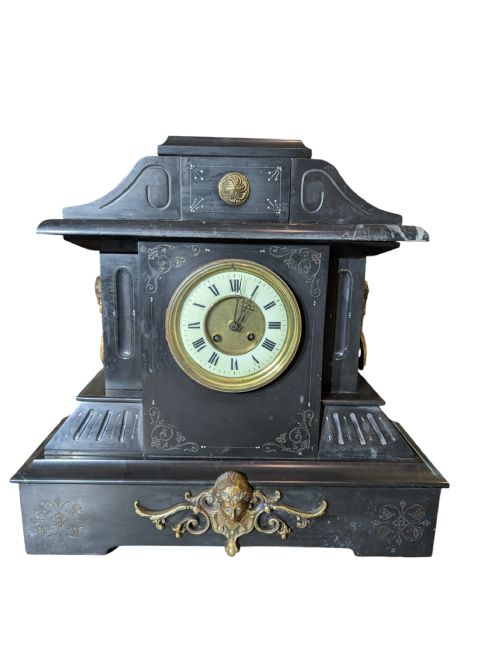
Mantel pieces dominate the selection, appearing in forms such as architectural marble cases, portico clocks, and drum heads, alongside matching garnitures of vases or side ornaments.
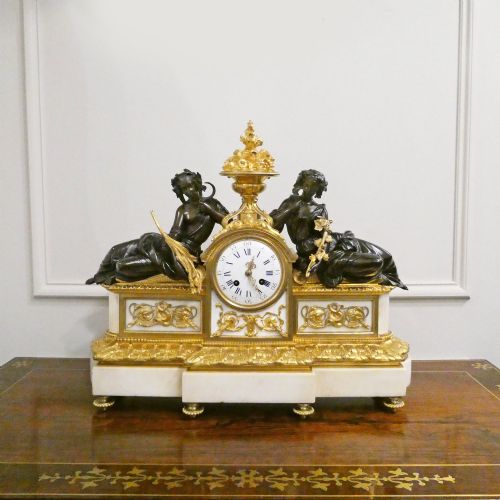
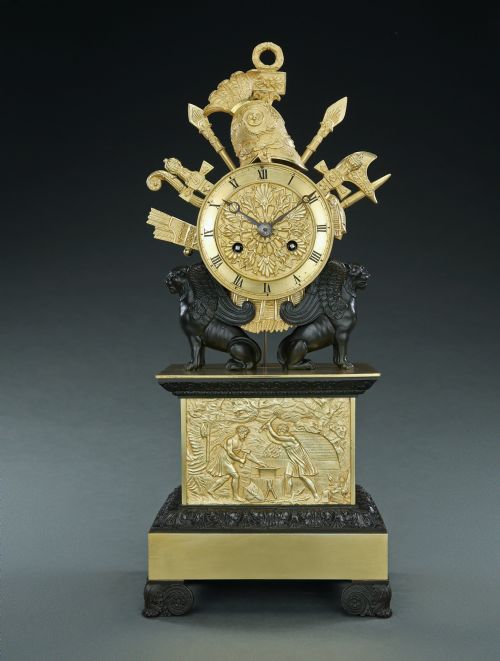
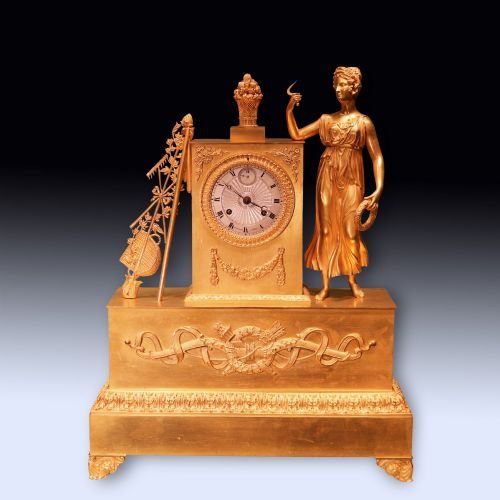
Neoclassical, Louis XVI style, and French Empire designs prevail, drawing on classical motifs, patinated bronze figures, and gilt brass mounts.
Materials and Construction
Clockmakers and bronze founders combined natural stones such as black, green, and sienna marble with cast ormolu, gilt bronze, and patinated bronze.
Dials utilised hand-painted porcelain, enamel, and cut crystal, housed within heavy stone cases or portico frames supported by pillars.
Listings feature black, green, and sienna marble alongside gilt bronze, ormolu, and hand-painted porcelain.
Distinctions in Quality
The standard of an antique classical clock rests on the crispness of the bronze casting, the depth of the fire gilding, and the integration of marble and mounts.
Maker marks stamped on movements by established Parisian houses indicate higher workshop standards than unmarked equivalents.
Vincenti·Walker and Hall·Canaillor of Paris·Samuel Marti·Etienne Lenoir·Japy Freres·Philippes Paris·Berger·Louis Japy·Fritz Marti
The Antique Classical Clock Glossary
- Ormolu
- A technique of applying finely ground high-carat gold to a bronze base using mercury, creating a durable golden finish. This method is characteristic of high-status French pieces.
- Garniture
- A set comprising a central clock flanked by matching decorative objects such as urns or candelabra. These matched sets were designed to sit together on a mantelpiece.
- Portico Clock
- A clock case constructed with architectural columns supporting a lintel that houses the movement. The pendulum often swings visibly between the pillars.
- Cartel Wall Clock
- An ornate wall-mounted clock enclosed in a asymmetrical or architectural frame of gilt bronze or carved wood. Such clocks were popular in eighteenth and nineteenth-century interiors.
- Movement
- The internal mechanism of a clock, comprising wheels, gears, and escapements driven by springs or weights. Signed movements provide evidence of the maker.
Antique Classical Clock: Frequently Asked Questions
How do I wind an antique mantel clock?
Most mechanical clocks use a key inserted into the dial holes to tension the springs. Turn the key gently until resistance is felt, avoiding over-winding.
Ensure you do not force the mechanism past the stopping point to prevent damage to the spring or escapement.
Where should I place a marble clock?
Marble and bronze clocks require a sturdy, level surface such as a mantelpiece or heavy sideboard. The considerable weight of stone cases means stability is essential for proper function.
Keep the piece away from direct sunlight and damp walls to preserve the marble polish and metal patination.
How do I identify a French Empire clock?
French Empire pieces typically feature military trophies, classical deities, and heavy ormolu mounts against dark marble or patinated bronze. The design vocabulary reflects the neoclassical taste of the early nineteenth century.
Movements from this period often bear the stamps of Parisian makers on the backplate.
What is a clock garniture set?
A garniture consists of a central clock accompanied by matching side ornaments, such as porcelain urns or bronze vases. These sets were manufactured to create a balanced display on a fireplace mantel.
Materials and decorative motifs match across every component of the set.