


Antique Citrine Pendant
An antique citrine pendant brings warm golden light and deep historical character to the neckline, spanning Victorian, Edwardian, and Georgian periods.
Antique Citrine Pendant
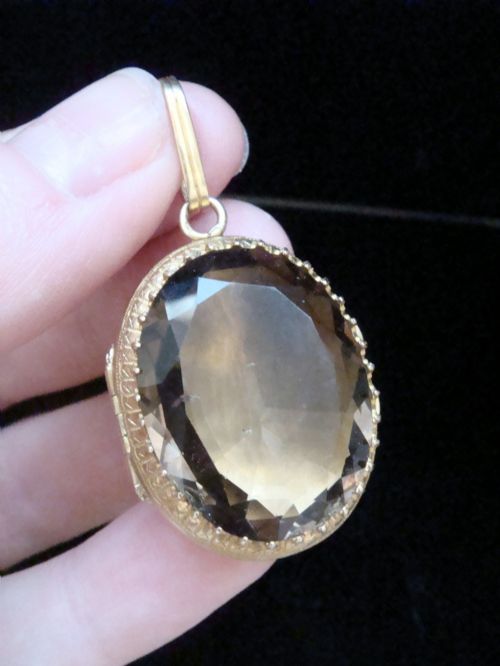
An antique citrine pendant is a piece of jewellery designed to hang from a chain, featuring a yellow quartz gemstone set in precious metal. You will most frequently encounter Victorian examples on this page, alongside Edwardian, Georgian, and mid-twentieth-century designs.
The forms range from simple faceted stone drops and spinning fobs to intricate lockets, witch's hearts, and Scottish Revival thistle motifs. Many of these pieces incorporate surrounding materials such as seed pearls, garnets, and enamel.
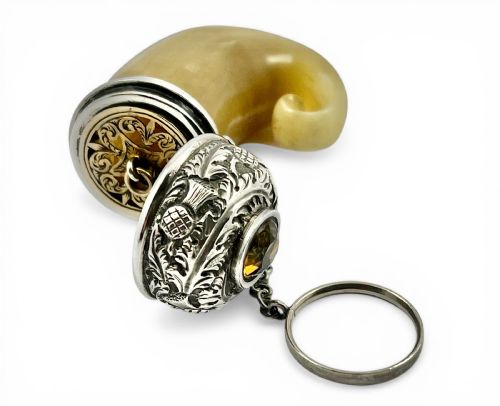
Originating across different eras, these pendants include Scottish horn vinaigrettes, French charms, and Arts and Crafts necklaces. They were worn historically as personal adornments, watch keys, and decorative fob seals.
How they were made
Metals span sterling silver, gilt metal, and yellow gold in 9ct, 15ct, and 18ct purities. Jewellers secured the citrine stones into bezels, collets, and open-back settings to let light pass through the quartz facets.
Specialised techniques include plique-à-jour enamel work, chasing floral motifs into gold, and mounting horn with silver. Stones are frequently faceted into oval, round, or large chunky shapes to maximise brilliance.
Listings feature citrine pendants set in silver, gilt metal, and yellow gold ranging from 9ct to 18ct purity.
What varies in quality
Quality rests on the depth of colour in the citrine crystal and the precision of the stone cutting. Better examples show even saturation and clean facets without internal cloudiness.
The fineness of the metalwork distinguishes superior pieces, visible in chased floral details, secure prong or bezel settings, and intact enamel work. Original mountings and integrated chains or lockets elevate the overall craftsmanship.
Heinrich Levinger·Liberty and Co
The Antique Citrine Pendant Glossary
- Citrine
- A yellow variety of quartz valued for its warm golden and amber hues. It has served as a principal gemstone in jewellery across the Georgian and Victorian eras.
- Fob
- A short chain, ribbon, or pendant attached to a pocket watch. Many antique fobs were later converted to be worn as necklace pendants.
- Plique-à-jour
- A vitreous enamelling technique where the enamel is applied without a backing, resembling miniature stained glass. This method allows light to shine through the transparent coloured areas.
- Vinaigrette
- A small ornamental box or pendant used to hold a sponge soaked in aromatic vinegar. They were carried in the nineteenth century to mask unpleasant odours.
- Scottish Revival
- A nineteenth-century jewellery style inspired by Scottish traditions and folklore, often featuring thistles, citrines, and native materials like horn.
Antique Citrine Pendant: Frequently Asked Questions
What is an antique citrine pendant?
An antique citrine pendant is a wearable ornament featuring a yellow quartz gemstone mounted in gold, silver, or gilt metal. These pieces date from the Georgian, Victorian, and Edwardian eras and include diverse forms like lockets, fobs, and drops.
Many incorporate additional materials such as seed pearls, garnets, and enamel. They reflect the prevalent jewellery styles of their respective periods, from Scottish Revival to Art Nouveau.
How do I style an antique citrine pendant?
You can suspend an antique citrine pendant from a matching gold or silver chain to wear at the collarbone or lower on the chest. Chunky fob pendants and lockets pair well with simpler historical chains to let the gemstone remain the focal point.
Because these pieces vary in scale from delicate drops to large spinner fobs, they work well either worn alone or layered with other antique necklaces.
How can I tell the period of a citrine pendant?
Dating relies on the style of the mounting, the choice of associated stones, and the metal purity marks. Georgian pieces often feature closed-back foils behind the stones, while Victorian examples frequently showcase chased floral motifs or Scottish horn.
Edwardian designs tend towards lighter silver wirework and garland motifs. Later twentieth-century pieces, such as those from the 1930s or 1950s, introduce different clasp types and bolder geometric cuts.
Were citrine pendants worn for a specific purpose?
Citrine pendants served various practical and decorative roles in daily life. Some functioned as watch keys or spinning fobs for pocket watches before being adapted as necklaces.
Others held sentimental value as lockets containing hair or portraits, while pieces like vinaigrettes held scented sponges. Primarily, however, they were worn as fashionable personal adornments.