



Antique Church Candles
These antique church candles and related ecclesiastical holders bring height, weight and ritual dignity into domestic interiors.
Antique Church Candles
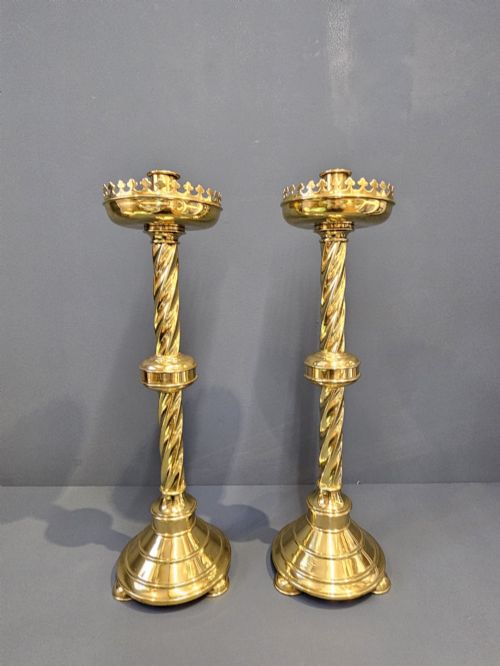
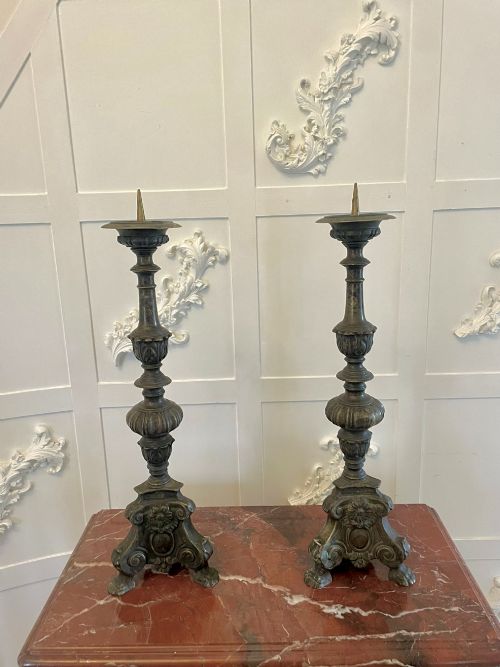
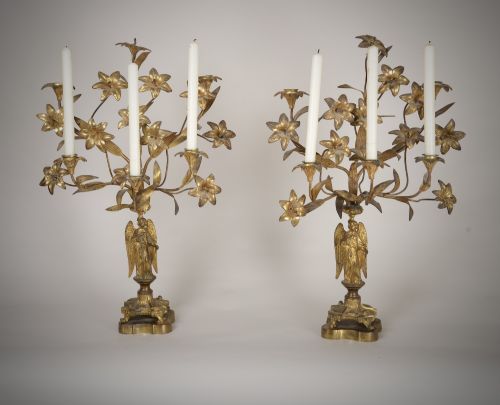
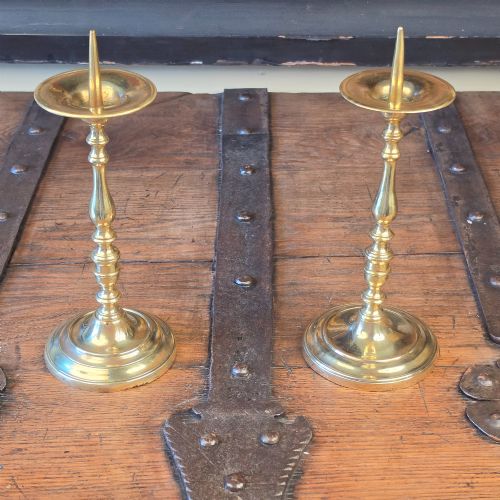
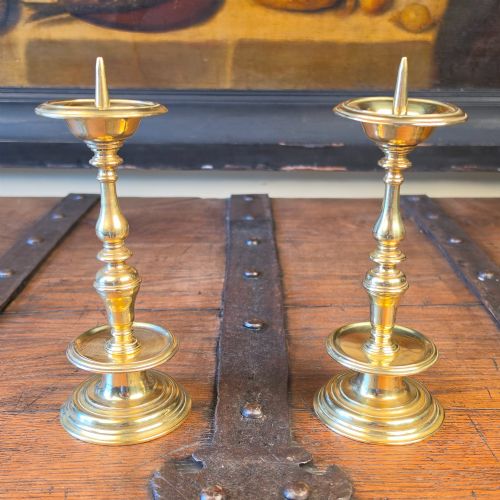
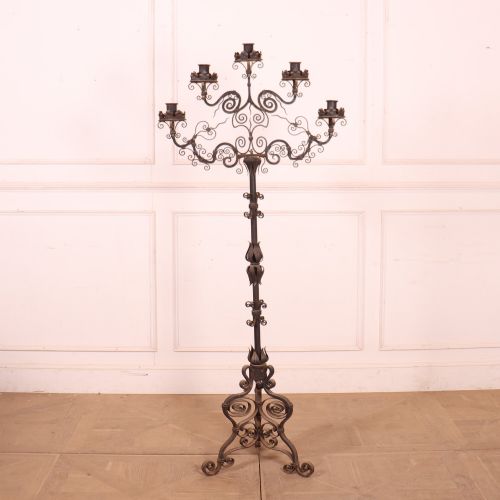
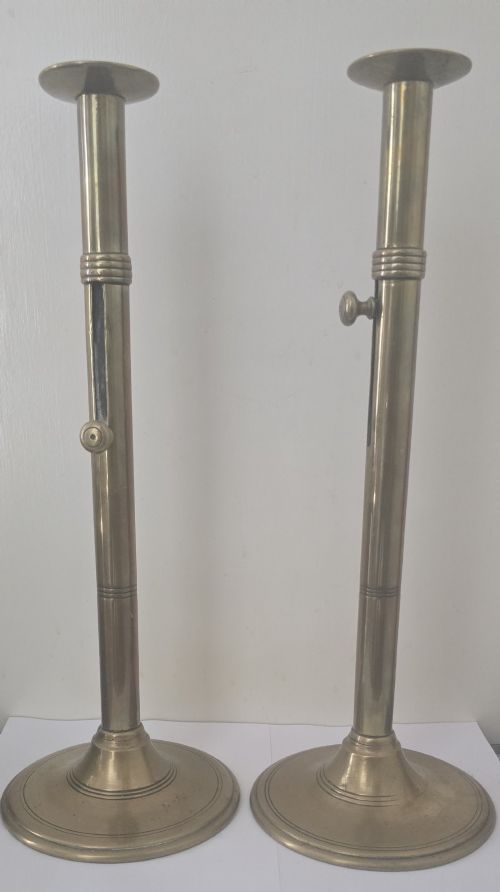
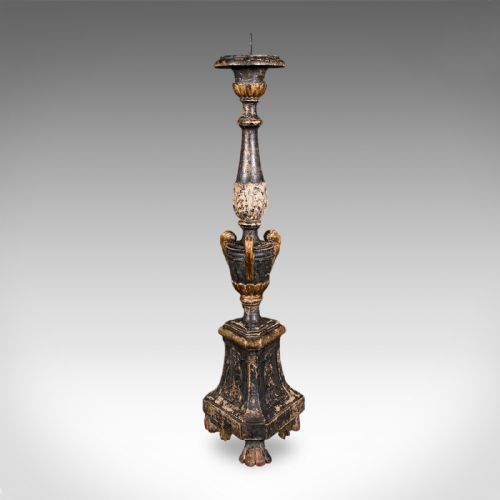
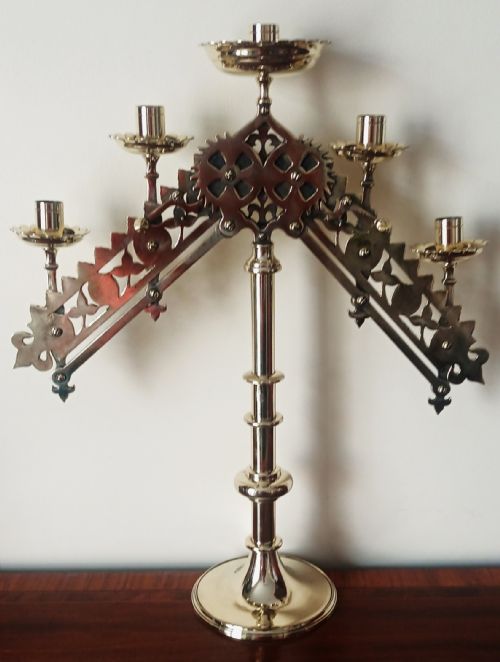
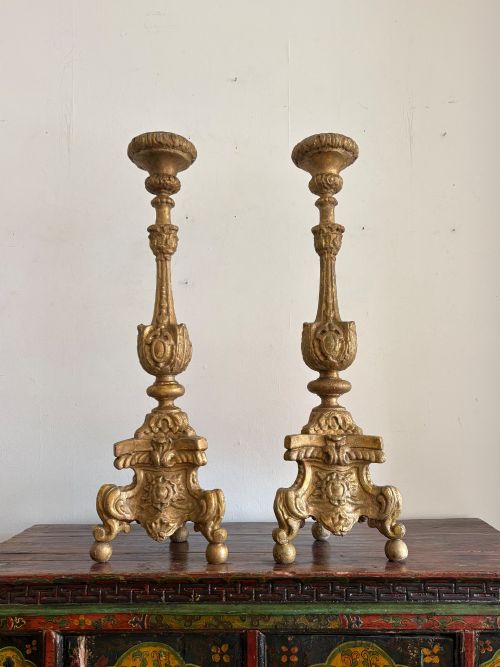
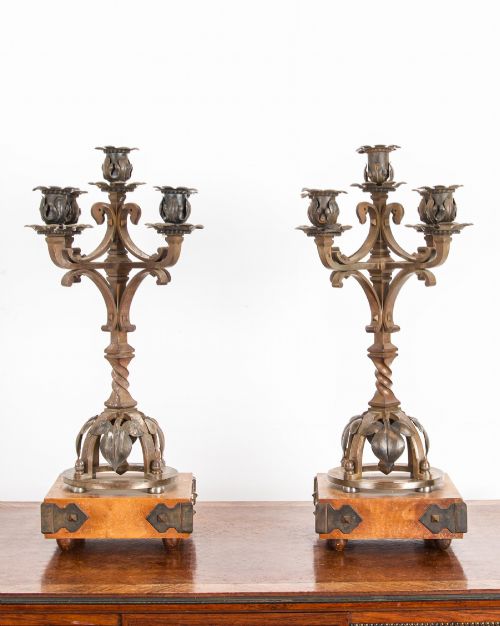
When searching for antique church candles, collectors encounter taller altar sticks, floor-standing torcheres and heavy prickets rather than standard domestic tapers. The pieces available span the eighteenth, nineteenth and early twentieth centuries, drawing on Gothic Revival, Baroque and Georgian design idioms.
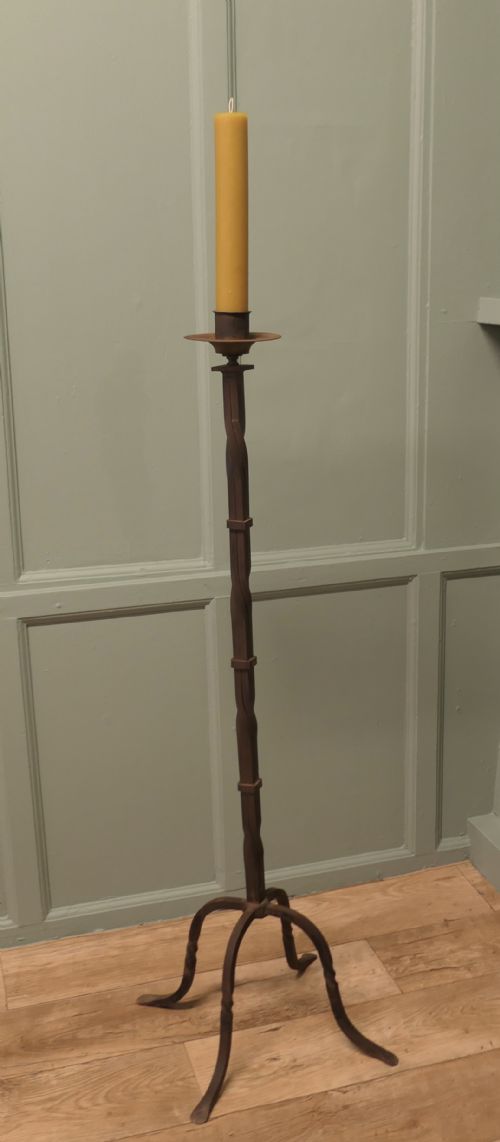
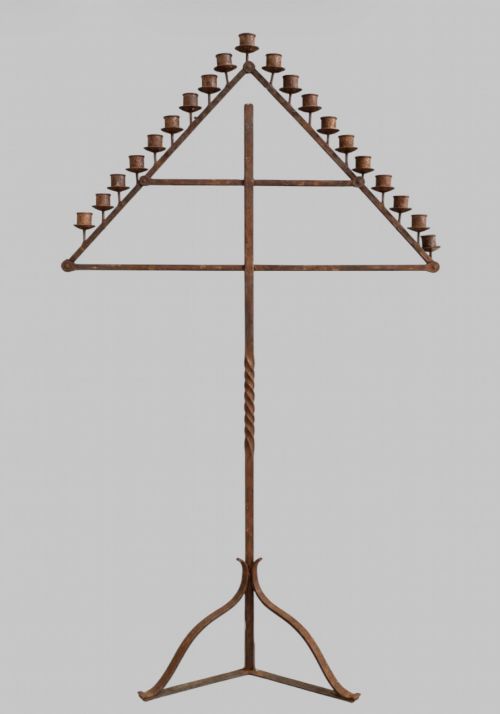
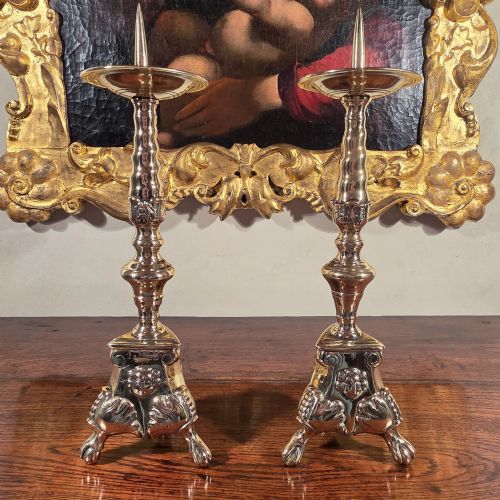
Most items taking candles in this category are actually the substantial metal or carved wooden stands designed to support altar lights. Brass, wrought iron and giltwood dominate the forms, frequently standing significantly taller than ordinary table candlesticks.
Materials and construction methods
Foundry-cast brass and hand-hammered wrought iron provide the structural backbone for the metal examples, often utilising heavy gauge components to support towering candle heights. Carved pinewood and fruitwood serve in wooden pieces, frequently finished with gesso, silvering or polychrome paint.
Joinery and assembly rely on threaded box joints, heavy rivets and substantial turned mounting tenons capable of bearing considerable vertical weight. Surface finishes range from polished brass and gilt to ebonised timber and oxidised iron.
Antique Church Candles Retail Price Guide 2026
Typical asking prices for church candles among the pieces listed under this phrase on Sellingantiques today, from the lower quarter to the upper quarter. They describe what is for sale here now, not the wider market.
Some tall iron stands bear the soot of genuine nineteenth-century altar smoke, retaining their original ecclesiastical atmosphere.
Evaluating standard and craftsmanship
Quality separates simple utilitarian church ironwork from master-carved Italian giltwood figures and heavy cast-brass architectural columns. Proportions, crispness of cast or carved detail, and the retention of original surface treatments define the better examples.
Substantial weight, intact pricket spikes and balanced structural geometry distinguish superior ecclesiastical metalwork from later reproductions or utilitarian workshop pieces.
The Antique Church Candles Glossary
- Pricket
- A sharp metal spike upon which a large candle is impaled. This spike secures thick wax blocks used traditionally on church altars.
- Torchere
- A tall ornamental stand or candlestick designed to carry a light. These often take the form of carved wooden columns or figures.
- Giltwood
- Wood that has been coated with gold leaf or a gold-coloured metallic finish. It appears frequently on Baroque and 18th-century altar pieces.
- Gothic Revival
- An architectural and decorative style drawing inspiration from medieval design. It is characterised by pointed arches, trefoils and heavy vertical lines.
Antique Church Candles: Frequently Asked Questions
What is a pricket candlestick?
A pricket candlestick uses an upward-pointing spike instead of a socket to hold the wax pillar securely.
This method suits large, heavy candles traditionally burned in ecclesiastical settings.
How tall are these candle holders?
Many examples measure significantly taller than standard domestic sticks, often exceeding forty centimetres and reaching floor-standing heights.
This elevation placed the flame above the altar level for visibility during services.
Where were wooden altar pieces made?
Continental workshops, particularly in Italy and France, produced carved wooden torcheres and figures.
Craftsmen utilised local pine or fruitwood before applying gesso and surface gilding.
How do I date brass church candlesticks?
Stylistic markers such as Gothic Revival motifs, Georgian column designs or Amsterdam School shaping indicate the period.
Weight, casting seams and assembly methods provide further clues to age.