


Antique Church Candleholder
An antique church candleholder brings solemn architectural presence into a room, offering heavy cast brass or gilded timber made for altars and sanctuaries.
Antique Church Candleholder
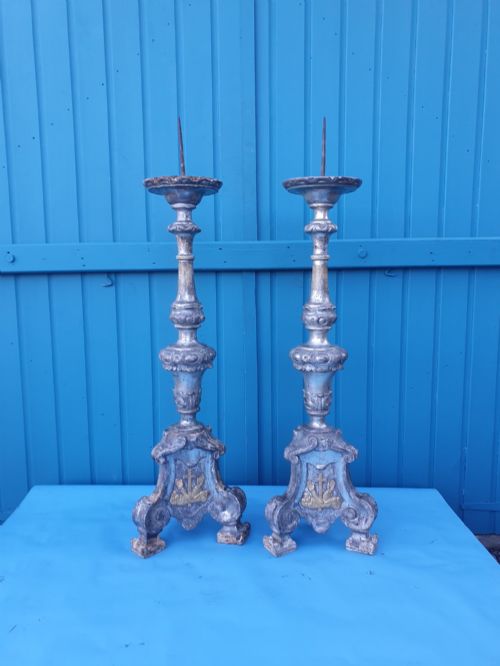
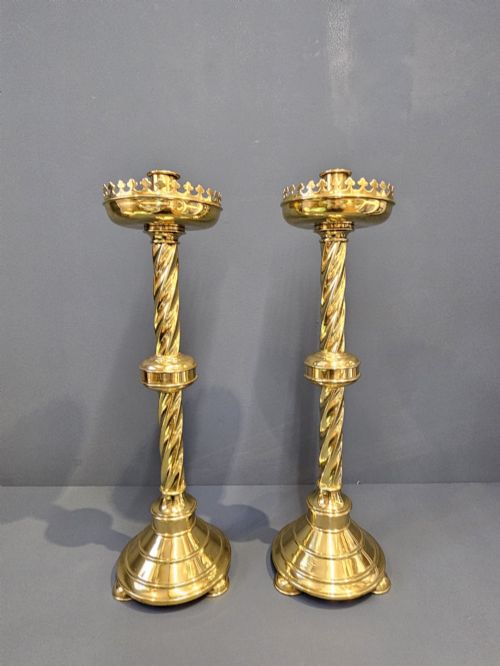
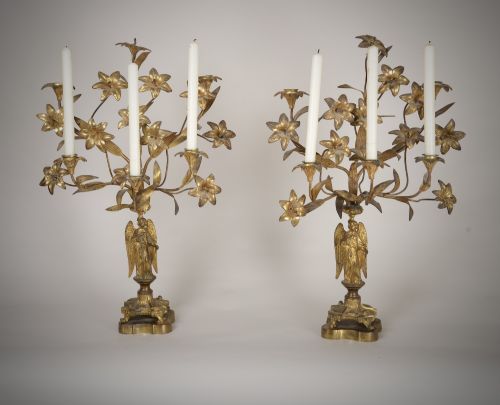
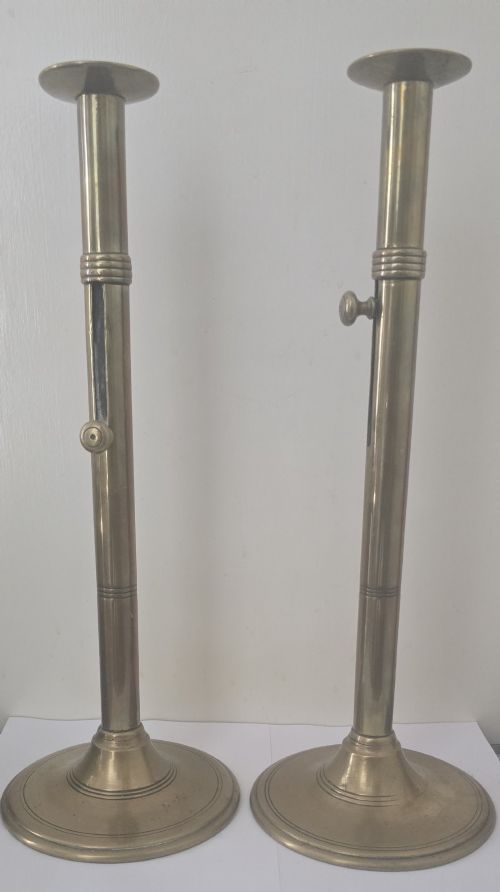
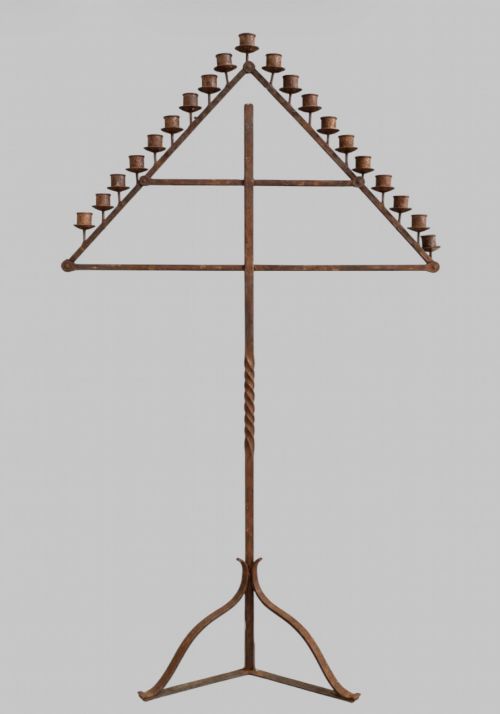
When you search for an antique church candleholder, you encounter heavy, vertical altar fittings designed for ecclesiastical spaces, predominantly appearing here as matched pairs of brass candlesticks and iron floor candelabra. These items range from small domestic altar pieces to substantial architectural statements originating across the nineteenth and eighteenth centuries.
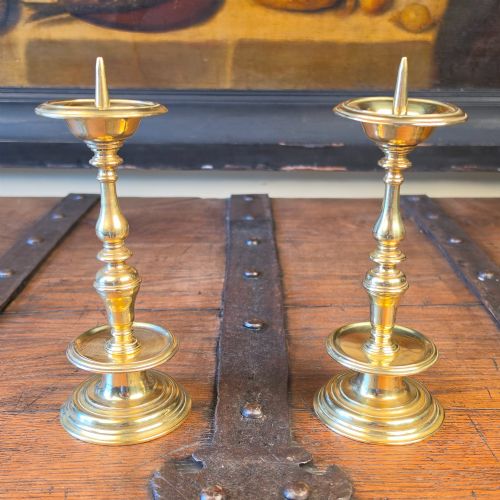
The styles heavily reflect ecclesiastical revivals, running from Gothic Revival brass work through to baroque carved timber and Amsterdam School designs. Most listings are tall candlesticks or pricket sticks, holding candles securely above altars or sanctuary floors rather than serving as domestic dining table lighting.
Materials and construction
The pieces are constructed primarily from cast brass or carved wood finished with gesso, gilt, and paint, reflecting the traditional demands of ecclesiastical furnishing. Brass examples utilise robust casting techniques to support heavy sockets and prickets, while wooden alternatives employ carved timber structures finished with silvered mecca or gilt decoration.
Makers shaped wrought iron into multi-candle architectural floor candelabra, welding and forging metal for structural stability. Wooden altar-style candleholders rely on traditional joinery and surface gilding, bringing together metallic hardware and organic carved forms.
Some tall brass examples feature side ejectors, ensuring that priests could raise or release stubborn candle stubs without burning their fingers.
Assessing quality in ecclesiastical lighting
Quality rests in the weight of the casting, the crispness of the Gothic or baroque ornamentation, and the preservation of original gilding or surface paint. Superior brass examples demonstrate thick, heavy metal gauge and clean execution of decorative nodes, whereas inferior pieces display lighter construction and softer detail.
On wooden items, the finesse of the hand-carving and the integrity of the original giltwood or polychrome surface dictate the standing of the piece. Proportion also matters, with taller, well-balanced altar sticks commanding more visual authority than standard domestic adaptations.
T Thomason & Co
The Antique Church Candleholder Glossary
- Pricket
- A sharp metal spike on top of a candlestick designed to secure a candle by impaling its base.
- Giltwood
- Timber that has been coated with a thin layer of gold leaf or powder, frequently found on eighteenth-century baroque altar pieces.
- Ecclesiastical
- Relating to the Christian Church or its clergy, describing items manufactured specifically for use in places of worship.
- Mecca
- A transparent golden varnish applied over silver leaf or tin to imitate true gold gilding, seen on Venetian-style altar sticks.
- Candelabra
- A large branched candlestick or holder for multiple candles, often standing on the floor or mounted to a surface.
Antique Church Candleholder: Frequently Asked Questions
How do pricket candlesticks work?
A pricket candlestick uses a sharp metal spike at the top to hold the candle in place, requiring a candle with a matching base hole.
This design was standard for large church candles, allowing them to sit firmly on the spike without needing a conventional socket.
How do I date an antique church candleholder?
Dating relies on examining the materials, casting methods, and stylistic cues such as Gothic Revival detailing, baroque carving, or Amsterdam School forms.
Nineteenth-century pieces often feature heavy machine-assisted or sand-cast brass, while eighteenth-century examples lean towards hand-carved giltwood and wrought iron.
Where should I place a floor candelabrum?
A floor candelabrum suits large open spaces or corners where its architectural height and heavy metalwork can stand as a focal point.
Because these pieces were built for high ceilings and wide church sanctuaries, they require ample room to balance their visual weight in a modern interior.