


Antique Chrome Clock
An antique chrome clock brings clean geometric lines and polished metal surfaces into a room, defining the modernist aesthetic of the interwar period.
Antique Chrome Clock
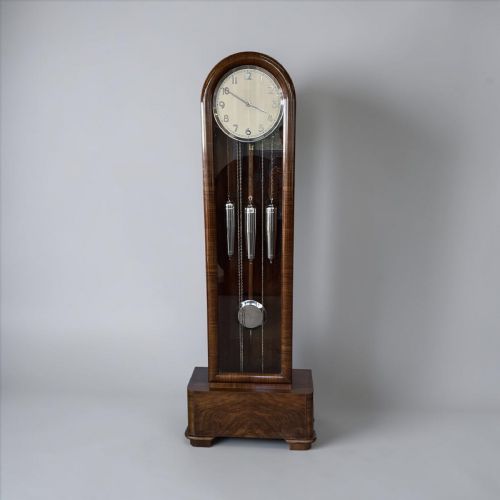
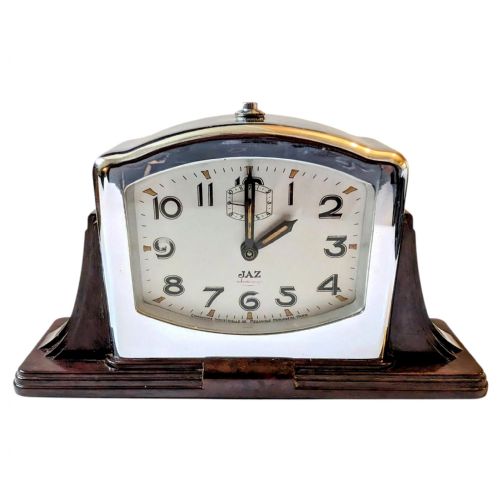
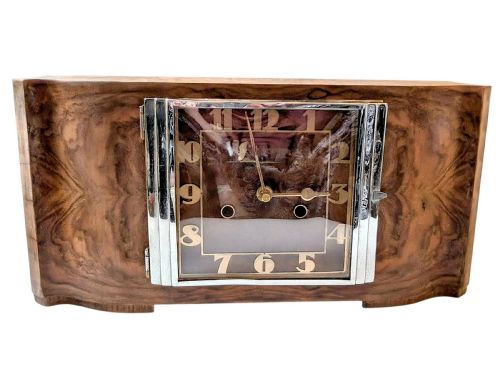
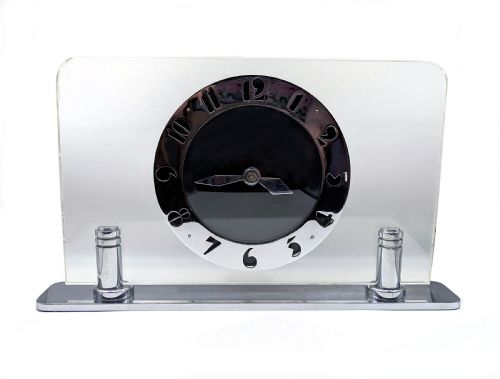
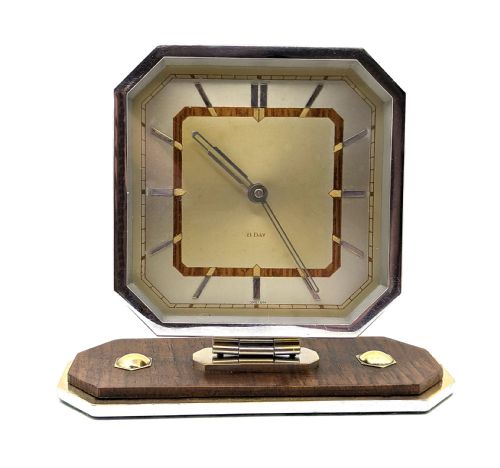
An antique chrome clock is primarily represented on this page by mantel clocks, desk clocks, and wall clocks originating mainly from the 1930s. These pieces embody the Art Deco and Mid-Century Industrial styles, often combining polished metal with contrasting materials for a striking geometric silhouette.
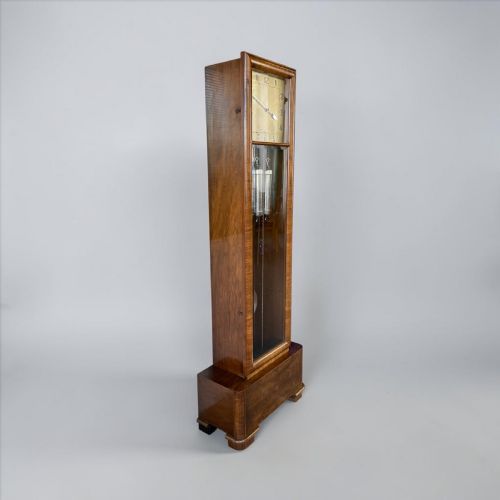
The selection extends to larger floor-standing models such as grandfather clocks and longcase clocks alongside travel clocks and bulkhead pieces. Buyers frequently encounter smaller desk and mantel versions equipped with eight-day movements or specialised mechanisms from notable makers.
How they were made
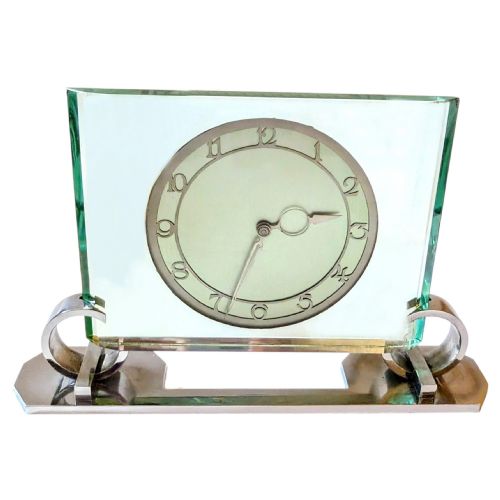
Manufacturers plated brass or base metal frames with chrome to achieve a bright, rust-resistant finish that defined modernist design. This metalwork was frequently paired with polished walnut, oak, onyx, or moulded coloured glass such as opaline and uranium variants.
Clockmakers housed reliable eight-day or wind-up movements within these metal and wooden housings, integrating dials marked by clear Arabic or Roman numerals. Distinctive variations incorporated Bakelite components or sculptural elements cast in metal alongside glass panels.
German shepherds made of metal and stone occasionally guard time from the mantelpiece, proving dogs were dedicated to punctuality.
What varies in quality
Quality rests upon the integrity of the chrome plating and the preservation of secondary materials like glass, marble, and hardwoods. Pieces retaining their original signed movements by established clockmakers command greater interest among collectors.
The sophistication of the dial design and the precision of the geometric casing separate standard production items from exceptional modernist examples. Condition of the internal mechanics and original finishing largely determines the standing of an individual clock.
Smiths Clockmakers·Mappin & Webb·Harrods of London·Pfeilkreuz Junghans·Asprey
The Antique Chrome Clock Glossary
- Chrome-plated
- Covered with a thin layer of chromium via electroplating to provide a durable, reflective metallic finish. This process became central to manufacturing modern metal objects during the interwar period.
- Bakelite
- An early synthetic thermosetting plastic moulded into dark, solid shapes for clock cases and desk accessories. It provides a smooth, tactile contrast to polished metal surfaces.
- Mantel clock
- A portable clock designed to sit upon the shelf or mantelpiece above a fireplace. These domestic timepieces often incorporate striking mechanisms or chiming functions.
- Bulkhead clock
- A rugged timepiece originally mounted to the interior walls of a ship or watercraft. They typically feature heavy brass or chrome bezels secured to withstand maritime environments.
- Garniture
- A set of matching decorative ornaments, frequently comprising a clock flanked by matching urns or sculptural figures. They were arranged symmetrically on mantelpieces during the early twentieth century.
Antique Chrome Clock: Frequently Asked Questions
How do I wind an antique chrome clock?
Most models feature an eight-day movement requiring a dedicated key inserted into the dial arbors to tension the mainspring. Care must be taken not to over-wind the mechanism.
Ensuring the clock rests on a level surface helps maintain a steady beat from the internal escapement.
Where were these clocks typically placed?
Smaller variants served on office desks, bedside tables, or travellers' luggage, while larger formats anchored the decor of a living room mantelpiece. Wall-mounted versions provided visible timekeeping in hallways and municipal spaces.
Maritime styles originally functioned within ship cabins before finding homes ashore.
How do I identify an Art Deco clock?
Look for symmetrical geometric forms, stepped cases, and contrasting combinations of chrome with dark woods or coloured glass. Dials often feature stylized numerals characteristic of the 1930s design movement.
Materials like Bakelite and polished onyx further signal this distinct period of manufacture.
Are these clocks suitable for daily use?
Many examples retain functional mechanical movements that keep accurate time when properly serviced and adjusted. Routine maintenance by a horologist ensures the gears continue to operate smoothly.
Placing them away from direct sunlight and damp environments preserves both the metal plating and the wood veneer.