
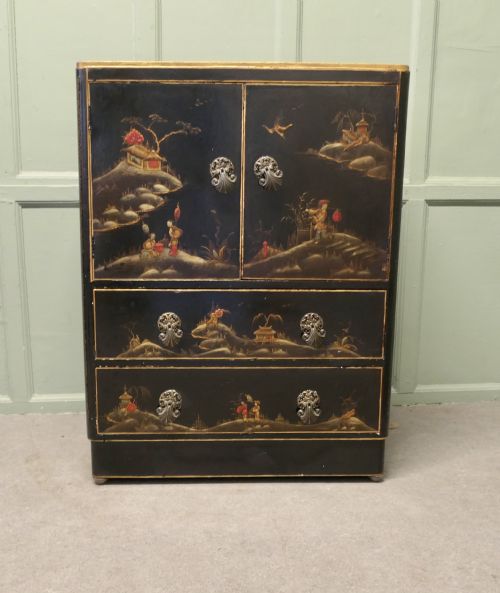
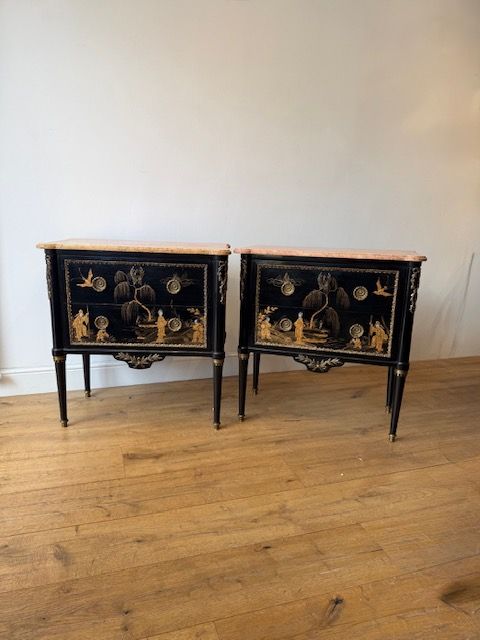
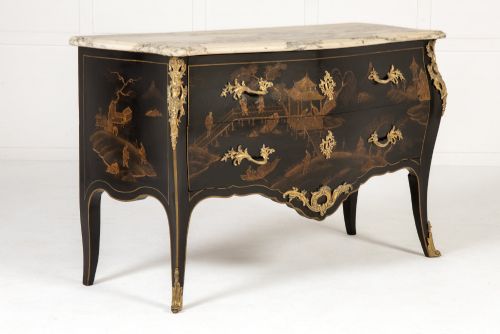


Antique Chinoiserie Drawers
Antique chinoiserie drawers bring painted narrative scenes of distant landscapes into domestic rooms through rich lacquer work.
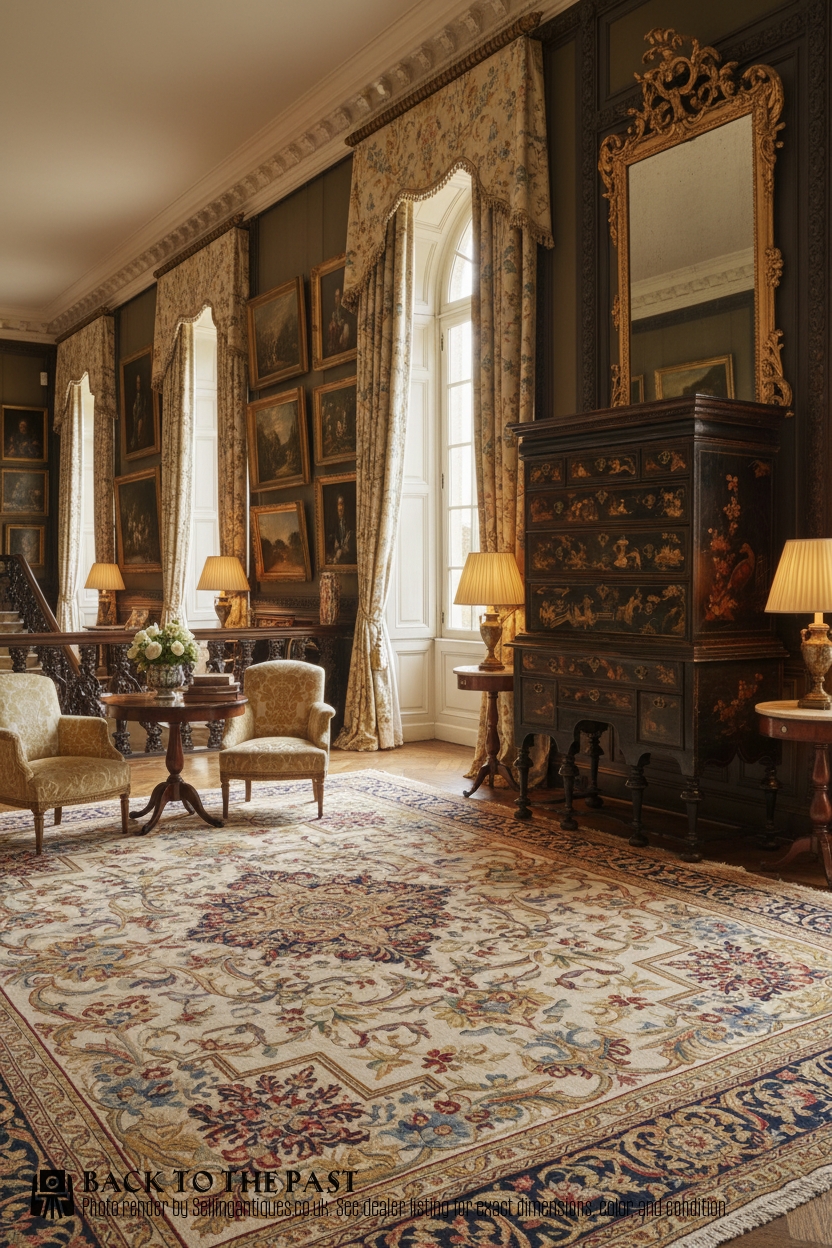
Antique Chinoiserie Drawers
Antique chinoiserie drawers encompass storage forms finished with decorative motifs inspired by European interpretations of East Asian design. These pieces appear primarily as chests of drawers, commodes, bureaux, and cabinets across the eighteenth, nineteenth, and early twentieth centuries.
Buyers encounter substantial case pieces alongside smaller side tables and writing desks decorated in this manner. The selection spans periods from the eighteenth century through the Edwardian era and the nineteen-twenties.
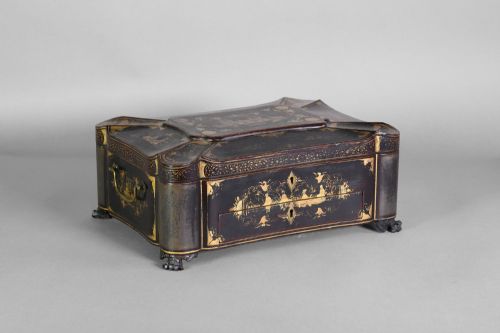
Lacquered wood forms dominate the available selection, often utilising black, pale cream, or coloured grounds to support the painted decoration. Brass hardware frequently accompanies these timber carcasses to complete the execution.
How they were made
Carcasses take shape from timber including pine and general wood substrates before receiving surface preparation. Artisans apply layers of lacquer to create smooth grounds suitable for detailed painting.
Makers build up decorative scenes using paint and raised gilt work to depict figures, pavilions, and flora. Brass handles and escutcheons are fitted to drawers and doors to provide functional access.
Materials recorded across the inventory include brass, lacquer, lacquered wood, paint, wood, painted wood, pine, and timber.
What varies in quality
Depth of surface preparation and the finesse of the painted scenes dictate the distinction between standard and superior pieces. Skilled application of lacquer creates resilient grounds that retain crisp detail across the panels.
The integration of hardware and the stability of the underlying timber carcass influence the overall integrity of each item. Finer examples display careful alignment of drawers and cohesive decorative schemes across all visible surfaces.
The Antique Chinoiserie Drawers Glossary
- Chinoiserie
- European artistic style reflecting Chinese and East Asian decorative motifs. This aesthetic heavily influences the painted scenes found on lacquer furniture.
- Japanned
- European imitation of East Asian lacquerwork using specialised varnishes and metallic dust. This technique creates glossy dark or coloured surfaces decorated with raised motifs.
- Commode
- Low decorative chest of drawers or cabinet developed in France during the eighteenth century. These pieces often feature bombé profiles and ornate surface decoration.
- Bureau
- Desk fitted with a sloping flap that opens to reveal internal compartments and small drawers. Many examples incorporate painted lacquer finishes in the chinoiserie taste.
- Faux bamboo
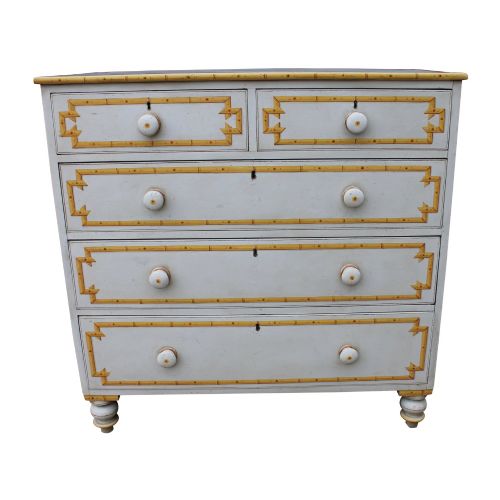
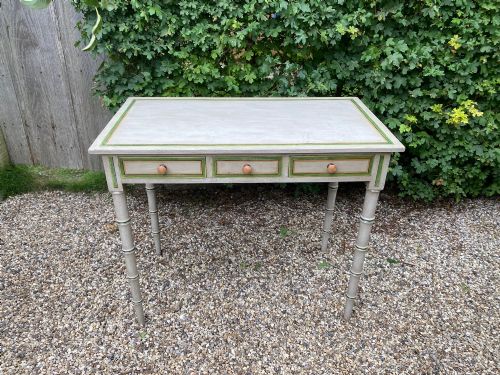
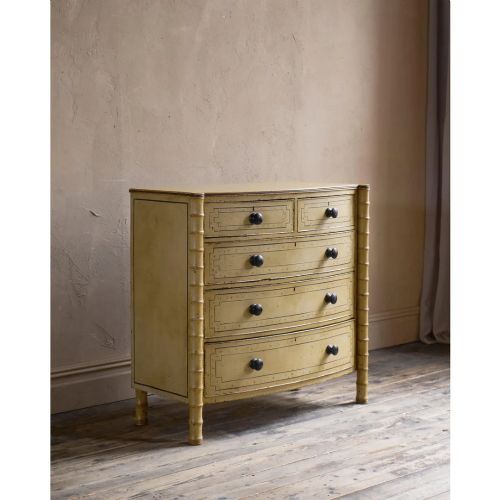
- Wood turned and carved to imitate natural bamboo stalks. This decorative framing appears on nineteenth-century pieces associated with orientalist styles.
Antique Chinoiserie Drawers: Frequently Asked Questions
What periods do these pieces date from?
The selection includes items originating from the eighteenth century through the Georgian and Regency periods. Later examples extend into the nineteenth century, the Edwardian era, and the nineteen-twenties.
Each era brings distinct proportions and construction methods to the lacquer and painted surfaces.
How do I care for lacquered surfaces?
Lacquered wood requires stable indoor humidity and protection from direct sunlight to prevent cracking or fading. Dusting with a soft dry cloth maintains the finish without abrasive cleaners.
Avoid placing damp items directly onto the decorative surfaces of cabinets and chests.
Where were these items placed historically?
These decorative case pieces served in formal reception rooms, private bedchambers, and libraries as functional storage. Bureaux and writing tables provided dedicated spaces for correspondence.
Smaller side tables and commodes occupied hallways and parlours to display ornaments.
How do commodes differ from standard chests?
Commodes generally feature lower, wider proportions developed from French furniture traditions, often with shaped or serpentine fronts. Standard chests of drawers tend to be taller and more rectilinear in form.
Both types utilise lacquer and painted chinoiserie decoration across their exterior panels.