




Antique Chinoiserie Coffer
An antique chinoiserie coffer brings rich hand-painted storytelling and deep lacquered surfaces into a modern interior.
Antique Chinoiserie Coffer
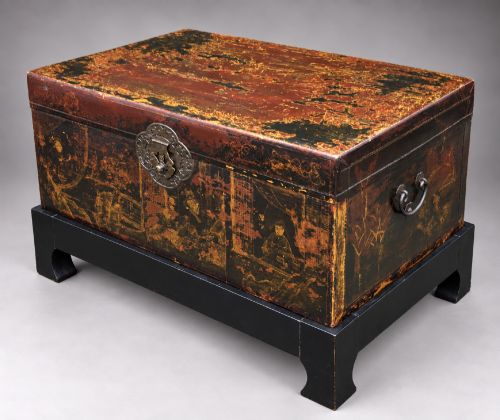
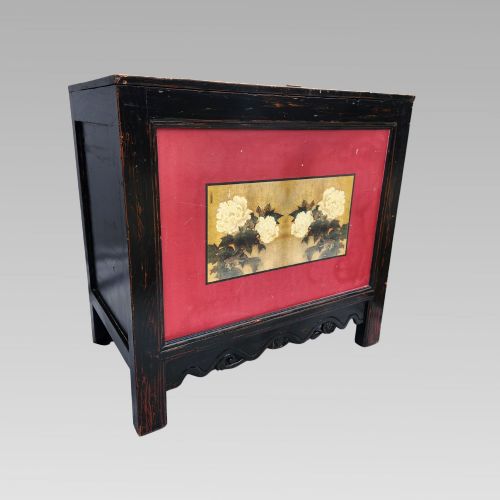
When you search for an antique chinoiserie coffer, you are looking at substantial storage furniture decorated with imaginative eastern motifs. The items appearing on this page span from the eighteenth century through to the early decades of the twentieth century. Most examples you will meet take the form of blanket boxes, storage chests, and marriage cabinets.
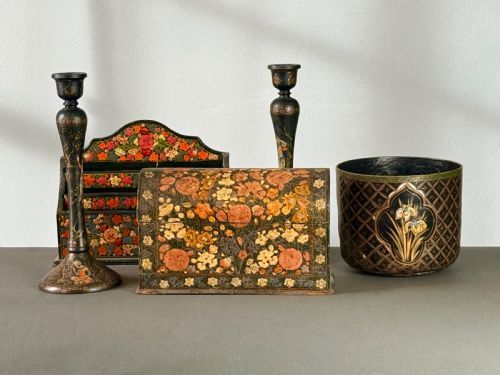
The aesthetic bridges traditional eastern craftsmanship with western decorative tastes, encompassing Chinese export work and Anglo-Indian production. Alongside traditional blanket boxes, the selection includes smaller accessories and cabinets mounted on carved stands. These pieces function visually as focal points while offering practical enclosed storage for textiles and domestic items.
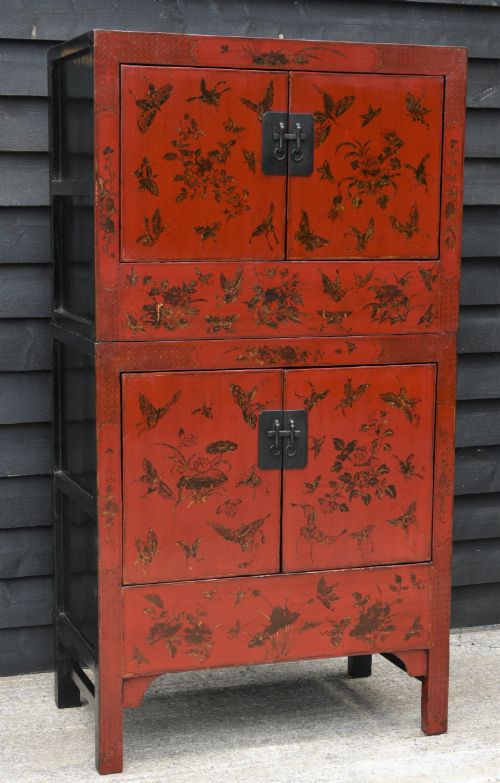
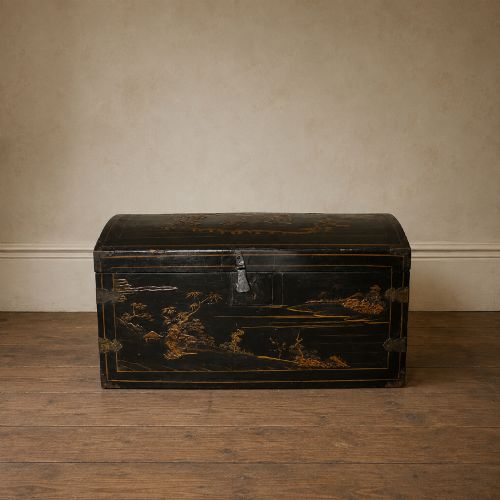
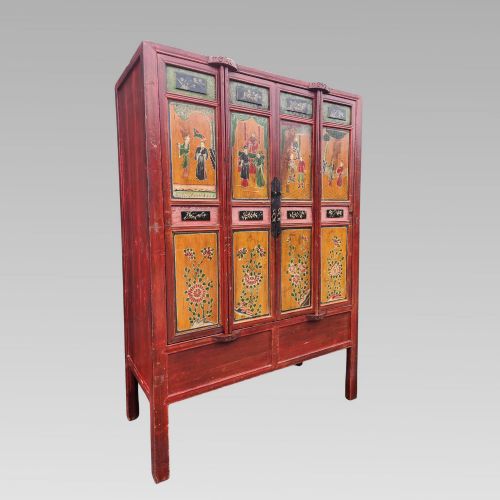
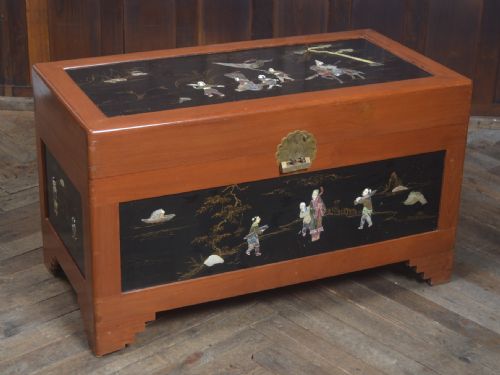
Dating ranges from eighteenth-century export pieces to nineteen-thirties storage chests finished with floral ornamentation. You will encounter domed trunks, red and black lacquered marriage cabinets, and camphor wood chests covered in brass. Each version reflects the enduring popularity of oriental design motifs across multiple design periods.
Materials and construction
The primary construction relies on sturdy timber carcasses, with camphor wood frequently utilised for storage boxes due to its aromatic qualities and natural resilience. Over these wooden foundations, makers applied successive layers of lacquer to create smooth, durable surfaces. Pigments, gold leaf, and gilt decoration were then hand-applied to render intricate figural scenes, landscapes, and floral patterns.
Metal hardware plays an essential structural and decorative role, featuring brass and iron mountings, hinges, and corner plates. Some chests incorporate elaborate brass covering secured across the entire exterior surface of the wood. Stands and bases, where present, often display carved wooden details that elevate the main body of the cabinet.
The inventory includes both floor-standing blanket boxes and elevated cabinets resting on carved wooden stands.
Judging quality in lacquered storage
Quality reveals itself in the precision of the surface decoration and the integrity of the lacquered layers. Finer examples display meticulous hand-painted detail in the gilt and pigment work, showing depth and narrative clarity in the depiction of figures and foliage. Lesser pieces exhibit simpler, repetitive stencilling with less variation in the pictorial elements.
The condition of the timber carcass and the stability of the lacquer finish distinguish superior items from the rest. Original brass or iron hardware that remains intact without modern replacement adds considerably to the integrity of the piece. Furthermore, the survival of original stands and supporting cabinetry alters the balance and overall presence of the furniture.
The Antique Chinoiserie Coffer Glossary
- Chinoiserie
- European theatrical and decorative interpretation of Chinese and East Asian artistic traditions. This style dominated various periods of furniture production through painted motifs and lacquered finishes.
- Lacquer
- A durable resin finish applied in multiple coats to wooden furniture and polished to a smooth sheen. It forms the protective and decorative canvas for gilt artwork.
- Camphor wood
- An aromatic timber native to Asia, traditionally selected for storage chests. Its natural scent acts as a deterrent to insects, protecting stored textiles.
- Gilt decoration
- Application of gold leaf or gold-coloured pigment onto a prepared surface to highlight details. It creates strong visual contrast against dark lacquer grounds.
- Marriage cabinet
- A large storage cupboard traditionally presented to couples in China. These pieces frequently feature striking red lacquer and substantial brass hardware.
Antique Chinoiserie Coffer: Frequently Asked Questions
What is a chinoiserie coffer?
An antique chinoiserie coffer is an enclosed wooden storage box or chest decorated with oriental motifs, gilt work, and lacquered finishes. These pieces were produced for both export markets and domestic use across several centuries.
They combine practical storage capacity with decorative painted panels depicting traditional eastern landscapes, figures, and floral arrangements.
Where were these coffers made?
The items originate from various regions including China, Japan, and India, often created specifically for export to western markets. British and European trade routes encouraged local craftsmen to adapt traditional techniques for international buyers.
Consequently, you find stylistic influences ranging from classical Chinese export workshops to Anglo-Indian production centres.
How do I care for lacquer furniture?
Lacquered surfaces require stable environmental conditions away from direct sunlight and excessive humidity. Dust gently with a soft, dry cloth without applying modern chemical polishes or abrasive cleaners.
Protecting the surface from sharp objects and extreme temperature changes preserves the integrity of the delicate gilt decoration.
How do I date an antique chest?
Dating relies on examining the underlying timber construction, the composition of the lacquer, and the style of the brass hardware. Eighteenth-century examples typically show different joinery methods and patination compared to pieces made around nineteen-hundred.
Comparing the painted motifs against established historical periods helps narrow down the decade of manufacture.
What was a marriage cabinet used for?
Marriage cabinets served as primary storage furniture for household linens, garments, and valuables belonging to a newly wedded couple. Their striking red lacquer finishes symbolised good fortune and joy in traditional settings.
Today, they function as versatile wardrobes or linen cupboards in contemporary interiors.