


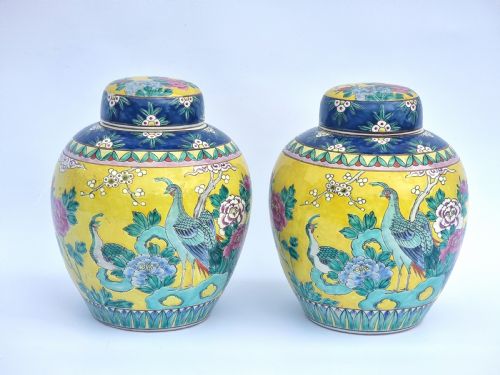


Antique Chinese Covered Jar
An antique Chinese covered jar brings centuries of ceramic tradition into a room, offering both bold scale and quiet, painted detail.
Antique Chinese Covered Jar
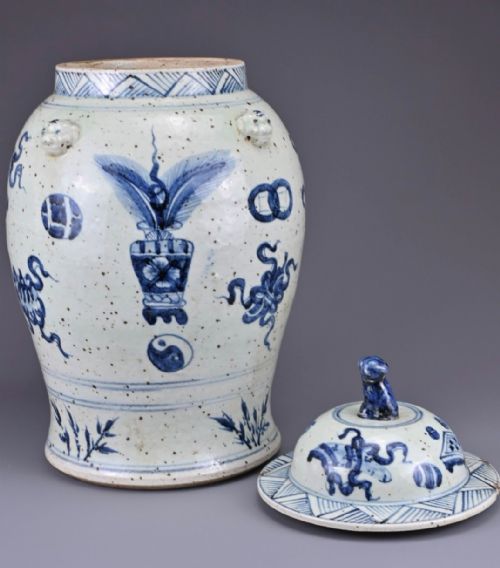
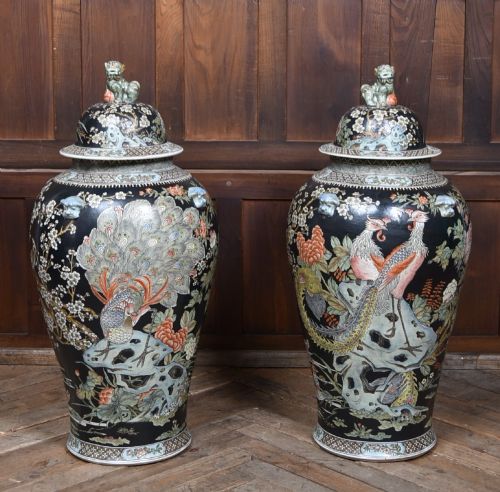
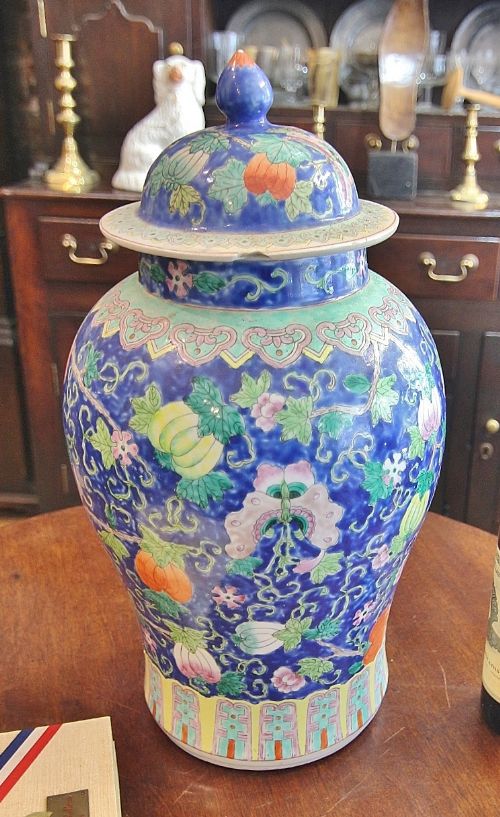
An antique Chinese covered jar appears in several distinct forms across this selection, ranging from large baluster vases and ginger jars to smaller Kamcheng jars and tea caddies. Buyers seeking an antique Chinese covered jar will encounter substantial lidded vessels shaped for display or storage, often rooted in traditional forms.
The pieces span various periods, with 19th-century examples representing a significant share of the offerings alongside earlier Qing Dynasty works, Tang Dynasty pottery, and mid-20th-century items. These vessels serve primarily as decorative focal points, carrying the weight of distinct historical periods and regional styles.
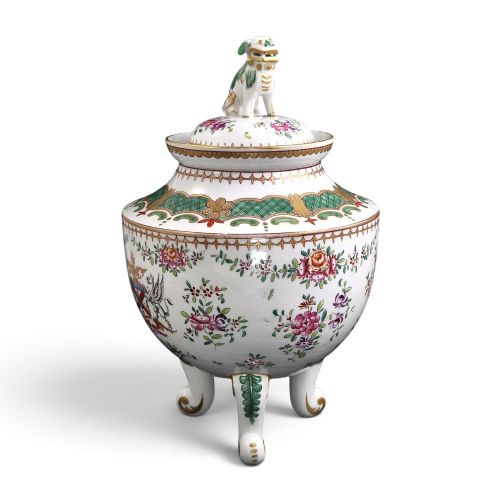
Stylistic influences vary from orthodox Chinese traditional and Qing Dynasty designs to European interpretations such as Chinoiserie and Samson Paris productions. This mix provides buyers with choices between authentic domestic wares and the Western decorative adaptations that followed them.
Materials and production
The primary material across these listings is porcelain, complemented by ceramic, stoneware, and early pottery bodies. Artisans applied cobalt glaze, enamel, and crackle glaze to the surfaces, frequently enhancing the vessels with gilding.
Metal elements also appear, with brass and copper utilised in cloisonné and fitted components. Hand painting remains a defining technique, seen in floral, bird, and figural motifs executed across centuries of production.
Birds and flora appear persistently across these lids, faithfully guarding dry goods they haven't held for centuries.
Judging the work
Quality rests in the precision of the hand painting and the depth of the glaze, whether cobalt blue or polychrome enamel. Superior pieces display crisp brushwork and harmonious colour control that elevate the decorative impact of the vessel.
The integrity of the form and the preservation of the matching cover dictate the standing of a piece within its period. Refined potting, balanced proportions, and clean application of surface treatments distinguish the finest examples from simpler commercial wares.
Samson Paris·Mason
The Antique Chinese Covered Jar Glossary
- Baluster vase
- A tall vessel with a rounded body that tapers toward a flared base and rim, often fitted with a matching domed cover.
- Ginger jar
- A broad-shouldered storage vessel originally used for spices, typically featuring a flat or domed lid without handles.
- Kamcheng
- A lidded jar originating from southern China and made for export, frequently decorated in polychrome enamels for utilitarian and ceremonial use.
- Cloisonne
- A metalworking technique where thin wires are soldered to a copper or brass base to create cells filled with enamel paste and fired.
- Cobalt glaze
- A metallic oxide pigment applied under the glaze to produce deep blue tones when subjected to high-temperature kiln firing.
- Crackle glaze
- A deliberate network of fine fissures created in the ceramic surface during cooling, valued for its textural appearance.
Antique Chinese Covered Jar: Frequently Asked Questions
How do I date a Chinese covered jar?
Dating relies on combining stylistic evidence with an examination of the material, glaze characteristics, and potting techniques. Pieces often carry aesthetic traits specific to periods such as the Qing Dynasty or Tang Dynasty.
Changes in palette, such as the depth of cobalt blue or the brightness of later enamel work, help narrow the era of production. Comparing base traits and decorative motifs provides further context for the age of the vessel.
What were these jars originally used for?
Many of these vessels served as storage containers for valuable goods like ginger, tea, spices, or dry commodities. Others functioned purely as ornamental display pieces in domestic interiors.
Export jars were often traded globally for both practical utility and decorative display. Over time, their role shifted primarily to interior decoration.
Are matching covers important for value?
The presence of the original matching cover significantly impacts the completeness and visual harmony of the piece. Covers were easily separated or broken over centuries of use.
Finding a jar and cover that share the same period, glaze, and decoration preserves the intended design of the maker. Collectors prefer examples where the lid and body belong together.
How do I display a large jar safely?
Large ceramic and porcelain vessels require sturdy, level surfaces away from heavy foot traffic or vibration. Placing them on dedicated stands helps distribute weight and protects the base.
Keeping jars out of direct sunlight prevents potential fading of enamel colours over time. Stable placement ensures the piece remains secure while serving as a focal point.