




Antique China Tureen
An antique china tureen brings nineteenth-century dining grandeur straight to the sideboard.
Antique China Tureen
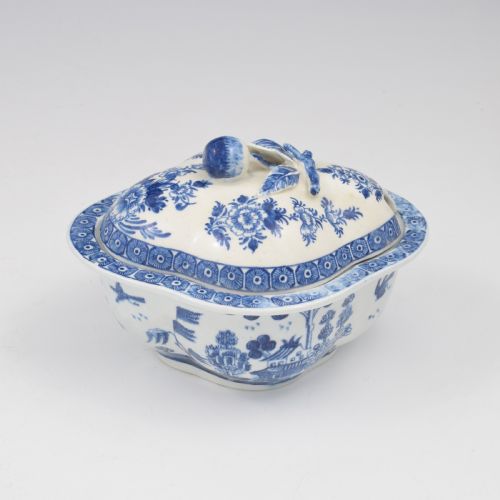
An antique china tureen serves as a deep, covered vessel traditionally used at the table for dishing out soups, sauces, or vegetables. When searching this phrase, collectors encounter various forms ranging from large soup vessels down to diminutive sauce tureens and child's service pieces.
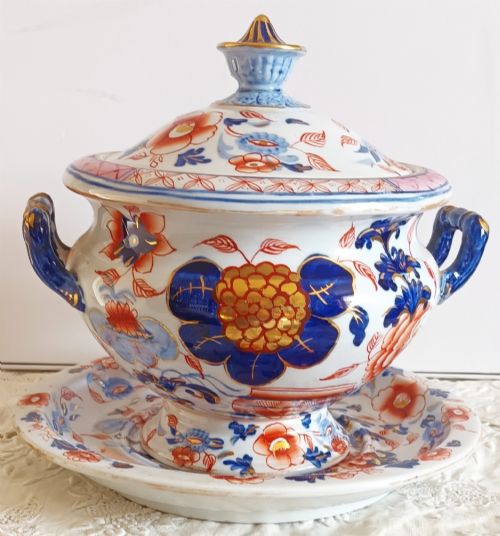
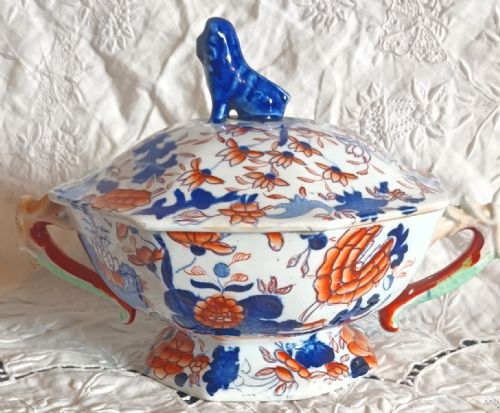
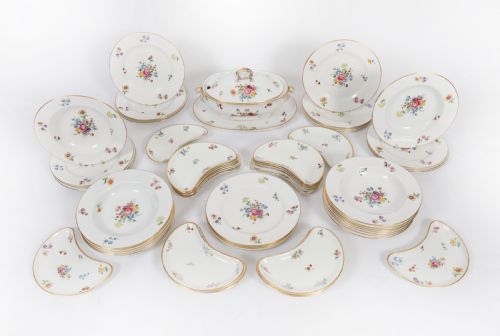
The pieces appearing here span the eighteenth and nineteenth centuries, taking in Georgian, Regency, and Victorian aesthetics. Makers created these covered bowls in earthenware, ironstone, and porcelain, often decorated with transfer-printed blue and white scenes or hand-painted Chinoiserie motifs.
How They Were Made
Potters utilised durable earthenware and heavy ironstone bodies to withstand daily kitchen and dining room use, whilst delicate porcelain was shaped for formal drawing-room service. Bodies were cast or moulded before receiving hand-painted pigments or blue and white transfer printing.
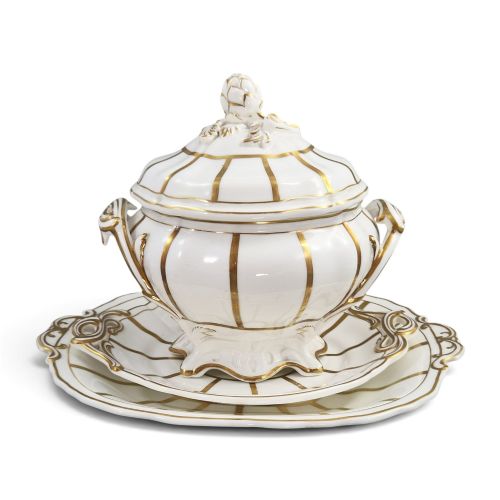
A protective glaze covered the ceramic surface, sometimes enhanced with gilt details or gold leaf applied over the fired body. Lids and handles often featured sculpted animal heads, branches, or ornate foliage integral to styles like Rococo Revival.
Antique China Tureen Retail Price Guide 2026
Typical asking prices for china tureen among the pieces listed under this phrase on Sellingantiques today, from the lower quarter to the upper quarter. They describe what is for sale here now, not the wider market.
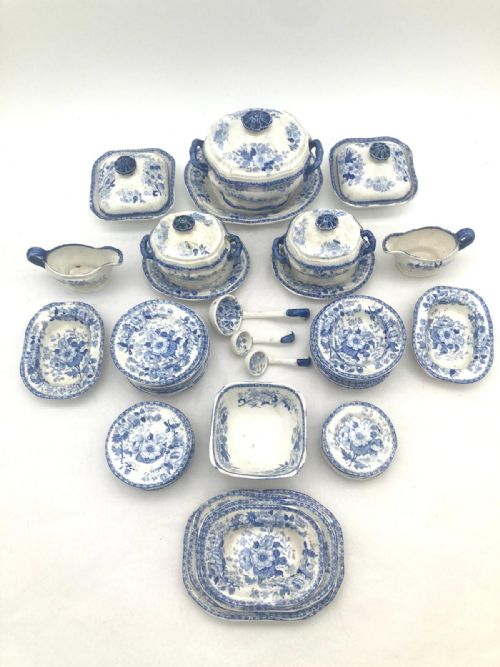
Several miniature child's dinner services survive complete with tiny tureens, proving that Victorian children practiced formal dining etiquette with diminutive tableware.
What Varies in Quality
The division between standard domestic kitchenware and superior display pieces rests upon the crispness of the transfer print and the intricacy of hand-applied enamel decoration. Finer examples display precise registration in multi-coloured patterns and well-modelled handles without distortion from the kiln.
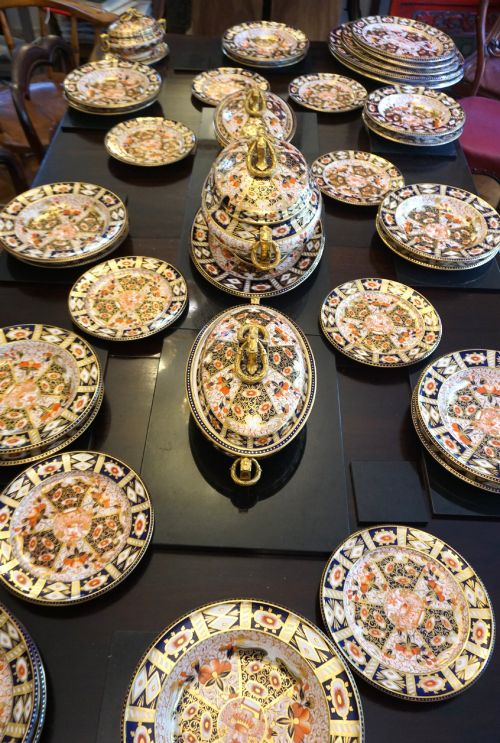
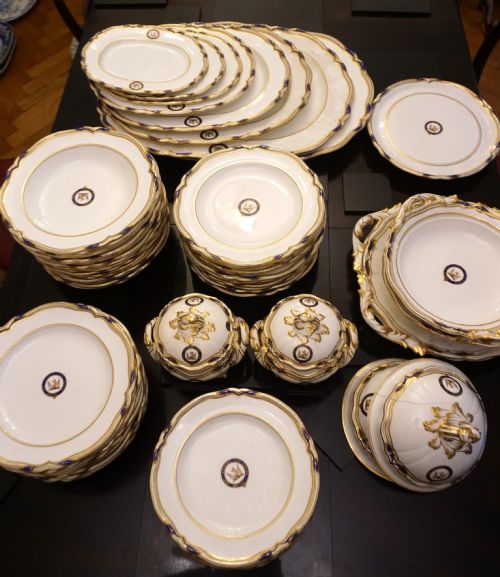
Completeness dictates value and distinction within the category, particularly when original matching stands and ladles survive alongside the tureen and cover. Factory marks stamped or painted to the base further separate unmarked utilitarian wares from named Staffordshire and porcelain manufactories.
Davenport Bone China·Derby Porcelain·Minton·Wedgwood·Mason's Ironstone·Spode·Worcester·Booths·Flight Barr And Barr·Müller Volkstedt·Doulton·J And R Clews·Rogers·James Wallace And Co
The Antique China Tureen Glossary
- Ironstone
- A patented ceramic body invented in the nineteenth century for its extreme durability and stone-like strength. It provided a robust alternative to porcelain for heavy-use dinner services.
- Transfer printing
- A decoration technique where an engraved copper plate transfers a design onto tissue paper, which is then rubbed onto the unglazed or bisque ceramic. This allowed intricate blue and white patterns to be reproduced consistently.
- Sauce tureen
- A small covered vessel designed specifically for holding gravies, melted butter, or sauces at the dining table. They frequently include an attached or separate matching stand.
- Chinoiserie
- A European artistic style reflecting Chinese motifs and decorative arts. Potters utilised exotic landscape and architectural designs on dinnerware during the Georgian and Victorian eras.
- Quatrefoil
- A symmetrical shape formed of four partially overlapping circles resembling a four-leaf clover. Ceramic vessels often utilised this outline for stands and tureens.
Antique China Tureen: Frequently Asked Questions
What is an antique china tureen used for?
These covered vessels held hot soups, stews, vegetables, or sauces at formal dining tables before being served into individual plates. They acted as the centrepiece of a grand dinner service.
Today, buyers use them as decorative accents on sideboards, side tables, or open shelving. Their sculptural lids and handles make them striking standalone display objects.
How do I date an antique tureen?
Dating relies heavily on maker marks, backstamps, and registry lozenges found on the underside of the base. Stylistic cues such as heavy ironstone bodies, blue and white transfer prints, or Rococo Revival handles also help narrow the period.
Early eighteenth-century pieces often feature softer porcelain bodies and hand-painted rather than printed motifs. Mid-nineteenth-century items frequently display patent ironstone stamps and bolder botanical or topographical patterns.
What is the difference between ironstone and porcelain?
Ironstone is a heavy, opaque earthenware developed to resist chipping and cracking during heavy dining service use. It provides a sturdy, utilitarian body favoured by nineteenth-century Staffordshire potteries.
Porcelain is a vitrified, finer ceramic that possesses translucent qualities when held to the light. It was traditionally reserved for more delicate, high-status dining wares and decorative items.