



Antique Chiffonier Table
An antique chiffonier table is a low, compact side cabinet designed to hold dining silver or books.
Antique Chiffonier Table
An antique chiffonier table is a low, enclosed side cabinet that evolved from the sideboard during the nineteenth century. Buyers searching for an antique chiffonier table encounter forms spanning the Regency and Victorian periods, often incorporating shelves or mirror glass above the main cupboard.
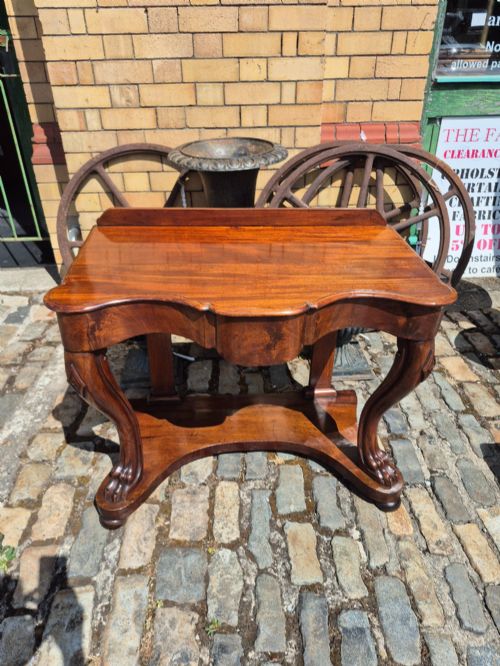
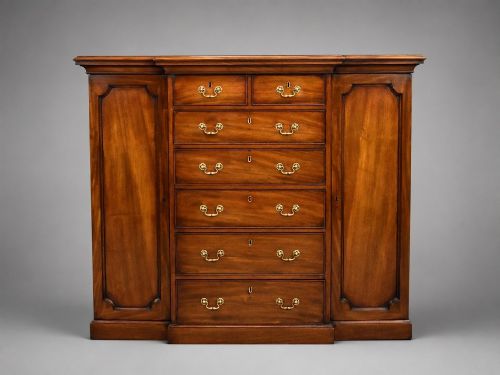
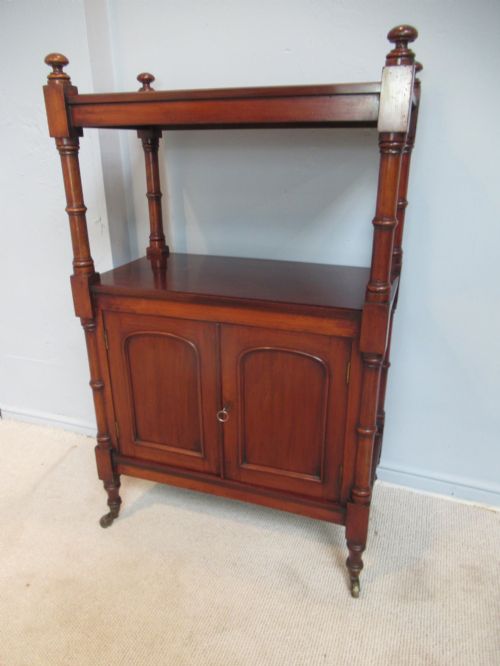
The pieces appearing here include examples from the Regency, Victorian, and Edwardian eras, demonstrating how the low side cabinet adapted over decades. Makers utilised timber like mahogany, rosewood, and pollard oak to construct these functional furniture items for the dining room or drawing room.
While some pieces align closely with classical revival styles like French Empire, others reflect straightforward domestic cabinet making from the mid-nineteenth century. Each variation serves the primary purpose of low storage whilst offering a flat surface for display.
Materials and construction methods
Cabinet makers constructed these pieces predominantly using solid and veneered hardwoods such as mahogany, rosewood, and oak. Flame mahogany and pollard oak feature prominently, selected for their striking grain patterns across large door panels and cupboard fronts.
Detailing often incorporates brass hardware, glass panels, marble tops, and inlaid woodwork to elevate the visual weight of the furniture. Structural elements such as breakfront facades and turned columns demonstrate standard joinery and cabinet-making techniques of the nineteenth century.
Some Victorian chiffoniers include hidden compartments designed specifically for concealing silver cutlery from light-fingered staff.
Distinctions in quality and execution
Quality rests upon the selection of timber veneers, where finely figured flame mahogany or burr walnut indicates superior material sourcing. The integration of solid brass mounts and polished marble tops separates standard utilitarian pieces from more ambitious commissions.
Construction rigour reveals itself in the fit of cupboard doors, the precision of inlaid details, and the stability of superstructure shelves. Superior examples maintain crisp carving and balanced proportions regardless of their overall scale.
G. Trollope & Sons
The Antique Chiffonier Table Glossary
- Regency
- A British design period spanning the early nineteenth century characterised by classical revival motifs and refined proportions. Furniture from this era frequently employs rosewood and brass inlay.
- Pollard oak
- Oak timber harvested from pollarded trees, producing a dense, knotty grain pattern prized for decorative veneer. Cabinet makers utilised this material on mid-nineteenth-century case furniture.
- Breakfront
- A cabinet design where the central section projects forward from the flanking wings. This architectural arrangement adds depth to sideboards and chiffoniers.
- Napoleon III
- A French design style of the mid to late nineteenth century incorporating eclectic revivals and rich ornamentation. Pieces from this era often feature dark woods and meticulous inlays.
Antique Chiffonier Table: Frequently Asked Questions
What is an antique chiffonier table used for?
These pieces function as compact side cabinets designed for storing dining room accessories, linens, or books in domestic interiors.
The flat top surface additionally serves as a convenient sideboard or display area for decorative objects and lighting.
How do I date an antique chiffonier table?
Dating relies on identifying timber choices like rosewood or pollard oak alongside characteristic construction methods of the Regency and Victorian eras.
Stylistic markers such as brass gallery rails, carved corbels, and mirror glass panels help narrow the period of manufacture.
Where should I place a chiffonier in my home?
A chiffonier suits dining rooms, living spaces, or hallways due to its shallow depth and low profile against a wall.
The enclosed lower cupboards provide practical concealed storage while keeping floor space clear.
What is the difference between a sideboard and a chiffonier?
A sideboard is typically longer and stands at standard serving height, built primarily for large dining rooms.
A chiffonier is smaller and more compact, frequently including an enclosed cupboard base beneath a raised shelf or mirror.