

Antique Chest with Writing Desk
An antique chest with writing desk combines domestic storage with a drop-down writing surface, offering practical workspace alongside concealed interior drawers.
Antique Chest with Writing Desk
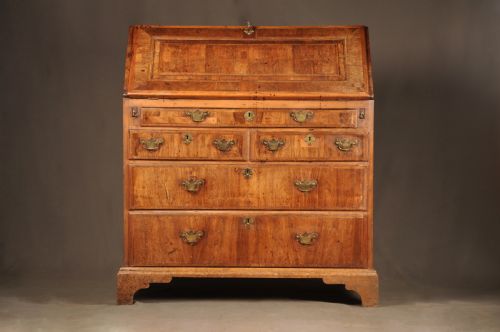
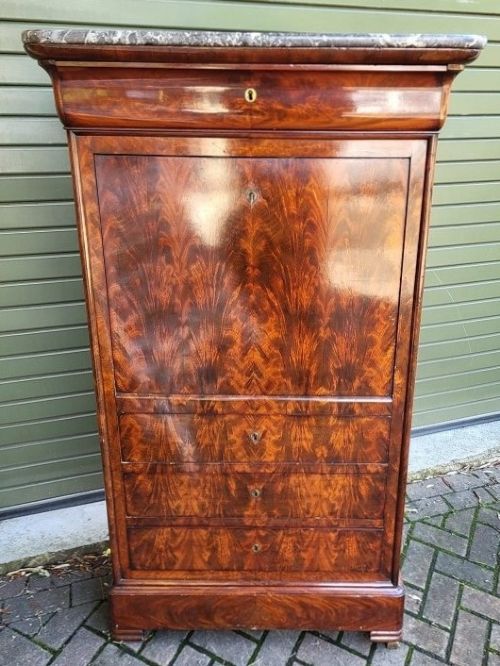
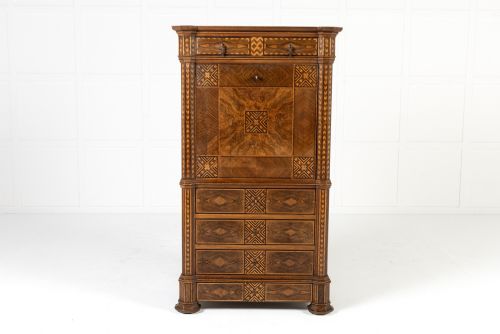
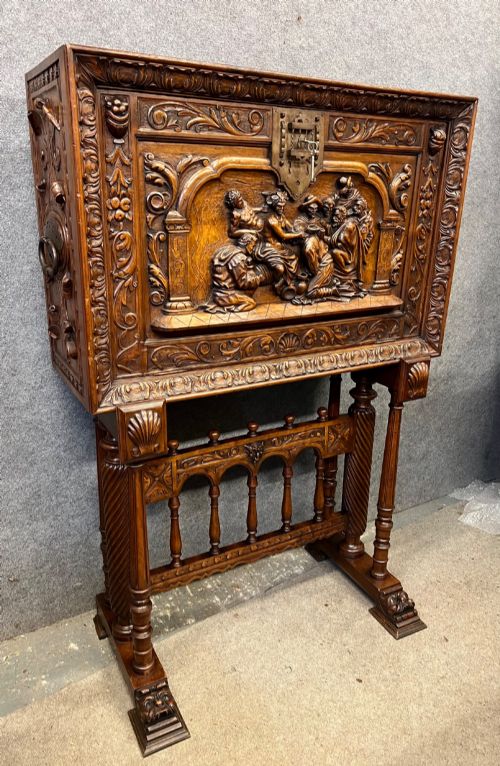
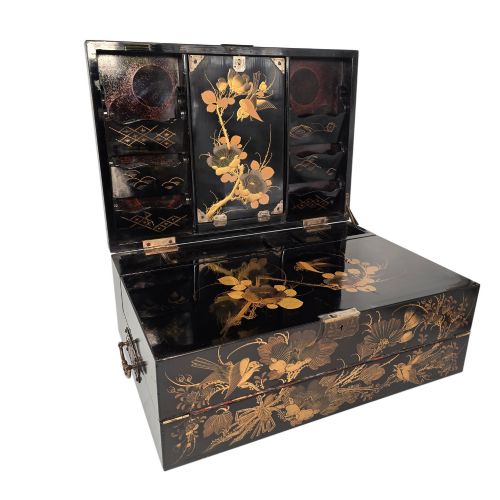
An antique chest with writing desk brings together the everyday utility of a set of drawers and a dedicated writing surface, most frequently taking the form of a bureau with a fall front. These pieces appear across several periods, from seventeenth-century oak examples to Georgian mahogany and walnut variants, alongside later nineteenth and early twentieth-century interpretations.
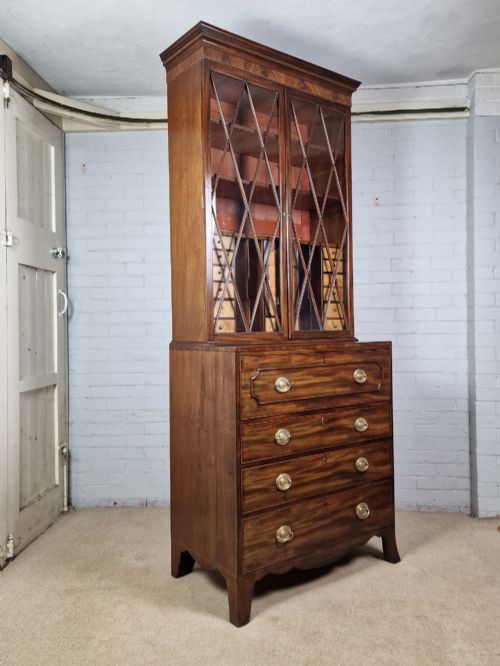
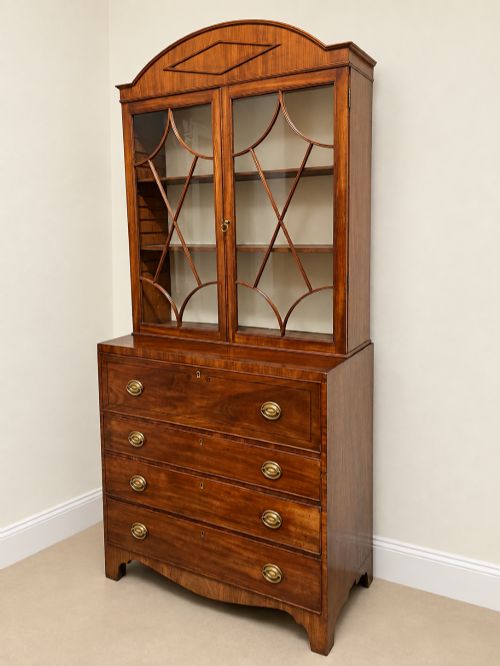
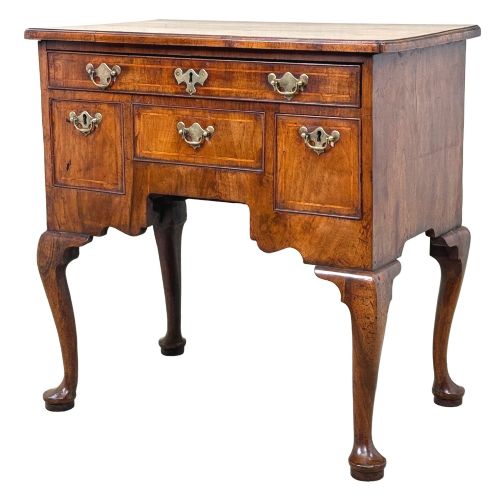
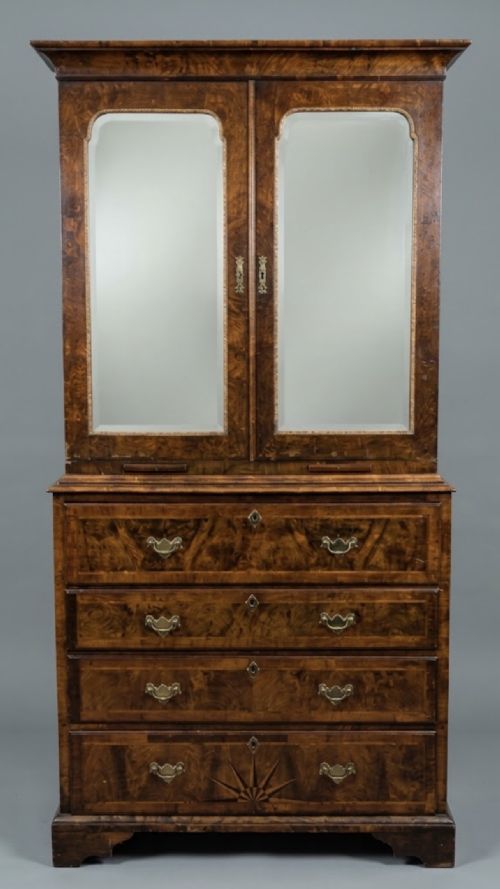
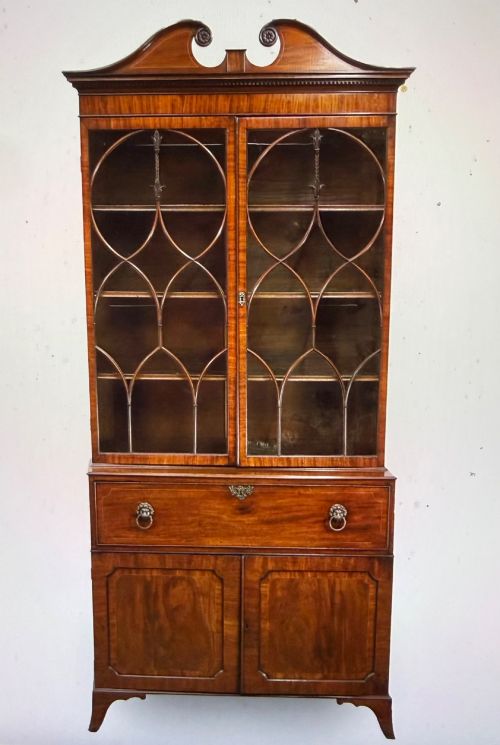
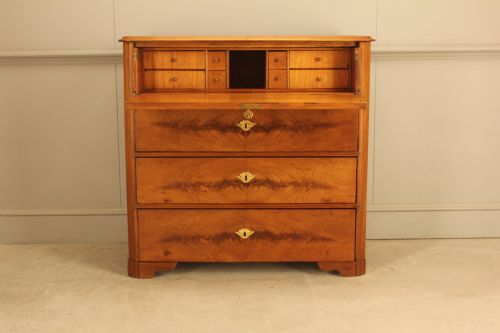
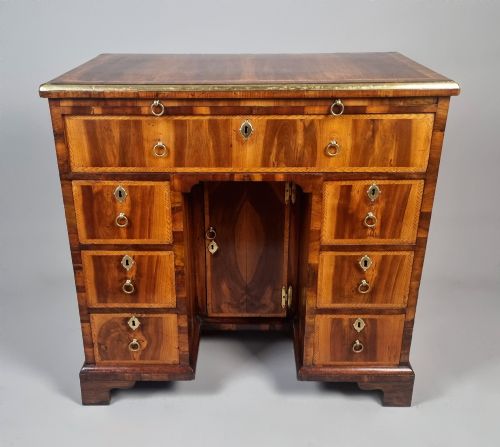
The primary forms on this page include bureaux, secretaire bookcases, and kneehole desks, often fitted with internal compartments, pigeonholes, and small drawers behind the main writing flap. Walnut and mahogany predominate, supplemented by oak, pine, and specialised timbers such as burr walnut and satinwood.
Buyers encounter regional variations and stylistic markers ranging from plain provincial surfaces to crossbanded veneers and inlaid details. The underlying construction balances structural drawer frames with the delicate joinery required for internal pigeonhole assemblies.
Materials and construction methods
Cabinet makers utilised solid hardwoods like oak, mahogany, and walnut for the primary carcase and drawer frames, often applying figured veneers to the exterior fall fronts and drawer facades. Secondary timbers such as pine frequently appear inside drawer linings and back panels.
Joinery techniques combined traditional hand-cut dovetails for drawer construction with panelled backs and sides, while hinges, brass drop handles, and escutcheons secured the fall fronts and doors. Interior compartments relied on miniature drawers assembled with fine pins and thin dividers to organise stationery and documents.
Antique Chest with Writing Desk Retail Price Guide 2026
Typical asking prices for chest with writing desk among the pieces listed under this phrase on Sellingantiques today, from the lower quarter to the upper quarter. They describe what is for sale here now, not the wider market.
Listings feature walnut, mahogany, and oak across periods spanning the seventeenth century through to the 1930s.
Distinguishing quality across pieces
Quality rests primarily on the selection of timber veneers and the precision of the interior cabinet work, where secondary drawers and pigeonholes reveal the maker's hand. Matched figuring across the fall front and drawer fronts indicates careful material preparation by the cabinet maker.
The integrity of the internal mechanisms, the retention of original brass hardware, and the stability of the fall-front hinges govern how well a piece holds its structural form. Simpler provincial items present robust utility, whereas pieces featuring crossbanding, fine inlay, and fitted glazed upper cabinets reflect higher workshop specialisation.
Gillows·Heals
The Antique Chest with Writing Desk Glossary
- Bureau
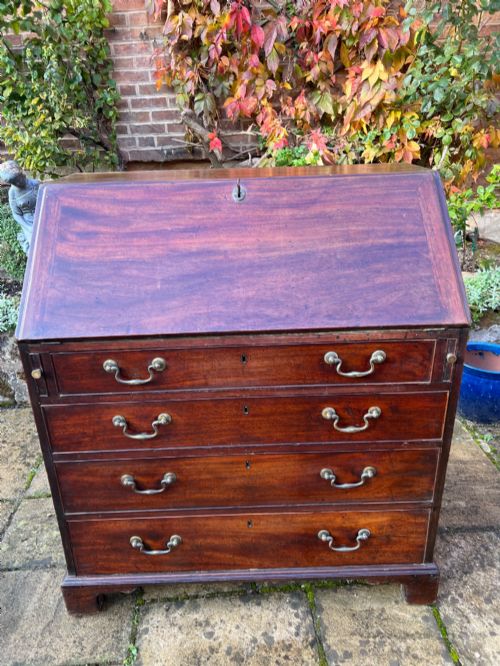
- A desk featuring a sloping fall front that drops down to create a writing surface while concealing interior compartments. This form serves as the primary configuration found in this category.
- Fall front
- The hinged panel on a bureau or escritoire that lowers to reveal the writing desk interior. It acts as the structural writing flap when open.
- Secretaire bookcase
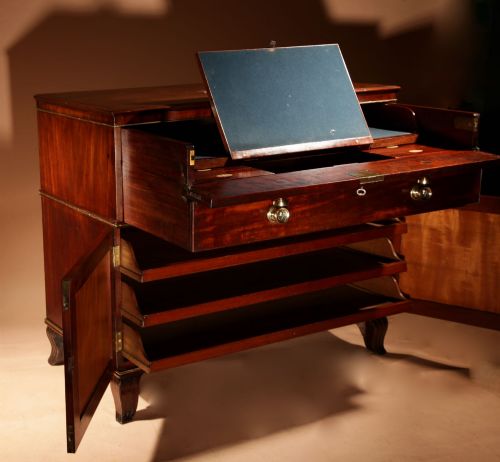
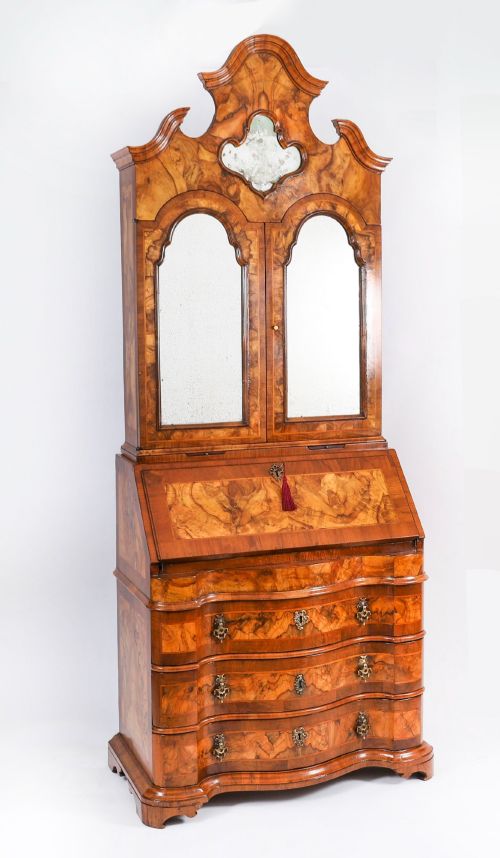
- A tall cabinet combining a fitted writing drawer or fall-front desk compartment with upper shelved storage enclosed by glazed doors. These pieces integrate library storage with a writing surface.
- Kneehole desk
- A compact desk or dressing chest featuring a central recessed space for the user's legs, flanked by pedestals of small drawers. This form allows the user to sit directly facing the writing surface.
- Escritoire
- A tall writing cabinet, often associated with seventeenth and eighteenth-century walnut construction, providing a vertical writing surface behind a drop-down door. The term shares close historic ties with the bureau.
Antique Chest with Writing Desk: Frequently Asked Questions
What is an antique chest with writing desk?
An antique chest with writing desk is a hybrid furniture form that merges lower storage drawers with a dedicated writing slope or pull-out desk surface. These pieces provide concealed compartments for letters and papers alongside everyday drawer space.
Such furniture evolved through the seventeenth, eighteenth, and nineteenth centuries, taking forms ranging from oak bureaux to mahogany secretaire bookcases. They served as primary correspondence and storage units in period homes.
How do you use a fall front bureau?
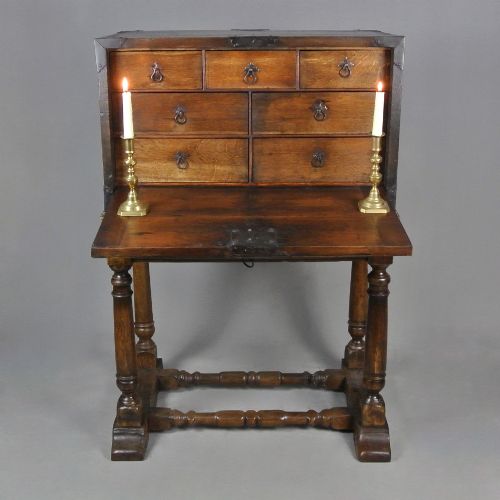
To use a fall front bureau, you release the small brass catches or lock to lower the hinged writing flap until it rests horizontally. This motion reveals an arrangement of small interior drawers, pigeonholes, and sometimes a central secret compartment.
When writing is finished, the flap lifts back to a vertical position, concealing the papers and keeping the desktop neat. The hinges and support ledges take the weight of the writing surface during use.
How can you tell a Georgian bureau from a later piece?
Georgian bureaux, spanning the eighteenth century, typically display hand-cut dovetails, solid oak or pine secondary timbers, and dense mahogany or walnut primary wood. The internal drawer construction and hardware fixings reflect eighteenth-century hand tool methods.
Later nineteenth and twentieth-century interpretations often incorporate machine-cut elements, different interior woods, or applied styling from revival periods such as Arts and Crafts. Examining the secondary wood inside the small interior drawers usually clarifies the period.
Where were secretaire bookcases used?
Secretaire bookcases were traditionally placed in libraries, studies, or principal reception rooms where books and writing materials were kept close at hand. The upper glazed section displayed leather-bound volumes, while the lower desk section provided a private writing space.
In modern rooms, they function well as dual-purpose study furniture or living room storage units. Their vertical format allows them to fit against walls while offering extensive internal capacity.