
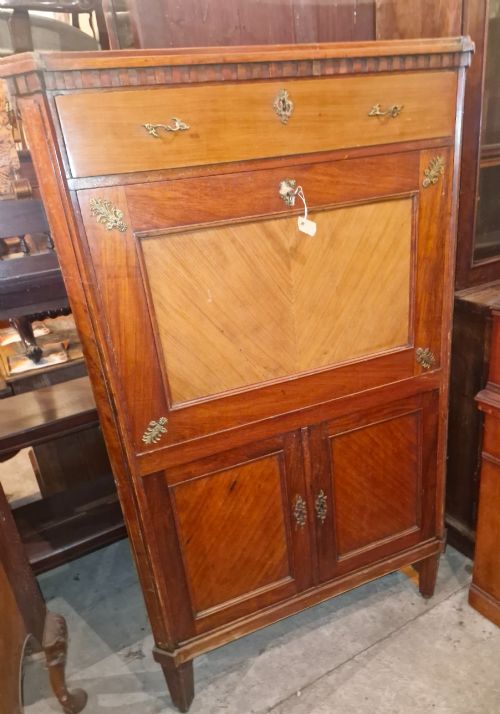
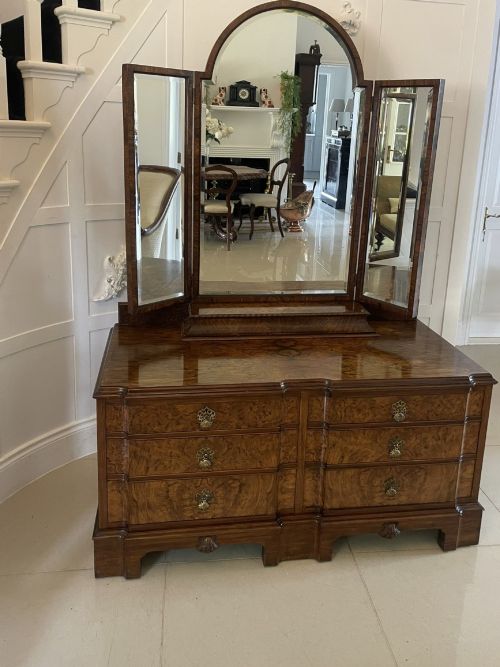
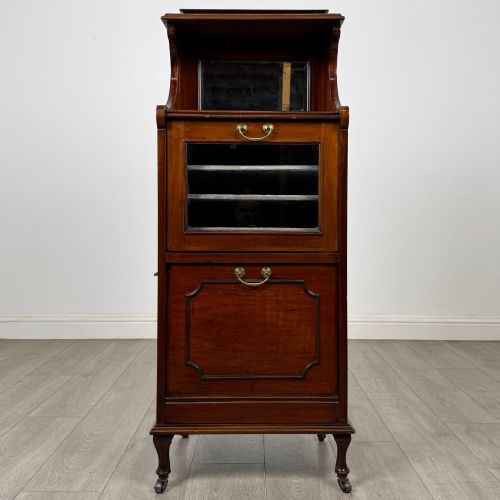
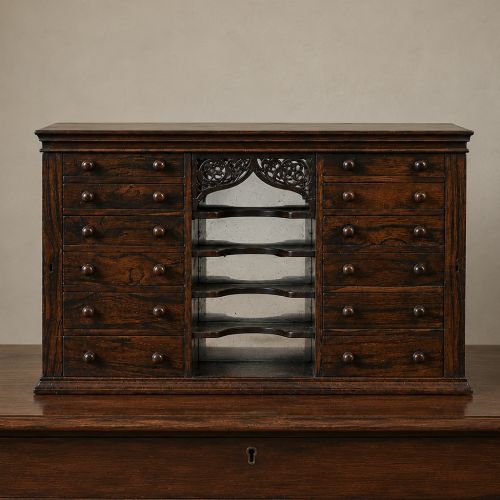
Antique Chest with Mirror
An antique chest with mirror combines a solid drawer base with a pivoting or fixed glass plate, serving bedroom storage needs with practical elegance.

Antique Chest with Mirror
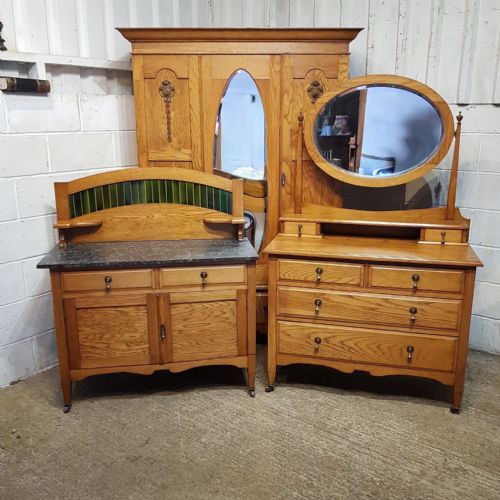
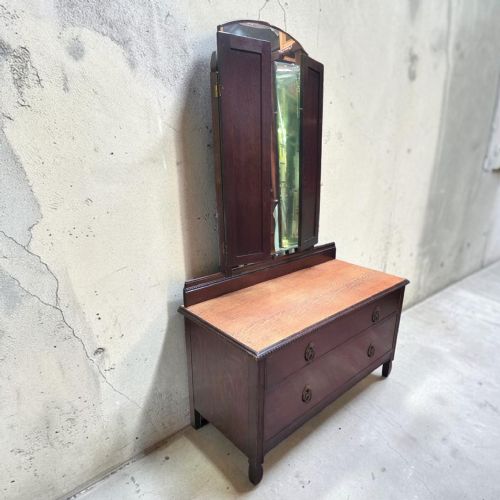
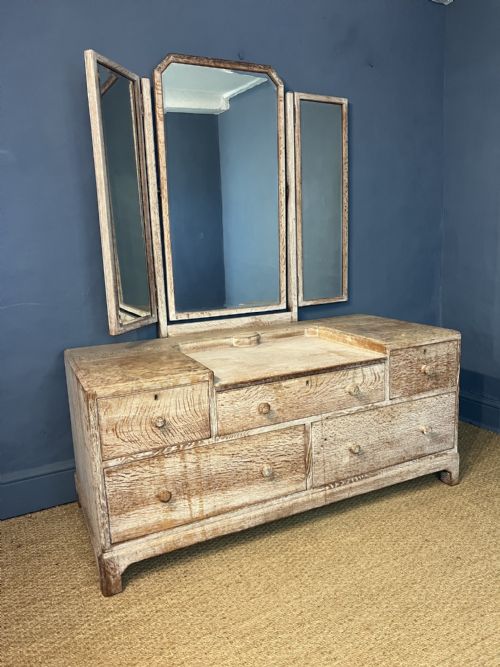
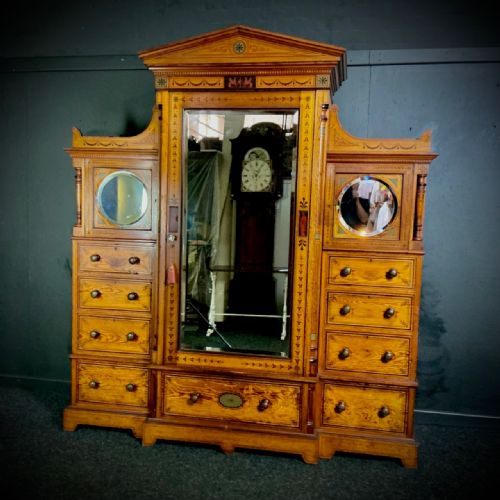
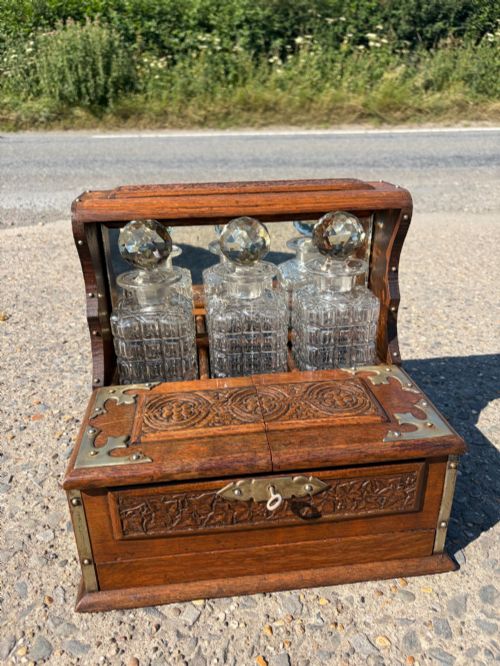
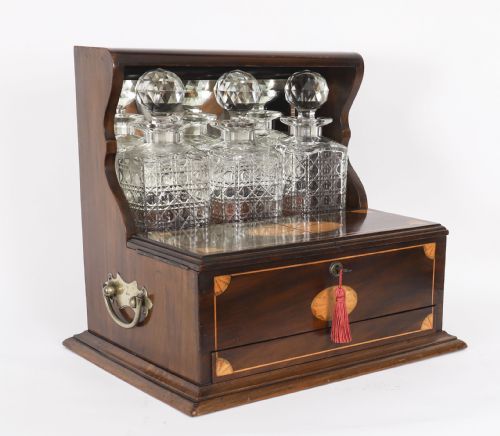
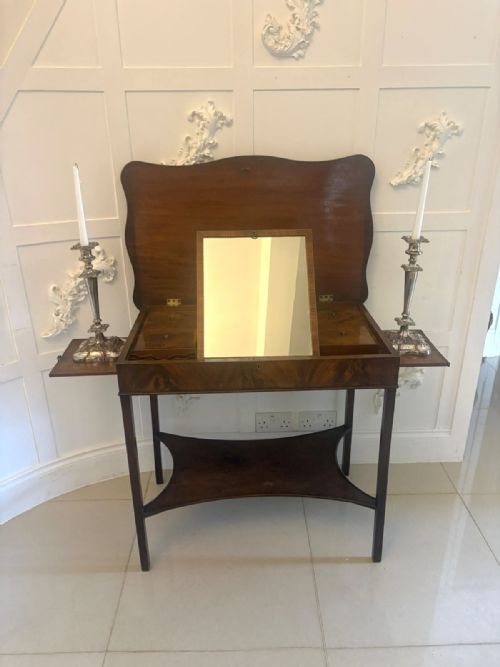
When you search for an antique chest with mirror, you encounter pieces designed primarily for grooming and personal storage, predominantly appearing as dressing chests, dressing tables, and compact drawer units fitted with glass. These items emerge from various decades spanning the Georgian era through the Victorian and Edwardian periods up to the 1930s Art Deco movement.
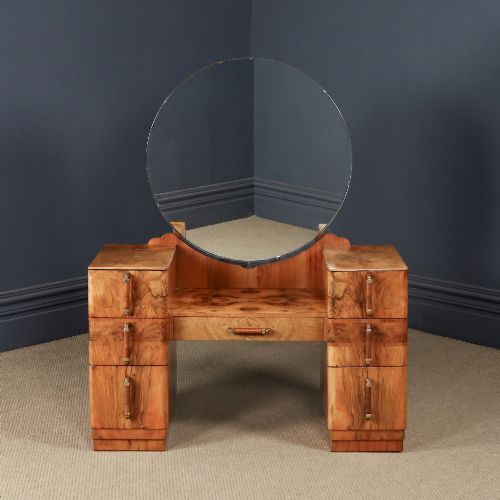
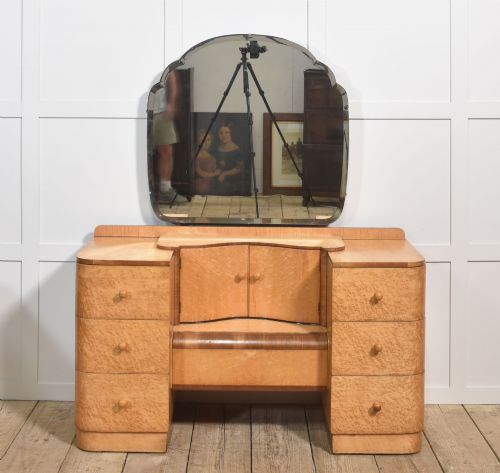
The version most commonly met on this page is the Edwardian or Victorian dressing chest, usually constructed in mahogany, oak, or walnut with an attached swing mirror supported by upright arms. Alongside these, examples surface from the Arts and Crafts movement and Art Deco periods, featuring pedestal configurations or geometric burr walnut veneers.
Materials and construction
Cabinetmakers utilised dense timbers such as mahogany, oak, and walnut, frequently applying figured burr walnut or maple veneers to large surfaces for visual depth. Drawer construction typically involved hand-cut dovetail joints, while mirrors utilised bevelled glass plates secured within adjustable wooden frames.
Hardware played an essential role, incorporating brass handles, drop pulls, and swing mirror brackets that allowed users to tilt the glass. Secondary timbers such as pine appeared in drawer linings and carcases, whilst specialised finishes ranged from French polish to painted scumble glazes.
Several Victorian dressing chests include built-in candle sconces flanking the mirror for evening grooming before electric lighting became common.
Markers of distinction
The grade of an antique chest with mirror rests heavily on the selection of timber veneers and the intricacy of the cabinetwork. Pieces featuring symmetrical burr walnut or figured mahogany display superior material choice compared to standard painted pine or plain secondary woods.
Construction refinement dictates longevity and visual balance, distinguishing standard utility furniture from pieces produced by notable workshops. The integration of the mirror framework, original brass fittings, and clean joinery signal higher manufacturing standards.
George Walton·Heals·Wright & Hunter of Belfast·Harris Lebus·Lamb of Manchester·Maurice Adams
The Antique Chest with Mirror Glossary
- Swing mirror
- A glass plate mounted on vertical pivots or screw pins allowing the user to alter the angle of reflection. This component sits atop the chest base, secured by wooden support arms.
- Dressing chest
- A lower storage unit combining a chest of drawers with an integrated mirror superstructure. It bridges the function of a tall chest and a dressing table.
- Burr walnut
- Timber harvested from the irregular growth knots of a walnut tree, yielding highly decorative swirling grain patterns. Cabinetmakers sliced this wood into thin veneers for decorative surfaces.
- Dovetail joint
- An interlocking woodworking joint formed by alternating wedge-shaped pins and tails. It provides strong tensile strength for drawer construction without relying on metal fasteners.
- Aesthetic movement
- A late 19th-century design style emphasising visual beauty over narrative subject matter. Furniture from this movement often incorporates ebonised finishes, subtle inlay, and artistic brassware.
Antique Chest with Mirror: Frequently Asked Questions
How do I date an antique chest with mirror?
Dating relies upon examining the timber species, construction techniques, and stylistic markers such as Arts and Crafts brackets or Art Deco geometry. Drawer dovetails and handle styles offer direct clues to the era of manufacture.
Earlier Georgian and Victorian examples employ heavy solid timbers and hand-cut joints, whereas Edwardian and 1930s pieces often showcase specific veneer choices and lighter framing.
Were mirrors original to these chests?
Most mirrors attached to these chests are original components designed specifically for the carcase, utilising matching timbers and matching bevelled glass. The proportions between the drawer base and mirror superstructure remain balanced.
Replacement mirrors occasionally occur due to historical breakages, identifiable by mismatched wood tones or differing mounting brackets.
How do I care for a wood dressing chest?
Preserving the wood requires maintaining stable indoor humidity away from direct sunlight and heat sources to prevent veneer lifting or timber splitting. Gentle dusting with a soft dry cloth protects the polished finish.
Avoid liquid cleaners or silicone polishes, applying traditional beeswax sparingly when the timber appears dry to nourish the antique surface.