


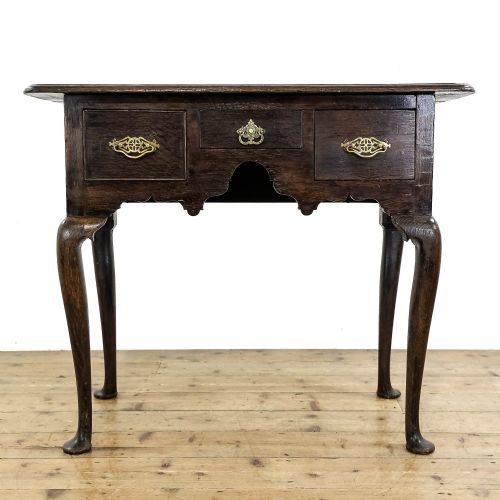


Carved Oak Vanity Desk
A carved oak vanity desk brings solid timber and period detail to a bedroom, offering a sturdy surface for daily routines.
Carved Oak Vanity Desk
A carved oak vanity desk is a practical furniture piece designed for personal grooming and writing, often featuring drawers for storage and a dedicated surface. Buyers searching for a carved oak vanity desk will encounter various historic interpretations spanning the eighteenth century through to the interwar period.
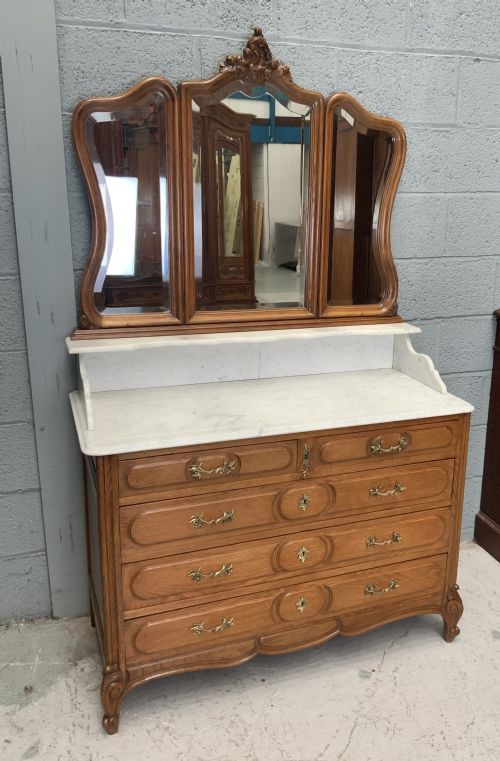
Regional and stylistic variations appear across the inventory, including French Provincial, Georgian, and Tudor Revival influences. Alongside traditional dressing tables, buyers will find side tables and desks adapted for vanity use.
What varies in quality
Quality in a carved oak vanity desk is determined by the crispness of the hand carving and the selection of timber grain. Superior examples display thoughtful proportions and harmonious integration of decorative elements rather than heavy-handed ornamentation.
The integrity of the construction, including drawer movement and the survival of original brass handles or keys, separates standard production from finer workshop output. Maker signatures or paper labels also indicate higher levels of craftsmanship and documented origin.
Heals·Shapland and Petter
The Carved Oak Vanity Desk Glossary
- Lowboy
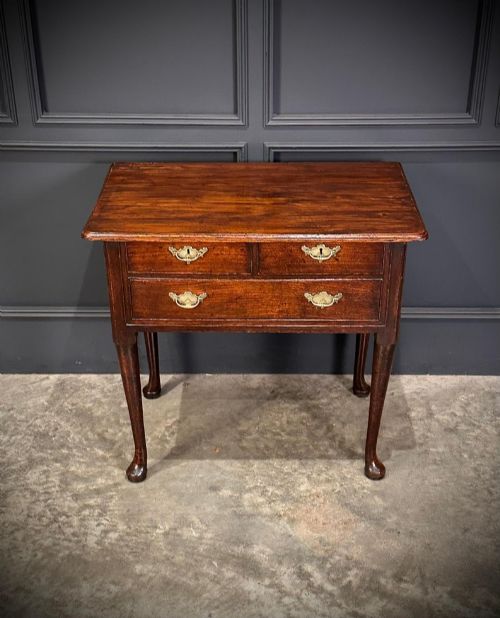
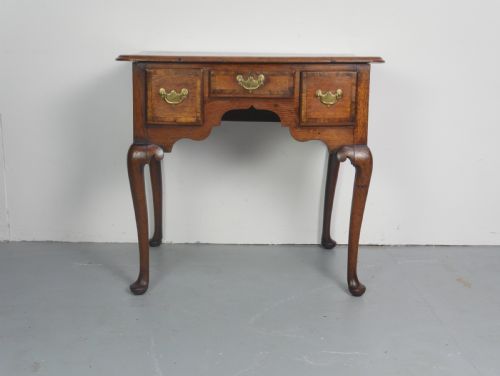
- A small oak table with drawers, typically dating from the eighteenth century and used as a dressing table or side table.
- Marquetry
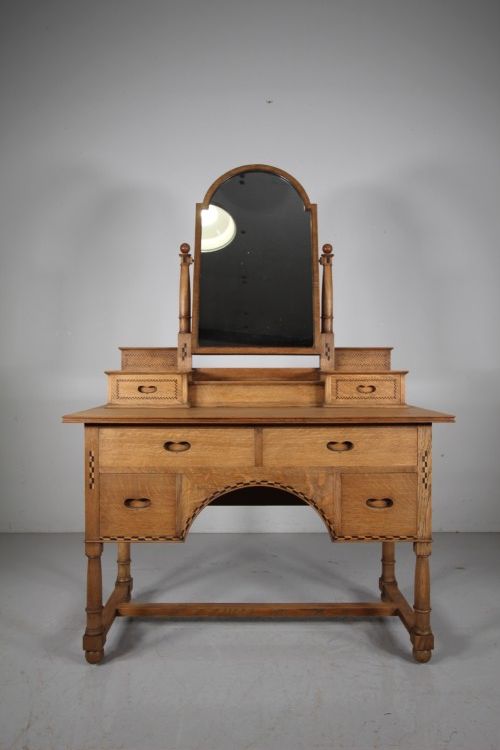
- Decorative woodwork where pieces of veneer are fitted into a backing to form geometric or pictorial designs.
- Barley twist
- A turned wooden furniture leg or column resembling a spiral rope.
- Arts and Crafts
- A design movement prioritising traditional craftsmanship, simple forms, and visible construction methods.
- Washstand
- A piece of furniture designed to hold a basin and pitcher for personal washing, often adapted into vanity use.
Carved Oak Vanity Desk: Frequently Asked Questions
How do I date an oak vanity desk?
Dating relies on examining construction methods, hardware, and stylistic traits such as leg turning and drawer dovetailing.
Earlier eighteenth-century examples feature hand-cut joints and simpler lines, while Edwardian and later pieces often incorporate bolder carved motifs.
Were lowboys used as dressing tables?
Eighteenth-century lowboys frequently served as dressing tables or small writing desks before dedicated vanity furniture became common.
Their compact proportions and drawer space made them suitable for bedrooms and dressing rooms.
What is the difference between a lowboy and a dressing table?
A lowboy is typically a low table with one or more rows of drawers, whereas a dressing table may include attached mirrors and tiered compartments.
Both forms overlap significantly in historical bedroom furniture.
How should I care for an antique oak surface?
Maintain antique oak by dusting regularly with a dry cloth and occasionally applying traditional beeswax to nourish the timber.
Avoid placing these pieces in direct sunlight or near heat sources to prevent the wood from drying out.