







Antique Champagne Bowls
These antique champagne bowls range from Victorian cut glass coupes to silver plated Edwardian coolers, offering the ideal vessel for serving sparkling wine in style.
Antique Champagne Bowls
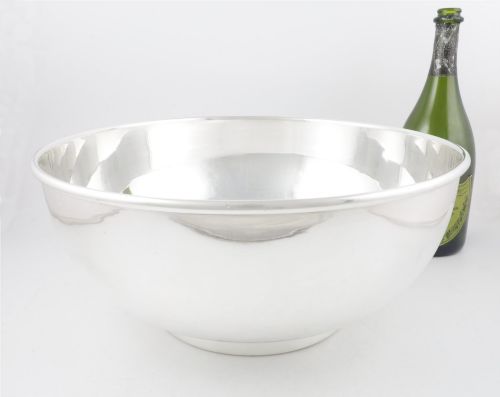
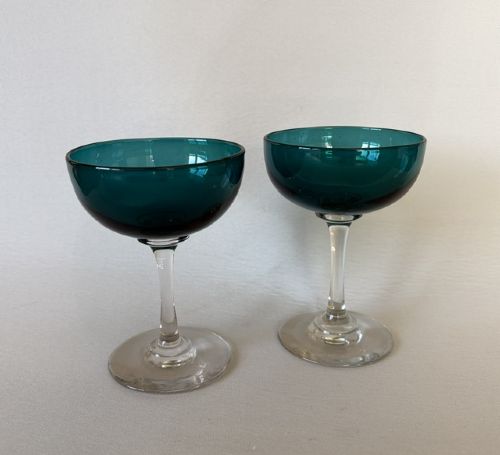
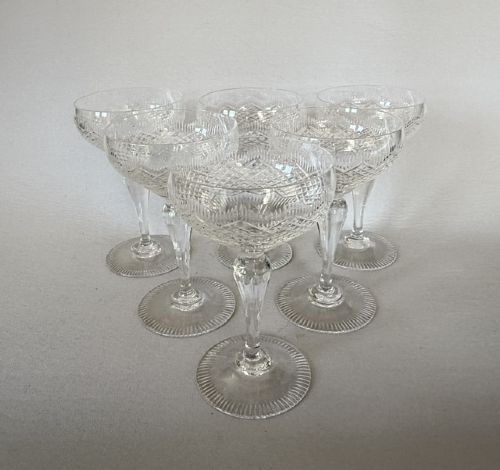
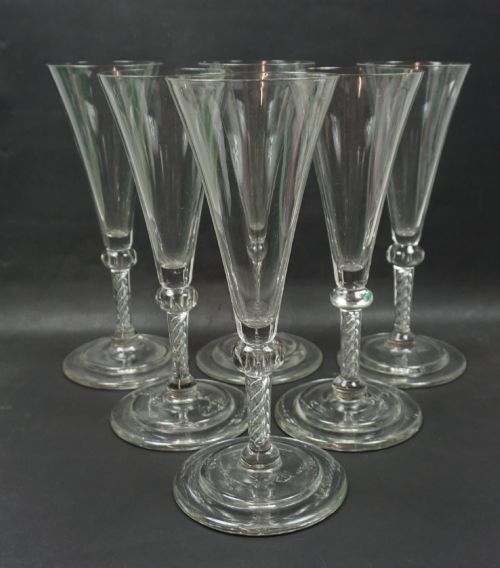
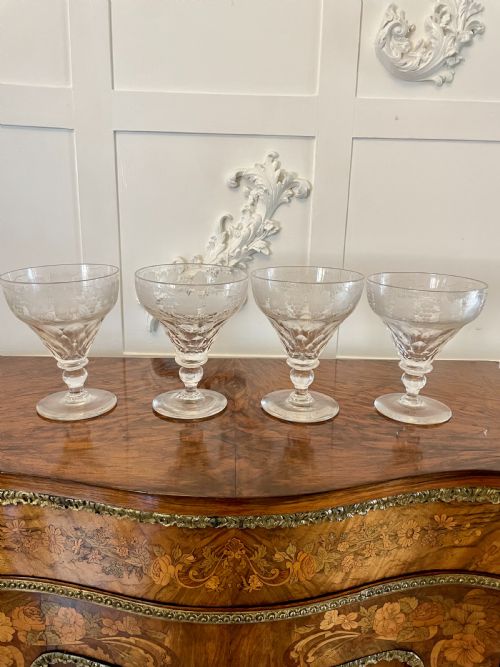
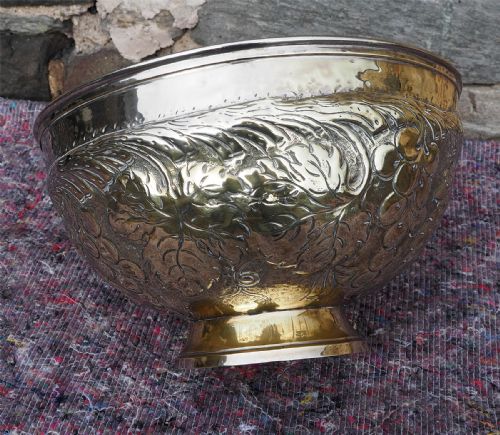
When you search for antique champagne bowls, you are looking at a varied selection of drinking vessels and cooling receptacles designed for sparkling wine. The most common forms on this page include shallow glass champagne coupes and substantial metal wine coolers or ice buckets.
The objects span from the Victorian period through the Edwardian era and into Art Deco designs. You will encounter individual glasses, matched sets, and large presentation vessels in silver plate, copper, brass, and crystal.
Origins vary across English, Scottish, Austrian, and French workshop traditions, reflecting the changing social habits of hosting garden parties, dinners, and banquets over the decades.
Materials and construction methods
Glass pieces utilise cut crystal, lead crystal, and coloured glass such as ruby and green overlays, often featuring wheel engraving with fruiting vines or geometric motifs. These techniques require skilled glassblowers and cutters shaping thick metal moulds.
Metal vessels combine silver plate on copper, solid brass, and pewter, shaped through spinning, hammering, and soldering. Makers such as Mappin & Webb applied heavy silver plating to copper substrates to create durable, lustrous surfaces for hospitality.
Antique Champagne Bowls Retail Price Guide 2026
Typical asking prices for champagne bowls among the pieces listed under this phrase on Sellingantiques today, from the lower quarter to the upper quarter. They describe what is for sale here now, not the wider market.
Distinctions in quality and execution
The distinction between standard utility items and finer examples rests on the depth of the metalwork, the weight of the glass, and the crispness of any engraved decoration. Heavier gauges of silver plate and deeply cut crystal represent superior workshop standards.
Matched sets and signed pieces from established makers demonstrate greater consistency in proportion and finish than unmarked utilitarian vessels.
Mappin & Webb·Barker Ellis·Napier Clan
The Antique Champagne Bowls Glossary
- Champagne coupe
- A shallow, broad-bowled glass designed specifically for sparkling wine and champagne service. This form was widely used from the Victorian era onward before flute styles gained dominance.
- Silver plate on copper
- A manufacturing method where a thin layer of silver is fused to a base of copper. This technique provided the appearance of solid silver at a lower production cost.
- Lead crystal
- Glass containing a significant proportion of lead oxide, which increases brilliance, weight, and clarity. It allows for deep, sharp facet cutting.
- Presentation bowl
- A large decorative vessel often awarded as a prize or commemorated with inscriptions. These pieces frequently feature substantial metal handles and footed stands.
- Overlay glass
- A glass vessel formed by fusing a coloured layer over a clear crystal base. Artisans then cut through the top layer to reveal contrasting patterns beneath.
Antique Champagne Bowls: Frequently Asked Questions
What is a champagne coupe?
A champagne coupe is a shallow-bowled stemmed glass intended for sparkling wines. Its wide brim was historically favoured for allowing bubbles to dissipate quickly.
Today, these glasses are often collected for period dining settings and vintage table displays.
How do I care for silver plated coolers?
Silver plated items require gentle cleaning with non-abrasive silver polishes to maintain their shine. Avoid harsh scrubbing that can wear through the thin silver layer to the underlying copper.
Store them in dry environments to prevent tarnishing and oxidation of the base metals.
Can I use antique glass bowls daily?
Antique glass vessels can be used for special occasions with careful handling. Hand washing in lukewarm water is essential to preserve fragile rims and engraved details.
Sudden temperature changes should be avoided to prevent cracking historical glass.