



Antique Ceramic Umbrella Holder
An antique ceramic umbrella holder is a robust hallway vessel designed to keep wet walking gear contained, bringing both structure and colour to an interior.
Antique Ceramic Umbrella Holder
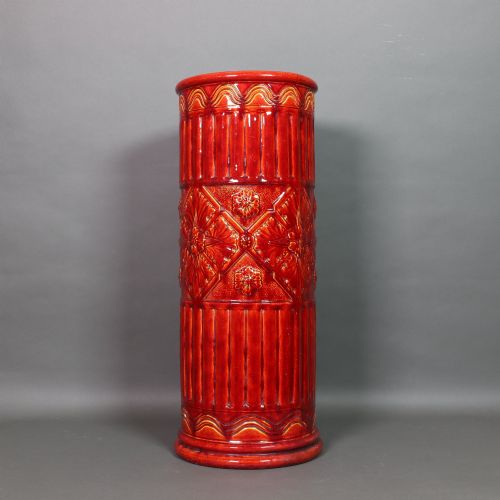
When you search for an antique ceramic umbrella holder, you are looking at substantial vessels made to hold walking sticks and wet umbrellas in the hallway. The examples appearing here span the Victorian and Edwardian eras, reaching back to the late nineteenth century and incorporating global design movements. Most pieces function primarily as stick stands, serving homes that required designated places for heavy walking gear upon entry.
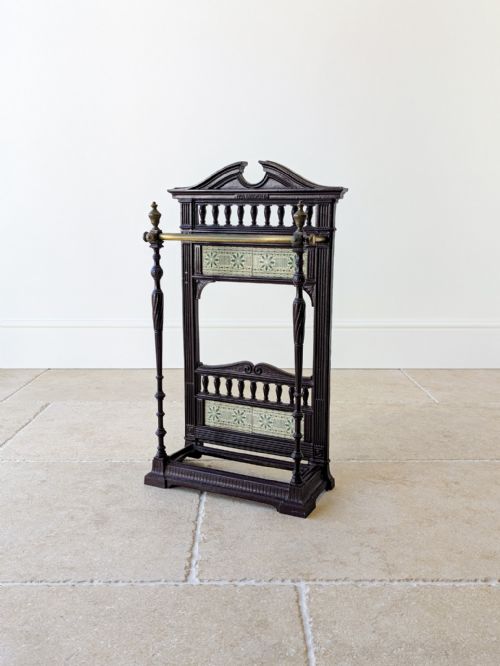
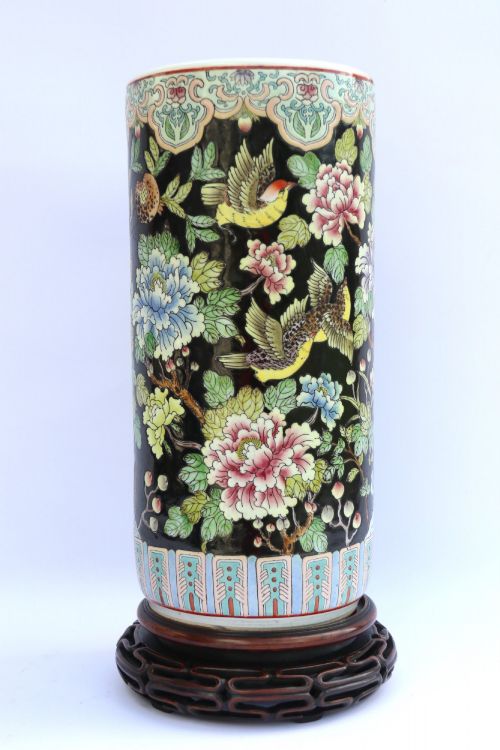
You are most likely to meet British art pottery versions on this page, alongside Continental revivals and export porcelain from China and Japan. Forms range from cylindrical barrels to glazed earthenware bodies sometimes paired with cast iron elements. These robust items combine practical utility with decorative ambition, reflecting the aesthetic priorities of their period.
How they were made
Potters constructed these heavy vessels using earthenware, stoneware, and porcelain, shaping them into cylindrical barrels or tall bodies capable of supporting wet canes. Glazed earthenware and saltglaze finishes provided waterproof interiors, while majolica and faience techniques delivered rich surface colours and intricate patterns. Some makers integrated brass and cast iron into the design to add structural weight and durability at the base.
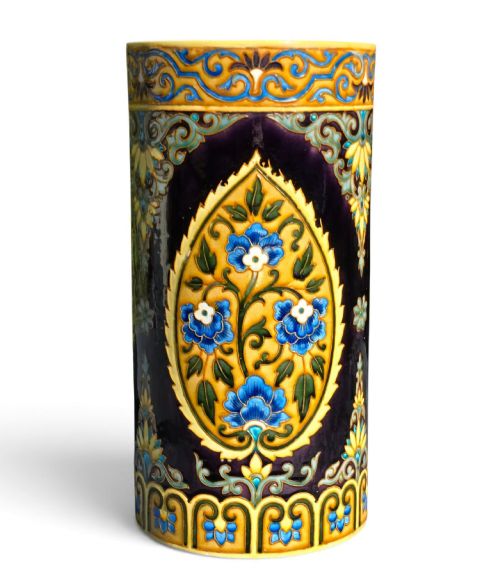
Decoration drew on diverse stylistic traditions, including the Aesthetic Movement, Iznik Revival, and Arts and Crafts principles. Techniques varied from hand-painted Canton porcelain medallions to moulded British art pottery surfaces finished with high-gloss or textured glazes.
Antique Ceramic Umbrella Holder Retail Price Guide 2026
Typical asking prices for ceramic umbrella holder among the pieces listed under this phrase on Sellingantiques today, from the lower quarter to the upper quarter. They describe what is for sale here now, not the wider market.
Design influences span the Aesthetic Movement, Iznik Revival, and Qing Dynasty export traditions.
What varies in quality
Quality in these vessels rests on the ambition of the ceramic body and the depth of the glaze. A superior piece displays crisp moulding, even glaze coverage, and a well-balanced form that stands firmly without rocking. Finer examples showcase the distinct stylistic traits of recognised potteries, such as complex Iznik-revival motifs or rich majolica colouring.
The distinction between standard utility items and finer works lies in the artistic execution of the surface design. Robust stoneware barrels made for simple daily use contrast with elaborate art pottery cylinders intended to display refined taste in a grand entrance hall.
Burmantofts Faience·Coalbrookdale·Théodore Deck·Fukagawa
The Antique Ceramic Umbrella Holder Glossary
- Majolica
- A type of earthenware coated with an opaque tin-glaze and painted with bright metal oxide colours. It produces a glossy, vibrant surface that withstands moisture well.
- Faience
- A term for glazed earthenware, often associated with fine British art pottery production. It provides a smooth base for complex decorative surface patterns.
- Saltglaze stoneware
- A dense, impermeable ceramic fired by throwing common salt into the kiln at peak temperature. This creates a distinctive textured orange-peel surface finish.
- Aesthetic Movement
- A late nineteenth-century design current emphasising visual beauty over narrative meaning. It drew inspiration from Japanese art and natural forms.
- Canton porcelain
- Chinese export porcelain decorated with detailed hand-painted enamels, frequently featuring panels of figures and foliage.
Antique Ceramic Umbrella Holder: Frequently Asked Questions
Where were umbrella stands placed in the home?
These vessels stood in the entrance hall or vestibule to catch water dripping from wet walking gear. Their heavy ceramic or iron construction kept them stable when tall canes were dropped inside.
Placing them near the front door ensured visitors and residents had an immediate place to deposit damp items upon entering the house.
How do I clean a ceramic umbrella holder?
Maintenance requires gentle washing with warm water and a soft cloth to remove dust and dirt accumulated inside the base. Avoid harsh chemical cleaners that might dull historic glazes or damage vulnerable earthenware surfaces.
Allow the interior to dry completely after cleaning to preserve the ceramic body over time.
Can these stands hold heavy walking sticks?
The thick earthenware, stoneware, and cast iron components provide the substantial weight needed to support heavy walking sticks and umbrellas. Their wide bases prevent tipping when multiple items are placed inside.
Users should still place items in gently to protect the interior glaze from sharp metal tips.
How do I tell Victorian pieces apart from Edwardian ones?
Victorian examples often display heavier ornamentation, rich majolica colours, or dense Aesthetic Movement patterns. They frequently reflect elaborate historic revival styles popular during the nineteenth century.
Edwardian items tend to show simplified forms and lighter decorative schemes influenced by the evolving Arts and Crafts aesthetic.