


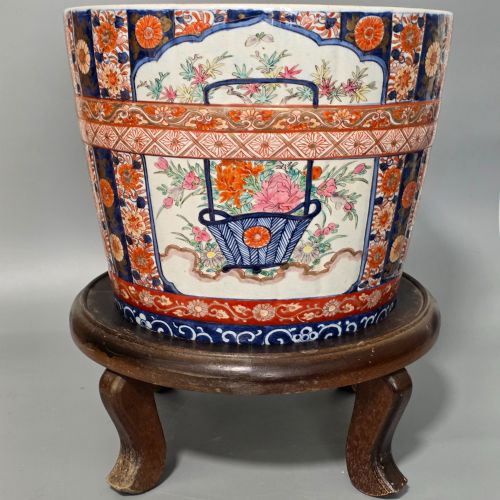


Antique Ceramic Jardiniere Stand
An antique ceramic jardiniere stand brings potted plants to eye level with sculptural form and rich glaze.
Antique Ceramic Jardiniere Stand
An antique ceramic jardiniere stand comprises a matched or associated vessel and pedestal designed to display indoor foliage. Buyers seek these pieces to elevate palms and ferns inside period rooms, combining functional support with decorative presence. The selection ranges from tall pottery columns to combined cache pots and stands.
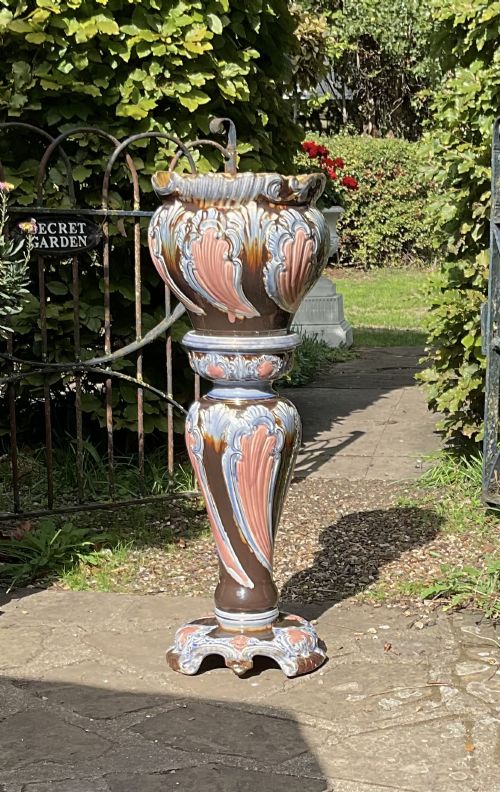
The most frequent form on this page pairs a moulded earthenware bowl with a matching pedestal base. Many examples date from the late nineteenth and early twentieth centuries, spanning Victorian, Art Nouveau and Arts & Crafts styles. Origin points include English potteries alongside Japanese and European manufacturers.
How they were made
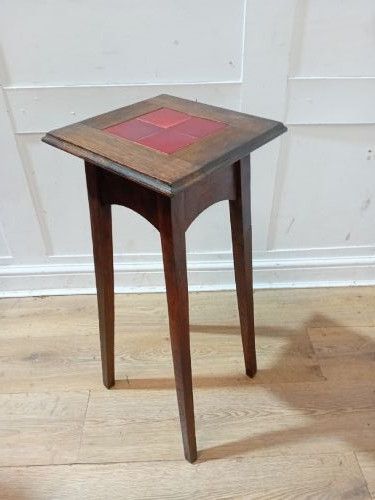
Potters shaped these vessels from earthenware or porcelain using press-moulding and throwing techniques. Makers applied coloured glazes, majolica enamels or lustre finishes before firing the ceramic bodies in kilns. Some stands incorporate turned hardwood or oak elements to support the heavy pottery bowls.
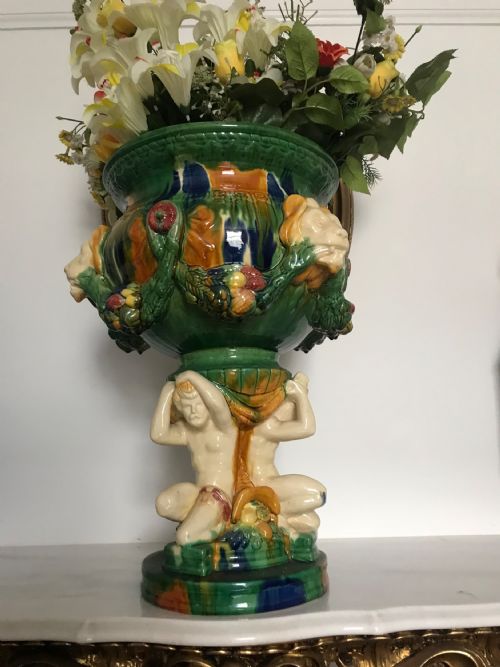
Figural details and naturalistic motifs, such as lions' heads or griffins, were hand-modelled or cast in sections before assembly. Glazing techniques varied from high-gloss majolica to iridescent lustre surfaces that catch the light from different angles.
Antique Ceramic Jardiniere Stand Retail Price Guide 2026
Typical asking prices for ceramic jardiniere stand among the pieces listed under this phrase on Sellingantiques today, from the lower quarter to the upper quarter. They describe what is for sale here now, not the wider market.
Watch for watchful griffins and stern lions guarding the base of your ferns.
What varies in quality
Quality rests on the crispness of the moulded detail and the depth of the glaze. Finer pieces display sharply defined botanical or figural ornaments with rich, even colour saturation across both bowl and pedestal. Weaker examples show blurred surface relief and uneven glaze pooling.
The integrity of the pairing dictates the standing of the piece. Sets where the jardiniere and stand share factory origins and matched glaze finishes outrank composite arrangements where bowls and pedestals were united later. Substantial weight and balanced proportions mark the superior examples.
Burmantofts Art Pottery·Enoch Wood and Sons·Clement Massier·Minton·Julius Dressler·Woodlesford Art Pottery·Royal Worcester
The Antique Ceramic Jardiniere Stand Glossary
- Jardiniere
- A large ornamental pot or bowl used for holding flowers or growing plants indoors. They often sit upon dedicated floor-standing pedestals.
- Majolica
- A type of earthenware coated with an opaque tin-glaze and painted with metallic oxide colours. It produces vibrant greens, blues and purples.
- Cache pot
- An ornamental flower pot used without drainage holes to cover a plain inner pot. They frequently accompany matching plant stands.
- Lustre glaze
- A ceramic finish containing metallic elements that create an iridescent sheen. Clement Massier utilised this technique on earthenware.
- Pedestal
- A tall support column designed to raise a jardiniere above floor level. They are carved from wood or moulded in ceramic.
Antique Ceramic Jardiniere Stand: Frequently Asked Questions
How do I style a jardiniere stand at home?
Place a tall ceramic pedestal and bowl in an empty corner or beside a window to showcase trailing ferns or large palms. The vertical height draws the eye upward and breaks up flat expanses of wall.
Ensure the plant sits in a waterproof inner liner to protect the historic glazed interior from moisture damage and mineral deposits over time.
Are the bowls and stands usually sold together?
Many listings present the jardiniere and its pedestal as a unified set created by the same pottery. These matched combinations display consistent glaze colours and harmonious decorative motifs.
Other examples consist of associated pieces, where a ceramic bowl and a hardwood or ceramic stand from different origins were paired together later in their history.
What is majolica and how do I identify it?
Majolica is a heavily glazed earthenware developed during the nineteenth century, known for vivid coloured lead glazes over moulded relief decoration. Pieces often feature naturalistic leaf, animal or classical motifs.
The surface exhibits a high gloss finish with rich pools of colour in the recesses of the moulding, commonly seen in Victorian and continental European pieces.
How do I date an antique plant stand?
Dating relies on stylistic markers such as the flowing organic lines of Art Nouveau or the robust forms of the Arts and Crafts movement. Maker marks, registry numbers stamped into the clay, and glaze types also help narrow down the period.
Late nineteenth and early twentieth-century pieces dominate this category, though Regency and earlier nineteenth-century examples appear through classical revival designs and wooden frames.