


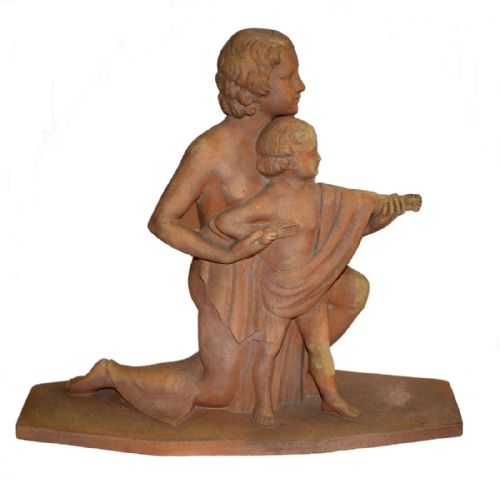
Antique Ceramic Figural Group
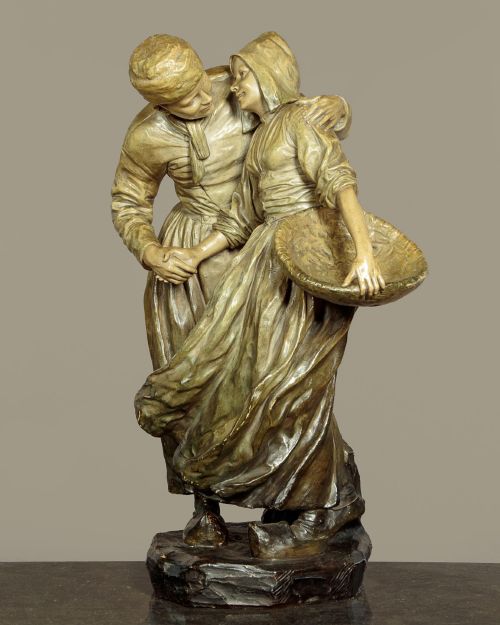
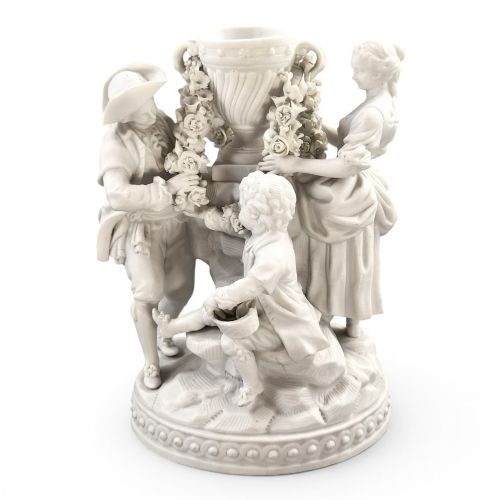
These antique ceramic figural group pieces capture multi-figure narratives in porcelain and terracotta, bringing character and finely modelled detail to any mantelpiece.
Antique Ceramic Figural Group
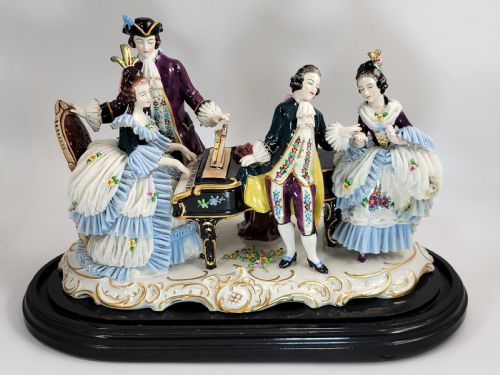
An antique ceramic figural group brings together two or more modelled figures within a single sculptural composition, often depicting allegorical subjects, musicians, or domestic scenes. The selection here spans delicate biscuit porcelain from factories like Meissen and Derby alongside robust terracotta and earthenware creations.
The most common examples encountered on this page date from the nineteenth century, including Victorian continental works and French porcelain groups. These pieces range from large centrepieces featuring elaborate floral bocage to smaller cabinet figures depicting children and fortune-tellers.
Makers ranged from major European porcelain manufactories to individual sculptors working in terracotta and bisque. Buyers often select these groups for their intricate modelling and the way they encapsulate the decorative tastes of the Georgian, Victorian, and Art Deco periods.
Materials and methods of manufacture
Makers utilised a variety of ceramic bodies including hard-paste porcelain, soft biscuit porcelain, earthenware, and terracotta to form these multi-figure compositions. Complex groups required multipart moulds where individual arms, heads, and accessories were cast separately before being assembled by hand prior to firing.
Glazed surfaces were painted by hand using mineral enamels, occasionally accented with gold leaf, while unglazed bisque and terracotta relied entirely on the crispness of the initial modelling. Delicate additions such as applied lace porcelain required textile elements to be dipped in slip and fired until the fabric burnt away, leaving fragile ceramic drapery.
The listings here include works from the eighteenth, nineteenth, and early twentieth centuries, featuring materials from unglazed terracotta to gilded porcelain.
What separates the finest examples
The retention of fragile applied elements like floral garlands, delicate lace work, and bocage backgrounds strongly influences the standing of a piece. Finer examples maintain their original polychrome enamel colours and gilding intact, showing minimal restoration to extremities.
Goldscheider·Ernst Bohne Söhne·Meissen·Eugene Clauss·Vion et Baury·Royal Dux Bohemia·Copeland·B Rezl
The Antique Ceramic Figural Group Glossary
- Biscuit porcelain
- Unglazed porcelain fired once to produce a matte, white surface resembling marble. This finish was favoured for its ability to highlight subtle modelling details.
- Bocage
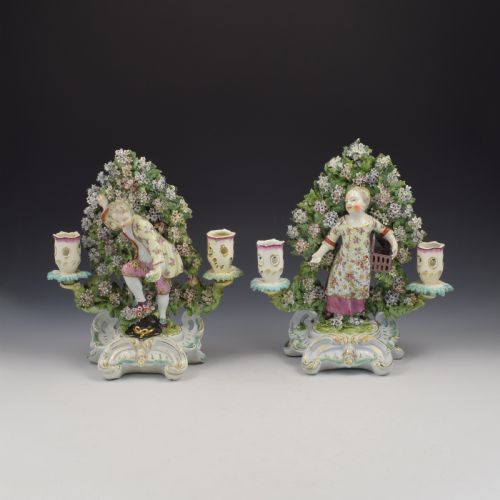
- An applied background of carved or moulded foliage and leaves surrounding a figural scene. This decorative element is frequently found on eighteenth-century porcelain candlesticks.
- Hard-paste porcelain
- A durable ceramic composition fired at very high temperatures using kaolin and petuntse. It produces a dense, bright white body impervious to liquids.
- Terracotta
- Fired brownish-red clay used unglazed or painted with pigment for sculptural works. It allows for bold, expressive modelling in large-scale figural groups.
- Enamel
- Coloured vitreous paint applied over or under the glaze and fired to fuse with the ceramic surface. These pigments provide the rich palette seen on nineteenth-century figures.
Antique Ceramic Figural Group: Frequently Asked Questions
Where were these ceramic groups displayed?
Owners typically placed larger figural groups on mantelpieces, sideboards, or as centrepiece bowls on dining tables where guests could admire the detailed narratives.
Smaller pairs of candlestick figures and single groupings were often arranged on parlor brackets or within glass-fronted display cabinets.
How do I identify eighteenth century pieces?
Early pieces often feature hand-modelled bocage backgrounds, deep underglaze factory marks, and softer, more translucent paste bodies.
The sculptural style tends to reflect Rococo or Georgian aesthetics, focusing on pastoral or allegorical subjects.
What is the difference between bisque and porcelain?
Porcelain is fired at high temperatures and finished with a glossy vitreous glaze, giving it a smooth and reflective surface.
Bisque porcelain is left unglazed after firing, offering a matte texture that resembles carved marble and shows fine shadow detail.