


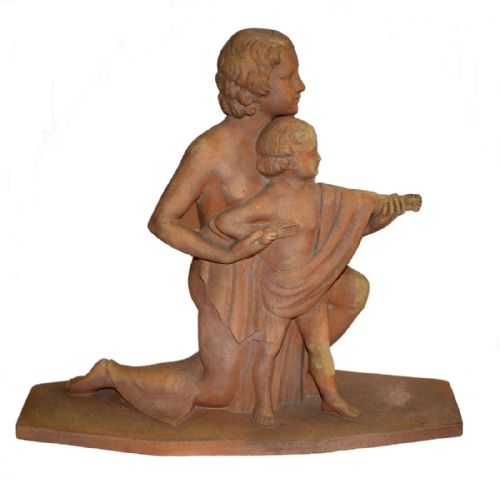
Bisque Porcelain Group Figure
Bisque porcelain group figures are unglazed ceramic sculptures capturing multiple figures in narrative scenes that bring classic decorative charm to a room.
Bisque Porcelain Group Figure
A bisque porcelain group figure presents multiple subjects modelled together in unglazed ceramic, offering a matte finish that highlights every sculptural detail. These pieces range from early Georgian mythological groups to late nineteenth-century Victorian compositions and twentieth-century Art Deco interpretations.
The selections available here showcase diverse origins including French French Rococo Revival works, English Parian ware, and Bohemian manufactures. Collectors encounter subjects varying from classical allegories and literary scenes to domestic moments involving parents and children.
Makers utilise this unglazed medium to mimic marble, giving the figurative groupings a smooth, stone-like texture. Such pieces serve as striking centrepieces for mantelpieces and display cabinets alike.
How they were made
Makers form these pieces by firing porcelain clay without a final glaze, producing a matte biscuit surface that accepts fine modelling and delicate hand-finishing. Some workshops incorporate enamel highlights or partial glazing to accentuate specific garments or decorative elements within the group.
Parian porcelain and Parian ware employ a specific low-fusion frit mixed with feldspar, creating a dense, self-glazing body that resembles carved marble when cooled. Artisans cast these complex multi-figure compositions in multiple mould sections before assembling and firing them at high temperatures.
Fishermen on boats and fortune-tellers share shelf space here with ancient Greek deities, proving that nineteenth-century kiln workers possessed wonderfully eclectic imaginations.
What varies in quality
The complexity of the composition and the reputation of the founding pottery or individual sculptor also dictate the standing of a piece. Well-documented works by established factories or signed artists demonstrate superior spatial arrangement and anatomical balance.
Luca Madrassi·Triebner Ens And Co·Copeland·Vion Et Baury·Royal Dux Bohemia·B Rezl
The Bisque Porcelain Group Figure Glossary
- Bisque porcelain
- Unglazed ceramic ware that has undergone a single firing to achieve a porous, matte finish resembling marble. This surface allows intricate details of the figures to remain crisp and unmasked by shiny glazes.
- Parian ware
- A fine-grained British porcelain developed in the nineteenth century specifically to imitate carved white marble. It possesses a slightly vitrified texture that catches the light gently across sculptural surfaces.
- Neo-Rococo
- A nineteenth-century revival style drawing on eighteenth-century French motifs, characterised by asymmetrical curves, elaborate scrolls, and romantic figural groupings. Pieces in this style often display dynamic movement and theatrical gestures.
- Neoclassical
- An artistic movement inspired by the classical art and culture of ancient Greece and Rome, favouring symmetry, heroic subjects, and dignified poses. Figures from this tradition frequently depict mythological narratives like the Three Graces.
Bisque Porcelain Group Figure: Frequently Asked Questions
Are all white porcelain figures made of Parian?
Not all white unglazed pieces are Parian; standard biscuit porcelain differs in chemical composition and firing temperature from true Parian ware.
Parian contains a higher proportion of feldspar, giving it a heavier weight and a subtle sheen compared to traditional matte bisque.
How can I identify the age of a figure group?
Examine the base for factory impressed marks, artist signatures, or registration numbers that correspond to nineteenth and twentieth-century ceramic registries.
The style of the drapery, hair, and subject matter also provide strong clues to whether a piece originates from the Georgian era or the Art Deco period.
Where should I display these delicate sculptures?
Place group figures in enclosed cabinets or stable mantel locations away from heavy foot traffic to protect projecting limbs and fingers from accidental knocks.
Keep them out of direct sunlight to preserve any subtle enamel highlights and prevent dust accumulation on the textured matte surfaces.