





Antique Ceramic Espresso Cup
An antique ceramic espresso cup brings cabinet elegance and diminutive form to your table, offering a direct link to early morning rituals of the Georgian, Victorian, and Art Deco eras.
Antique Ceramic Espresso Cup
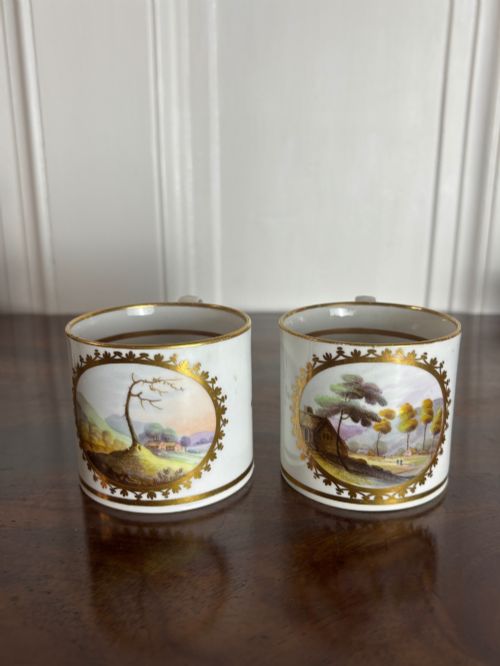
When you search for an antique ceramic espresso cup, you encounter small porcelain drinking vessels and matching saucers spanning the Georgian period, the nineteenth century, and the early decades of the twentieth century. These include individual coffee cans, demitasse cups, and complete sets housed in fitted cases.
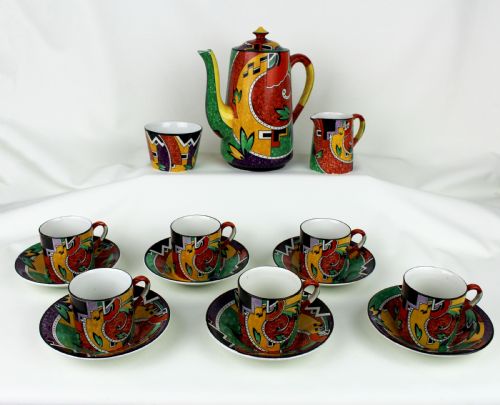
The versions you meet most frequently on this page belong to the nineteen-twenties and nineteen-thirties, often styled in the geometric spirit of Art Deco or bearing delicate hand-painted motifs. Alongside these sit earlier English porcelain coffee cans and continental demitasse services.
Formations range from single cabinet display pieces to cased sets complete with silver mounts and spoons. Each object reflects the changing social habits of coffee consumption across successive design movements.
How they were made
Makers shaped these cups from fine porcelain before applying hand-painted designs, enamel work, and rich gilding. Many examples incorporate precious highlights in gold leaf that catch the light along the rim and handle.
Some nineteenth-century and twentieth-century pieces integrate metalwork directly into the ceramic body, featuring sterling silver mounts. Cased presentation sets pair the porcelain with satin and leatherette linings inside fitted boxes.
Listings feature porcelain pieces spanning the Georgian period, the nineteenth century, and twentieth-century movements including Art Deco.
What varies in quality
The distinction between ordinary production and finer work rests on the precision of the hand-painting and the delicacy of the porcelain body. Hand-painted landscape scenes and intricate enamel patterns separate artisan output from standard factory output.
Completeness and presentation elevate certain pieces, particularly matched sets that retain their original sterling silver mountings, spoons, and fitted presentation cases lined in satin and leatherette.
Flight And Barr Worcester·Royal Worcester·Hutschenreuther·KPM
The Antique Ceramic Espresso Cup Glossary
- Coffee can
- A straight-sided cylindrical porcelain cup used for serving strong coffee during the Georgian and nineteenth-century periods. It differs from the flared shape of a traditional teacup.
- Demitasse
- A small cup used to serve espresso or Turkish coffee, literally translating to half-cup in French. These frequently appear paired with matching saucers in twentieth-century sets.
- Porcelain
- A white, vitrified ceramic material fired at high temperatures to achieve a dense, translucent body. It serves as the primary medium for fine antique coffee wares.
- Gilding
- The application of gold leaf or gold paint to the surface of the ceramic for decorative enrichment. It commonly accentuates handles, rims, and painted borders.
- Sterling silver mount
- A fitted collar or base made of high-purity silver attached to the ceramic vessel. This technique combines metalwork with porcelain in luxury table services.
Antique Ceramic Espresso Cup: Frequently Asked Questions
What is a demitasse cup?
A demitasse is a small ceramic vessel designed specifically for holding concentrated coffee such as espresso. These cups hold significantly less liquid than standard teacups.
They appear frequently in nineteenth-century and twentieth-century porcelain services, often accompanied by matching saucers and silver spoons.
How do coffee cans differ from teacups?
Coffee cans feature straight, vertical sides rather than the curved, flared walls typical of tea bowls and teacups from the same eras. This cylindrical shape helped retain the heat of early roasted brews.
Potters during the Georgian period favoured this distinct geometry for porcelain drinking vessels intended for coffee.
Can I use these cups for daily espresso?
While these antique porcelain pieces remain fully functional, their delicate painted surfaces, gold leaf trim, and silver mounts require careful hand washing. Many collectors prefer to display them in cabinets or reserve them for special occasions.
Consider the presence of delicate enamel work and age-related wear when deciding whether to use them for everyday dining.
What periods do these coffee sets represent?
The available pieces span several distinct eras, beginning with Georgian and Regency porcelain from around eighteen hundred. You will also find nineteenth-century examples alongside significant numbers from the nineteen-twenties and nineteen-thirties.
Twentieth-century sets often embrace Art Deco aesthetics, while earlier pieces showcase traditional landscape paintings and neoclassical motifs.
What are cased coffee sets?
Cased sets are matched collections of cups and saucers housed within custom-fitted boxes lined with satin and leatherette. These presentation boxes frequently incorporate sterling silver spoons.
Such sets were designed as luxury gifts or high-end dining accessories during the Edwardian era and the nineteen-twenties.