



Antique English Coffee Cans
Antique English coffee cans are small, handleless cylindrical vessels designed for early morning caffeine, offering a direct tactile link to Georgian and Regency breakfast habits.
Antique English Coffee Cans
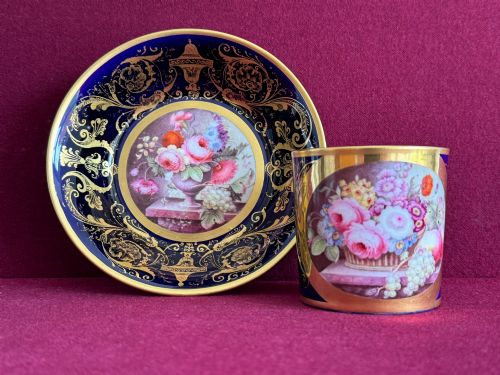
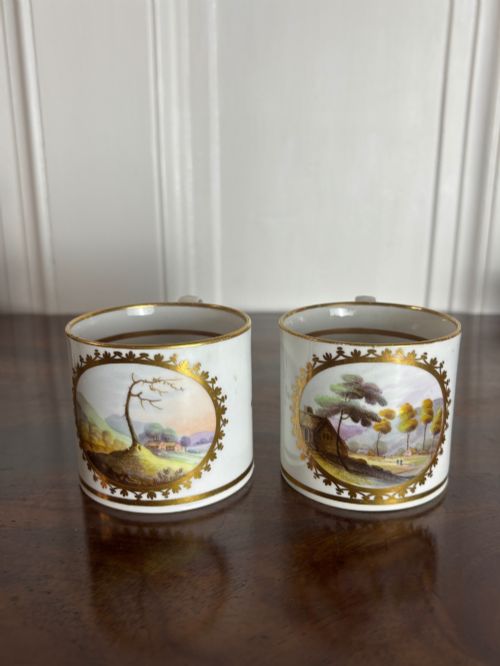
When you search for antique English coffee cans, you encounter straight-sided, handleless porcelain vessels designed specifically for serving strong coffee during the Georgian and Regency periods. The forms range from strict cylindrical shapes of the late eighteenth century to slightly later Regency variations with matching saucers and delicate gilded trim.
The pieces listed on this page span several centuries, including eighteenth-century productions from Worcester and New Hall alongside nineteenth-century examples and twentieth-century sets. Most items appear alongside their original saucers as part of a cup and saucer set or cabinet trio rather than standing entirely alone.
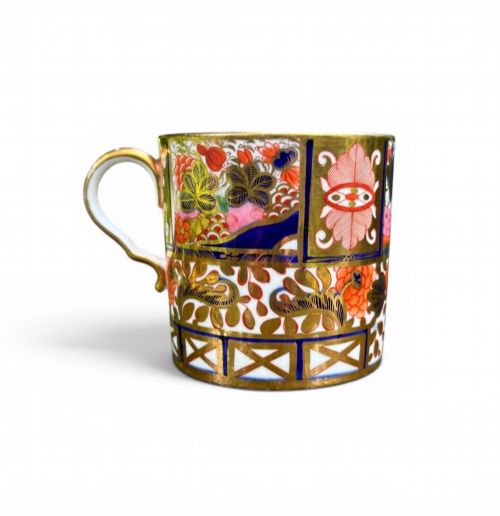
Makers represented in this inventory include New Hall, Flight & Barr Worcester, First Period Worcester, Minton, Spode, and Royal Worcester. The stylistic range covers hand-painted landscape scenes, Chinese figures, Imari patterns, and later twentieth-century demitasse forms.
How they were made
Potters utilised soft-paste porcelain and bone china as the primary bodies for these vessels, shaping them on wheels or moulding them in specialised factories. Painters then applied enamel colours by hand, often incorporating gold leaf and rich gilding to highlight the rims and handles of the saucers.
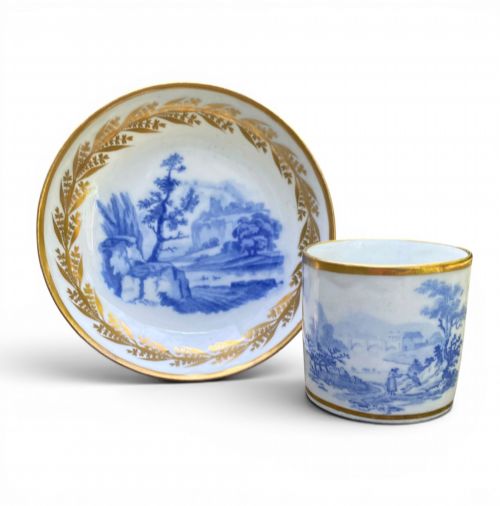
Decoration relied heavily on underglaze blue painting, transfer printing, and meticulous overglaze enamel work by named artists such as Thomas Steel. Firing took place in traditional kilns where decorators fixed intricate motifs like the Dragon in Compartments pattern or hand-painted landscape scenes onto the porcelain surface.
Listings feature porcelain pieces spanning the eighteenth century through the Regency period, Edwardian era, and mid-twentieth century.
What varies in quality
The standard of painting distinguishes standard factory output from exceptional cabinet pieces, particularly where artists executed detailed landscape scenes or delicate Chinese figures by hand. Crispness in the transfer printing and precision in the application of gold leaf dictate the visual weight and refinement of the finished item.
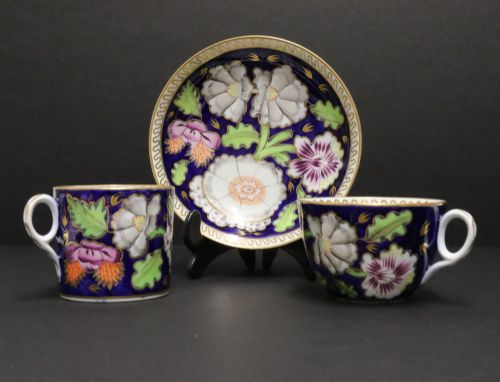
The integrity of the porcelain body and the survival of the original matching saucer alter the desirability of a piece within the broader market. Early soft-paste bodies and vibrant enamel palettes such as Imari or wet blue retain greater artistic interest compared to later mass-produced sets.
New Hall·Flight & Barr·Minton·Spode·Royal Worcester
The Antique English Coffee Cans Glossary
- Coffee can
- A straight-sided, handleless drinking vessel produced primarily during the late eighteenth and early nineteenth centuries. It was held by the base or rim while containing strong black coffee.
- Soft-paste porcelain
- A ceramic composition made from white clay mixed with ground glass and other materials, fired at lower temperatures than hard-paste porcelain. It creates a warm, slightly creamy body characteristic of early English factories.
- Imari
- A decorative style inspired by Japanese export wares, characterised by a palette of underglaze blue, iron red, and abundant gilding. English factories adopted this scheme extensively around eighteen hundred.
- Demitasse
- A small cup used for serving espresso or strong coffee, appearing frequently in twentieth-century production alongside traditional saucers.
- Cabinet trio
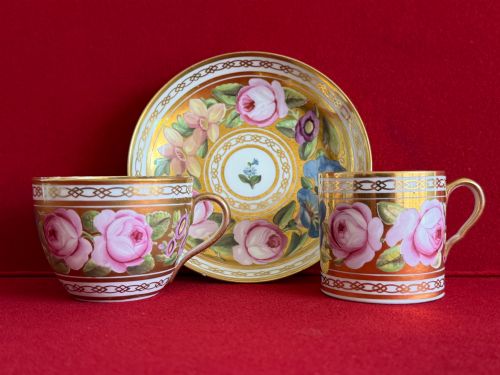
- A matched set comprising a coffee can, a teacup, and a saucer intended for display within a porcelain cabinet rather than everyday use.
Antique English Coffee Cans: Frequently Asked Questions
What is a coffee can?
A coffee can is a small, cylindrical, handleless cup designed specifically for drinking coffee in the eighteenth and nineteenth centuries.
Unlike standard teacups which featured handles, these vessels required the drinker to hold the porcelain directly, often utilising the saucer to manage the heat.
Why do they not have handles?
Early porcelain makers omitted handles on coffee cans to mirror Chinese export porcelain and fashionable continental drinking vessels of the period.
The straight-sided shape helped retain the heat of strong coffee while fitting neatly into the matching saucer.
How do I date a coffee can?
Dating relies on identifying factory marks, paste compositions, and stylistic indicators such as Regency shapes or eighteenth-century Chinese figure painting.
Soft-paste bodies and hand-painted enamel palettes generally point to the Georgian era, while later twentieth-century sets display different backstamps and manufacturing uniformity.
Can I use them for daily coffee?
Antique coffee cans are delicate ceramic objects composed of historic porcelain and soft-paste bodies that require careful handling.
Most collectors prefer to display them in cabinets or use them strictly for occasional decorative purposes rather than everyday dining.
What is a cabinet trio?
A cabinet trio consists of a matching coffee can, teacup, and saucer produced as a unified decorative set by factories like New Hall.
These sets were created for display in domestic drawing rooms to showcase the owner's taste and the manufacturer's painting skill.