






Antique Ceramic Cake Plates
Antique ceramic cake plates bring hand-painted fruits, transfer-printed castles, and gilt-edged porcelain directly to the table.
Antique Ceramic Cake Plates
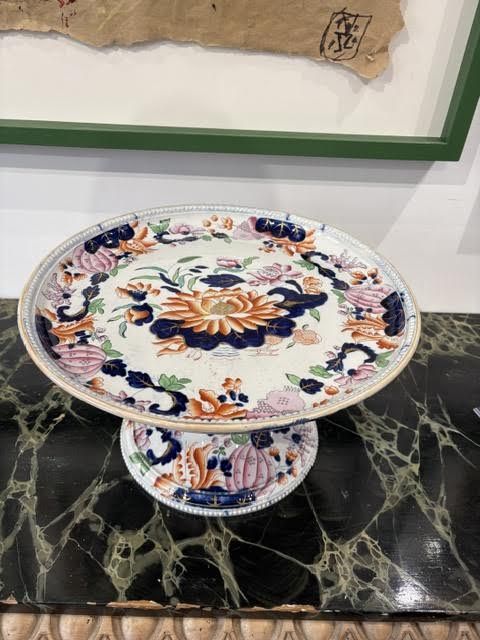
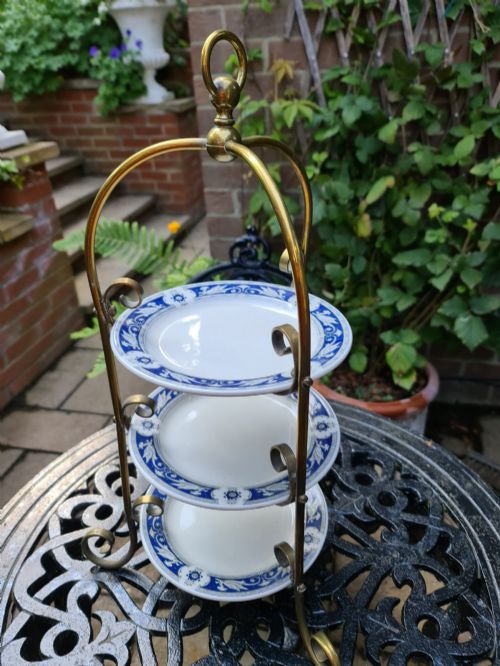
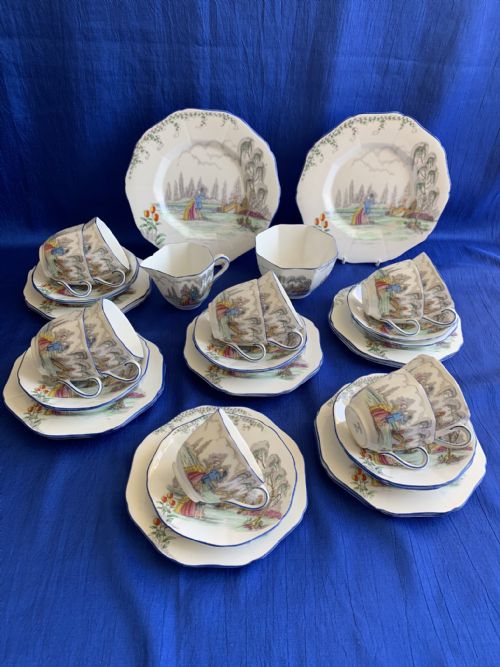
Antique ceramic cake plates encompass footed comports, tazzas, sandwich plates, and larger dessert services dating from the Regency period through to the 1930s. Buyers searching for antique ceramic cake plates will encounter everything from single display tazzas to multipart sets meant for serving pastries and fruit.
The items span Victorian, Edwardian, and Art Deco styles, showing influences from Rococo Revival and Victorian Imari alongside crisp English Regency forms. Many examples function as part of larger tea or dessert services, or survive as standalone serving dishes and cake stands.
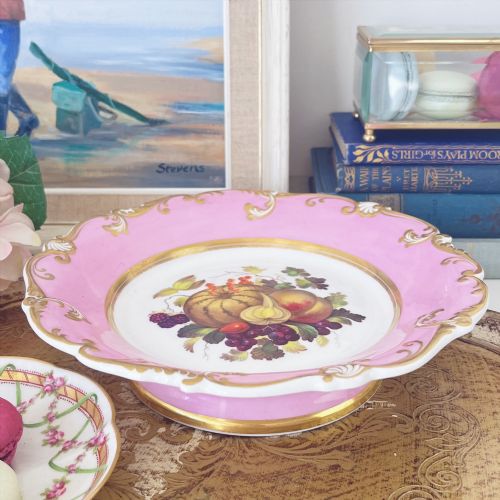
Makers represented in this tradition range from established Staffordshire potteries to early nineteenth-century porcelain works. The forms vary from straightforward blue and white transfer pottery to elaborate pink ground comports with hand-painted details.
How they were made
Potters shaped these pieces using earthenware, bone china, stone china, and fine porcelain, applying smooth glazes to seal the ceramic body. Many items received rich decoration through hand-painted floral motifs, transfer-printed patterns, and delicate enamel work.
Makers applied gold leaf and gilt highlights by hand to rims, handles, and footed bases to catch the light during formal tea and dessert services. Firing techniques of the nineteenth and early twentieth centuries left distinct marks on the undersides, including date ciphers and pattern numbers.
Antique Ceramic Cake Plates Retail Price Guide 2026
Typical asking prices for ceramic cake plates among the pieces listed under this phrase on Sellingantiques today, from the lower quarter to the upper quarter. They describe what is for sale here now, not the wider market.
Periods represented span from Regency and Victorian eras through Edwardian designs into the Art Deco styles of the 1920s and 1930s.
What varies in quality
The quality of decoration distinguishes standard production ware from finer studio and factory output. Precision in hand-painted fruit panels, crispness of transfer-printed castle scenes, and the deliberate weight of the porcelain or stone china indicate the skill behind the piece.
Preservation of the original gold leaf and gilt embellishments alters the visual impact of an antique cake plate or comport. The clarity of the glaze and the structural integrity of footed tazzas reveal the care taken during the original firing processes.
H & R Daniel·Royal Crown Derby·John Ridgway·Spode·Doric China Longton Stafford·Royal Doulton·Wileman Foley Shelley·Davenport·Gladstone Potteries
The Antique Ceramic Cake Plates Glossary
- Comport
- A raised serving dish or pedestal bowl designed for fruit or small cakes at the end of a meal. They often match smaller dessert plates in a service.
- Tazza
- A shallow bowl or plate mounted on a central foot, used historically for serving sweets and confections. The form dates back centuries but appears frequently in nineteenth-century dessert services.
- Bone china
- A type of soft-paste porcelain containing animal bone ash, producing a durable ceramic body with high whiteness and translucency. It became a staple of British tablewares.
- Transfer pottery
- Earthenware or ironstone decorated by applying a printed design from an engraved copper plate onto tissue paper, then transferring the ink onto the ceramic body before glazing.
- Stone china
- A dense, durable ceramic body developed in the nineteenth century to bridge the gap between heavy earthenware and delicate porcelain.
- Gilt
- A thin layer of gold applied to the ceramic surface, typically along rims and handles, to add decorative contrast.
Antique Ceramic Cake Plates: Frequently Asked Questions
What is a tazza?
A tazza is a shallow decorative plate raised on a central pedestal foot. These pieces were historically used to serve fruit, sweetmeats, or small cakes during formal dining.
They often formed the centrepiece of a larger dessert service, accompanied by matching plates or smaller dishes.
How do I use them today?
These pieces suit everyday dining or special occasions when serving cakes, pastries, or afternoon tea. Sturdy sandwich plates and footed comports handle food safely provided they are washed by hand.
Standalone plates and tazzas also serve as decorative display items on sideboards or open shelving.
How do I date these items?
Dating relies on maker's marks, pattern numbers, and registration ciphers stamped or painted on the underside. Stylistic cues such as Regency shapes or Art Deco geometries also point to specific decades.
Changes in ceramic bodies, from heavy earthenware to fine bone china, help narrow down the period of manufacture.
Are part sets usable?
Part sets, such as remaining sandwich plates or partial dessert services, function well for entertaining small groups. Mixing individual plates with other antique tablewares creates an eclectic table setting.
Many collectors gather mismatched pieces from similar periods to build a usable collection over time.