

Antique Centre Desk
An antique centre desk provides a commanding freestanding surface, drawing the eye from any angle in a room.
Antique Centre Desk
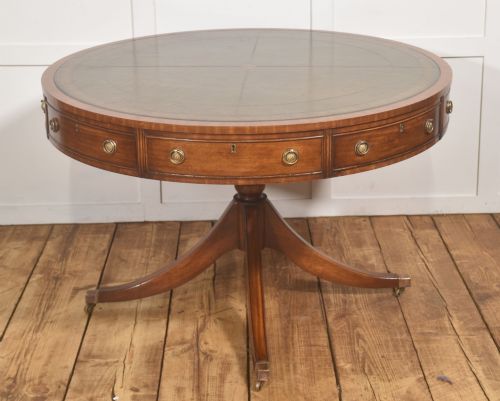
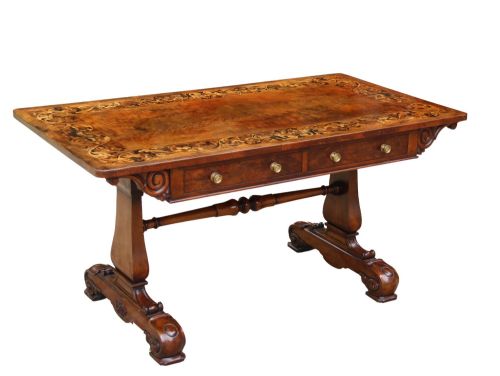
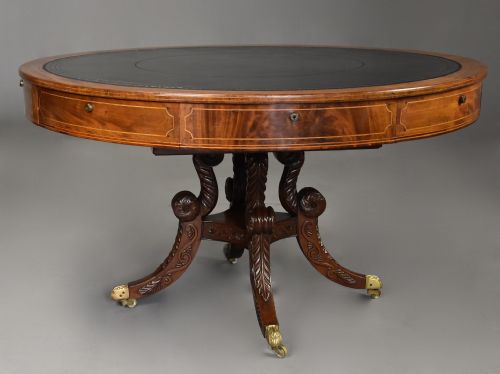
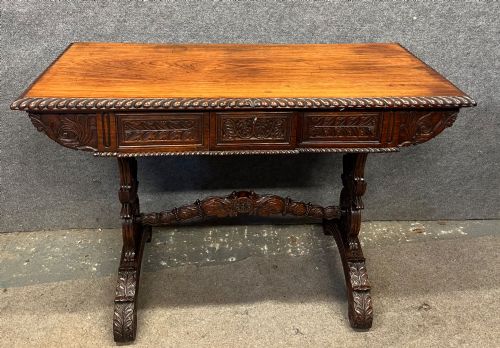
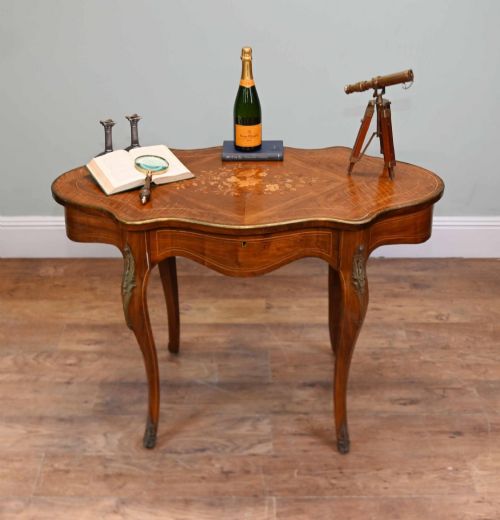
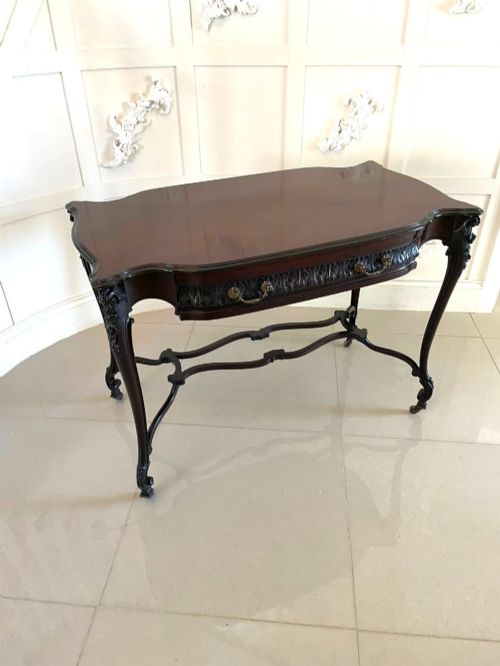
An antique centre desk combines the practical writing surface of a library table with the finished back and sides required for placement in the middle of a room. Buyers searching this term encounter substantial freestanding tables designed to sit away from walls, often featuring leather inset tops, drawers, and decorative timber work visible from all four sides.
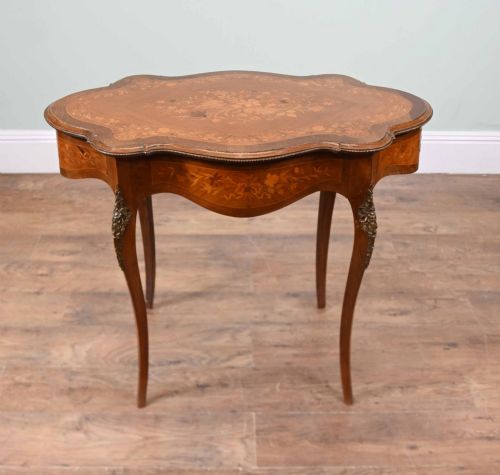
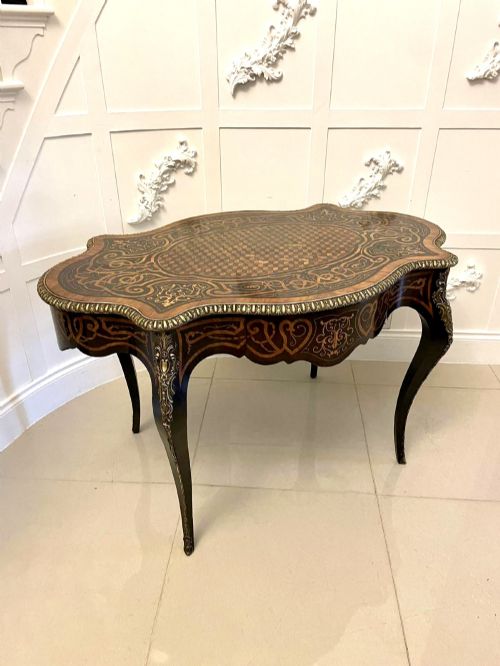
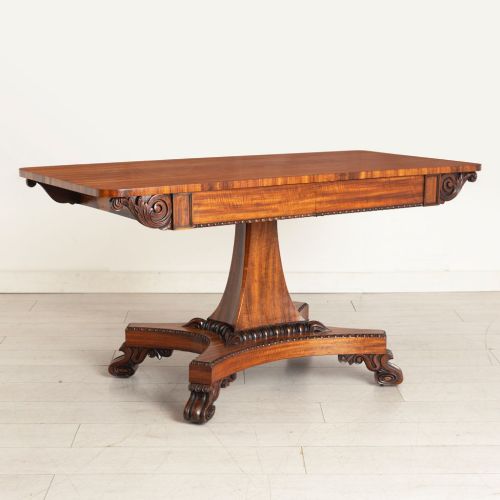
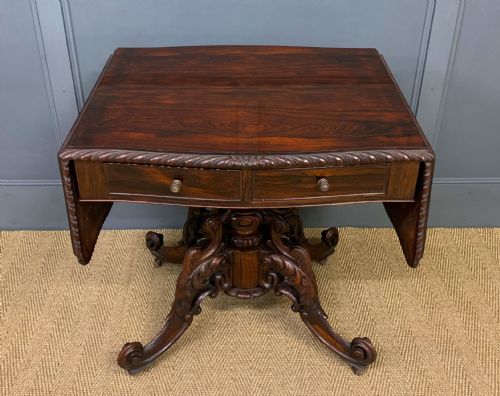
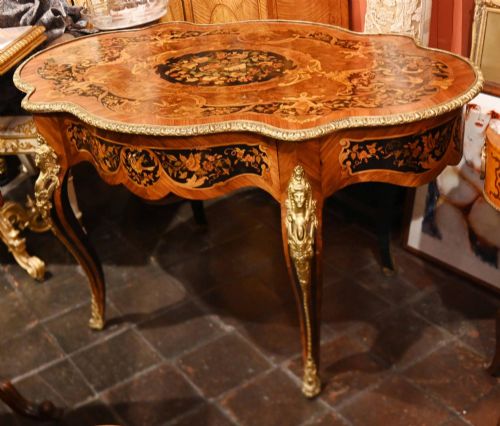
The pieces appearing on this page span the Georgian, Regency, William IV, and Victorian periods, alongside continental European and revival styles. Mahogany, walnut, and rosewood dominate the selection, frequently paired with marquetry, parquetry, or brass mountings.
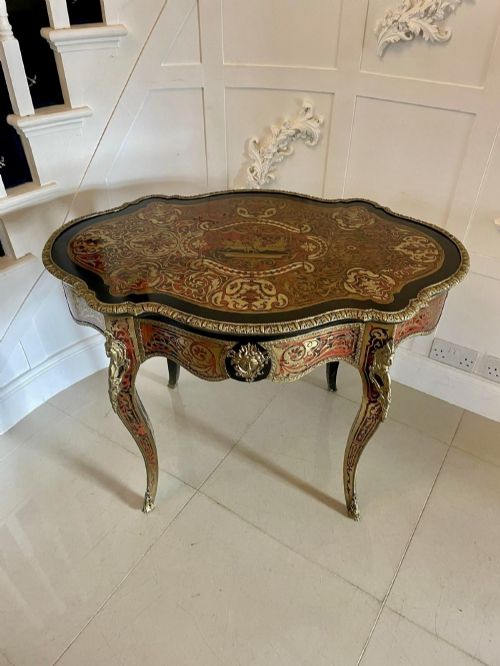
Library tables, drum tables, and writing tables form the core of these offerings, reflecting the varied terminology used historically for furniture designed for study and correspondence. Most examples hail from the nineteenth century, ranging from simple oak and birch constructions to elaborate French boulle and marquetry pieces.
Materials and construction methods
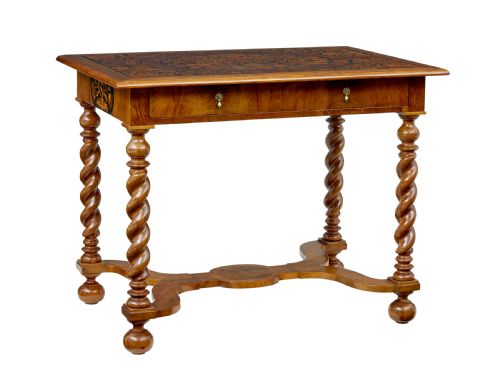
Cabinetmakers utilised dense hardwoods including mahogany, walnut, rosewood, and kingwood as solid foundations or as sliced veneers over stable secondary timbers. Exotic woods such as burr maple, padauk, and zebrawood supplied decorative grain patterns for prominent surfaces.
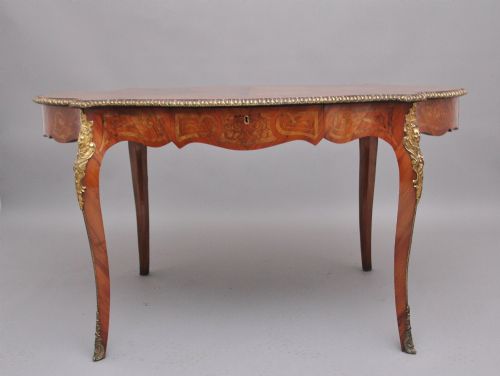
Inlay techniques defined high-end production, incorporating bone, mother-of-pearl, brass stringing, and elaborate floral marquetry in various contrasting timbers. Ormolu mounts and leather writing inserts completed pieces intended for formal libraries and drawing rooms.
Antique Centre Desk Retail Price Guide 2026
Typical asking prices for centre desk among the pieces listed under this phrase on Sellingantiques today, from the lower quarter to the upper quarter. They describe what is for sale here now, not the wider market.
Some tables incorporate hidden compartments designed for secret correspondence and private ledgers.
Distinctions in manufacture and finish
The calibre of a centre desk rests on the precision of its timber selection and the execution of its decorative details. Superior examples exhibit tightly matched veneer grains, crisp hand-carved mouldings, and intricate inlay work that remains flush with the surrounding wood.
Structural integrity relies on traditional joinery within the drawer linings and underframe, ensuring the piece remains stable when freestanding. The quality of secondary woods used in unseen areas often separates standard regional furniture from masterwork production.
Williams and Gibton·Edward’s And Robert’s·Mein of Kelso·Gillows
The Antique Centre Desk Glossary
- Marquetry
- Decorative patterns formed by fitting together thin veneers of different coloured woods, ivory, or shell onto a structural surface.
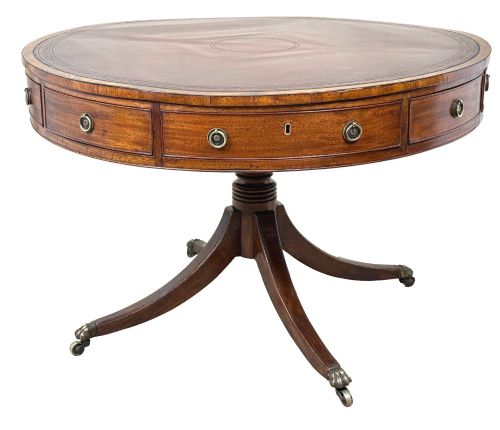
- Drum table
- A circular library table with a deep top containing numerous drawers, supported by a central pillar and tripod base.
- Ormolu
- Gilt bronze mounts applied to furniture for decorative enrichment, popular in French revival styles.
- Boulle
- A style of marquetry utilising tortoiseshell and brass inlay, named after the French cabinetmaker André-Charles Boulle.
- Parquetry
- Geometric wood mosaic work used for floors and tabletops, creating repeating patterns.
Antique Centre Desk: Frequently Asked Questions
What is an antique centre desk?
A centre desk is a freestanding piece of furniture finished on all sides, allowing it to sit away from walls in the middle of a room. It functions both as a decorative centrepiece and a practical writing surface.
These tables typically feature inset leather writing panels and multiple drawers beneath the top. Their finished backs distinguish them from standard writing desks that require wall placement.
How were library tables used?
Library tables served as central workspaces for reading, writing, and sorting correspondence in large homes and institutions. Their robust construction accommodated heavy ledgers and books.
Many examples include rotating tops or drum configurations with labelled drawers to organise documents. They occupied the middle of the library floor, providing access from all sides.
How do I identify a Victorian centre desk?
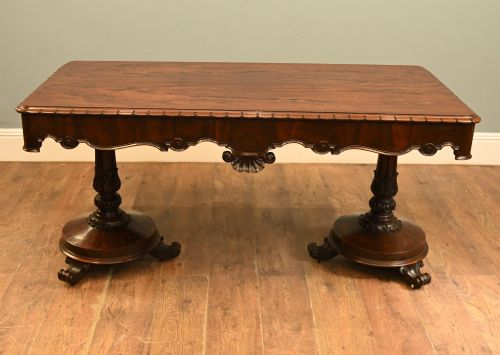
Victorian centre desks often feature dark timbers like walnut, rosewood, and mahogany, frequently enhanced with heavy carving, burr veneers, or ormolu mounts. Proportions tend to be generous and sturdy.
Stylistic influences from French revival and Elizabethan periods appear widely across this era. Leather tops with gold-tooled borders also characterise mid-nineteenth-century examples.
Can I place a centre desk in the middle of a room?
Centre desks are specifically engineered to stand away from walls because their rear panels receive the same decorative treatment as the front. This makes them ideal for dividing large living spaces.
Freestanding placement showcases the timber grain, inlay work, and finished cabinetry from every viewing angle. Ensure adequate clearance around the piece for chair movement and drawer access.