


Antique Cat Art
Antique cat art brings together centuries of painted felines, bronze panthers and illustrated prints for the collector who values character.
Antique Cat Art
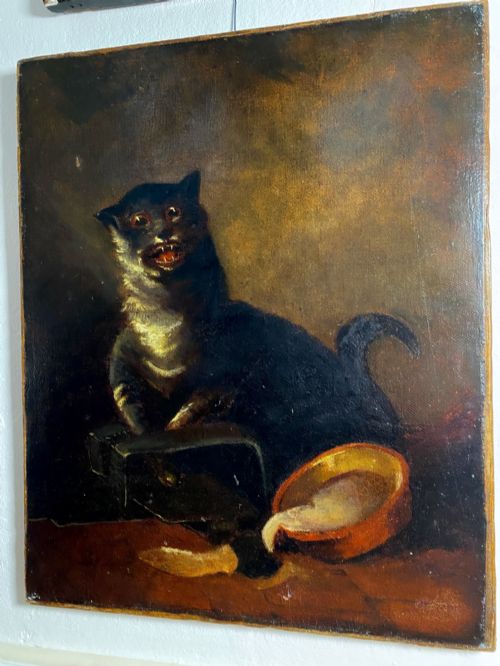
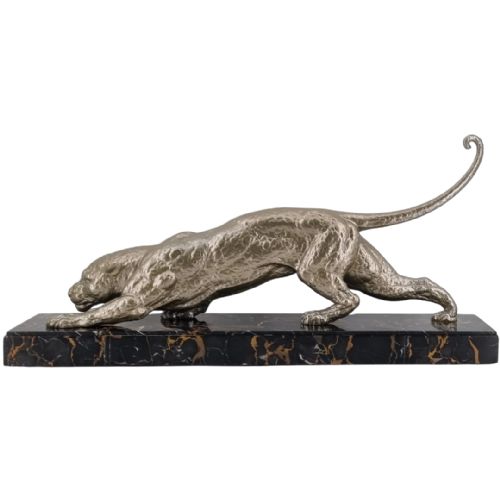
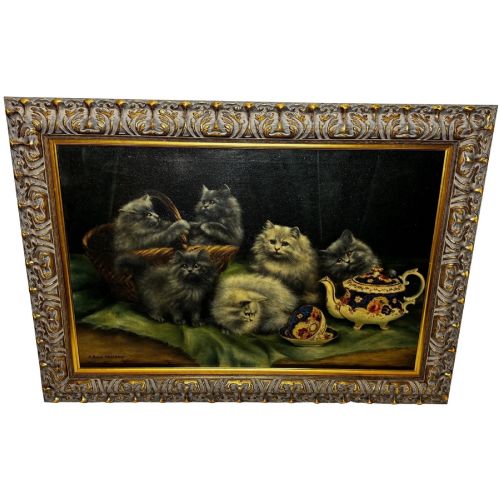
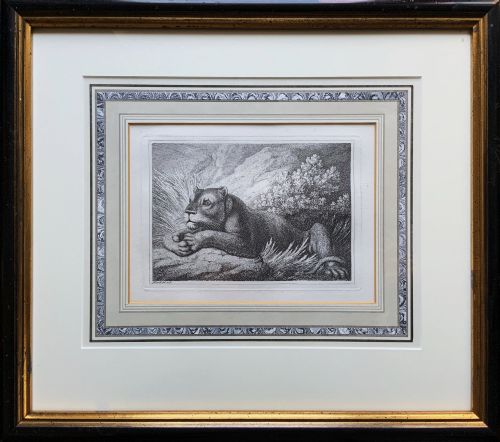
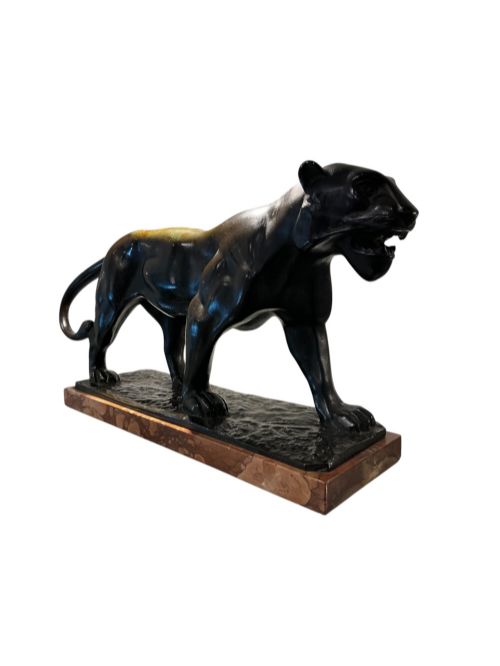
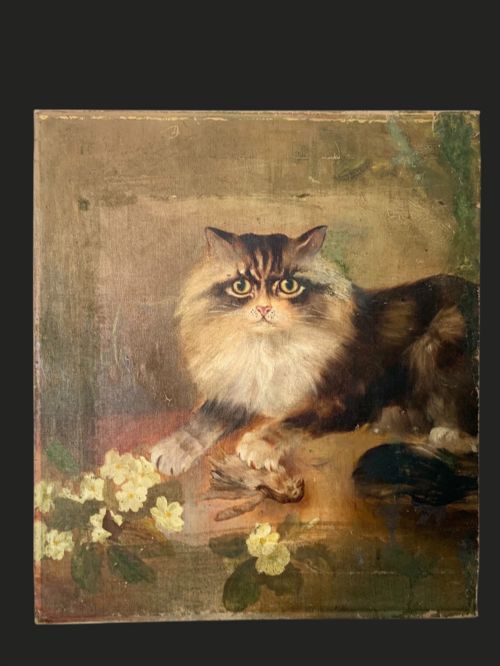
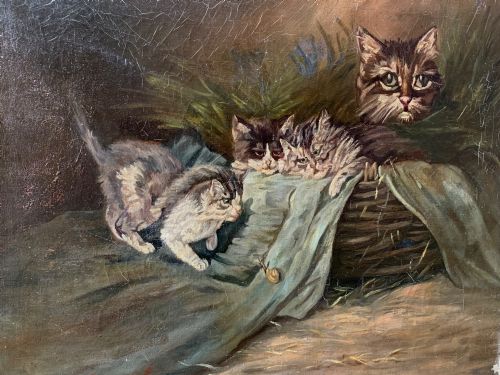
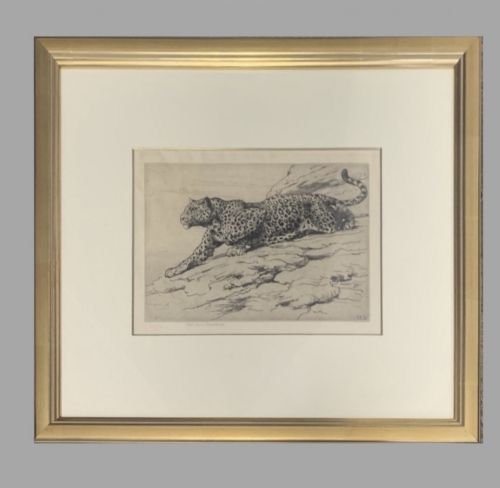
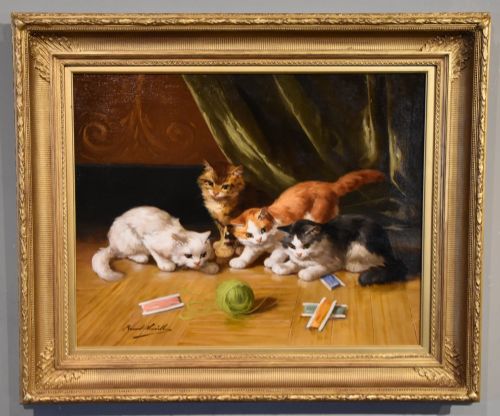
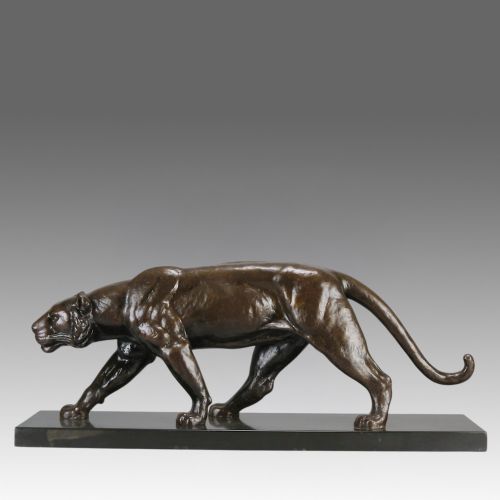
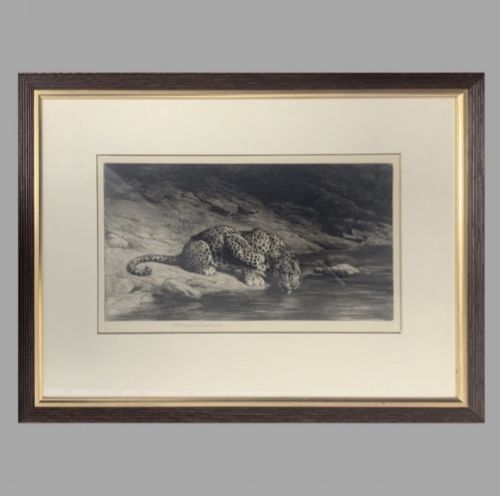
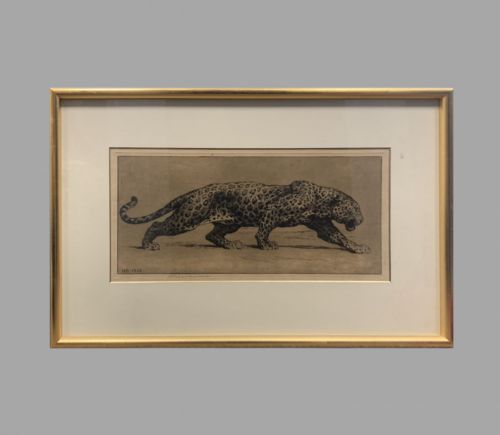
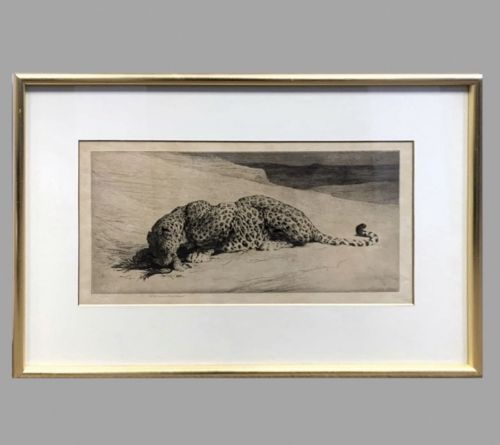
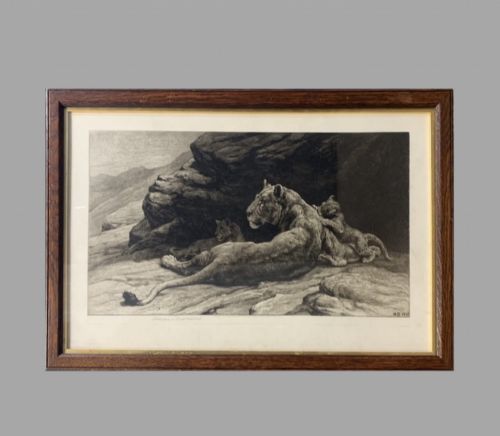
When searching for antique cat art, buyers encounter a diverse range of works spanning oil paintings, bronze sculptures, etchings and framed prints. Domestic kittens at play and seated Persians appear frequently alongside powerful big cats rendered in various media.
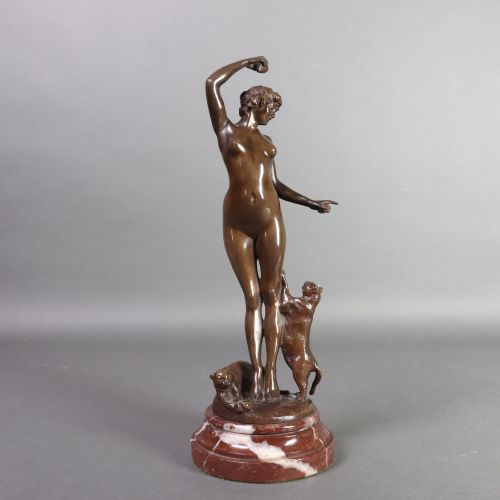
The selections bridge multiple eras, stretching from 19th-century naive school portraits and Victorian canvases to Art Deco sculptures mounted on marble bases. French and English schools dominate the recorded pieces, offering both naturalistic studies and stylized depictions.
Materials and production methods
Makers utilised traditional canvas, wood panel and vellum for paintings and etchings, applying rich oil pigments, ink and pencil to capture fine details in fur and expression. Etchings on paper often exist as signed limited edition artist proofs.
Three-dimensional representations draw on bronze, spelter, terracotta, alabaster and carved cherry amber, frequently paired with contrasting marble bases or glass eyes. Chromolithographs and reverse glass paintings demonstrate alternative popular reproductive and decorative techniques.
Antique Cat Art Retail Price Guide 2026
Typical asking prices for cat art among the pieces listed under this phrase on Sellingantiques today, from the lower quarter to the upper quarter. They describe what is for sale here now, not the wider market.
Recorded listings feature works on paper, canvas, glass, and carved wood alongside metal sculptures.
Factors influencing quality
Quality rests upon the artist's command of anatomy, texture and expression, distinguishing masterly brushwork or confident metal chasing from rigid commercial output. Subtle nuances in the rendering of a feline gaze or muscular tension elevate a piece.
The integrity of the materials, the clarity of the signature or proof mark, and the preservation of the surface patination or original framing further separate exceptional works from standard decorative examples.
Herbert Dicksee·Louis Wain·Horatio Henry Couldrey·Agnes Augusta Talboys·Alexandre Ouline
The Antique Cat Art Glossary
- Artist proof
- An impression of an etching taken to test the progress of the plate, highly valued because it is printed under the artist's direct supervision before a large edition is run.
- Chromolithography
- A planographic colour printing technique used to produce multi-coloured pictorial images without hand tinting, prominent in Victorian publication.
- Spelter
- An alloy of zinc and lead cast into decorative figures and patinated to resemble bronze, common in affordable Art Deco sculptures.
- Netsuke
- A small carved toggle traditionally used in Japan to secure small pouches, often fashioned from materials like cherry amber into detailed animal forms.
- Treen
- Small handmade wooden household objects and decorative items turned on a lathe, representing a distinct tradition of domestic craftsmanship.
Antique Cat Art: Frequently Asked Questions
How do I date an old cat painting?
Dating relies on the substrate, framing, pigment analysis and stylistic markers characteristic of specific periods like the Victorian era or the 1920s. Signatures and artist biographical records offer the most reliable chronological anchors.
Clothing styles in adjacent human figures, canvas stamps and dealer labels on the reverse also help narrow down the exact decade of creation.
What is the difference between an etching and a print?
An etching is an original print created by drawing through an acid-resistant ground on a metal plate, which is then bitten in acid and inked by hand. These often bear pencil signatures and limited edition numbers from the artist.
Standard framed prints or chromolithographs are mechanical reproductions of an original artwork intended for mass circulation rather than direct hand-pulling from a plate.
How were bronze sculptures made in the early 20th century?
Sculptures from this era were typically produced using the lost-wax casting method or sand casting, capturing intricate details of muscle and fur in molten metal. Artisans then applied chemical patinas to achieve deep bronze tones.
Cheaper alternatives utilised spelter with painted or patinated surfaces, mounted onto heavy marble or alabaster plinths for stability.
Where should I display antique feline art?
These works suit traditional studies, living rooms or galleries where adequate wall space or stable surface furniture allows them to be viewed closely. Paintings and etchings require protection from direct sunlight to prevent fading on paper and canvas.
Bronze and terracotta figures need secure placement on level surfaces away from heavy foot traffic to avoid accidental knocks.