
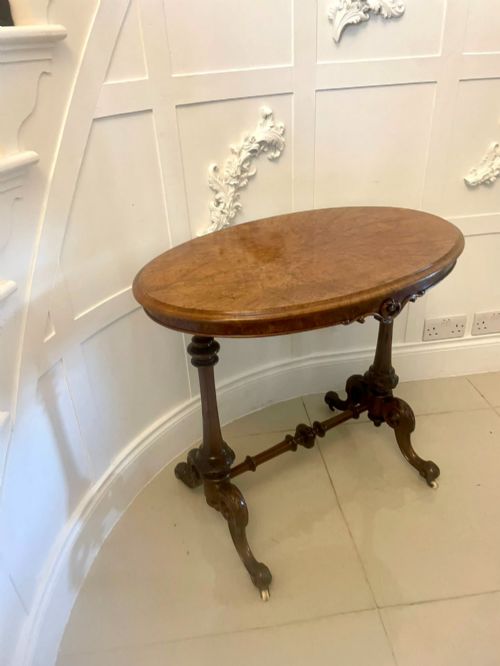
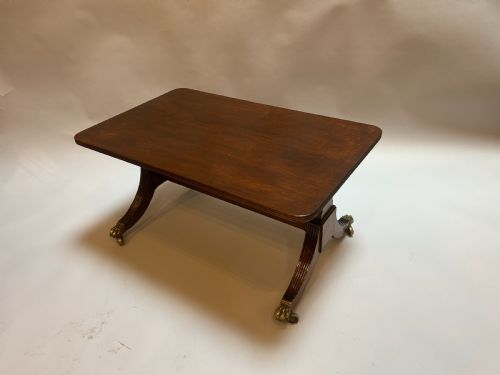
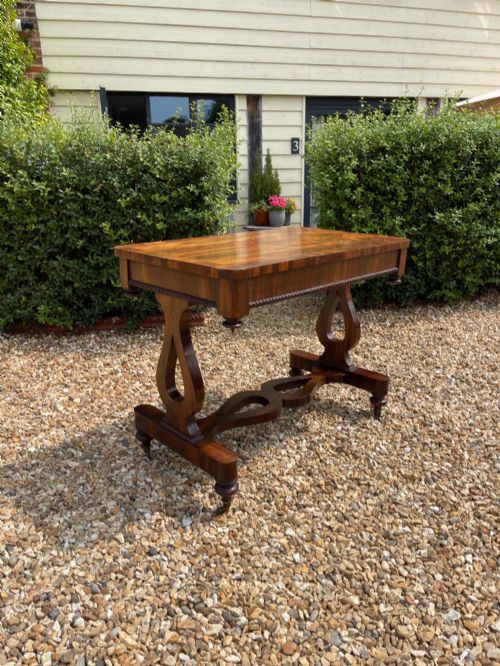

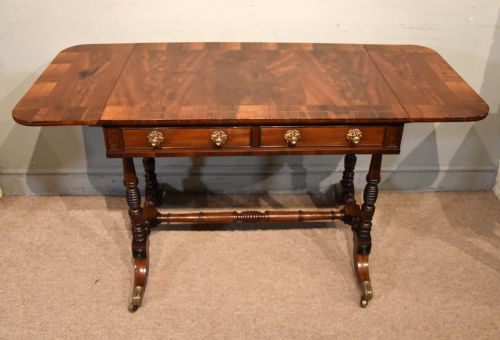
Antique Castored Sofa Table
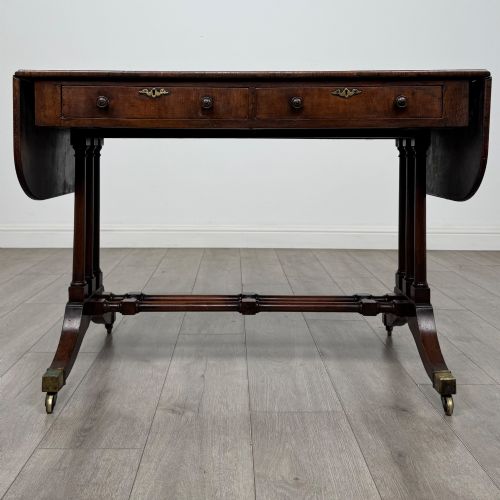
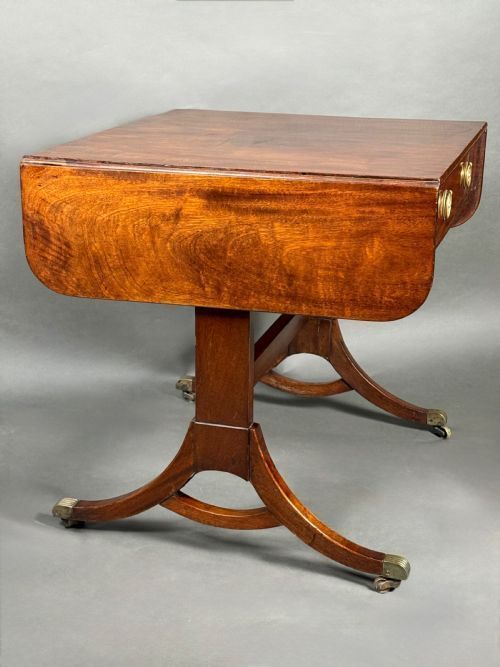
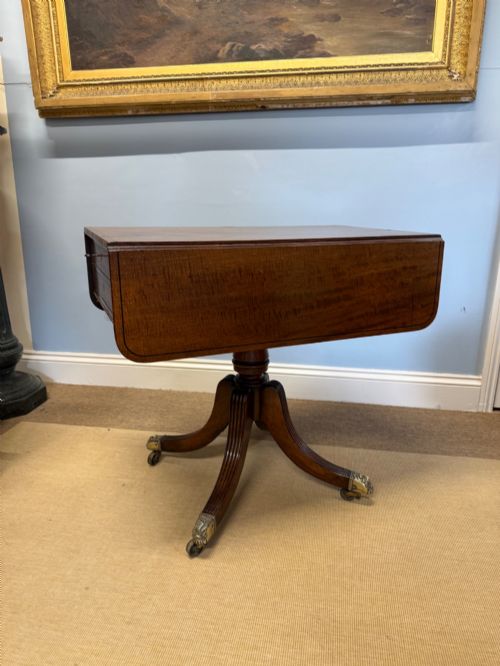
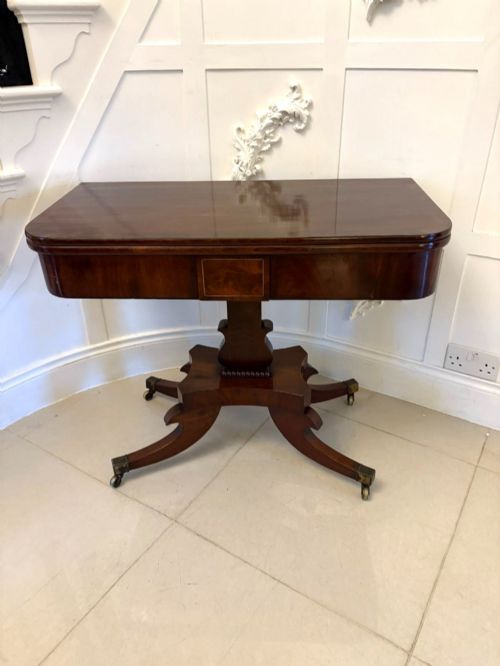
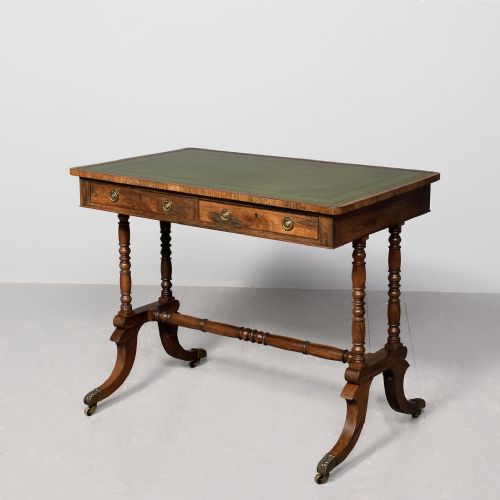
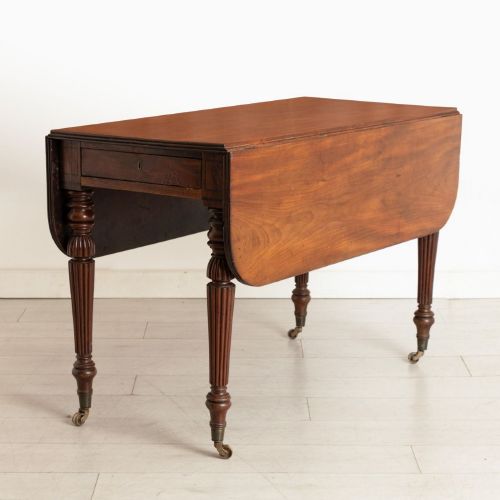
An antique castored sofa table brings versatile elegance to a room, offering drop leaves and brass castors for easy movement.
Antique Castored Sofa Table
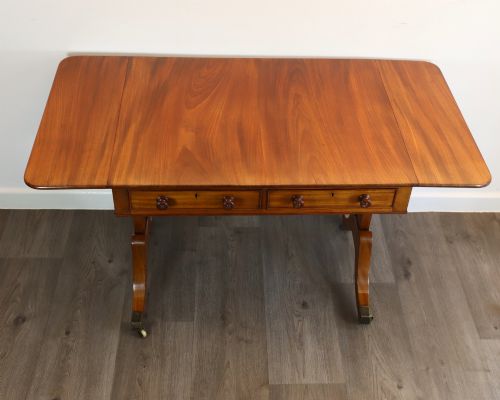
When you search for an antique castored sofa table, you are looking at narrow, freestanding tables designed to sit in front of a sofa or in the centre of a room. The pieces seen here span periods from George III through to the Edwardian era, with Regency and Victorian examples appearing frequently.
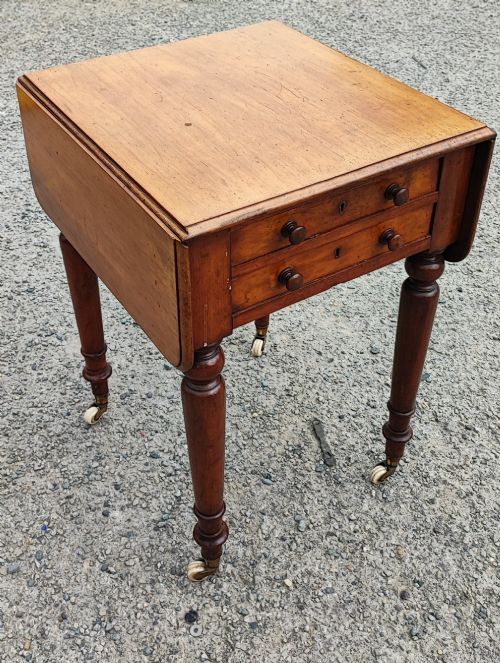
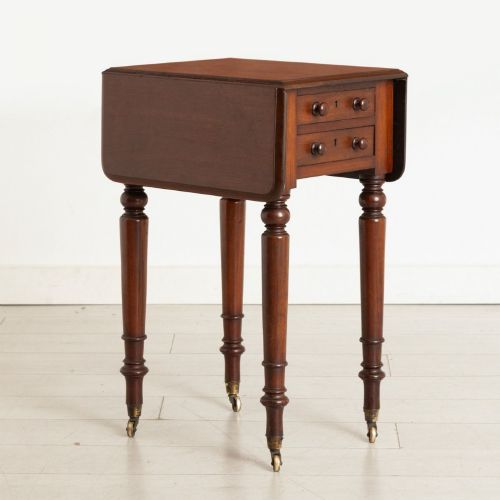
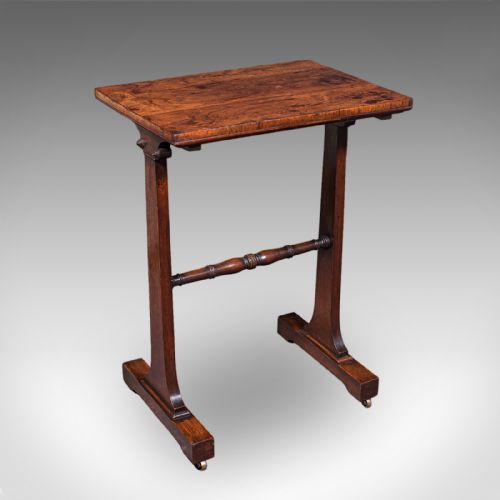
Most entries belong to the broader family of drop-leaf, library, and occasional tables fitted with small wheels. Mahogany and rosewood dominate the forms, often accompanied by brass or ceramic castors on the legs to permit repositioning across a carpet or floor.
Materials and construction methods
Cabinet makers utilised dense timber stocks such as flame mahogany, rosewood, burr walnut, and satinwood, often selecting figured veneers to catch the light on top surfaces. Drop-leaf actions rely on hinged flaps supported by pull-out rule-joint arms or pivoting wooden brackets beneath the framework.
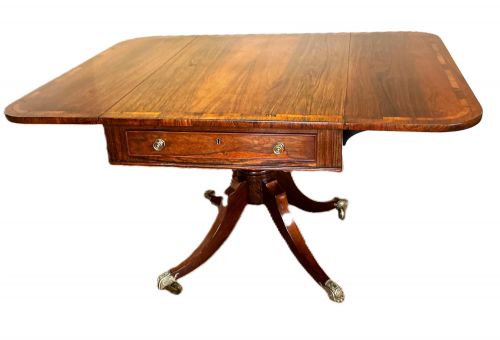
Metalwork played a functional role through brass castors attached to the feet, sometimes paired with ceramic wheels. Joinery methods included sturdy drawer linings and turned or pillar pedestals supporting the main carcase.
Listings here span the 18th, 19th, and early 20th centuries, covering Georgian, Regency, William IV, Victorian, and Edwardian periods.
Separating standard examples from the finest pieces
Quality rests upon the choice of timber figure and the crispness of the secondary wood used inside drawer carcases. Superior examples display symmetrical flame mahogany or richly grained rosewood matched across the leaf joins without interruption.
The refinement of the brass castors, the tightness of the drop-leaf hinges, and the subtlety of any inlay work distinguish workshop standards. A well-balanced base and smooth drawer movement indicate careful original assembly.
Johnstone and Jeanes·Andrew Thomson and Sons
The Antique Castored Sofa Table Glossary
- Castor
- A small swiveling wheel attached to the base of a table leg to ease movement across the floor. They are frequently cast in brass or fitted with ceramic rollers.
- Sofa table
- A rectangular drop-leaf table traditionally placed against the back of a sofa. These pieces typically feature two small drawers and freestanding pedestals.
- Pembroke table
- A small table with hinged drop leaves on two opposing sides. They often include a single drawer and straight or tapered legs.
- Flame mahogany
- A distinct wood veneer cut from the branch forks of the mahogany tree. The grain creates a flickering, flame-like pattern prized by period cabinet makers.
- Library table
- A large freestanding table finished on all sides so it could sit in the middle of a room. They were built to hold books and writing materials.
Antique Castored Sofa Table: Frequently Asked Questions
What is an antique castored sofa table used for today?
These tables function well behind a sofa, as a compact desk, or as a side table in a sitting room. The drop leaves allow the surface area to expand when extra space is needed.
Their mobility on brass castors makes them straightforward to reposition as room layouts change throughout the day.
How do I identify a Regency period sofa table?
Regency examples often feature pillar supports, sabre legs, or central pedestals resting on platform bases. They frequently utilise rosewood or flame mahogany with brass stringing and mounts.
Proportions tend to be balanced and linear, reflecting the neoclassical design influences of the early nineteenth century.
What woods were commonly used?
Mahogany and rosewood appear most frequently across the surviving nineteenth-century examples. Cabinet makers also employed burr walnut, satinwood, and yew for decorative veneer panels.
Secondary woods inside the drawer boxes typically include pine or oak depending on the workshop origin.
How do drop leaves function on these tables?
Hinges join the folding flaps to the main fixed top, supported underneath by hinged wooden brackets or pull-out wooden arms. When lifted, these supports lock the leaves level with the centre surface.
Lowering the leaves reduces the overall footprint for tighter spaces.