






Antique Castle Picture
An antique castle picture captures historic fortresses in watercolour, oil, or delicate straw and cork work.
Antique Castle Picture
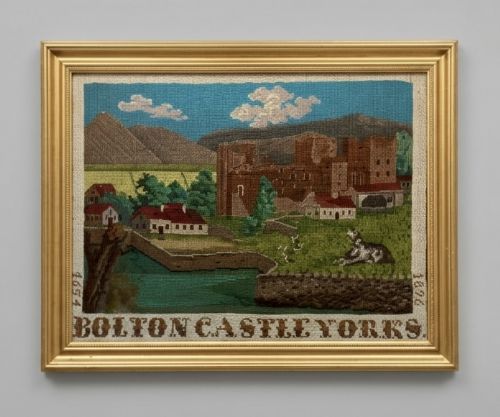
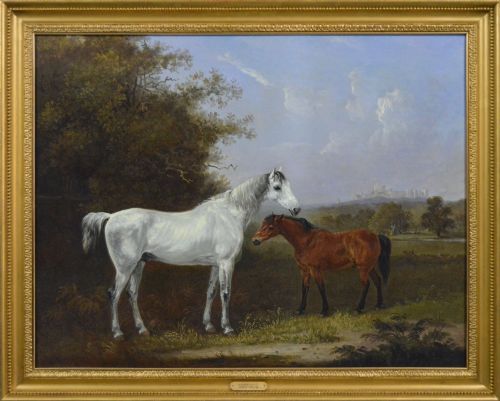
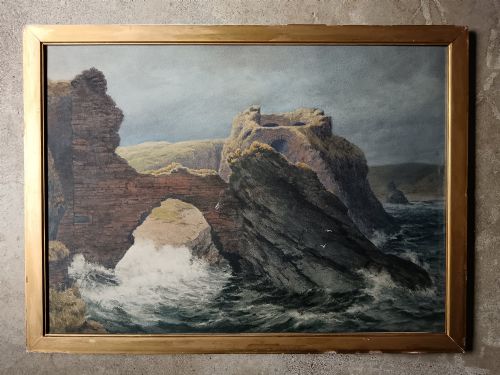
When you search for an antique castle picture, you encounter framed watercolours, oils on canvas, and intricate craftworks depicting British and European fortresses. These pieces span the nineteenth century and the early twentieth century, showing sites from Windsor and Bamburgh to Scottish coastal ruins.
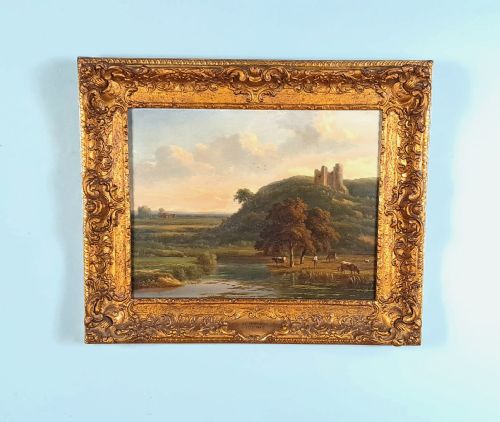
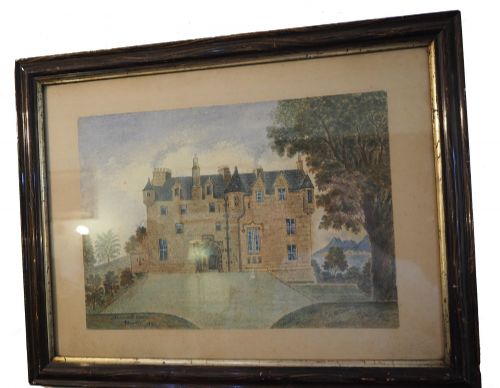
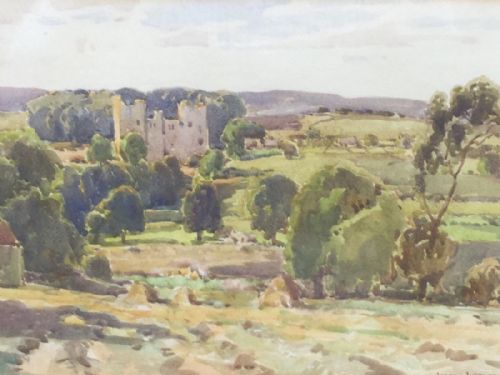
The version you meet most often on this page is a nineteenth-century watercolour painting, frequently framed behind glass with a gilt mount. Painters rendered these historic strongholds within romantic landscapes, often placing rivers, coastal waters, or grazing cattle in the foreground.
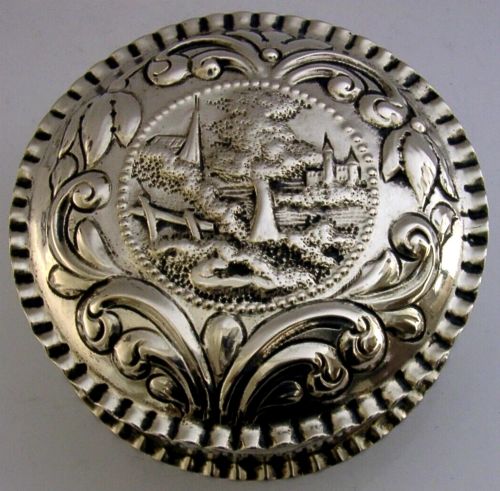
Beyond standard framed pictures, the category embraces decorative objects and specialised wall art. You find solid silver tabletop boxes featuring castle tops, wooden picture frames constructed with Tunbridge ware, and three-dimensional dioramas built from cork or straw.
How they were made
Makers utilised traditional artist pigments on paper and canvas, applying watercolour washes or oil paints to define stone walls, towers, and surrounding terrain. Framed works rely on wood and giltwood mouldings, occasionally protected behind glass.
Specialist decorative pieces demonstrate alternative crafting techniques. Artisans assembled intricate imagery using natural materials such as straw and cork, building textured dioramas, while others utilised mosaic wood marquetry like Tunbridge ware to construct picture frames.
Antique Castle Picture Retail Price Guide 2026
Typical asking prices for castle picture among the pieces listed under this phrase on Sellingantiques today, from the lower quarter to the upper quarter. They describe what is for sale here now, not the wider market.
Artists frequently added tiny fishermen, grazing cows, or beached shipwrecks to give sprawling stone fortresses a proper sense of human scale.
What varies in quality
The standard of an antique castle picture rests on the precision of the draughtsmanship and the artist's ability to handle light and atmospheric depth. Superior watercolours and oils display confident brushwork that brings texture to ancient masonry and natural scenery.
Material execution further defines the tier of a piece. Finely detailed straw work, intricate cork dioramas, and solid silver box constructions require meticulous hand labour, separating accomplished studio output from simpler decorative items.
Alfred Young Nutt·T C Hofland·John Moxon·Thomas Cooper Moore·Fred Lawson·David Cox Jnr·Frank Wood·James Bell Anderson·R P Noble·Thomas Whittle the Younger·James Canter·Frederick Tully Lott·Frank Wasley·Peter Toft·J D Walker·Charles Walter Radclyffe·R Allan·George Graham·Joseph William Carey·Henry Bright·F E Jamieson
The Antique Castle Picture Glossary
- Watercolour pigment
- A colour medium ground with water-soluble binders, widely applied on paper for nineteenth-century landscapes. It allows for transparent washes that create delicate skies and atmospheric moisture.
- Oil on canvas
- A painting medium utilising pigment suspended in drying oil, stretched across a wooden frame. This technique permits rich colour saturation and heavy impasto textures.
- Tunbridge ware
- A form of British woodworking consisting of tiny mosaic tiles assembled to form geometric or pictorial patterns. It frequently adorns nineteenth-century wooden picture frames and boxes.
- Giltwood
- Wood carved and coated with gold leaf or a gold-coloured finish. It provides the decorative border for many traditional picture frames.
- Diorama
- A three-dimensional scene constructed within a shallow box. In this context, makers utilised cork or straw to build perspective views of historic landmarks.
Antique Castle Picture: Frequently Asked Questions
What periods do these pictures cover?
The pieces span from the late eighteenth century through the Victorian and Edwardian eras up to the mid-twentieth century. Most examples date from the nineteenth century.
Watercolours and oils from this span document historic strongholds before modern restoration altered their skylines.
How should I hang watercolour paintings?
Watercolours require protection from direct sunlight to prevent the pigments from fading over time. Position them away from bright windows and damp walls.
Ensure they remain securely framed behind glass with a proper mount that keeps the paper from touching the glazing.
What are straw work pictures?
Straw work pictures are historic decorative items created by flattening and applying dyed cereal straw to a backing to form a mosaic image. Artisans meticulously arranged these strips to render architectural details of castles.
These delicate works require stable indoor humidity to preserve the integrity of the straw.
How do I identify the castle in a painting?
Artists often inscribed the title or location directly onto the mount, reverse of the canvas, or within the composition itself. Stylistic clues such as coastal settings or specific architectural layouts also point toward known landmarks like Bamburgh or Windsor.
Local histories and contemporary prints of British castles help confirm unlabelled views.
Were these painted on location?
Many artists produced preliminary sketches on site before completing finished watercolours or oil paintings in their studios. Some pieces reflect romantic interpretations rather than strict architectural surveys.
Travellers and professional artists alike toured Britain to record historic ruins during the nineteenth-century romantic movement.