



Antique Carved Timber Sign
These antique carved timber sign pieces are robust wooden markers and figures created to advertise trades and guide the public with genuine character.
Antique Carved Timber Sign
When you search for an antique carved timber sign, you are looking at substantial wooden trade figures, commercial signs, and architectural panels produced during the nineteenth and early twentieth centuries. These objects served functional purposes outside shops, masonic halls, and businesses, translating trades and identities into solid three-dimensional forms.
The pieces you are most likely to meet on this page span the Victorian and Edwardian eras, incorporating folk art sensibilities alongside more formal commercial carving. They take the shape of trade figures, shop signs, heraldic panels, and double-sided markers that once hung above bustling nineteenth-century streets.
Materials and construction
Makers utilised solid timber, pine, and hardwood as the foundational base for these signs and figures, applying hand-carving techniques to shape the wood. The natural grain of the timber provided strength and texture for substantial pieces meant to withstand daily exposure.
Surfaces were frequently finished with paint, polychrome paint, gesso, and leaf gilding to enhance visibility and detail. This combination of carved wood and layered paintwork gave the objects their distinct presence and durability.
Antique Carved Timber Sign Retail Price Guide 2026
Typical asking prices for carved timber sign among the pieces listed under this phrase on Sellingantiques today, from the lower quarter to the upper quarter. They describe what is for sale here now, not the wider market.
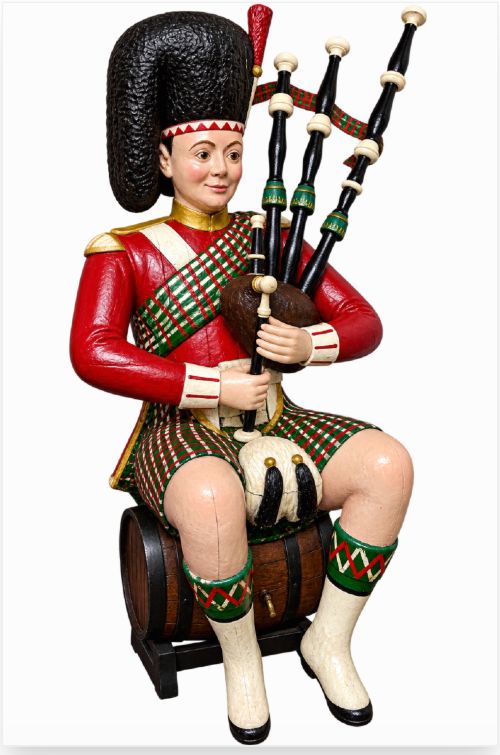
Trade figures included life-sized cricketers and bagpipers carved to entice customers into nineteenth-century shops.
Assessing quality and execution
The integrity of the original paint and gilding plays a major role in distinguishing finer examples. Pieces that retain their early polychrome decoration or historic layered paint demonstrate a more complete survival of their working life.
V Ramirez·Boudewijn Tuerlinckx·Christoffel Bisschop
The Antique Carved Timber Sign Glossary
- Trade sign
- A board, figure, or symbol displayed outside a shop or business to indicate the trade practised within. These objects were essential for advertising in periods when many people could not read.
- Polychrome
- Decorated in multiple colours. This term describes surfaces painted with several hues to bring realism and visibility to wooden figures and panels.
- Gesso
- A plaster-like mixture applied to wood as a base for paint or leaf gilding. It provided a smooth, prepared ground for fine decorative work.
- Folk art
- Art produced by self-taught or untrained makers, often within a community tradition. It is characterised by directness of expression and practical utility.
- Architectural salvage
- Building elements rescued from structures slated for demolition or alteration. These include panels and signs removed from older properties for preservation and display.
Antique Carved Timber Sign: Frequently Asked Questions
What is an antique carved timber sign?
An antique carved timber sign is a wooden marker or trade figure created in the nineteenth or early twentieth century to advertise a business, guild, or profession. These objects were carved by hand and often painted to attract the attention of passers-by on busy streets.
They combine practical utility with folk art craftsmanship, serving as durable outdoor displays before modern plastic and neon signage replaced them. Today they are valued as historical artefacts of commerce and trade.
Where were these signs originally displayed?
These signs were mounted outside shops, inns, masonic halls, and commercial premises to identify the trade carried on inside. Figures might stand near a doorway while panels and double-sided boards hung from brackets above the pavement.
Their robust construction in pine and hardwood ensured they could withstand exposure to the weather while guiding customers to specific merchants and craftsmen.
How do I care for wooden trade signs?
Care for these pieces involves keeping them in stable indoor environments away from direct sunlight, excessive moisture, and rapid temperature fluctuations. Dusting gently with a dry, soft cloth helps protect fragile paint and gesso surfaces.
Avoid using liquid cleaners or oils on historic painted surfaces, as moisture can lift old gesso and flaking pigment. Allowing the wood to acclimate to a steady room climate preserves the structural integrity of the timber.
How can I tell the period of a sign?
Dating relies on examining the tool marks, the type of timber used, and the style of the carving and lettering. Victorian and Edwardian examples often show specific characteristics in their paint layers and structural joinery.
Comparing the wear patterns and stylistic conventions with documented trade figures and panels from the nineteenth century helps establish a reliable timeline for each piece.