


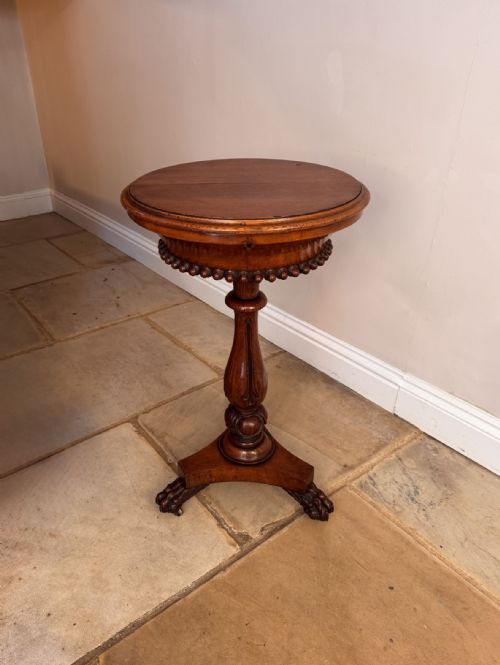
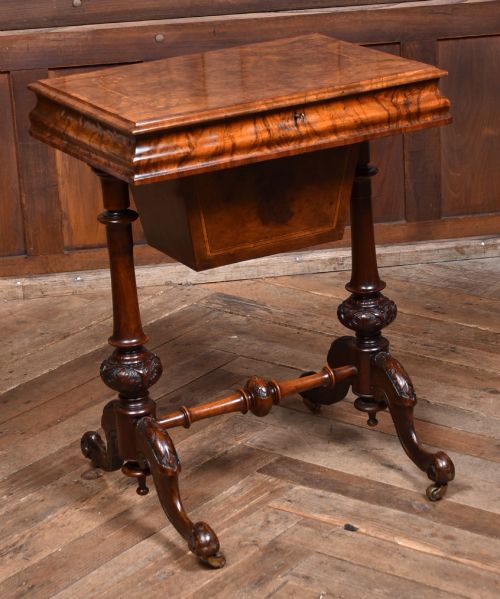
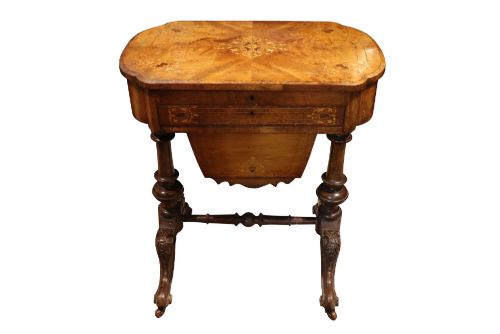
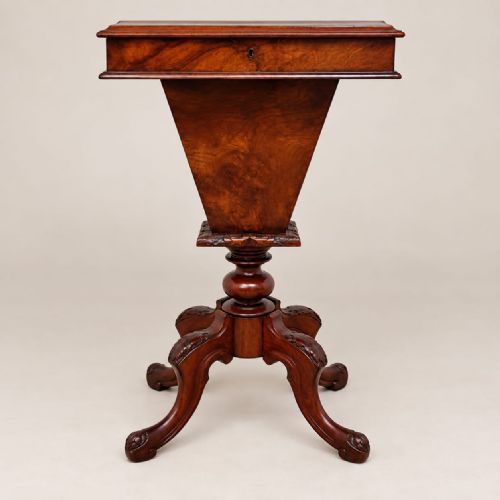
Antique Carved Sewing Table
An antique carved sewing table brings nineteenth-century elegance and clever concealed storage into a modern sitting room.
Antique Carved Sewing Table
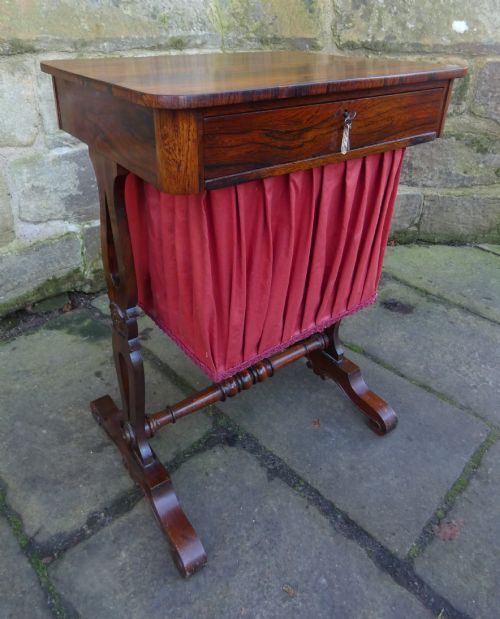
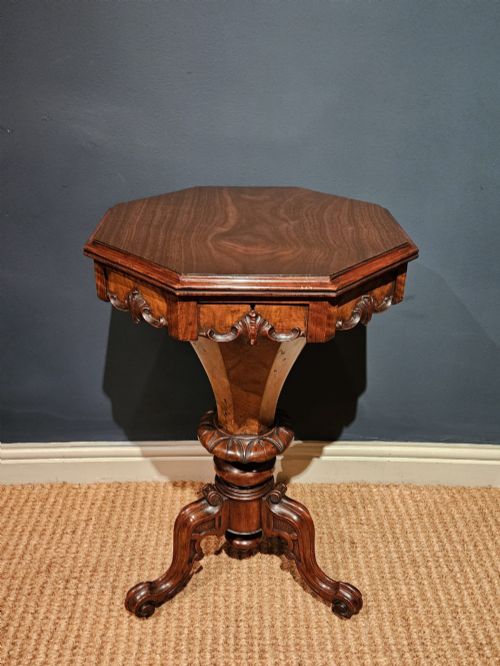
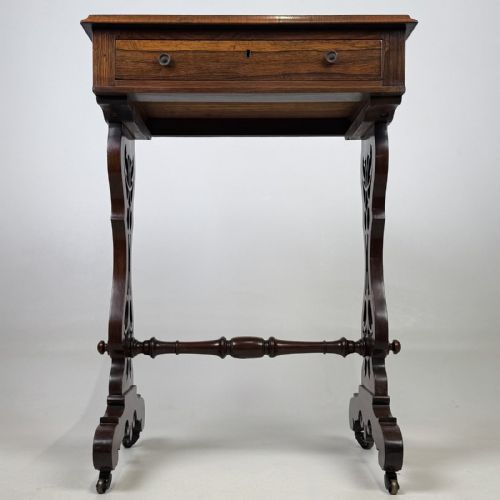
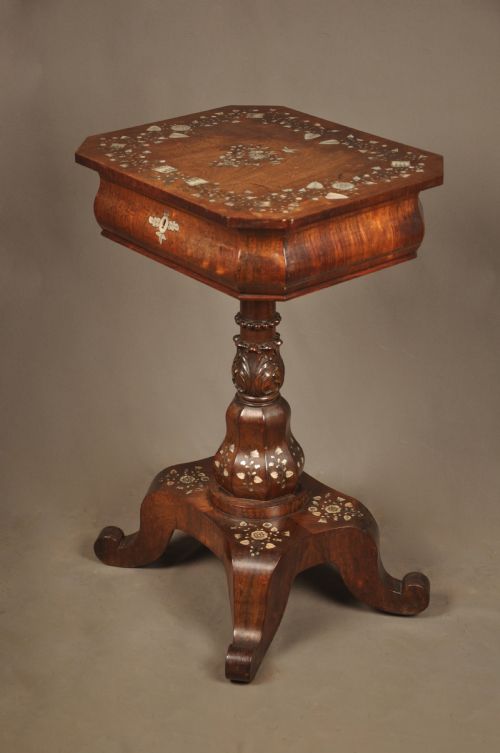
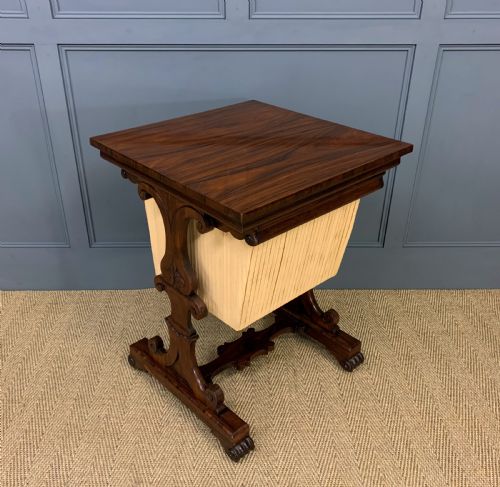
An antique carved sewing table is a specialised domestic piece designed for needlework, correspondence and small hobbies, appearing frequently across the Regency and Victorian periods. These pieces combine a display surface with internal compartments, often housing fitted trays and fabric bags beneath the top.
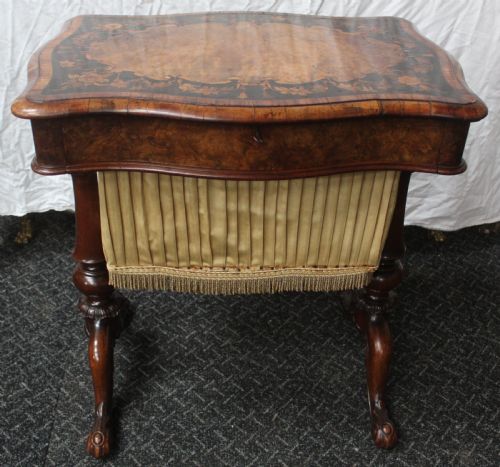
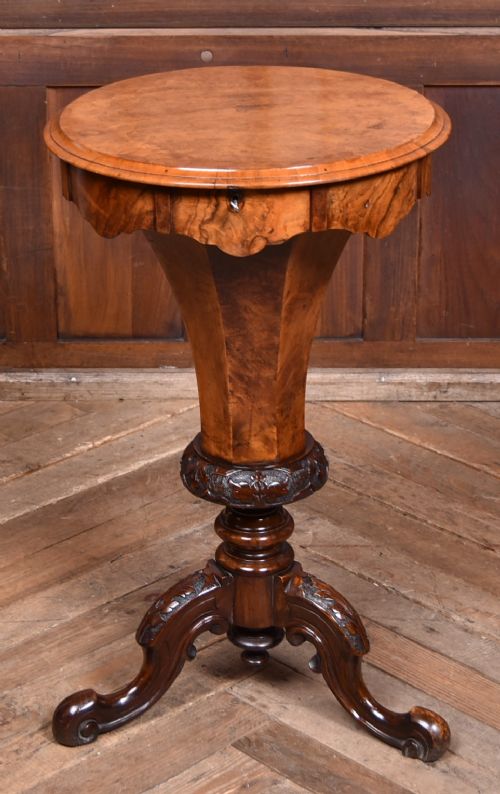
The versions most commonly found on this page date from the nineteenth century, ranging from the architectural severity of William IV designs to the opulent burr walnut of the high Victorian era. Alongside dedicated sewing tables, buyers frequently encounter related forms such as work tables, games tables with integrated chess boards, and occasional side tables.
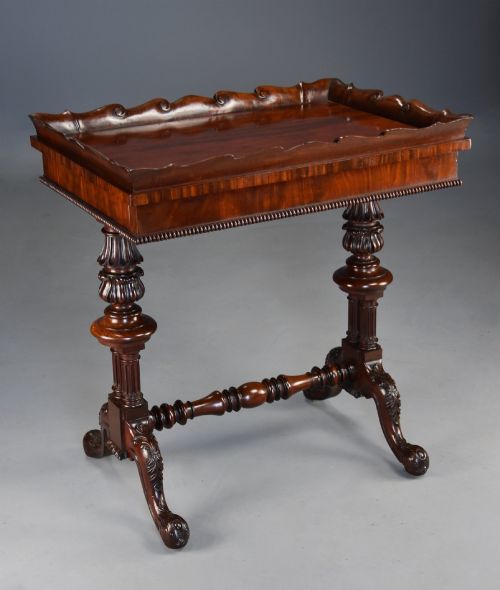
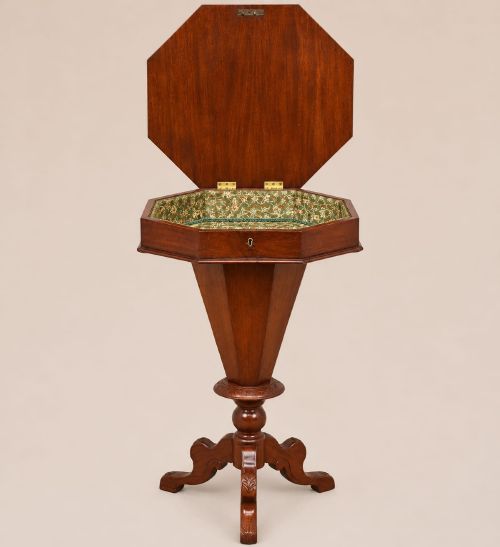
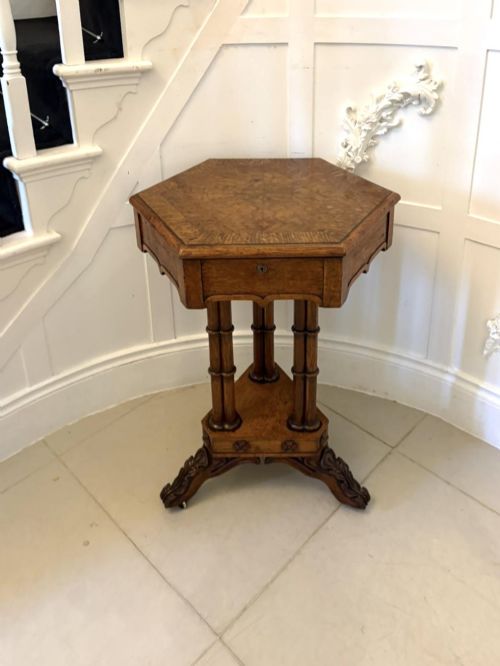
Origins span English workshops, Irish cabinets, Chinese export houses, and continental European makers, each bringing distinct regional timbers and decorative motifs to the form. A typical piece stands on a carved pedestal base or elegant slender legs, offering a compact footprint suited to parlours and studies.
How they were made
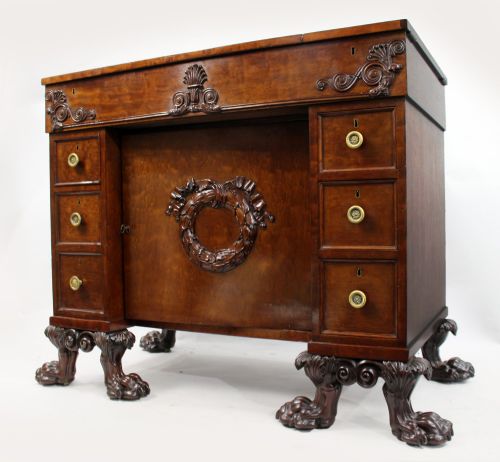
Cabinet makers utilised dense, richly figured hardwoods including rosewood, mahogany, and burr walnut, often laid as veneers over stable secondary timbers to create striking surface patterns. Solid sections received crisp hand-carving, from the bold sunbursts of the Regency period to the intricate floral marquetry of later Victorian examples.
Construction relied on traditional joinery techniques, incorporating dovetailed drawer boxes, drop-leaf action hinges, and sturdy pillar supports mounted on platform bases with concealed castors. Interior compartments utilised lightweight secondary woods and silk or fabric linings to house cotton spools and tools securely.
Antique Carved Sewing Table Retail Price Guide 2026
Typical asking prices for carved sewing table among the pieces listed under this phrase on Sellingantiques today, from the lower quarter to the upper quarter. They describe what is for sale here now, not the wider market.
Listings feature tables spanning the Georgian, Regency, William IV, and Victorian periods, executed in rosewood, mahogany, and burr walnut.
What varies in quality
The standard of a piece rests upon the choice of timber figure and the crispness of the hand-carving, where deeply undercut foliage and balanced proportions distinguish master workshops from provincial output. Superior examples feature perfectly matched veneer grains across the top and drop leaves, maintaining visual harmony when the table is fully extended.
Internal engineering marks the division between functional furniture and high-status decorative pieces, seen in smooth drawer runs, intact fitted compartments, and robust pedestal joints that prevent wobble. The integration of multi-purpose elements, such as combined chess boards and sewing wells, demands precise carpentry to ensure enduring stability.
Gillows
The Antique Carved Sewing Table Glossary
- Burr walnut
- A prized timber harvested from the wart-like growths on walnut trees, yielding swirling, organic patterns used extensively for decorative table surfaces.
- Work table
- A nineteenth-century term for a small multi-purpose table equipped with drawers or hanging fabric bags intended for women's domestic crafts.
- Drop leaf
- A hinged flap on either side of a table top that lifts to extend the surface area when needed.
- Marquetry
- The art of applying decorative pieces of veneer to a structure to form intricate geometric or floral designs.
- Caddy top
- A raised, moulded tabletop edge reminiscent of the hinged lids found on tea caddies from the same period.
Antique Carved Sewing Table: Frequently Asked Questions
What is the difference between a sewing table and a work table?
In nineteenth-century terminology, the two terms are largely interchangeable. Both describe compact tables equipped with internal compartments, drawers, or fabric storage bags for needlework and small hobbies.
Individual makers adapted these forms for multiple uses, occasionally incorporating chess boards or writing surfaces into the same piece.
How do I identify a Regency sewing table?
Regency pieces typically feature classical architectural lines, dark mahogany or rosewood timbers, and brass inlay or restrained pedestal carvings. They often date from the early nineteenth century and display a refined, geometric simplicity.
By contrast, later Victorian examples tend to favour figured walnut, more abundant floral carving, and elaborate marquetry inlay.
Where were sewing tables placed in a Victorian home?
These versatile pieces sat beside parlour seating, near windows for natural light during needlework, or functioned as elegant lamp tables in drawing rooms. Their compact size allowed them to be moved easily around the principal reception rooms.
Today, they serve well as bedside tables or occasional side surfaces in modern living spaces.
Are the fabric bags on sewing tables original?
Original fabric hanging bags rarely survive intact due to delicate silk or cotton degrading over the decades. Most surviving examples have been re-lined with appropriate period-style textiles by later owners or restorers.
The wooden framework and pull-out trays above the bag remain the primary focus for historical authenticity.