

Antique Carved Library Seating
Antique carved library seating brings substantial timber frames and deep upholstery into study spaces, offering steady support and period character.
Antique Carved Library Seating
Antique carved library seating encompasses sturdy armchairs, desk chairs, and open armchairs designed for reading rooms, studies, and substantial country houses. These pieces bridge domestic comfort and formal architectural presence through robust timber frames and upholstered elements.
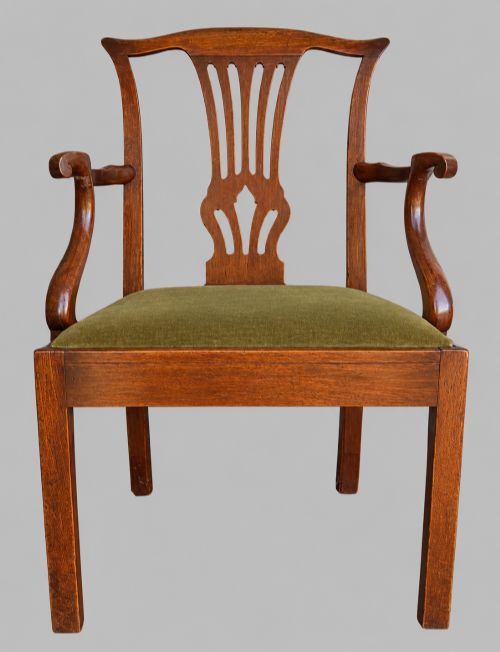
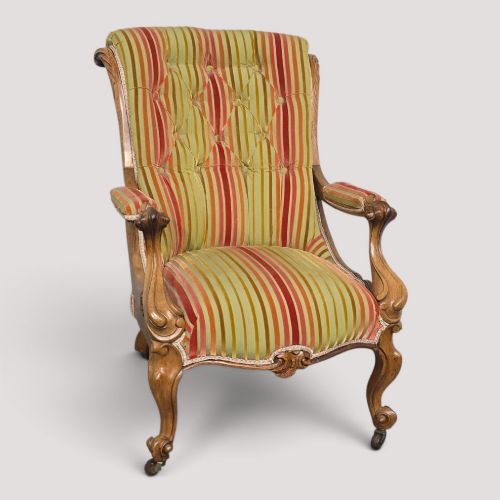
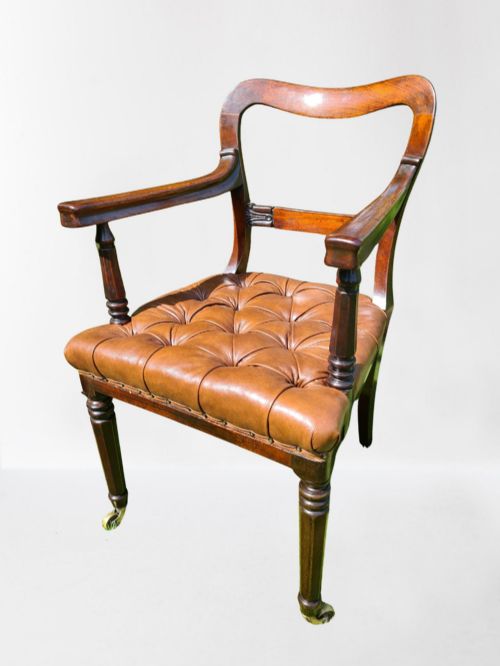
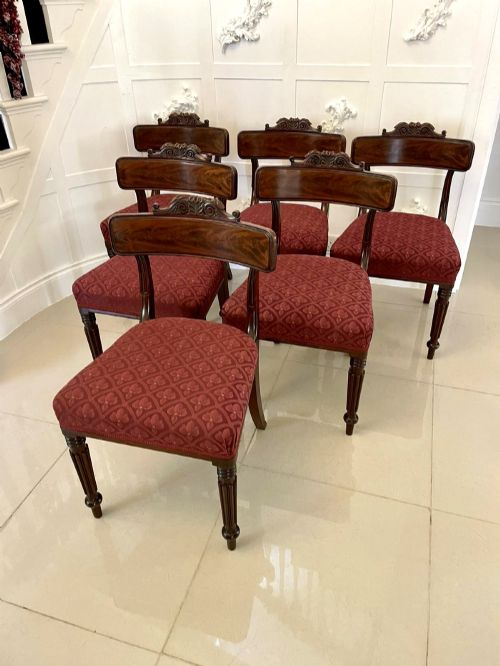
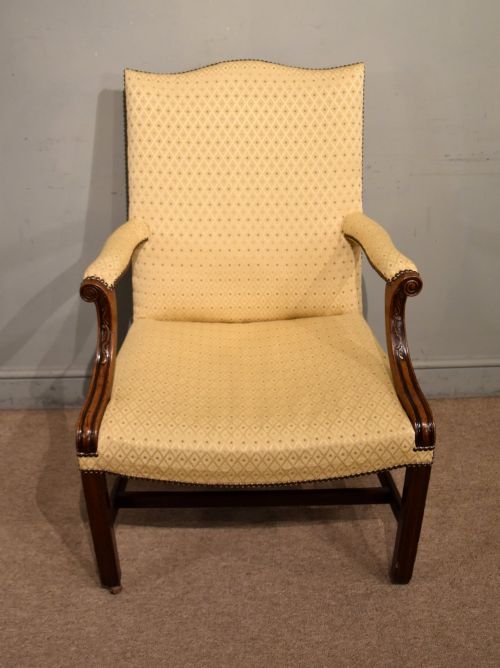
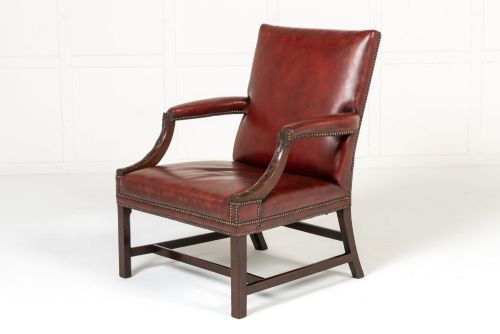
The versions most commonly met on this page span the Georgian, Regency, and Victorian periods, often executed in rich hardwoods like mahogany and walnut. Forms range from broad Gainsborough chairs with exposed wooden arms to buttoned leather reading seats and low-slung desk chairs.
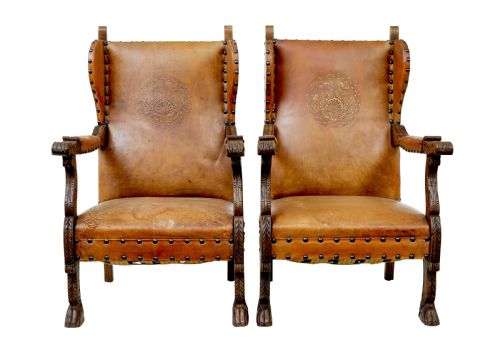
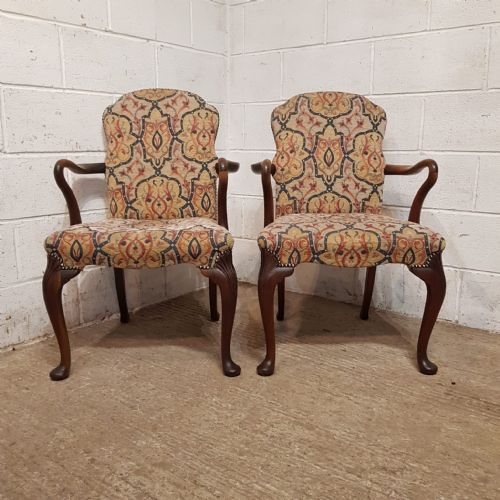
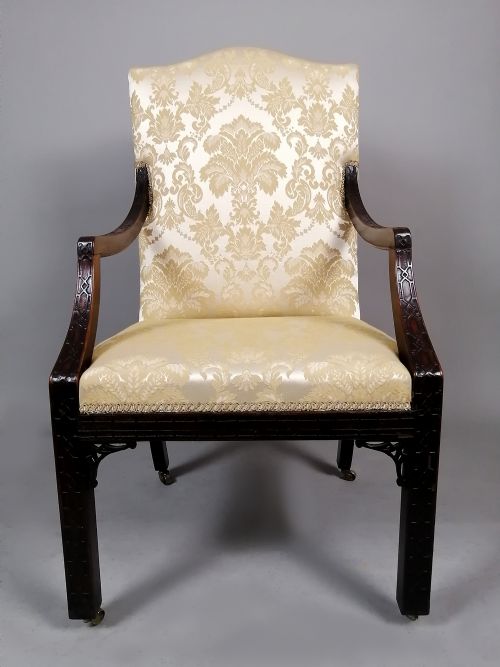
Makers and designers from these eras drew upon various stylistic revivals, incorporating Chippendale blind carving, Gothic tracery, or Pugin details into the wooden frames. Buyers encounter both single statement armchairs and matched pairs intended to flank a fireplace or library table.
Materials and construction methods
Makers utilised dense timbers such as mahogany, oak, walnut, rosewood, and solid ebony to construct durable frames capable of supporting heavy carving. Artisans shaped these woods into cabriole legs, scroll arms, and structural stretchers using traditional joinery methods.
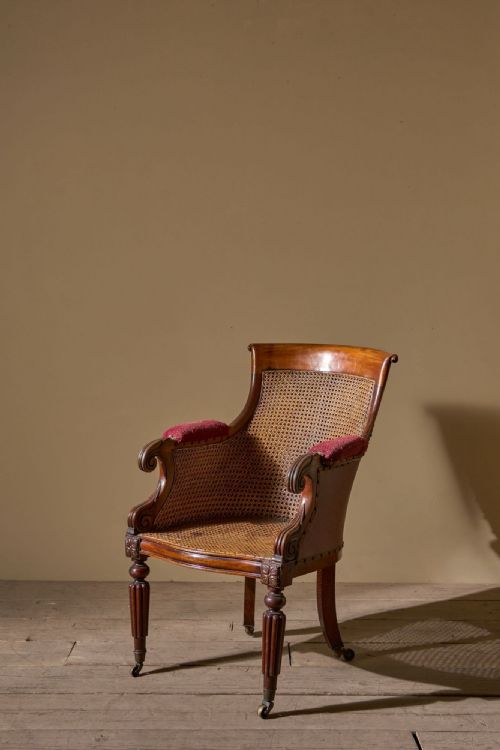
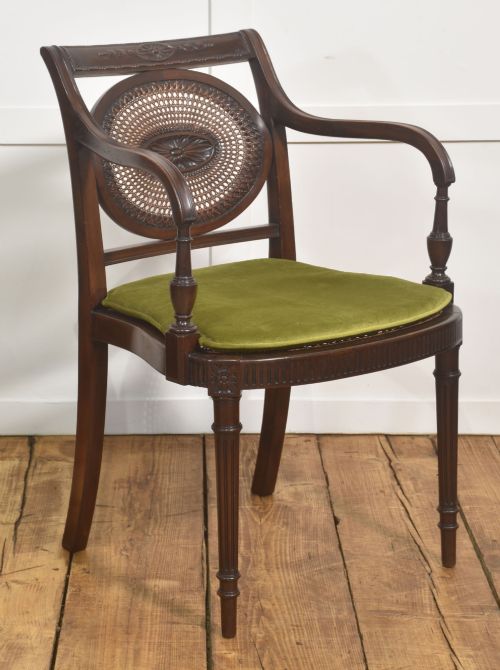
Upholstery relied on natural stuffing materials contained by leather, velvet, fabric, or embossed hide, often secured with brass tacking. Caning also appeared on seats and backs to provide a lighter texture within the heavy timber frameworks.
Carving was executed directly into the solid wood of the arms, rails, and legs, displaying crisp geometric patterns, floral motifs, or blind fretwork. Brass casters were frequently fitted to the feet of heavier chairs to ease movement across carpeted library floors.
Object types span armchairs, desk chairs, dining chairs, and hall chairs in various revival styles.
Evaluating craftsmanship and proportion
Quality in antique carved library seating rests on the crispness of the timber carving and the architectural balance of the frame. Superior examples display deeply undercut foliage and confident, flowing lines that integrate harmoniously with the structural joints.
The selection of timber grain significantly elevates a piece, particularly when figured mahogany, burr elm, or richly toned rosewood is chosen for prominent visual areas. Refined joinery ensures that even heavily proportioned armchairs maintain a sense of proportional elegance rather than mere bulk.
Gillows·Bruce James Talbert
The Antique Carved Library Seating Glossary
- Gainsborough chair
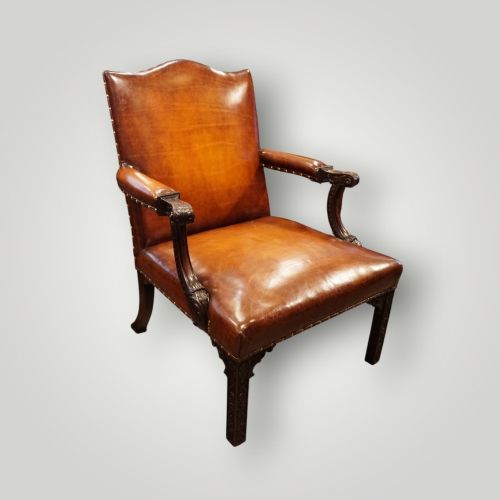
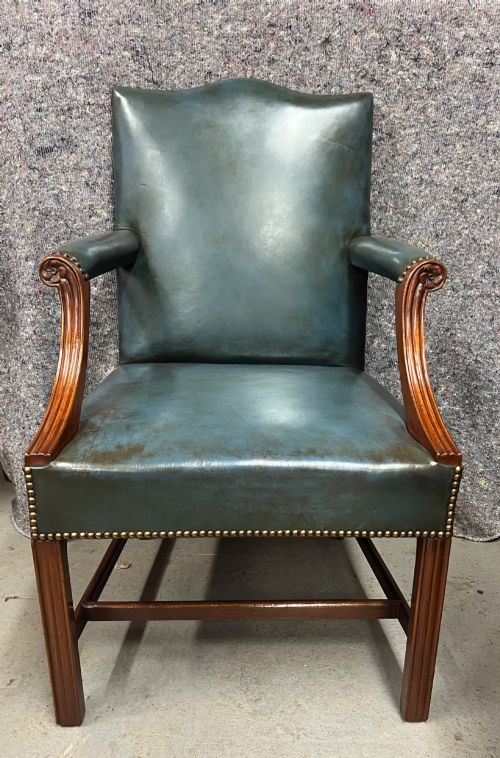
- A wide, upholstered armchair with open wooden arms, designed in the mid-18th century for writing desks or parlour seating. These pieces typically feature padded armrests and straight or cabriole legs.
- Bergère armchair
- An enclosed upholstered armchair with exposed wooden framing and cane-work sides or back panels. It originated in France and gained popularity in British interiors during the Regency period.
- Chippendale style
- A decorative aesthetic drawing from the mid-18th-century designs of Thomas Chippendale, characterised by robust mahogany frames and intricate carving. Elements often include pierced splats and blind fretwork.
- Gothic Revival
- An architectural and decorative style popular during the 19th century that reinterprets medieval forms. Pieces display pointed arches, trefoils, and heavy structural oak.
- Blind carving
- Relief carving applied to a flat surface without undercutting the background depth. This technique decorated the stiles and rails of 18th-century chairs.
Antique Carved Library Seating: Frequently Asked Questions
How do I identify a Gainsborough chair?
Gainsborough chairs are immediately recognisable by their wide seats, low backs, and open wooden arms that leave the upholstered sides uncovered.
They stand on four legs, frequently featuring carved cabriole shapes or straight legs connected by stretchers.
Were these chairs used only in libraries?
While designed primarily for reading rooms and private studies, these versatile seats also functioned in parlours, drawing rooms, and executive offices.
Their substantial construction made them suitable for any room requiring formal yet comfortable seating.
How do I care for leather upholstery?
Leather upholstery benefits from regular dusting and occasional treatment with appropriate conditioning balms to maintain its suppleness.
Keeping antique leather away from direct sunlight and excessive heat sources prevents the hide from drying and cracking over time.
Can I mix different wood tones together?
Mixing woods like mahogany, walnut, and oak works well in a library setting as long as the pieces share similar periods or formal qualities.
Natural variations in timber grain and colour add depth and historical character to a room rather than appearing mismatched.