
Antique Carved Chairs
Antique carved chairs range from robust 18th-century oak hall seats to elaborate Victorian walnut dining sets, offering solid timber construction and period character for daily use.
Antique Carved Chairs
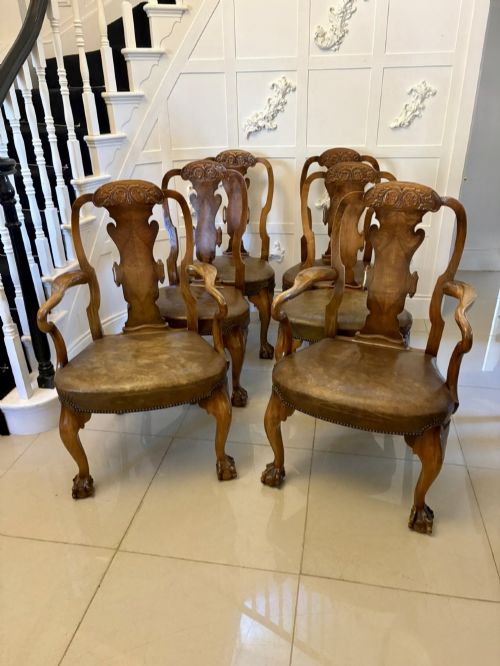
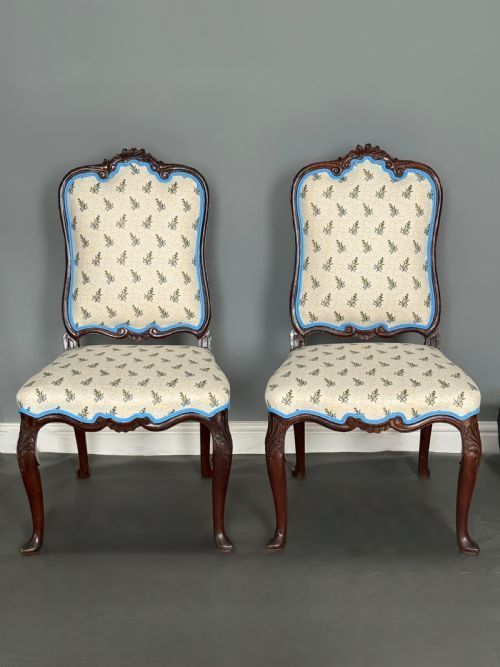
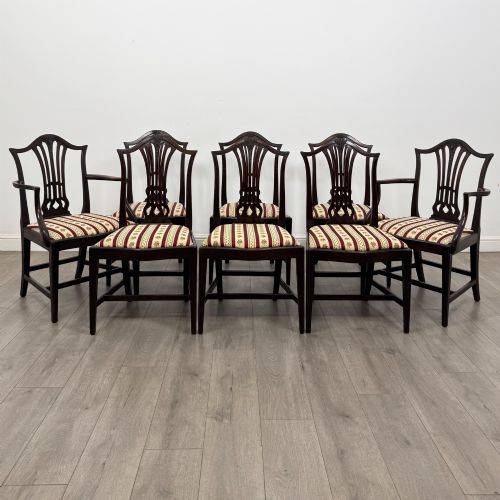
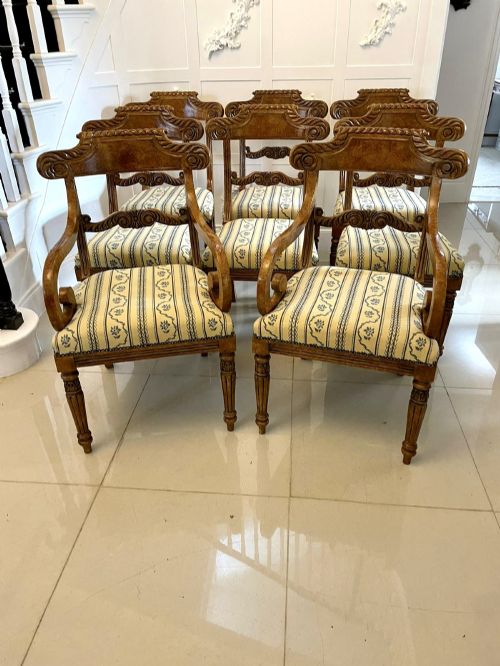
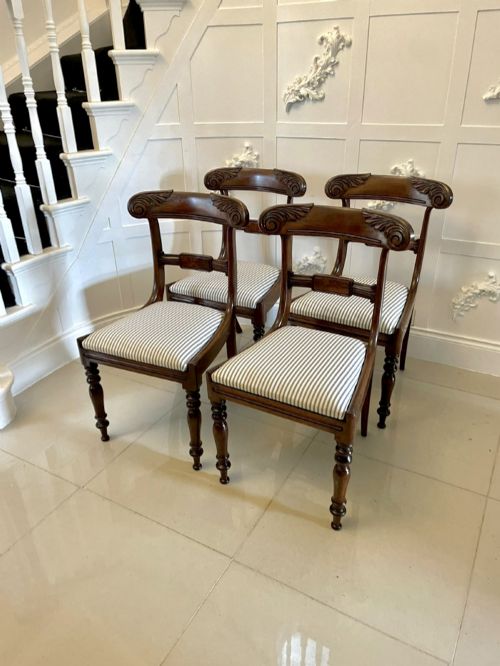
Sets of six or eight dining chairs appear frequently alongside pairs of library armchairs and single hall chairs. Timber choices typically include mahogany, walnut, and oak, reflecting the dominant cabinet-making materials of the Georgian and Victorian periods.
How they were made
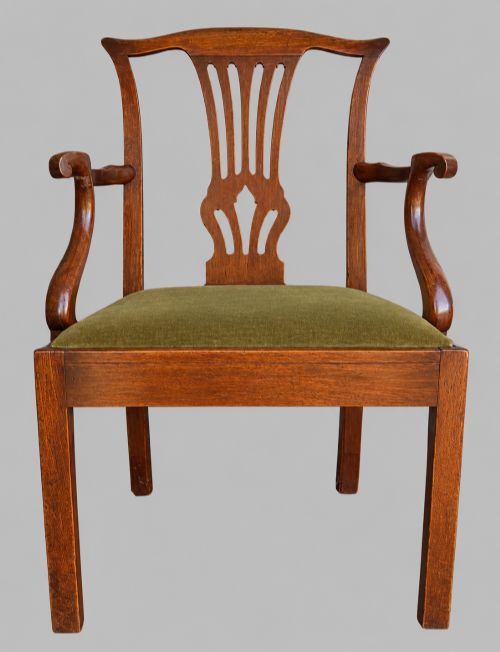
Cabinet makers utilised dense hardwoods such as mahogany, walnut, and oak for structural integrity, shaping them with hand chisels to create deep relief carvings on splats, rails, and knees. Joinery relied on traditional mortise and tenon joints, often reinforced with corner blocks for heavy-use seating.
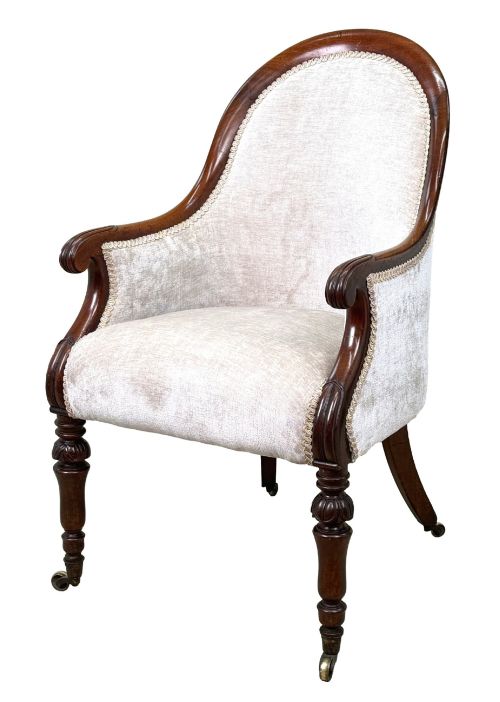
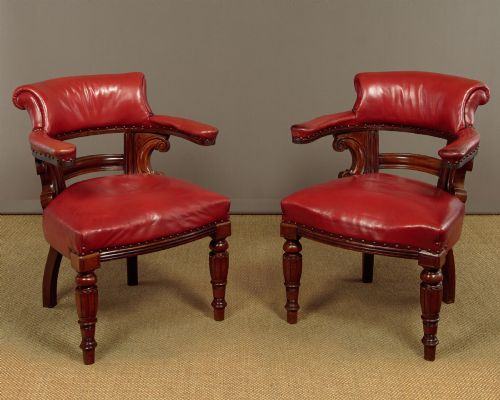
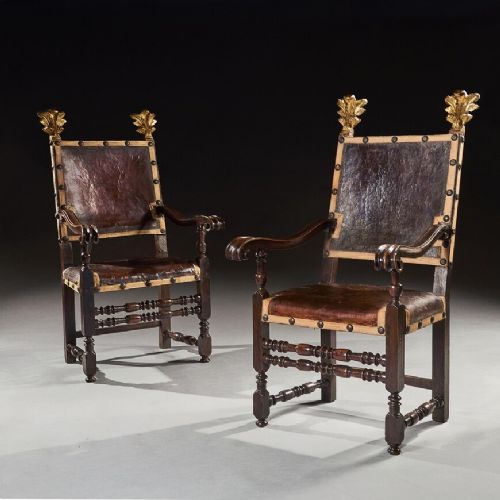
Upholstered variations integrated webbed seat bases overlaid with horsehair stuffing, secured beneath layers of leather, velvet, or woven textile. Decorative elements incorporated brass inlay, parcel-gilding, and turning techniques like bobbin twist or barley twist.
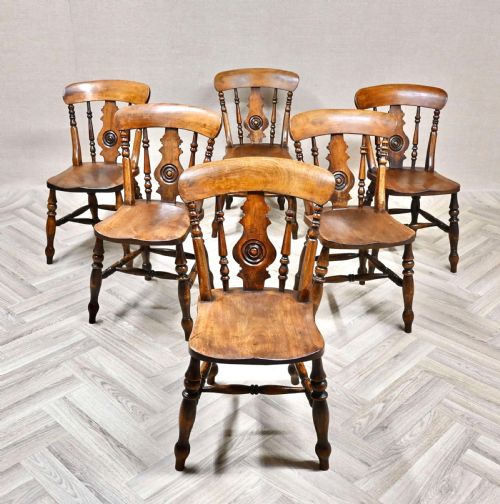
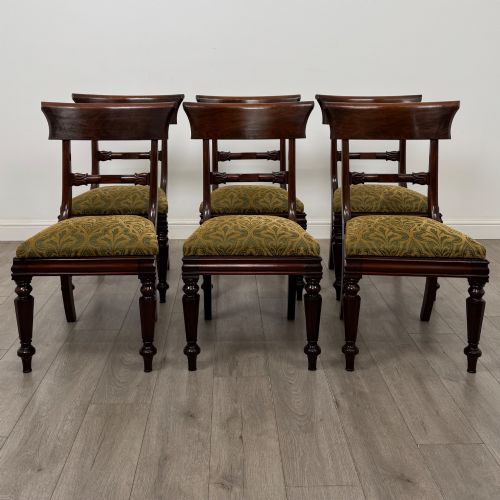
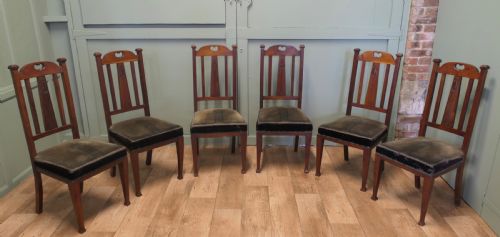
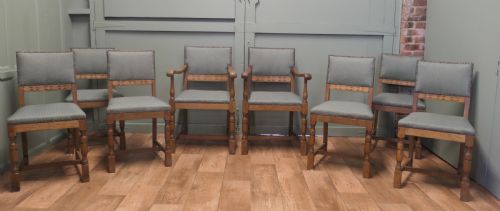
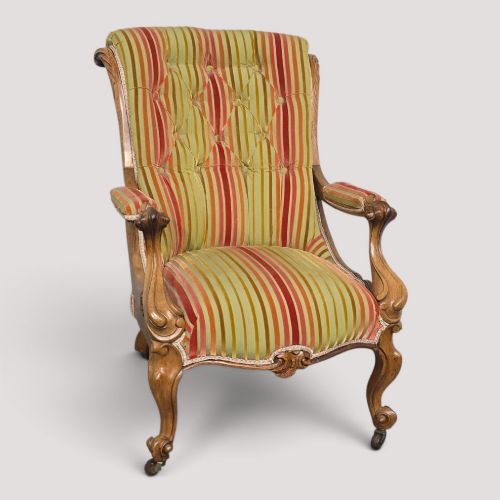
Arts and Crafts golden oak dining chairs appear alongside Regency rosewood library armchairs and Victorian carved walnut seating.
What varies in quality
The standard of carving dictates much of the distinction between ordinary pieces and exhibition-grade examples, with superior items displaying crisp undercutting and fluid symmetry. Timber selection also governs overall merit, as well-figured mahogany or quarter-sawn oak yields greater visual depth.
Structural robustness separates heavily worn examples from well-preserved survivals, particularly where joints meet under daily weight. Original surface patination and untouched finish layers elevate the standing of a piece far above heavily stripped or overly restored alternatives.
Gillows·Howard and Sons·Charles Tozer·Turner and Son Liverpool
The Antique Carved Chairs Glossary
- Carver
- An armchair, usually designed to sit at the head of a dining table and matching the surrounding side chairs.
- Sgabello
- A rigid wooden hall chair featuring a high back and solid trestle-like supports instead of conventional legs.
- Splat
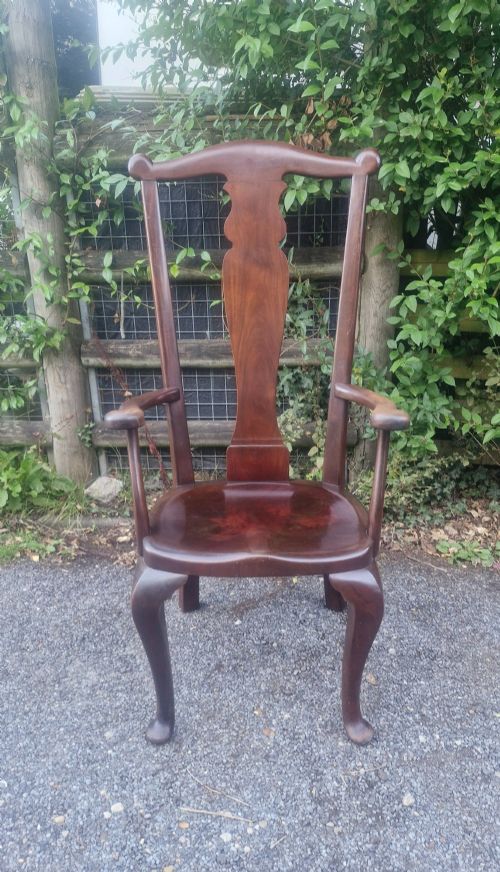
- The vertical wooden strip down the centre of an open chair back, frequently carved or pierced.
- Bergère
- An enclosed armchair with upholstered sides and a cane or cushioned back, originating in France.
- Barley twist
- A type of turned woodwork resembling a spiral rope, popular in 17th-century and later revival furniture.
- Prie Dieu
- A low devotional chair featuring an upper ledge for kneeling or resting arms during prayer.
Antique Carved Chairs: Frequently Asked Questions
How do I identify a dining chair set?
Authentic dining sets share uniform timber grain, matching turning details, and consistent dimensions across every chair in the group. Variations in seat height or subtle differences in carving often indicate assembled rather than original sets.
Examine the underside of the rails for maker stamps, tally marks, or consistent wear patterns that confirm the chairs belonged together from manufacture.
Can I use antique armchairs daily?
Most antique armchairs were built from sturdy hardwoods like mahogany and oak to withstand regular domestic use. Routine checks of the joints ensure the frame remains stable under weight.
Delicate show-wood frames or pieces with exposed veneer benefit from gentle treatment and careful placement away from direct heat sources.
What is the difference between an elbow chair and a side chair?
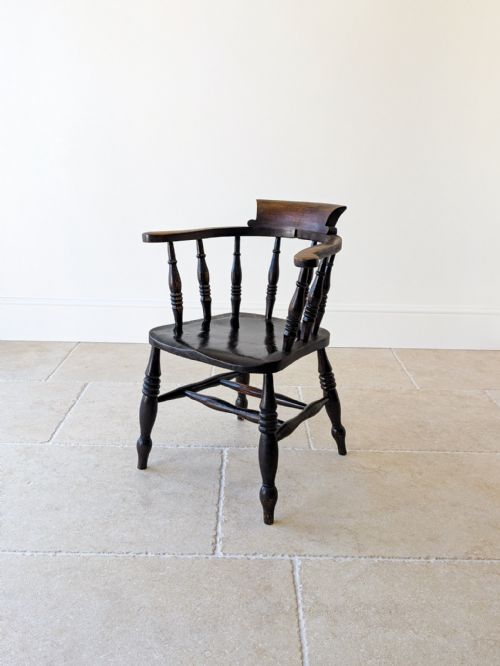
Elbow chairs feature armrests and were traditionally placed at the ends of a dining table or utilised independently as desk chairs. Side chairs lack arms, allowing them to tuck neatly beneath dining tables or line a hallway wall.
Both forms often share identical back designs and leg styles when produced as part of a larger dining suite.
How should I care for leather upholstery on antique chairs?
Historical leather requires minimal moisture and benefits from occasional cleaning with a damp cloth followed by a neutral wax polish. Avoid modern chemical cleaners that strip natural oils from the hide.
Keeping antique leather seating out of direct sunlight prevents the material from drying out and cracking over time.