
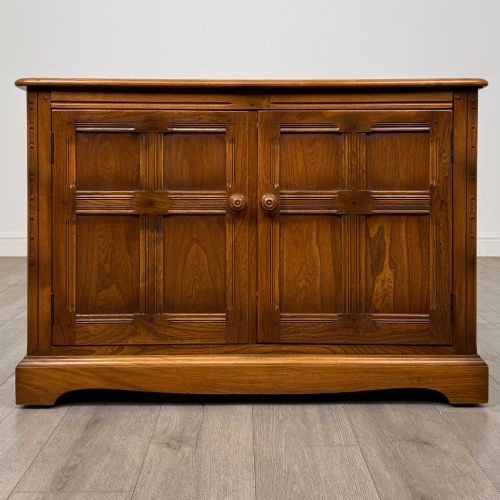
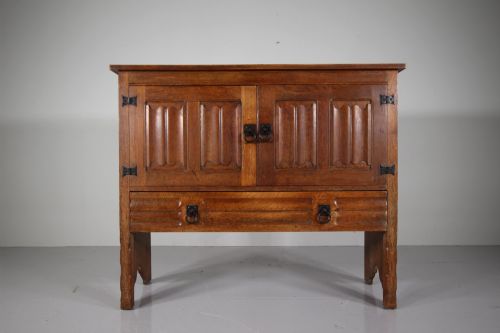
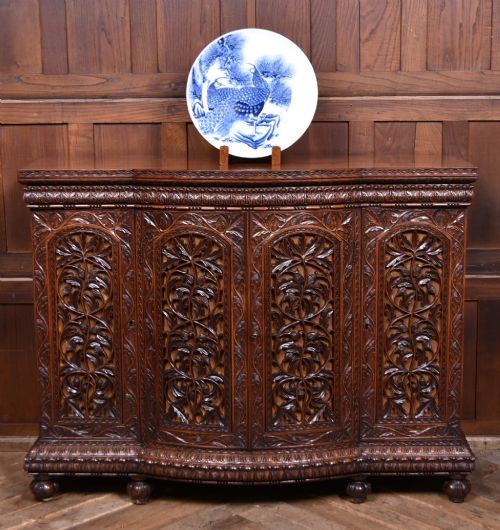

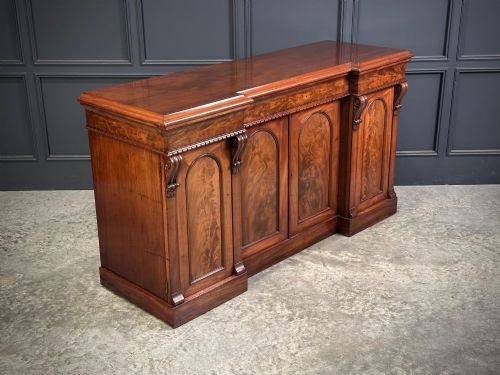
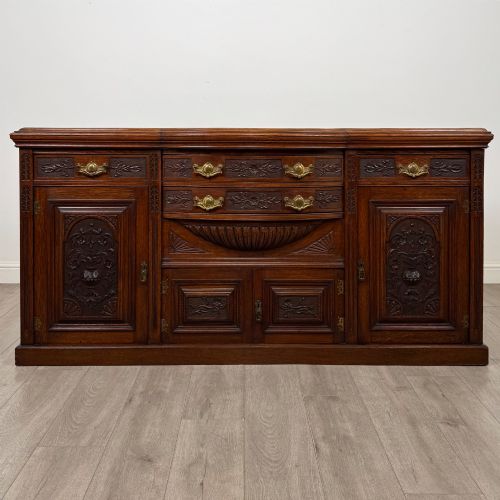
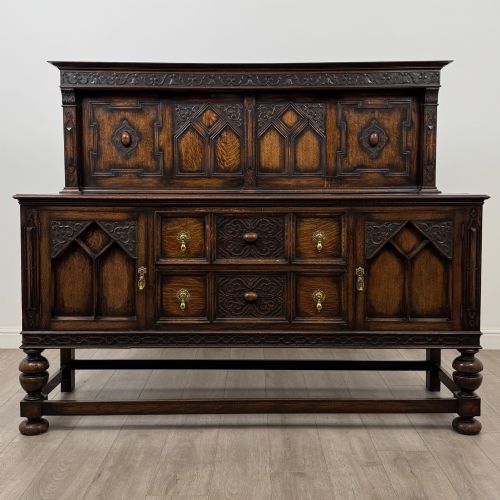
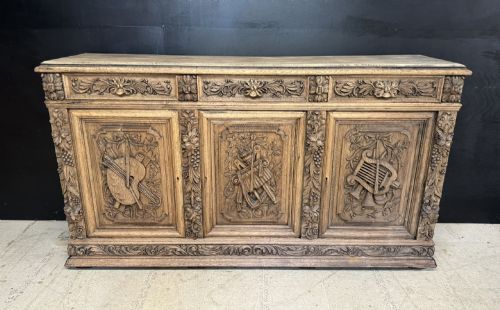
Antique Carved Buffet Cupboard
An antique carved buffet cupboard brings substance and rich timber grain to a room, offering substantial storage built to endure.
Antique Carved Buffet Cupboard
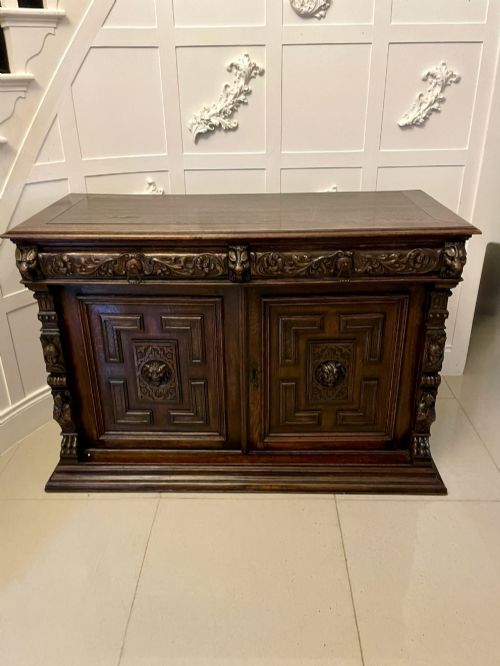
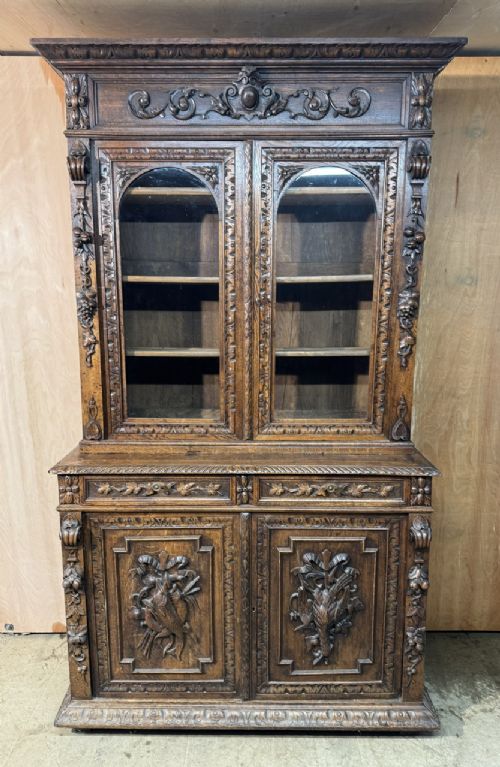
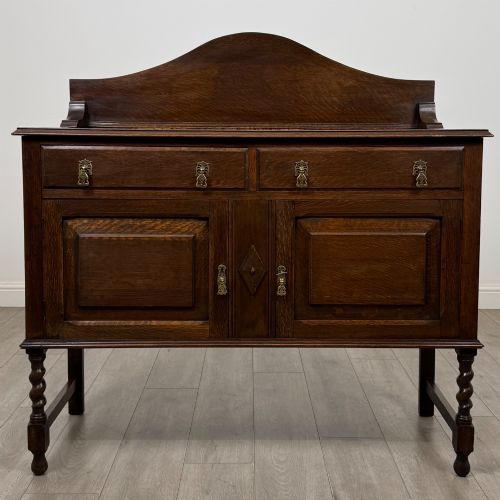
When you search for an antique carved buffet cupboard, you encounter substantial storage furniture designed for dining rooms and grand halls. These pieces combine the utility of a cupboard with the display surface of a sideboard or serving table. The selection spans several centuries, touching upon the 17th, 18th, and 19th centuries, alongside Edwardian interpretations.
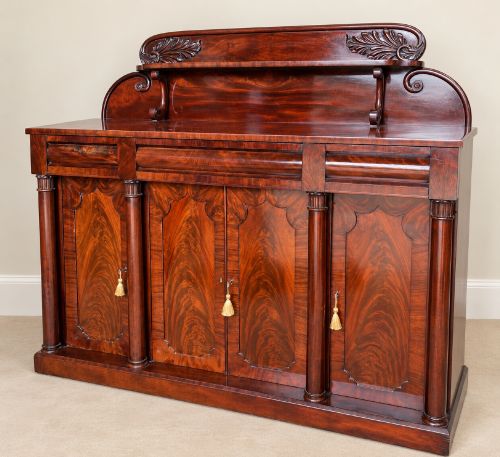
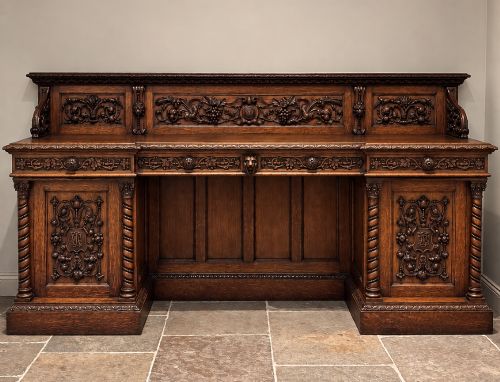
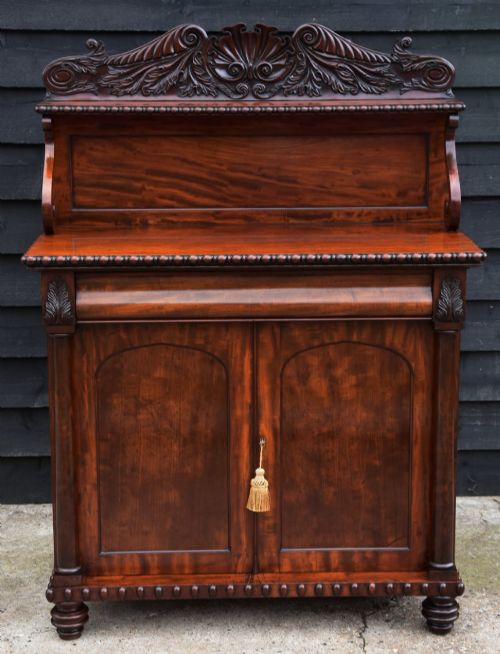
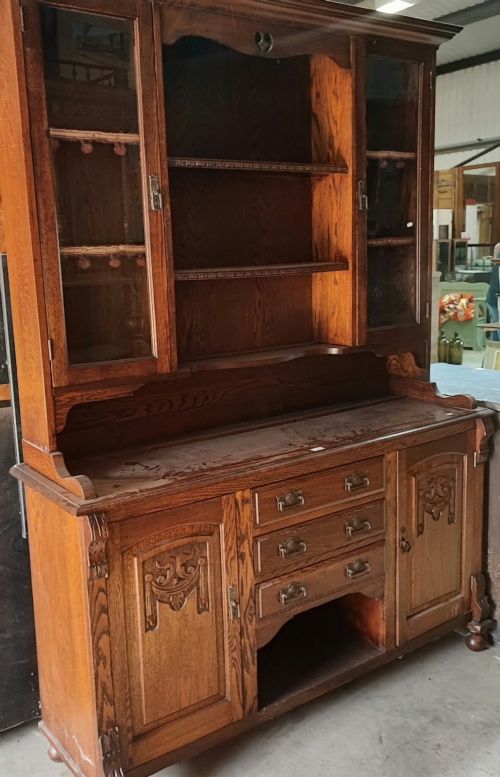
Oak forms the backbone of these pieces, frequently enriched with deep relief carving in revivalist styles such as Jacobean, Gothic, and Renaissance. You also encounter walnut, rosewood, and mahogany variants, sometimes featuring flame veneers or marble tops. The forms range from court cupboards and enfilades to chiffoniers and Welsh dressers.
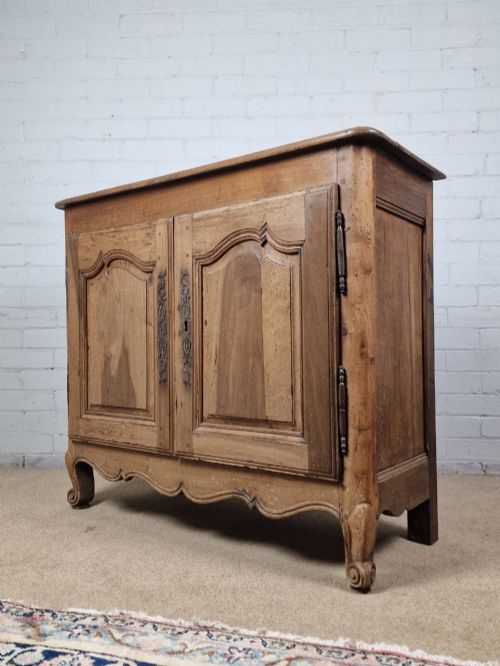
Victorian and Edwardian iterations dominate the selection, often carrying heavy, expressive carving typical of revival aesthetics. Pieces from earlier periods appear in simpler, more structural oak forms, while French provincial examples bring regional cabinet-making traditions into the mix.
Judging Quality
The depth and crispness of the carving separate standard workshop production from exceptional cabinet-work. Hand-chiselled detailing shows a fluency and variation that mechanical or later recutting lacks.
Timber selection dictates the visual weight of the piece, with well-figured oak grain and matched flame mahogany veneers creating a cohesive finish across doors and drawers. Original brass and iron hardware further elevates a piece's integrity.
Listings feature oak predominantly, alongside mahogany, walnut, and rosewood, spanning periods from the 17th century through the Edwardian era.
The Antique Carved Buffet Cupboard Glossary
- Court cupboard
- An antique enclosed storage piece, typically featuring an upper recess and lower cupboards, rooted in early oak vernacular furniture. It provides formal display space alongside secure storage.
- Enfilade
- A long cabinet or sideboard of French origin, traditionally featuring a series of three or more doors in a continuous line. It offers monumental proportions and extensive interior shelving.
- Chiffonier
- A compact sideboard or cabinet developed in the Regency and Victorian periods, often fitted with a small shelf or mirror back. It serves as a side table for serving or displaying porcelain.
- Flame mahogany
- A veneer cut from the fork of the mahogany tree where the branch meets the trunk, producing a rippling, flame-like pattern. Cabinet-makers used it on prominent drawer fronts and doors.
- Jacobean style
- A revival aesthetic drawing on 17th-century English design, characterised by geometric mouldings, heavy turned legs, and strapwork carving. It gives oak furniture a dense, architectural presence.
Antique Carved Buffet Cupboard: Frequently Asked Questions
What is an antique carved buffet cupboard used for?
These pieces served historically in dining rooms to store tableware, linen, and serving dishes while providing a surface for food presentation. Today, they function as substantial storage credenzas and focal points in living spaces.
Their deep cupboards and drawers accommodate modern household items while lending historic character and architectural weight to a room.
How do I identify a Victorian oak buffet?
Victorian oak buffets typically display heavy, confident carving, often executed in revivalist modes like Gothic or Jacobean styles. They utilise solid oak timbers with robust joinery and frequently feature panelled doors.
Look for period-appropriate brass or iron hardware and structural joinery that reflects mid-to-late 19th-century manufacturing methods.
Are these cupboards made of solid wood?
The majority of these pieces utilise solid oak or walnut for their structural frames, doors, and carved elements. Finer mahogany versions frequently incorporate matched veneers over secondary timbers on flat surfaces like drawer fronts.
This combination ensured stability and allowed cabinet-makers to display highly figured grain patterns without warping the primary structure.
How do I integrate a large sideboard into a modern room?
A substantial carved cupboard works best anchored against a large wall where its depth and height can balance the proportions of the room. Use the top surface for lamps, ceramics, or books to soften the visual mass.
Allow the rich timber tones and carved details to contrast cleanly with neutral walls and contemporary surroundings.