





Antique Caned Nursery Seat
These antique caned nursery seat designs offer sturdy, woven seating built for children across the Georgian, Regency, and Victorian eras.
Antique Caned Nursery Seat
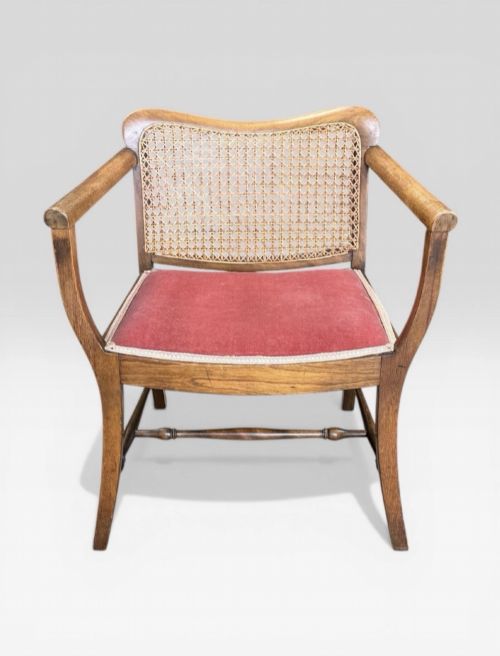
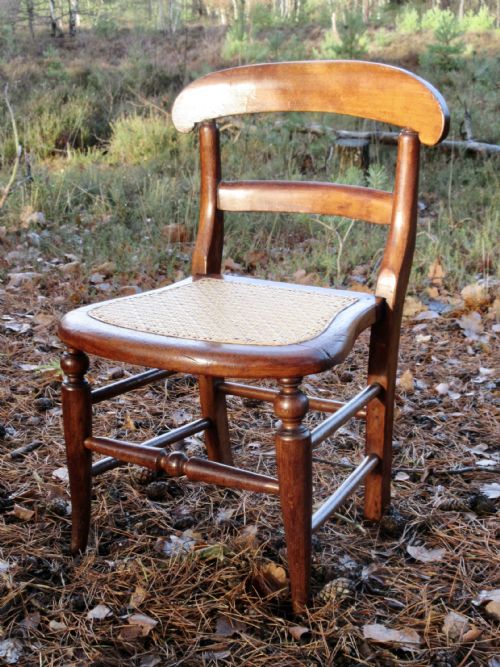
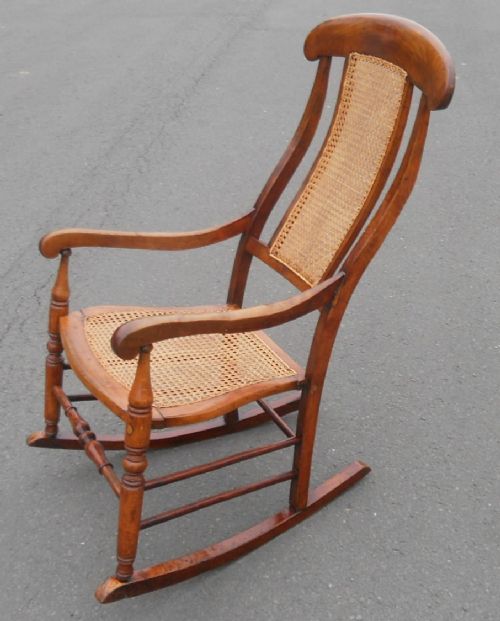
An antique caned nursery seat brings historical children's furniture into domestic spaces through small-scale chairs, armchairs, and rocking chairs. These pieces span Georgian, Regency, and Victorian periods, alongside Edwardian bentwood examples.
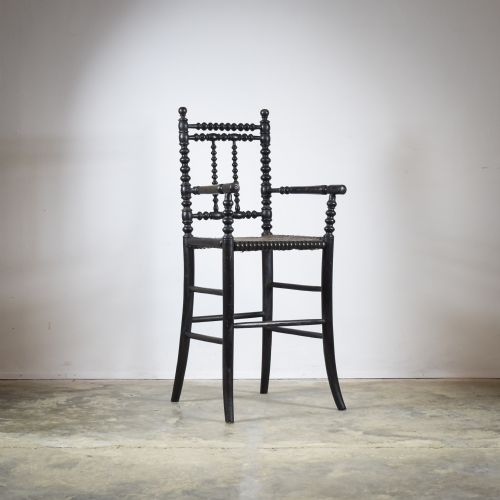
Buyers encounter child's high chairs, bergere chairs, rocking chairs, and correction chairs on this page. Many incorporate woven cane seats and backs within sturdy wooden frames.
Origins range from formal mahogany high chairs to steam-bent beech rockers produced by makers like Thonet and James Shoolbred.
How they were made
Craftsmen built these frames using traditional hardwoods such as mahogany, beech, oak, and ebonised wood. Steam-bent techniques shaped flexible timber into curved bentwood and faux bamboo forms.
Woven rattan cane creates breathable seats and backs, secured through traditional drilling and binding methods. Occasional upholstery elements like velvet complement the exposed wooden structures.
Some miniature rocking chairs were built precisely scaled for a child's favourite doll rather than a living occupant.
What varies in quality
The standard of timber selection and joinery distinguishes finer workshops from standard production. Dense, richly grained mahogany and precisely turned bobbin details reflect higher cabinet-making standards.
The integrity and tightness of the hand-woven cane panels dictate longevity. Original, undamaged cane work holds greater interest than later re-weaving.
James Shoolbred·Thonet
The Antique Caned Nursery Seat Glossary
- Bergere chair
- An enclosed upholstered armchair with a wooden frame, often featuring cane panels to the back and sides. This French-inspired form provides a lighter visual weight.
- High chair
- An elevated child's seat designed for feeding at a table. These pieces often feature footrests and safety rails.
- Bentwood
- Wood that has been heated with steam to make it pliable and curved into organic shapes. This technique defines many nineteenth-century seating designs.
- Correction chair
- A nineteenth-century seating form designed with a tall, straight back intended to encourage good posture in children. These examples frequently incorporate cane work.
- Bobbin turning
- A form of woodturning characterised by a series of rounded, spool-like shapes carved along the legs or stretchers. This decorative detail appears on various nineteenth-century frames.
Antique Caned Nursery Seat: Frequently Asked Questions
What are antique caned nursery seats?
These pieces are small-scale historical chairs designed for children, featuring woven cane work within wooden frames.
They encompass various forms including rocking chairs, high chairs, and armchairs produced during the Georgian, Regency, and Victorian periods.
How were these children's chairs used?
They served practical daily functions in nineteenth-century nurseries, providing seating for meals, play, or posture correction.
High chairs kept infants elevated at table height, while smaller rockers and armchairs offered independent seating for toddlers.
How do I care for cane seats?
Cane requires gentle maintenance and moderate humidity to prevent the natural rattan material from drying out and snapping.
Light dusting and occasional damp wiping help keep the woven fibres supple over time.
How do I identify the period?
Stylistic markers and timber choices indicate the era of manufacture, moving from heavy Georgian mahogany to Victorian beech and Edwardian bentwood.
Turned wooden details, structural forms, and maker stamps help narrow down the date of production.