


Antique Caned Daybed
These antique caned daybeds offer versatile seating and lounging, bringing classic woven texture and historic timber frames into traditional rooms.
Antique Caned Daybed
An antique caned daybed combines the posture of a settee or chaise lounge with woven plant material panels for supportive lounging. These pieces range across various historical periods, offering low profiles designed for daytime rest.
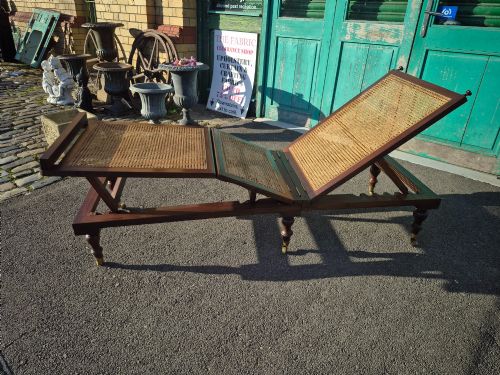
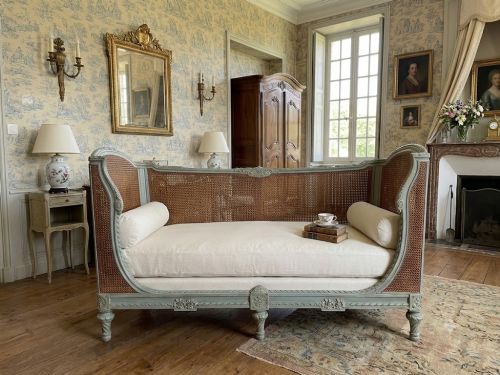
The versions most commonly met on this page span the nineteenth century alongside later twentieth-century iterations. They appear in forms such as campaign day beds, French Louis XVI style settees, and Anglo-Indian hardwood couches.
Framed in timber such as walnut, mahogany, beech, and rosewood, these daybeds integrate woven panels into backs and sides. Their silhouettes reflect regional aesthetic movements from French provincial chateaux to British colonial workshops.
How they were made
Makers constructed the structural frames of these daybeds using solid hardwoods like mahogany, walnut, and rosewood, alongside painted beech and bamboo. Joinery relied on traditional cabinet-making techniques to support the longitudinal weight of a resting person.
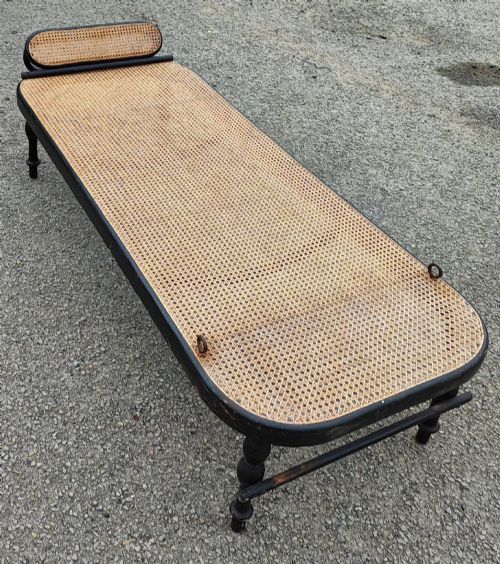
Panels of natural cane, rattan, and wicker were woven directly through drilled holes or slotted channels along the wooden framing. This permeable weaving method provided flexible support while allowing air circulation around the sitter.
Some nineteenth-century examples fold flat for travel, proving that historic officers still insisted on lounging in proper style while on military campaign.
What varies in quality
The refinement of the timber carving and the integrity of the structural joinery separate standard examples from finer pieces. Dense hardwoods like rio rosewood and finely turned mahogany exhibit superior material depth compared to painted softer woods.
The tightness, regularity, and preservation of the woven cane or rattan work dictate the overall grade of the piece. Intricate multi-strand weaving patterns demand higher skill than basic grid panels.
Angraves of Leicester
The Antique Caned Daybed Glossary
- Cane
- A material woven from the outer bark of rattan palms, utilised for resilient and breathable seating panels. It creates a smooth, patterned surface across backs and seats.
- Bergère
- An enclosed upholstered or caned armchair or sofa style originating in France, featuring wooden frames. The sides are typically filled with woven cane.
- Campaign style
- Portable furniture designed for military officers on the move, frequently incorporating folding mechanisms and brass hardware. These pieces balance durability with modular convenience.
- Gustavian
- The Swedish interpretation of French neoclassical design, characterised by restrained carving and pale painted finishes. This style favours understated elegance over heavy ornamentation.
- Chaise lounge
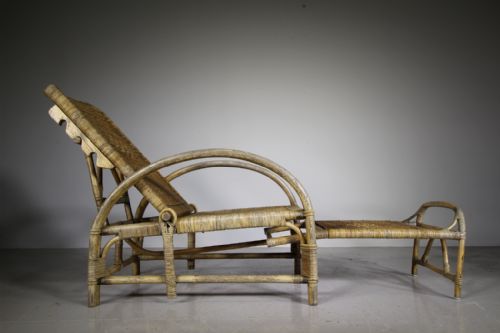
- An elongated chair meant for reclining, combining seat and footrest into one continuous piece. Historical examples feature supportive backrests and caned seating decks.
Antique Caned Daybed: Frequently Asked Questions
Where should I place a daybed?
These pieces suit living rooms, large hallways, or spacious bedrooms where their decorative backs remain visible. They function well beneath windows or positioned centrally to anchor a seating arrangement.
Because they combine the utility of a sofa with a reclined seat, they offer a comfortable secondary resting spot without dominating a room like a full bed.
How do I care for cane?
Keep woven panels away from direct heat sources and excessive moisture to prevent the natural plant fibres from becoming brittle. Occasional dusting with a soft brush maintains the material.
Applying a damp sponge lightly to the reverse side can help maintain humidity in dry indoor environments, ensuring the cane remains flexible.
Are these daybeds comfortable?
Their comfort depends on the supportive angle of the backrest and whether loose cushions or squabs are added to the wooden or caned deck. The woven panels provide a springy, yielding surface that adapts to weight.
Many historic examples were designed for lounging rather than sleeping overnight, making them ideal for reading or daytime resting.
How do I identify French styles?
French Louis XVI and Gustavian pieces often feature painted wooden frames, symmetrical neoclassical carving, and exposed fluted legs. The canework is tightly integrated into curved structural rails.
Look for refined proportions and scroll arms that reflect continental cabinet-making traditions distinct from British campaign or Anglo-Indian forms.