


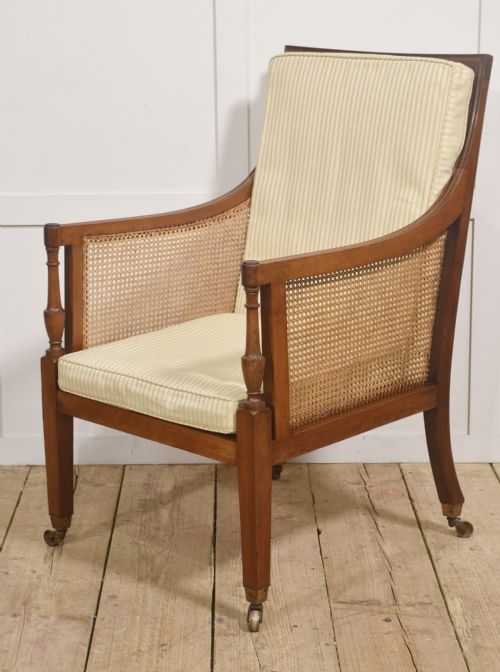


Antique Cane Reading Chair
An antique cane reading chair offers deep comfort and structural elegance, pairing woven cane with rich mahogany or oak for a distinguished study seat.
Antique Cane Reading Chair
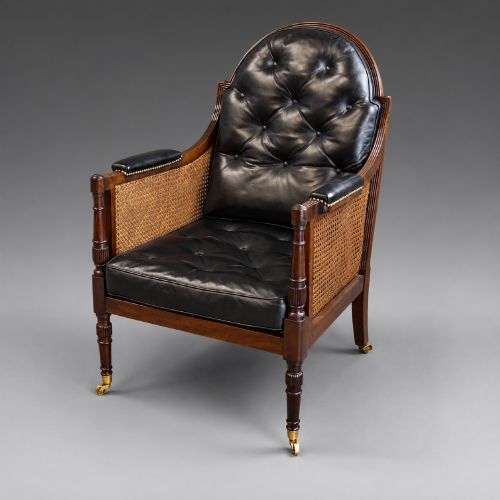
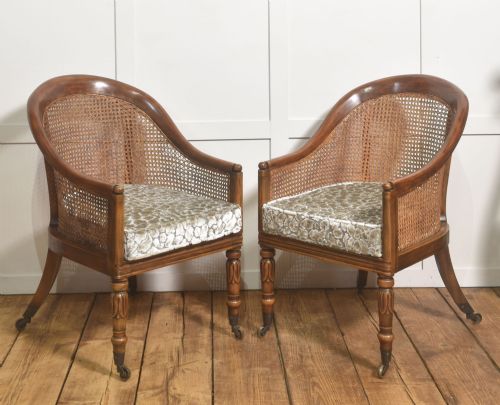
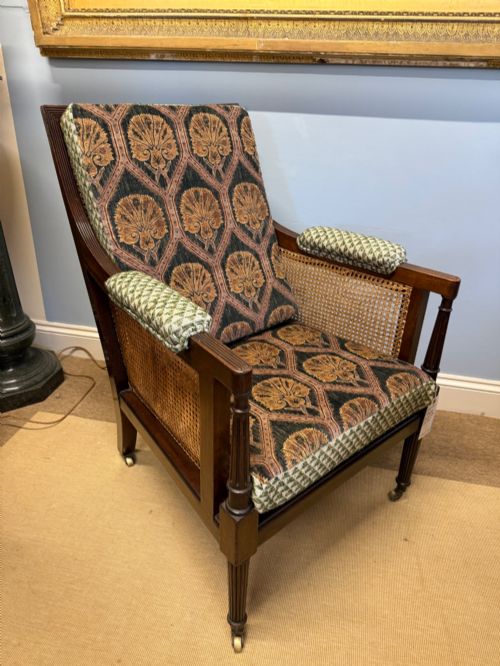
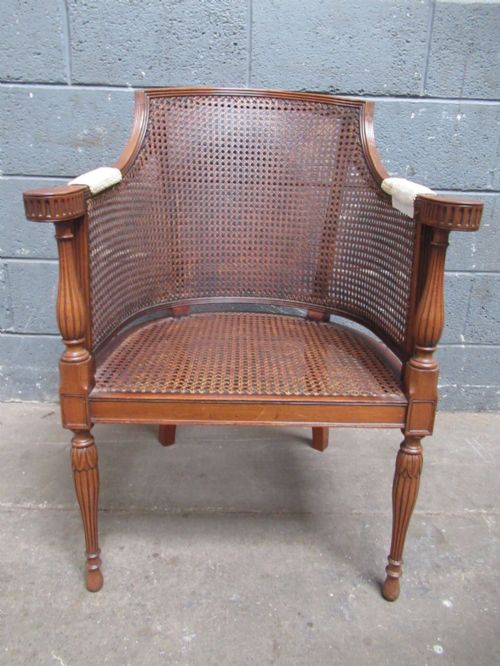
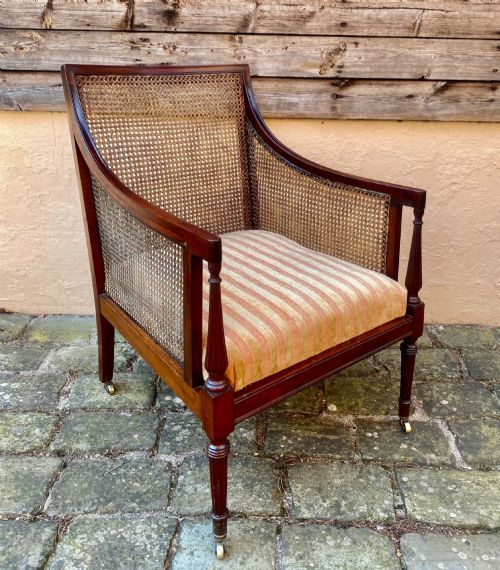
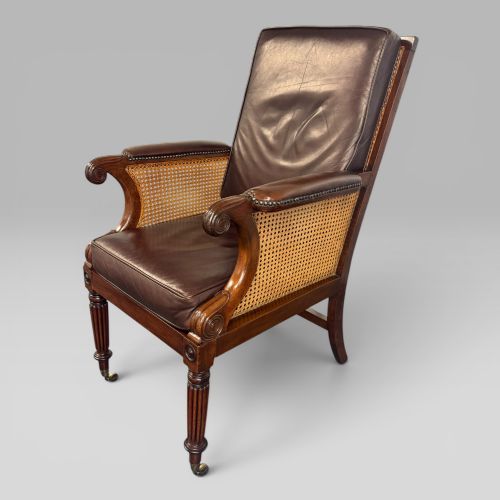
An antique cane reading chair is an armchair designed for the library or study, featuring woven cane panels and supportive armrests. These pieces appear across periods from the Regency era through to the 1930s, encompassing styles such as William IV, Edwardian, and Art Deco.
The form frequently overlaps with the bergère, presenting a low, deep seat intended for prolonged periods of reading. Mahogany forms the primary timber, alongside oak, satinwood, and faux rosewood.
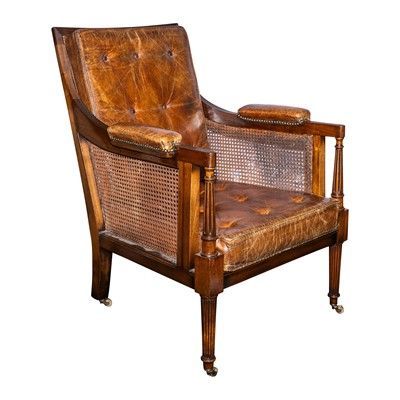
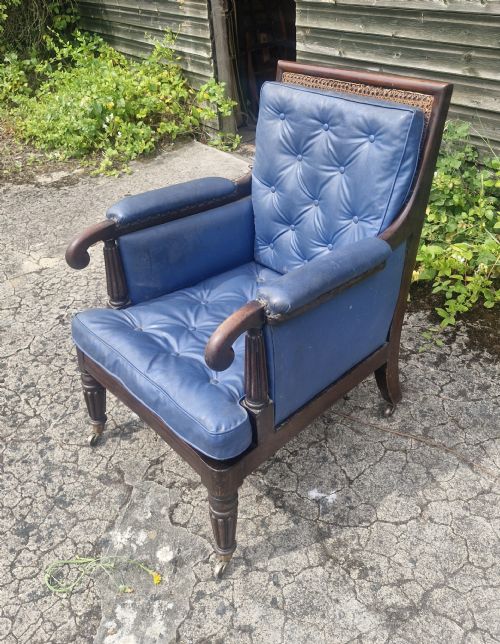
Country house libraries and formal town settings alike accommodated these armchairs, often supplemented by leather or velvet squab cushions for additional comfort. The prevalent versions on this page span the 19th century and the early decades of the 20th century.
How they were made
Cabinetmakers constructed the frames using solid timbers such as mahogany, oak, and satinwood, frequently turning or carving the wooden members for structural integrity. Selected pieces incorporate brass mounts or subtle painted details on faux rosewood surfaces.
Cane and rattan cane were woven tightly into the frame channels to create resilient, flexible panels for backs and sides. Upholstery traditions added loose cushions upholstered in leather, fabric, or velvet to complete the seat.
Antique Cane Reading Chair Retail Price Guide 2026
Typical asking prices for cane reading chair among the pieces listed under this phrase on Sellingantiques today, from the lower quarter to the upper quarter. They describe what is for sale here now, not the wider market.
Certain library chairs are so generously proportioned that they demand their own dedicated corner by the fireside.
What varies in quality
The refinement of the timber turning and the proportion of the frame set the finer examples apart from simpler utilitarian pieces. Well-drawn frames exhibit generous proportions and balanced curves that support the sitter correctly.
The tightness and regularity of the cane weaving indicate the skill involved in the original construction. Superior pieces maintain crisp carving details on the mahogany or oak framework and retain harmonious lines.
Gillows·Dryad of Leicester
The Antique Cane Reading Chair Glossary
- Bergere
- An enclosed upholstered armchair with wooden framing and woven cane sides and back. This French-inspired form became a staple of British libraries from the Regency period onwards.
- Cane
- Strips of rattan plant peeled and woven into open patterns for chair seats and backs. It provides flexible, breathable support.
- Tub chair
- An armchair with a continuous curved back and arms forming a rounded enclosure. This shape offers a secure and enveloping seat for reading.
- Squab
- A loose, upholstered cushion placed on the seat of a chair. These were traditionally filled with down, hair, or wool to soften the cane base.
Antique Cane Reading Chair: Frequently Asked Questions
What is a bergere chair?
A bergere chair is an upholstered armchair featuring exposed wooden framing and woven cane panels on the back and sides. It originated in France and was widely adopted by British cabinetmakers for libraries and drawing rooms.
The design prioritises comfortable lounging, often accompanied by a fitted loose cushion on the seat base. Regency and Victorian examples frequently utilise mahogany for the structural frame.
How do I care for cane furniture?
Cane requires moderate humidity to prevent the natural fibres from becoming brittle and snapping under pressure. Keeping the chair away from direct heat sources helps preserve the elasticity of the rattan.
Cleaning involves gentle dusting with a soft brush and occasionally wiping the cane with a damp cloth. Avoid saturating the woven material during maintenance.
Were these chairs used for reading?
These armchairs served primarily in libraries, studies, and drawing rooms for reading and quiet contemplation. Their deep seats and enclosed cane sides provided comfort and shelter from draughts.
Added leather or fabric cushions enhanced the ergonomic support required for extended periods of sitting with books or newspapers.
How do I identify a Regency reading chair?
Regency reading chairs typically display classical proportions, saber legs, and rich mahogany timbers reflecting early 19th-century neoclassical tastes. The woodwork often exhibits restrained turning or reeding rather than heavy carving.
Many examples incorporate woven cane panels flanked by scroll arms and may bear attributions to prominent cabinetmakers like Gillows.