




Vintage Leather Bergere Chair
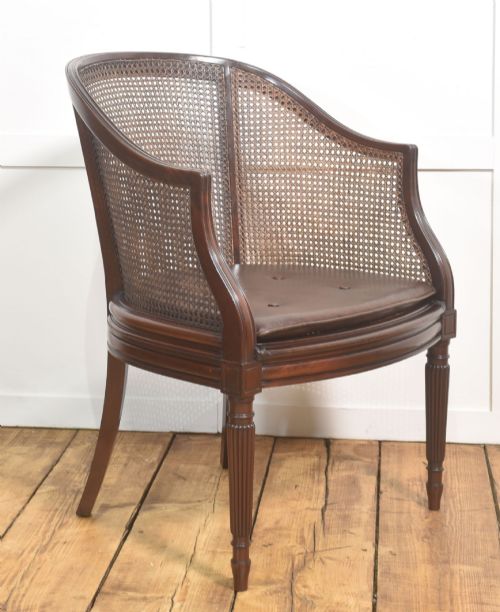
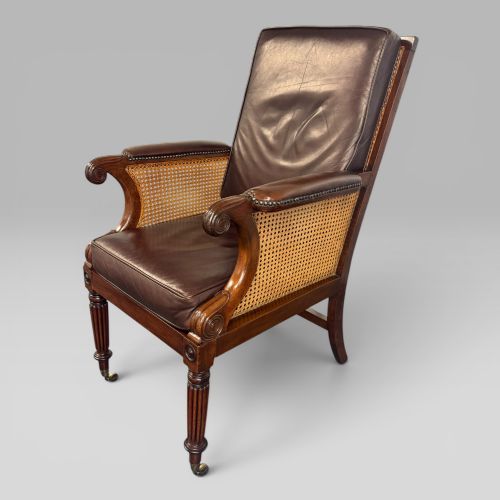
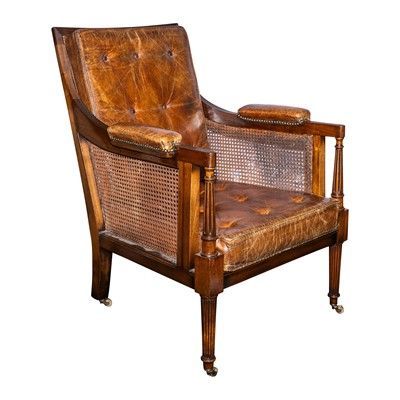
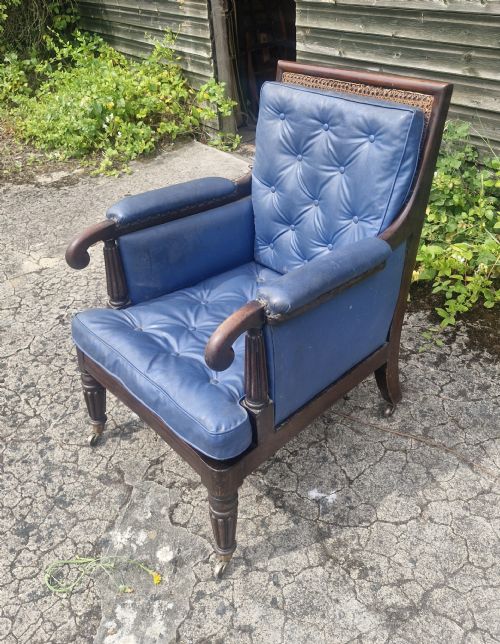
A vintage leather bergere chair combines deep-seated library comfort with woven cane and rich timber frames, offering a distinguished fireside seat.
Vintage Leather Bergere Chair
A vintage leather bergere chair is a deep library armchair featuring woven cane panels and a supportive upholstered seat, designed for long hours of reading. The pieces on this page span the nineteenth century up to nineteen thirty, drawing on Regency, Edwardian, and William IV traditions.
The most common forms you will encounter are library armchairs with mahogany or oak frames, often paired with loose leather squab cushions. British and French provincial workshops produced these seats in various revivals, including Rococo and Jacobean styles.
Makers utilised durable hardwoods like rosewood and mahogany to build these frames, incorporating intricate cane work alongside supple leather upholstery. The resulting armchairs balance structural rigidity with comfortable seating.
Construction and Materials
These armchairs were built using dense hardwoods such as mahogany, oak, and rosewood for the structural frames. Craftsmen shaped these timbers into curved arm supports and scrolled backs.
Caning was woven directly through drilled holes or inset channels along the frame to form the sides and back panels. Leather was then stretched over padded seat cushions and secured with brass tacks.
Vintage Leather Bergere Chair Retail Price Guide 2026
Typical asking prices for vintage leather bergere chair among the pieces listed under this phrase on Sellingantiques today, from the lower quarter to the upper quarter. They describe what is for sale here now, not the wider market.
Listings feature items from the nineteenth century, nineteen ten, and nineteen thirty, utilising mahogany, oak, rosewood, leather, and cane.
Assessing Quality and Craftsmanship
The standard of a bergere chair rests on the tightness of the cane weaving and the quality of the timber grain. Finer examples display hand-carved details and substantial hardwood frames without replacement sections.
Upholstery choices also distinguish individual pieces, as original or patinated leather adds considerable character. The integrity of the internal joinery dictates how well the armchair supports daily use.
The Vintage Leather Bergere Chair Glossary
- Bergere
- An enclosed upholstered armchair with wooden framing and cane side panels. This form originated in France during the eighteenth century.
- Caning
- A woven lattice made from rattan cane material. It forms flexible yet strong panels for chair backs and sides.
- Squab
- A thick, loose cushion placed on top of a chair seat base. It is typically upholstered in leather or fabric.
- Regency
- A British design period spanning the early nineteenth century. Furniture from this era often incorporates classical motifs and dark hardwoods.
Vintage Leather Bergere Chair: Frequently Asked Questions
What is a bergere chair?
A bergere chair is an enclosed upholstered armchair featuring wooden frames and woven cane sides. These seats were traditionally designed for reading rooms and libraries.
They combine wooden structures with cushioned seating to provide a supportive and deep posture.
How do I care for vintage leather?
Vintage leather requires regular conditioning to maintain its flexibility and prevent the surface from drying out. Avoid placing these armchairs in direct sunlight or near heat sources.
Gentle cleaning with appropriate leather balms preserves the natural patina developed over the decades.
Are these chairs comfortable for daily use?
These library armchairs were engineered for extended sitting, featuring deep seats and supportive angled backs. The addition of a cushioned squab seat enhances daily comfort.
Their robust hardwood construction ensures they withstand regular use in modern living spaces.
How do I identify a Regency piece?
Regency pieces typically feature dark mahogany or rosewood timbers with restrained classical lines. The style dates from the early nineteenth century and emphasises architectural proportions.
Makers of this period often incorporated turned legs and subtle inlay work into the frames.