



Antique Candy Dish
An antique candy dish brings table service to life, offering decorative glass, porcelain, and silver forms for sweets.
Antique Candy Dish
An antique candy dish encompasses decorative bowls, bonbon dishes, sweetmeat jars, and baskets designed to hold confectionery. The selection spans the nineteenth century through the Art Deco era, bringing together domestic tablewares and ornamental porcelain.
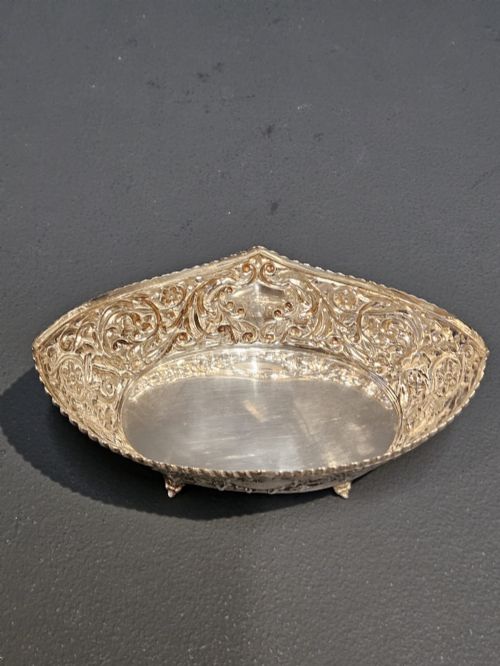
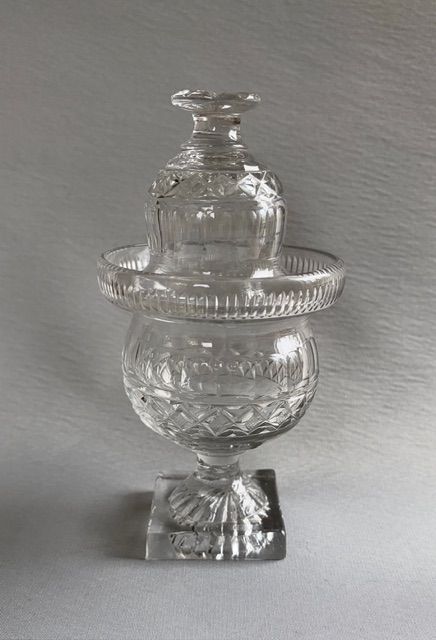
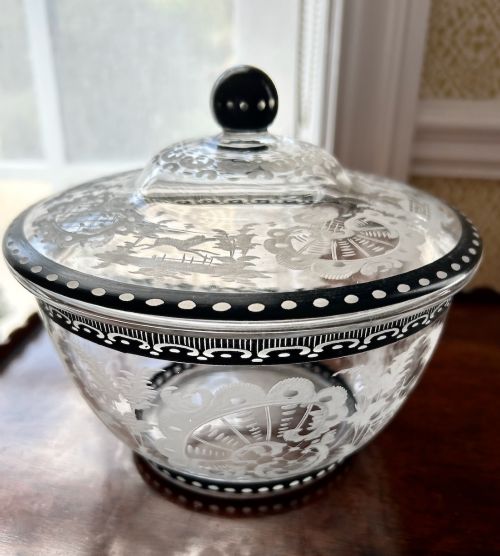
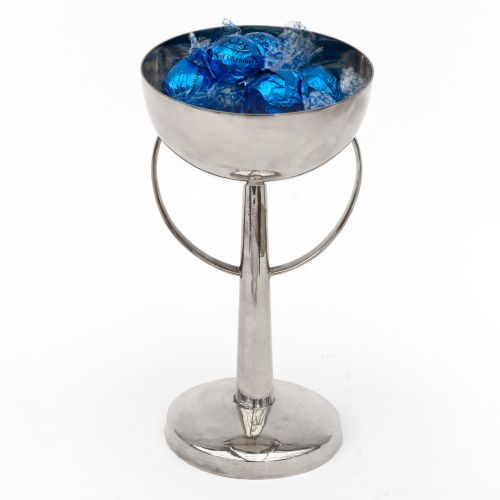
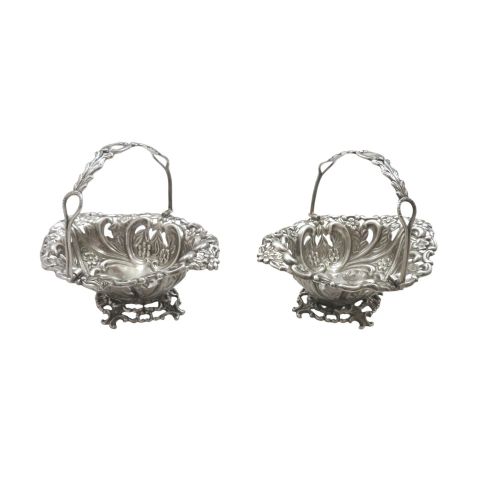
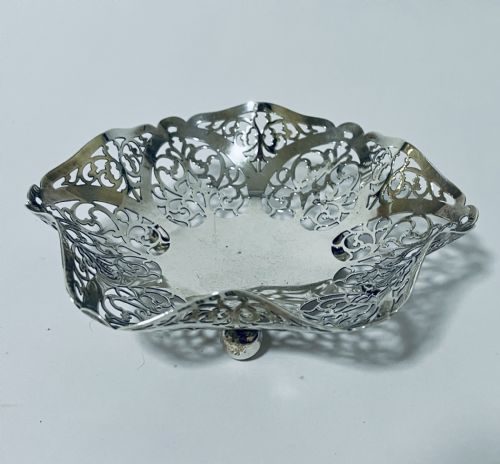
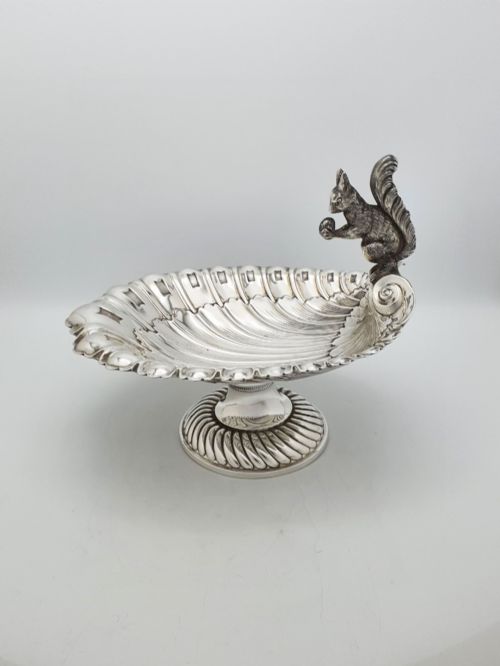
The most common forms you meet include silver-plated bonbon dishes, cut glass covered bowls, and ceramic sweetmeat figures. These pieces range from Victorian silver baskets to French nineteenth-century glass and Art Deco ceramic bonbonnières.
Makers and origins vary widely across the inventory, taking in English silver, Thuringian porcelain, Baccarat glass, and Limoges ceramics. Each object reflects the prevailing dining customs and decorative styles of its specific decade.
Materials and construction
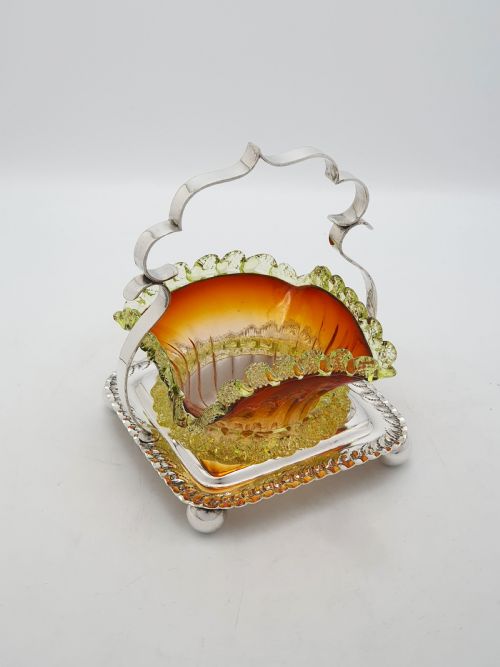
Silver plating and sterling silver provide the structure for metal baskets and bowls, often shaped in flowing Art Nouveau contours or geometric Deco lines. Artisans combined these metals with amber glass, cut crystal, and engraved glass inserts.
Glass production utilises techniques such as latticinio cane work, acid etching, and heavy cutting, resulting in opaque pink glass, cranberry tones, and clear crystal vessels. Porcelain pieces employ moulded figures, hand-painted details, and gilded highlights.
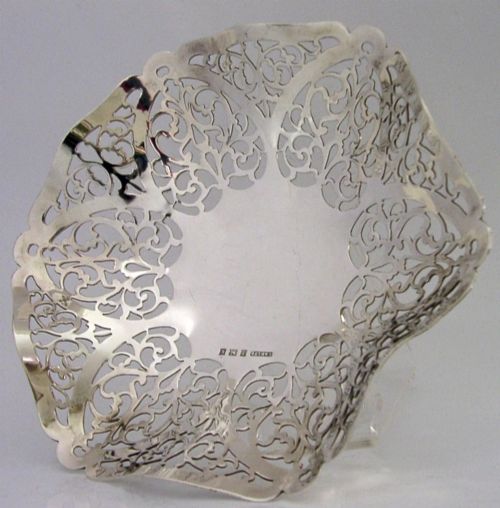
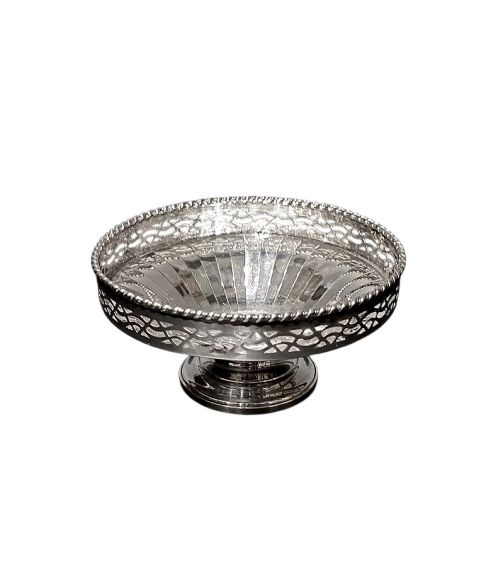
Metalwork utilises casting, piercing, and engraving, frequently bearing marks from Sheffield makers or continental manufacturers like WMF. Ceramic and glass items rely on skilled kiln firing and specialised blowing methods.
Antique Candy Dish Retail Price Guide 2026
Typical asking prices for candy dish among the pieces listed under this phrase on Sellingantiques today, from the lower quarter to the upper quarter. They describe what is for sale here now, not the wider market.
Listings feature nineteenth-century glass, Victorian silver plate, and Art Deco ceramics spanning from eighteen-fifty to nineteen-thirty.
Judging quality and craftsmanship
Quality rests upon the crispness of the casting in metalwork and the depth of the wheel-cutting on crystal bowls. Finer examples display balanced proportions, clean hallmarks, and well-executed decorative motifs without smoothing or softening.
In porcelain and glass, the refinement of the moulding and the clarity of the material distinguish superior pieces. Items featuring delicate hand-painted canes, integrated handles, or matched pairs demonstrate greater artisan skill.
WMF·Baccarat·Volkstedt·Limoges
The Antique Candy Dish Glossary
- Bonbon dish
- A small, decorative container specifically designed to hold sweetmeats or sugar-coated confections. These often feature pierced metal frames or handled glass bowls.
- Sweetmeat jar
- A covered vessel used for storing preserved fruits, nuts, or small sweets during formal dining. They frequently appear in matching pairs from the Victorian period.
- Latticinio
- A type of glasswork incorporating opaque white or coloured glass threads twisted within a clear matrix. This technique creates delicate net-like patterns across bowls and jugs.
- Sterling silver
- A silver alloy containing ninety-two point five percent silver by mass, combined with other metals for durability. English pieces typically carry assay office marks for towns like Sheffield.
Antique Candy Dish: Frequently Asked Questions
What is an antique candy dish used for?
These dishes served as decorative receptacles on dining tables or sideboards for holding sweets, bonbons, and small confections during the Victorian and Edwardian periods.
Today, they function well as display items on coffee tables or as practical holders for small trinkets and jewellery in a bedroom.
How do I clean silver plated candy dishes?
Cleaning requires a soft cloth and a gentle silver polish formulated specifically for plated items to avoid wearing down the thin silver layer.
Harsh abrasive dips should be avoided, particularly on pieces with amber glass inserts or delicate enamel work that might loosen in liquid.
Are glass candy dishes safe for food?
Most glass, crystal, and glazed porcelain dishes remain suitable for serving dry confectionery, provided the interior surface has no deep cracks.
Items with extensive silver plating or antique painted surfaces are better utilised for dry display rather than moist or acidic foods.
How do I tell Victorian from Art Deco dishes?
Victorian pieces typically display ornate Rococo Revival curves, heavy cut crystal, or elaborate floral repoussé work in silver and brass.
Art Deco items from the nineteen-thirties favour geometric symmetry, streamlined ceramic forms, and minimal ornamentation characteristic of modern design.