




Antique Candle Lustres
Antique candle lustres bring table and mantel displays to life, catching the ambient light with suspended crystal drops.
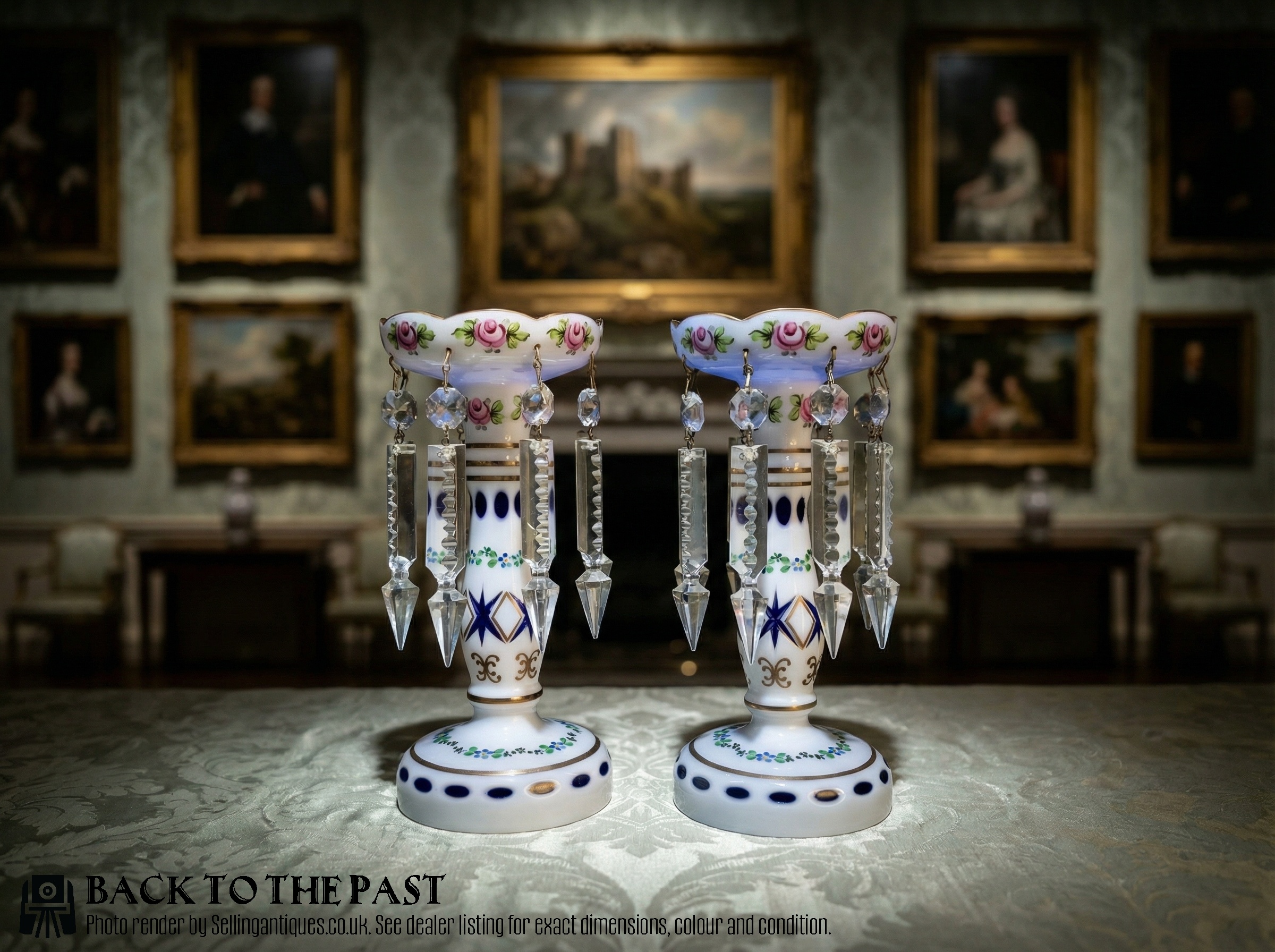
Antique Candle Lustres
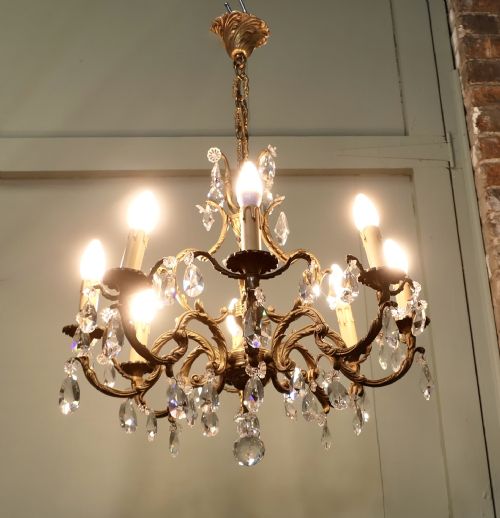
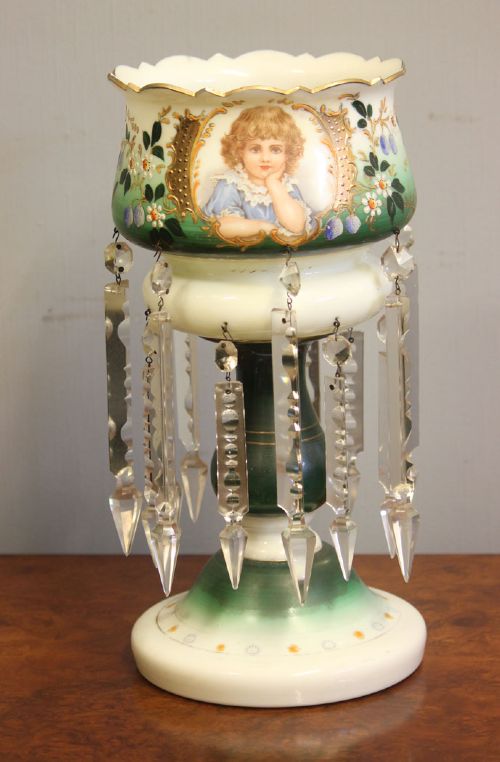
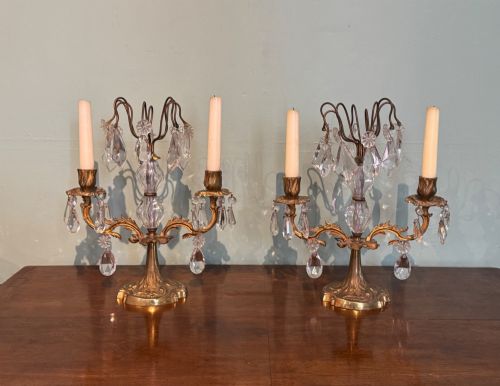
Antique candle lustres are specialised lighting pieces designed primarily for decorative display on mantels, tables, and sideboards rather than heavy illumination. These items combine a central candlestick or candelabra body with a ring of hanging crystal drops or spears that refract the candlelight.
The versions most commonly met on this page date from the nineteenth century, including the Victorian era and the Regency period, alongside early twentieth-century examples. They appear in forms ranging from single mantel lustres to pairs of table lustres and larger candelabra.
Makers and manufacturers utilised varied regional styles, producing French Empire and Rococo revival pieces, Swedish glass examples, and English Victorian coloured glass. Buyers often find them grouped with related items such as chandeliers, candelabra, and standard candlestick bases.
How they were made
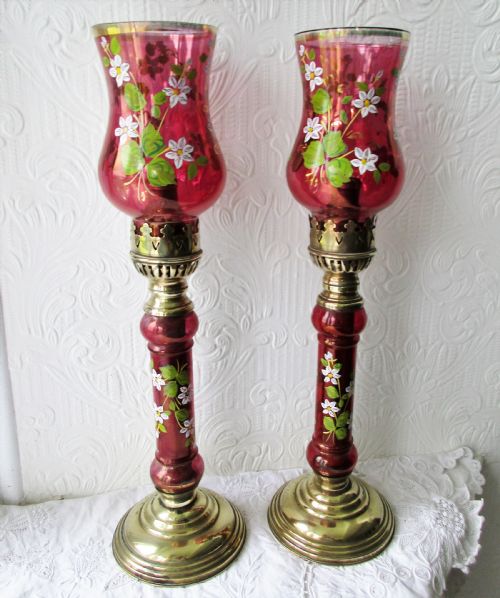
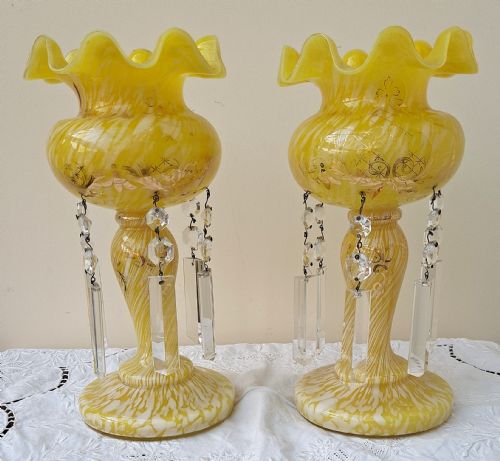
Glass and crystal form the primary body and hanging drops of these pieces, shaped through cutting, blowing, and overlay techniques. Coloured glass varieties such as ruby, green, pink, yellow, and cranberry rely on mineral oxides added during the molten stage.
Metal components utilise brass, bronze, and ormolu, often finished with gold leaf or gilding to enhance the reflective quality of the design. These metals provide sturdy structural support for the weighted bases and the crowns that suspend the glass prisms.
Listings feature 19th-century, Victorian, and Regency periods alongside 20th-century items, utilising materials from brass and ormolu to ruby, green, and cranberry glass.
What varies in quality
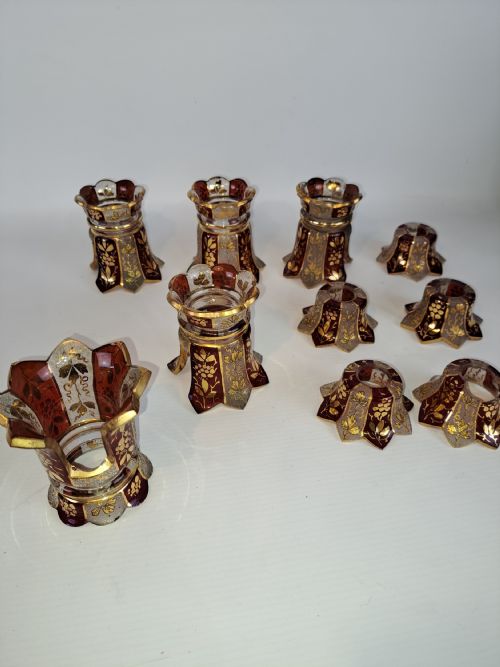
The clarity and depth of the glass cut distinguish standard production from superior examples, particularly in the faceting of the hanging prisms and the sharpness of the wheel-cut bowls. Overlay glass relies on precise layering where a coloured exterior is cut away to reveal a clear interior.
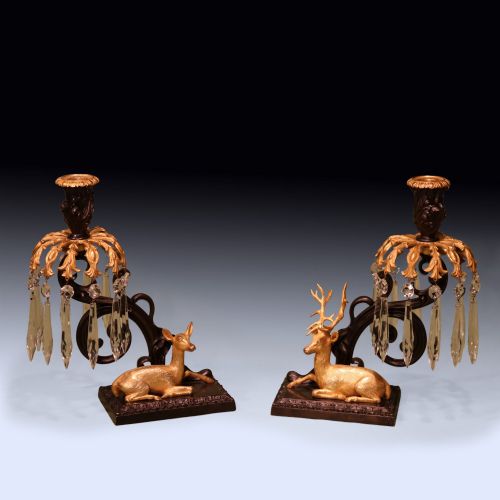
The weight and detail of the metalwork mark the division between ordinary and fine pieces, especially in cast bronze or ormolu mounts shaped as stags, does, or griffins. Complete sets of matching crystal drops that retain their original number and form indicate a well-preserved survivor.
Clarkes
The Antique Candle Lustres Glossary
- Lustre
- A candlestick or vase fitted with a ring of hanging crystal prisms designed to catch and refract light. They appeared frequently on nineteenth-century mantels and dining tables.
- Ormolu
- Gilt bronze produced by applying a mercury and gold amalgam to a bronze base, creating a rich golden surface finish. This technique was common in French and Regency metalwork.
- Overlay glass
- A glass-making technique involving two or more distinct layers of different coloured glass fused together. Craftsmen then cut away the exterior layer to expose the contrasting colour underneath.
- Cricklite
- A proprietary brand of candle-lamp and candelabra system featuring specialised shades and bases. These pieces often incorporated brass and cut glass elements.
- Prism
- A cut glass drop or pendant suspended from the upper rim of a lustre. Prisms catch and multiply the candlelight.
Antique Candle Lustres: Frequently Asked Questions
What is an antique candle lustre?
An antique candle lustre is a decorative candlestick or vase fitted with a crown of hanging glass prisms. These drops catch and reflect the flame of a candle.
They were placed on dining tables, sideboards, and drawing-room mantelpieces to add sparkle to candlelit rooms during the nineteenth century.
How do you use antique candle lustres?
These pieces serve primarily as decorative objects for mantelpieces and tables. They can hold small tapers in their central sockets.
When placed near natural light or burning candles, the suspended glass drops scatter light across the room.
How do I identify Victorian glass lustres?
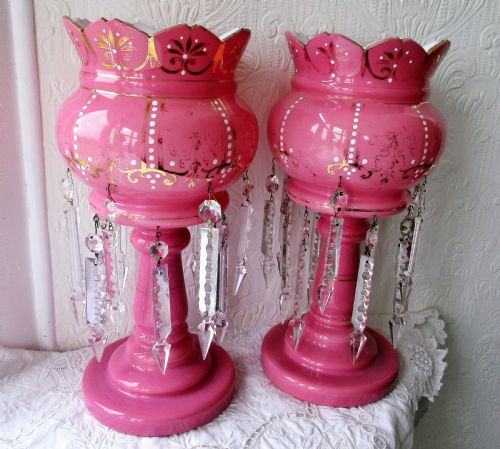
Victorian examples frequently feature intense body colours such as ruby, emerald green, pink, and opaque white opaline glass. They often include gilded enamel decoration and hand-cut crystal prisms.
Many survive as matched pairs intended for symmetry on either side of a fireplace clock.
What materials make up Regency lustres?
Regency period lustres typically combine heavy clear cut-glass with gilded bronze or ormolu mounts. Design motifs often include classical figures, animals such as stags or griffins, and foliate brass collars.
The metal bases provide the weight needed to support the elaborate glass bowls and hanging drops.