
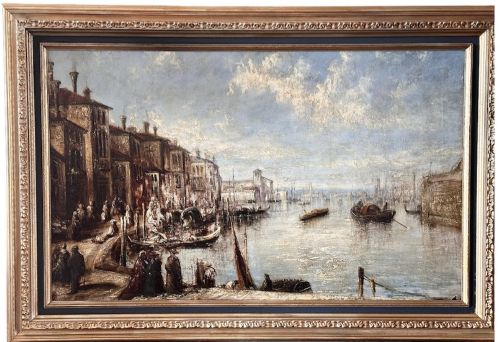


Antique Canal Scene Artwork
These antique canal scene artwork pieces capture historic waterways and bustling towpaths, bringing atmospheric charm and period character into a room.
Antique Canal Scene Artwork
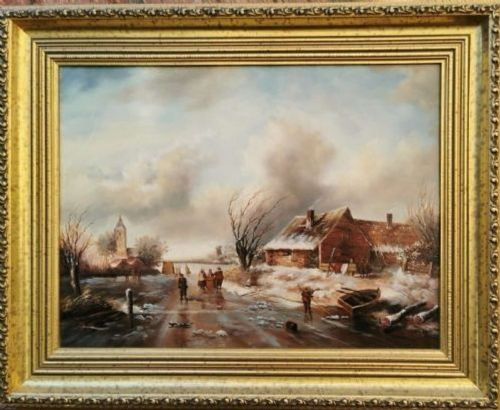
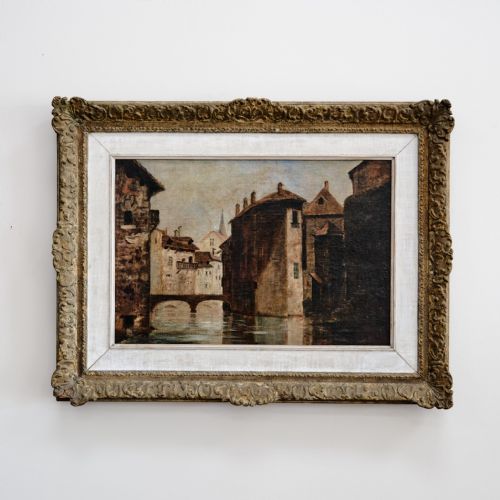
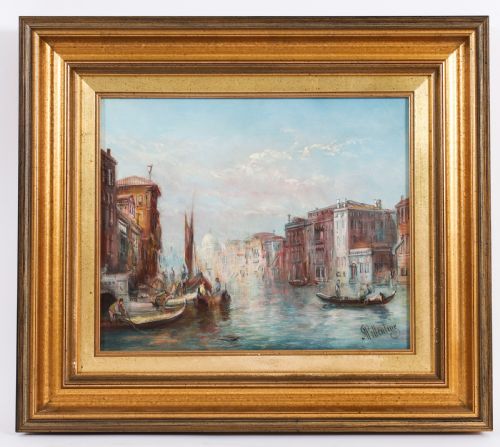
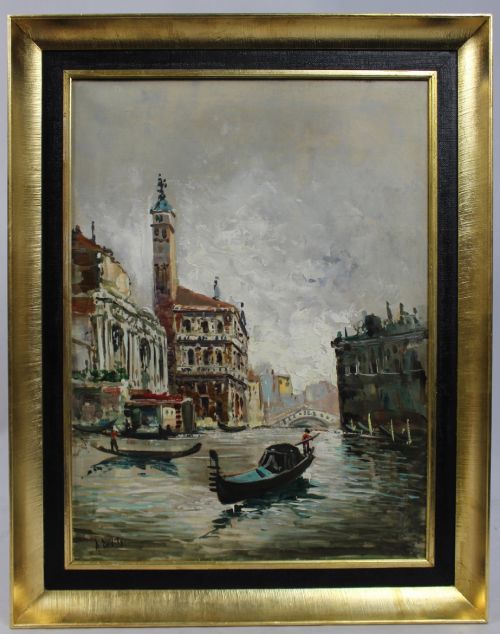
When you search for antique canal scene artwork, you encounter framed watercolours and oil paintings depicting historic waterways, urban canals, and continental ports. The examples available on this page span from the Victorian era through the early twentieth century, capturing scenes from British canals to the Grand Canal in Venice.
The subjects range from tranquil locks and barges in English landscapes to bustling Venetian lagoons featuring gondoliers and grand palazzos. These paintings document maritime life, industrial transport, and European travel during the nineteenth and twentieth centuries.
You are most likely to meet mid-nineteenth to early twentieth-century works executed in oil on canvas or delicate watercolour on paper. Many retain their original gilded wood frames, adding to their period authenticity.
How They Were Made
Artists created these works primarily using oil paint on canvas or watercolour on paper, occasionally employing pastel, gouache, and ink pen. Oil paintings allowed for rich textures and deep layering to capture water reflections and changing light, while watercolours offered swift, luminous washes for atmospheric skies and historic townscapes.
Support materials include stretched canvas secured to wooden frames and heavy paper sheets mounted behind glass. Gilded wood frames completed the presentation, often showing period mouldings suited to Victorian and Edwardian tastes.
Several artists braved the damp Venetian air simply to paint a gondolier stuck beneath a bridge.
What Varies in Quality
The distinction between ordinary and exceptional works rests on the artist's handling of light, perspective, and atmospheric depth on the water. Skilled painters commanded precise architectural detail in distant palazzos and convincing fluid movement in ripples and reflections.
Provenance and attribution elevate certain pieces, particularly those signed by established nineteenth-century and early twentieth-century painters of Venetian and continental scenes. The survival of the original frame and the preservation of the pigment without extensive overpainting also influence the standing of an individual piece.
Alfred Pollentine·Francis Moltino·Edwin Lord Weeks·Thomas Baker·Fred Lawson·Claude Jousset·Frederick Tully Lott·Marc Aldine·Jan van Couver·Jane Vivian·William Raymond Dommersen·Vittore Zanetti Zilla·Herbert Royle·Frank Wasley·Thomas Pyne·William Knox·GH Thompson·Arthur Netherwood·Ludwig Hermann·John D. Walker
The Antique Canal Scene Artwork Glossary
- Oil on Canvas
- A painting technique where pigment suspended in drying oil is applied to stretched woven fabric. This medium enabled artists to build rich textures and deep tones for water and sky.
- Watercolour
- A painting method where water-soluble pigments are applied to paper. It produces translucent washes that create light-filled, airy compositions.
- Gilded Wood
- Timber frames coated with a thin layer of gold leaf or metallic gilt. These ornate surrounds were designed to complement the paintings of the Victorian and Edwardian periods.
- Impressionism
- An art movement focusing on transient effects of light and everyday subjects. Artists of this style prioritized loose brushwork over rigid academic detail.
- Gondolier
- A traditional oarsman guiding a flat-bottomed Venetian boat. This figure frequently appears as a focal point in Italian canal compositions.
Antique Canal Scene Artwork: Frequently Asked Questions
How do I care for antique watercolours?
Watercolour paintings on paper require careful placement away from direct sunlight to prevent the pigments from fading over time. Maintaining stable indoor humidity levels also protects the paper and prevents warping inside the frame.
Keep the backing sealed and ensure the glass does not touch the painted surface directly. Professional framing with UV-protective glass offers the best preservation for delicate works on paper.
What periods do these paintings represent?
The selections span from the Victorian era through the early twentieth century, with numerous examples from the nineteenth century. You will find works created across several decades up to the mid-twentieth century.
Different decades brought shifts in technique, moving from traditional academic realism towards impressionist and expressionist interpretations of water and light.
Where were these canal scenes painted?
The locations include famous Italian waterways in Venice, British rivers and docks, and continental European ports in countries such as Belgium, France, and Germany. Artists travelled widely to capture both bustling commercial hubs and quiet rural waterways.
Venetian subjects often feature landmarks like the Grand Canal and the Bridge of Sighs, while British works frequently depict locks and quaysides.
How can I tell oil and watercolour apart?
Oil paintings feature a textured, heavier paint surface on canvas that often reflects light slightly and shows visible brush marks. Watercolours appear flat and smooth behind glass, relying on the white of the paper to shine through translucent washes.
Examining the piece closely under natural light reveals the woven texture of canvas versus the smooth paper fibres typical of watercolours.