



Antique Camphor Box
An antique camphor box brings the distinctive aroma and robust construction of colonial travel directly into a modern interior.
Antique Camphor Box
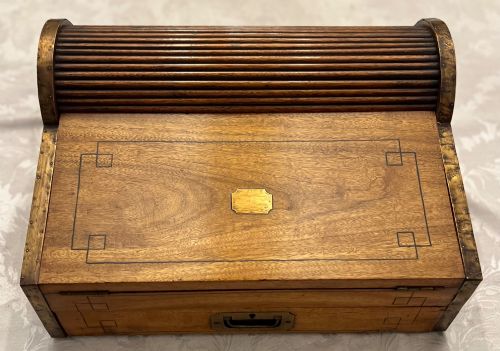
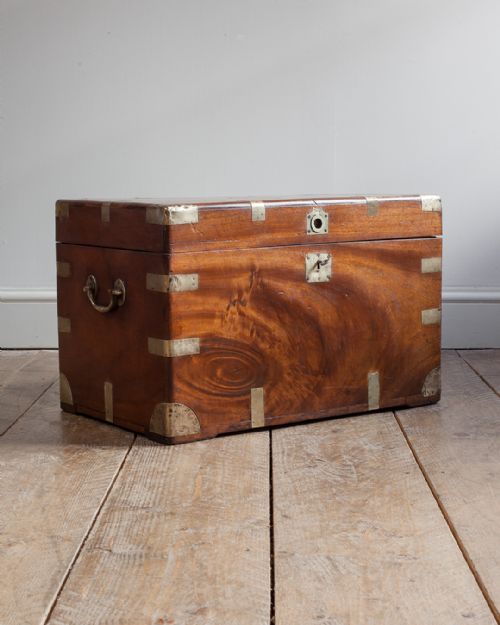
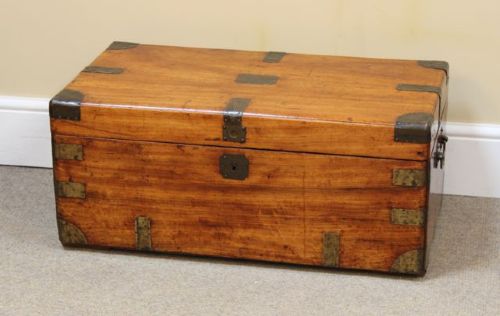
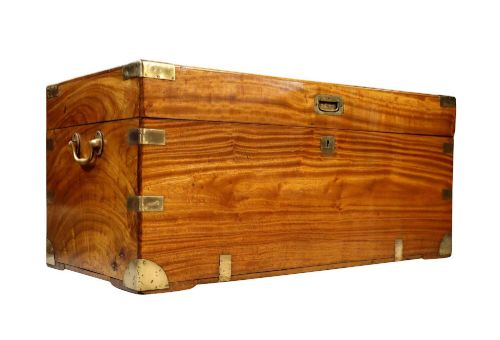
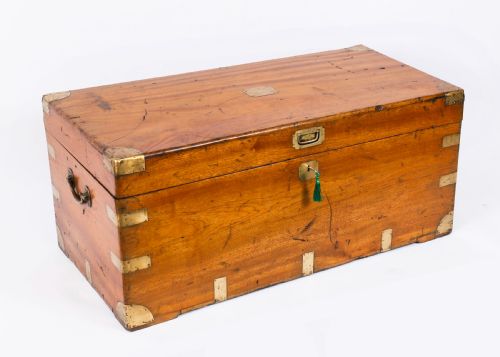
An antique camphor box serves as a functional storage piece, spanning large military campaign trunks, blanket boxes, and smaller writing slopes. These items emerge primarily from the nineteenth century, reflecting trade and military movement across China, India, and Ceylon.
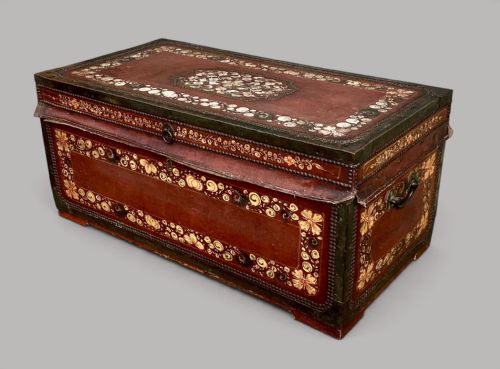
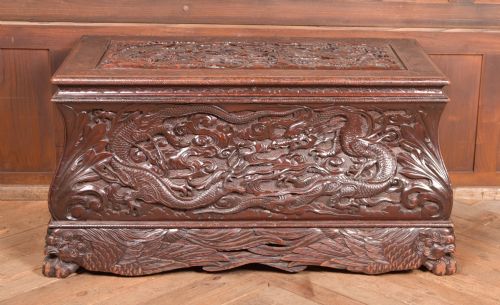
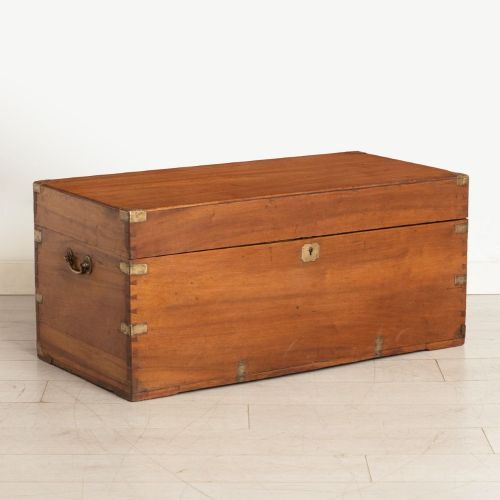
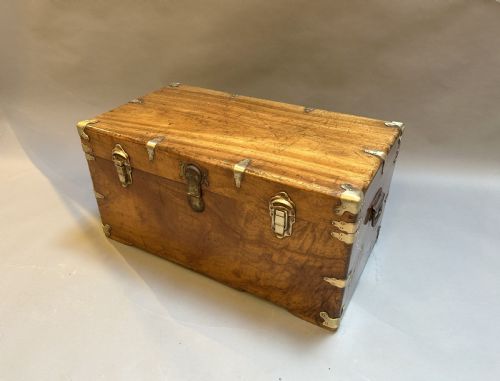
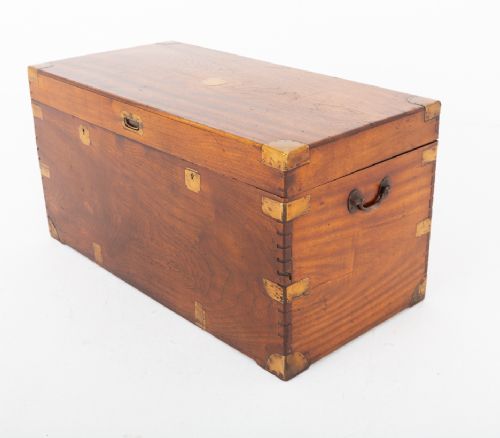
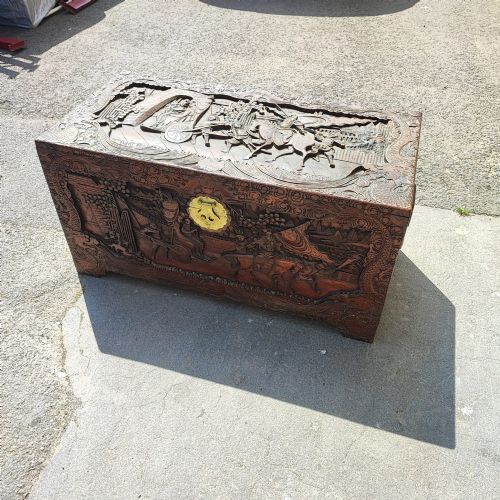
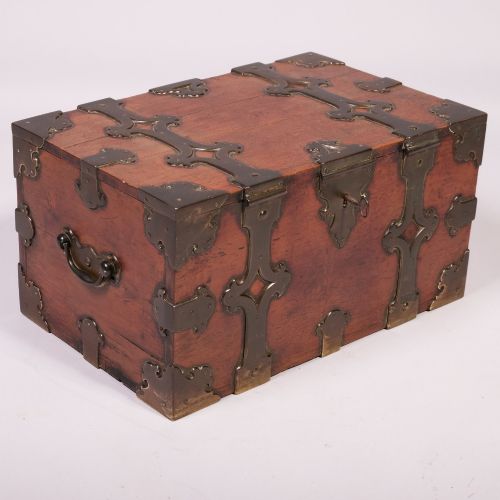
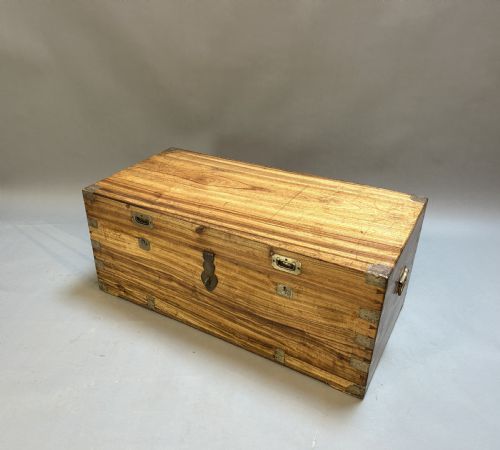
The most common examples on this page are sturdy trunks featuring brass binding and corner reinforcement designed to withstand long sea voyages. Buyers also encounter intricately carved Chinese export chests and simpler blanket boxes from the Victorian era.
Originating from the British Empire's global routes, these chests were utilised by officers and merchants to protect textiles and documents from insects and dampness. Today, they function effectively as coffee tables or blanket storage at the foot of a bed.
Materials and construction methods
The primary material is solid camphor wood, selected for its natural insect-repellent properties and distinct aromatic scent. Cabinetmakers combined this dense timber with durable secondary woods when constructing internal partitions and drawer linings.
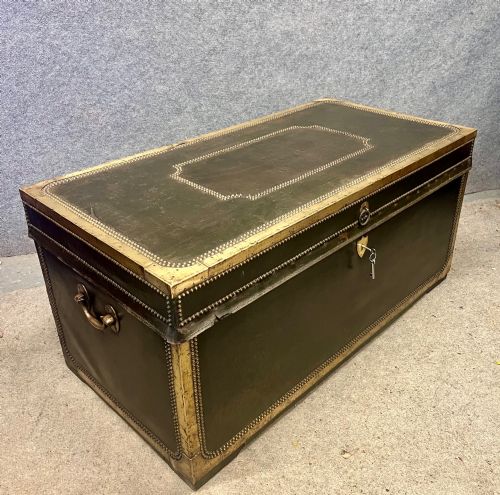
Metal hardware plays a structural role, utilising heavy brass for corner brackets, strapwork, and recessed carrying handles. Iron and leather appear on specific transport trunks, while rope and ebony accents surface on select Ceylonese and China Trade examples.
Antique Camphor Box Retail Price Guide 2026
Typical asking prices for camphor box among the pieces listed under this phrase on Sellingantiques today, from the lower quarter to the upper quarter. They describe what is for sale here now, not the wider market.
Distinctions in quality
Quality rests upon the integrity of the original brass hardware and the crispness of any surface carving. Pieces retaining their original recessed handles, locks, and working keys command greater interest among collectors.
The thickness of the camphor timber and the precision of the dovetail joints indicate the skill of the original workshop. Finer examples display minimal timber shrinkage and tightly fitted internal compartments, such as concealed tills or writing slopes.
The Antique Camphor Box Glossary
- Campaign trunk
- A portable storage chest constructed in sections with recessed brass hardware to facilitate frequent transport by military officers. These pieces often feature sturdy side carrying handles.
- China Trade
- Goods manufactured in China during the eighteenth and nineteenth centuries specifically for export to Western markets. These items frequently blend traditional Asian craftsmanship with European forms.
- Casket
- A smaller decorative box designed for storing valuables, documents, or jewellery. They share the robust timber construction of larger chests.
- Writing slope
- A portable desk featuring a hinged, slanted lid that opens to reveal inkwell compartments and storage for stationery. Many examples incorporate secret drawers beneath the writing surface.
- Brass bound
- A method of reinforcing wooden chest corners, edges, and lids with heavy brass strips and brackets. This technique protected the timber from the knocks of maritime transit.
Antique Camphor Box: Frequently Asked Questions
What is a camphor box used for?
These chests were originally manufactured to protect uniforms, documents, and personal belongings from humidity and insects during long sea voyages. The natural oils in the timber provide a durable deterrent against moths.
Today, households utilise them as practical storage trunks, coffee tables, or blanket boxes. Their robust lids and decorative metalwork allow them to function as central furniture pieces in living rooms and bedrooms.
How do I identify a military campaign box?
Military campaign boxes feature distinctive brass corner braces, strapwork, and flush-fitting drop handles designed to prevent snagging during transit. The carcasses are built from sturdy hardwoods like camphor to withstand rough handling.
Many examples separate into modular sections or include fitted internal trays. These practical adaptations allowed British officers to pack and move their belongings efficiently across colonies.
Why do these boxes smell so strong?
Camphor wood naturally contains aromatic organic compounds that give the timber its characteristic medicinal scent. This strong fragrance is the exact property that repelled insects from stored textiles centuries ago.
Over time, the scent may fade slightly but can be refreshed by lightly sanding the interior unvarnished surfaces. Placing the box in a well-ventilated room will also help moderate the intensity of the aroma.
How can I date an antique camphor chest?
Dating relies on examining the construction techniques, brass hardware styles, and any accompanying provenance or trade labels. Earlier pieces from the eighteenth century often display hand-wrought iron or simple brass mounts alongside dense, heavy timber.
Nineteenth-century Victorian and campaign examples typically feature standardised machine-made brass fittings and dovetailed joints. Carved Chinese export varieties frequently point towards the later decades of the nineteenth century or the early twentieth century.