


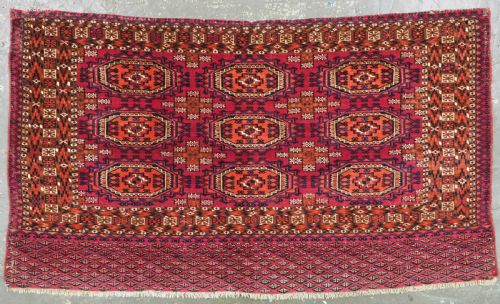


Antique Camel Bag
An antique camel bag brings tactile warmth and tribal history into a room, serving as a durable woven storage piece.
Antique Camel Bag
When you search for an antique camel bag, you encounter heavy nomadic storage sacks and saddle bags created by tribal weavers across Central Asia and Persia. These utilitarian containers were designed for transport on animals, featuring structured compartments for household goods.
The most common examples on this page are Turkmen torbas, chuvals, and various tribal bag faces dating from the eighteenth century to the early twentieth century. Pieces from Yomut, Tekke, Ersari, and Saryk tribes dominate the selection, often showcasing distinct regional guls.
Many survivors retain original flatweave backs, hanging loops, or leather and metal accents used during their active service life. Others appear as textile fragments, preserving centuries-old weaving traditions in concentrated formats.
Materials and Construction
Weavers constructed these utilitarian objects using hand-spun wool foundations paired with natural dyes that produce deep madder reds, browns, and contrasting accents. Silk highlights occasionally appear to illuminate specific motifs within the main field.
Structure relies on tight pile knotting combined with banded flatweave techniques, cotton warps, and occasional leather or metal reinforcement for durability. Complete items retain sturdy plain weave backs designed to endure heavy loading.
Antique Camel Bag Retail Price Guide 2026
Typical asking prices for camel bag among the pieces listed under this phrase on Sellingantiques today, from the lower quarter to the upper quarter. They describe what is for sale here now, not the wider market.
Many surviving chuval faces still wear their original hanging loops, ready to resume duties last performed on a nomad's tent pole.
Assessing Quality
The finest examples display precision in intricate gul designs and saturation in natural dye palettes, whereas weaker pieces show muddy colour transitions or imprecise knotting. The presence of complete backs, original hanging loops, and silk highlights elevates a piece significantly.
Structural integrity separates standard bag faces from complete survivors that retain their original proportions and reinforcement materials. Condition ranges from robust working items to delicate fragments valued primarily for their early tribal iconography.
The Antique Camel Bag Glossary
- Torba
- A small Turkmen storage bag traditionally used for domestic goods inside a tent. These rectangular sacks frequently feature rows of primary guls.
- Chuval
- A large tent bag utilised by nomadic tribes for bedding and heavy storage. They often measure significantly wider than torbas.
- Gul
- A repeated medallion motif associated with specific Central Asian tribes and clans. Each design helps identify the weaving group.
- Flatweave
- A textile constructed without pile by interweaving warp and weft threads directly. This technique creates durable, lightweight surfaces on bag backs and borders.
- Mafrash
- A rectangular storage bale or saddle chest piece used in pairs during migration. They display structured geometric designs across multiple sides.
Antique Camel Bag: Frequently Asked Questions
How were these bags used originally?
Nomadic families utilised these bags inside tents and during migrations to store clothing, bedding, and household possessions.
Their robust construction and hanging loops allowed them to be secured easily to animals or tent poles.
How do I live with an antique bag?
These textiles fit well into modern interiors as wall hangings, table accents, or preserved display pieces in low-traffic areas.
Keeping them away from direct sunlight protects the natural dyes and hand-spun wool fibres from fading.
How do I identify different tribal styles?
Tribal attribution relies on specific gul motifs, colour palettes, and structural weaving techniques unique to groups like the Yomut, Tekke, and Ersari.
Examining the borders, flatweave bands, and secondary ornaments clarifies the likely origin of each piece.