

Antique Buttoned Easy Chairs
Antique buttoned easy chairs bring deep springing and tight upholstery together for comfort, offering substantial nineteenth-century frames built for relaxed drawing room seating.
Antique Buttoned Easy Chairs
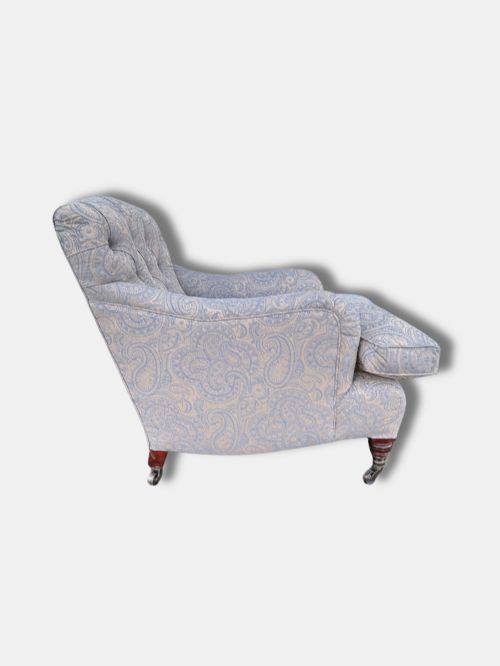
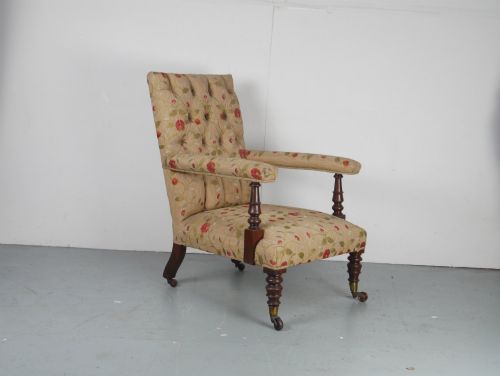
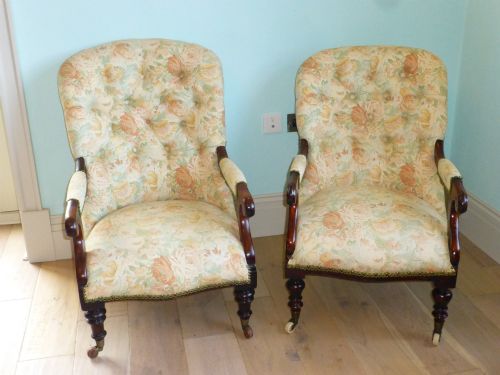
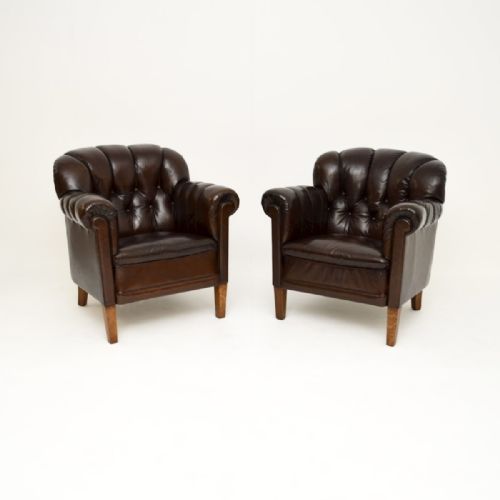
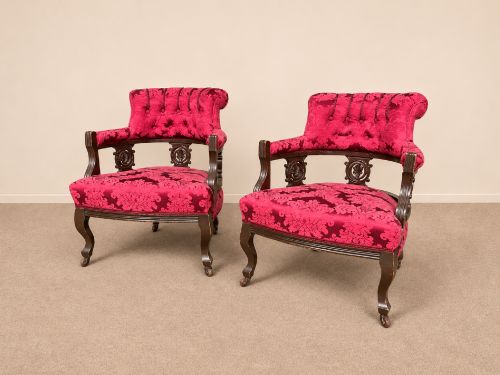
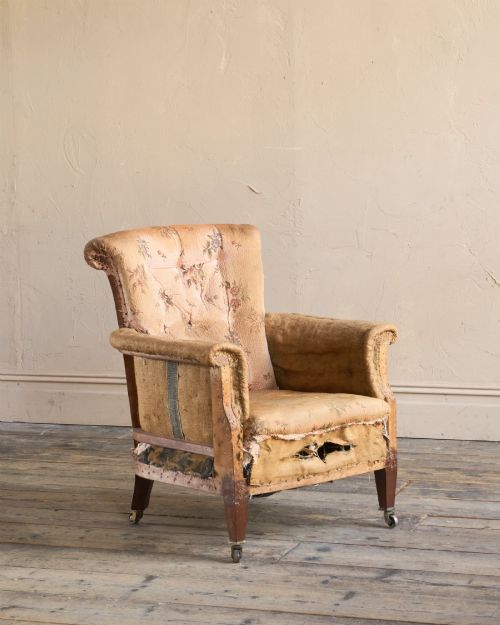
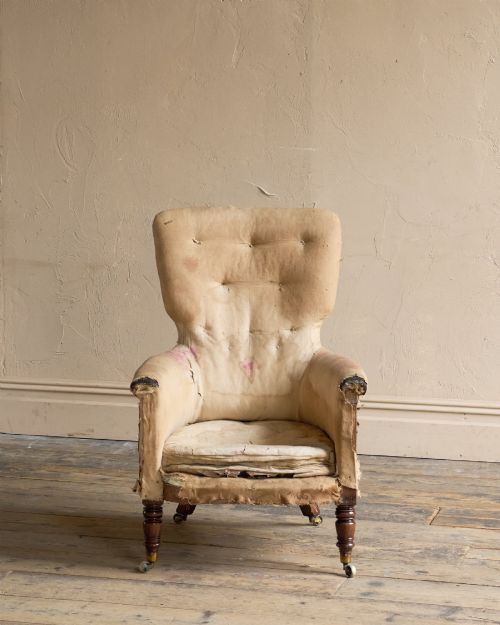
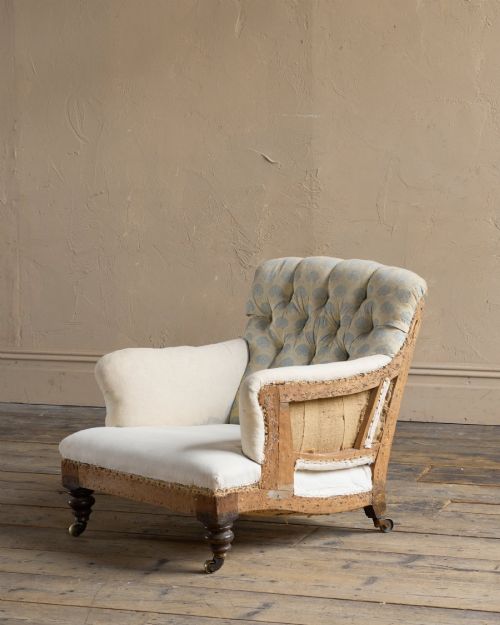
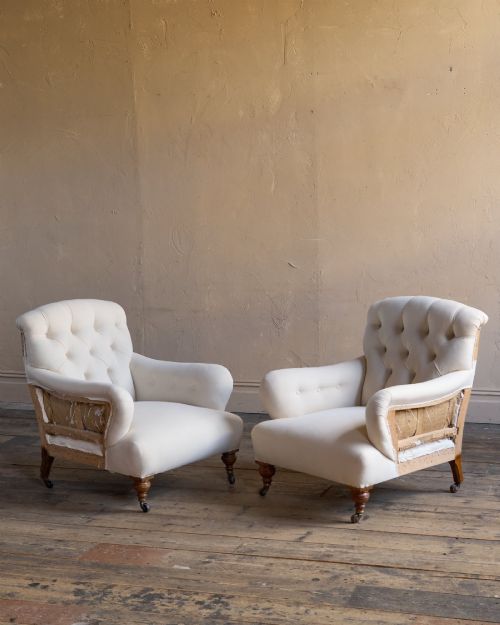
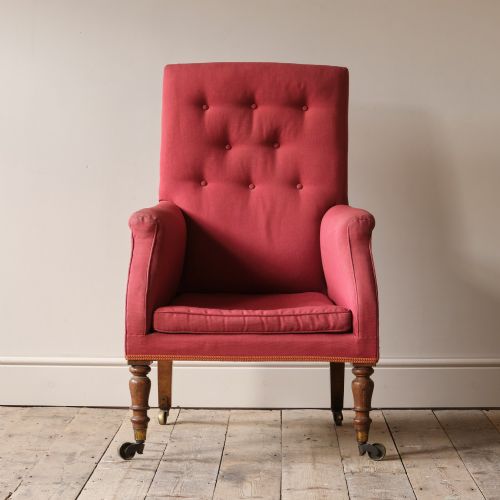
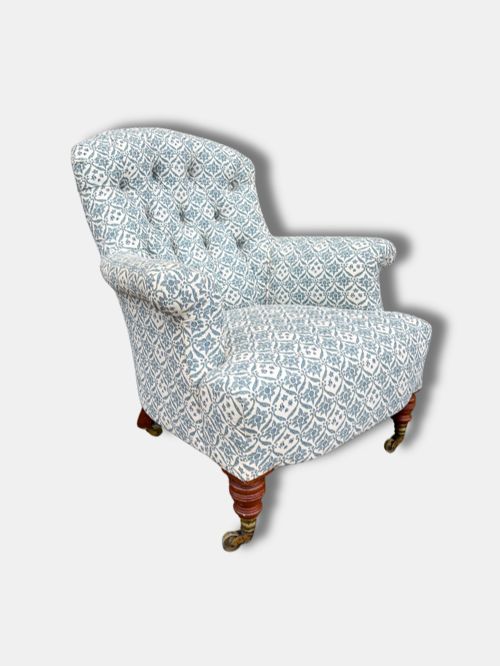
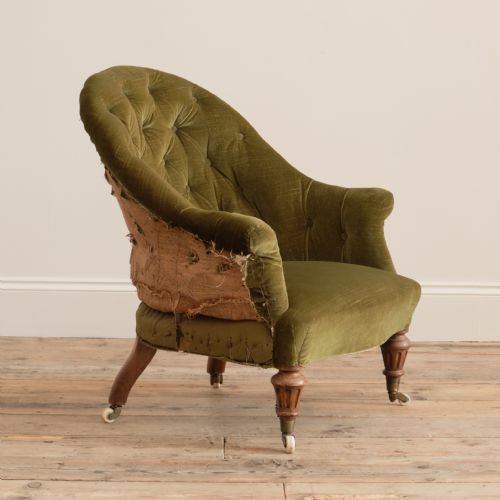
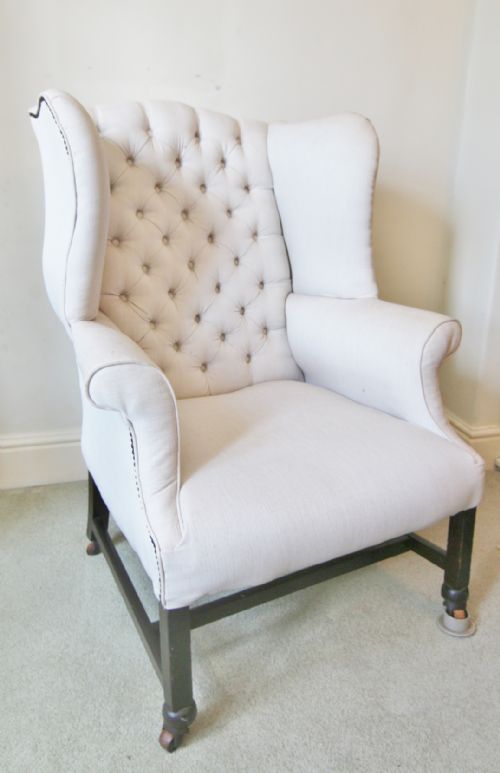
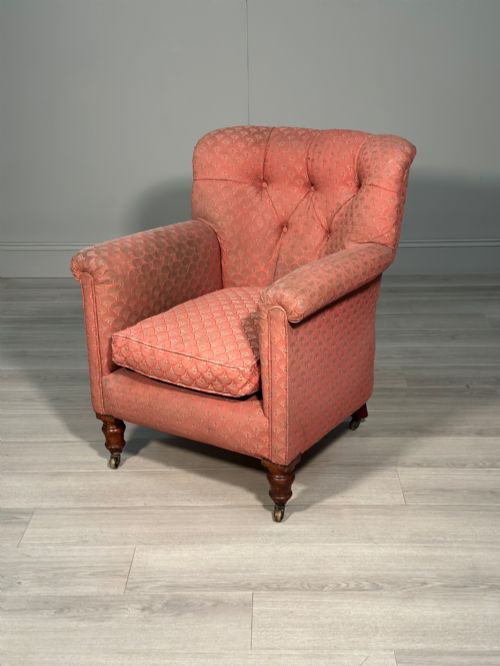
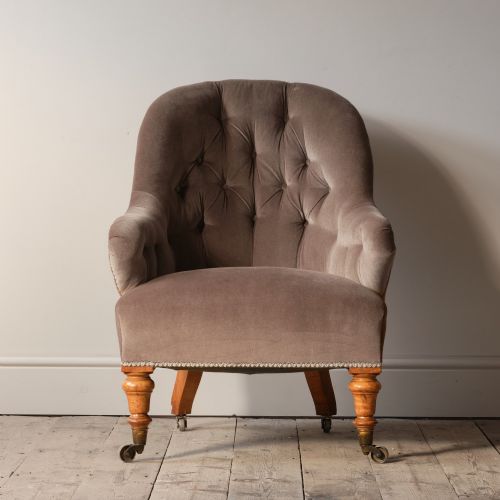
These antique buttoned easy chairs span the nineteenth century, taking forms from low slipper chairs and open library seating to generous country house armchairs and French Napoleon III designs. You will frequently encounter Victorian examples alongside Georgian and Regency antecedents, often retaining deep seats and supportive backs.
Makers and workshops ranging from Gillows to Howard and Sons shaped these seating forms, using mahogany, walnut, oak and iron frames beneath calico, velvet, leather and hessian covers. The regional English country house style sits alongside French Napoleon III and Swedish pieces, providing diverse proportions for period interiors.
How they were made
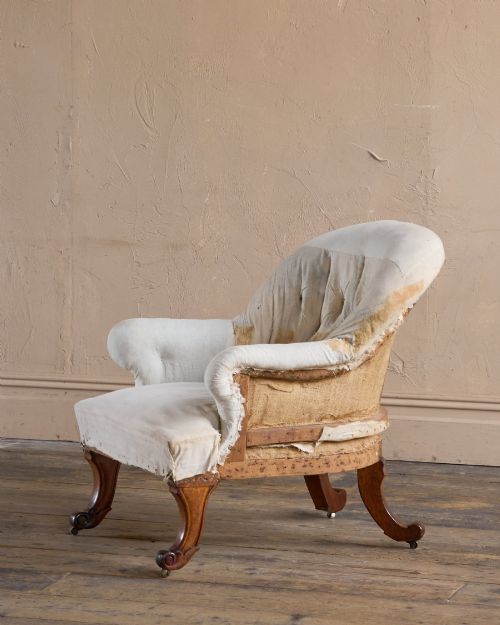
Frames rely on dense hardwoods like mahogany, walnut and oak, sometimes reinforced with iron supports or brass castors to handle the stress of daily use. Joinery is concealed beneath complex internal webbing and spring assemblies.
Upholstery techniques involve securing horsehair or natural stuffing within hessian and calico linings, finished with tight buttoning and outer covers of velvet, leather or woven fabric.
Antique Buttoned Easy Chairs Retail Price Guide 2026
Typical asking prices for buttoned easy chairs among the pieces listed under this phrase on Sellingantiques today, from the lower quarter to the upper quarter. They describe what is for sale here now, not the wider market.
Some nineteenth-century easy chairs arrived with matching footstools, ensuring maximum comfort for Victorian occupants.
What varies in quality
The integrity of the internal wooden frame and the precision of the joinery set the foundation, with robust mahogany or walnut structures outlasting lighter pine alternatives. Maker attributions to firms like Howard and Sons or Gillows elevate a piece through superior structural execution.
The sophistication of the original spring-work and the tightness of the buttoning dictate the comfort and longevity of the seating. High-grade upholstery materials and careful hand-pleating reflect the time invested by the original cabinetmaker or upholsterer.
Gregory & Co·Howard & Sons·Gillows·Mellier & Co
The Antique Buttoned Easy Chairs Glossary
- Button back
- A traditional upholstery method where deep depressions are formed by pulling cord through the padding and securing it to the frame.
- Country house style
- A relaxed English seating aesthetic prioritising deep proportions and loose or tailored covers over formal formality.
- Slipper chair
- A low-set upholstered armchair traditionally designed for bedroom use, allowing ladies to sit comfortably while putting on shoes.
- Webbing
- Interwoven strips of strong fabric stretched across the seat frame to support the internal springs and stuffing.
Antique Buttoned Easy Chairs: Frequently Asked Questions
What is an antique buttoned easy chair?
These pieces are nineteenth-century upholstered seats designed for relaxation, featuring deep springs and characteristic tufted buttoning across the backrest.
They appear in various regional styles, from English country house armchairs to French Napoleon III seating.
How do I date an antique easy chair?
Dating relies on examining the timber frame construction, turnings and upholstery techniques, alongside stylistic clues from the Georgian, Regency and Victorian periods.
Makers' stamps or brass castors also help narrow down the decade of production.
Were these chairs used in libraries?
Many sturdy mahogany and walnut examples served as library or drawing room chairs, offering support for extended periods of reading.
Their robust frames accommodated heavy use in formal domestic settings.
How do I care for antique upholstery?
Protect delicate fabrics and leather by keeping chairs away from direct sunlight and maintaining stable room humidity.
Gentle surface cleaning preserves the original textiles and buttoning without stressing the internal webbing.