


Antique Button Chair
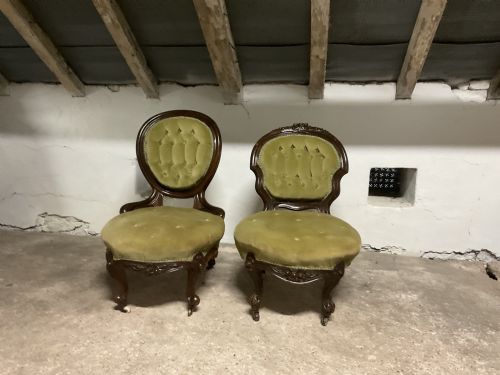
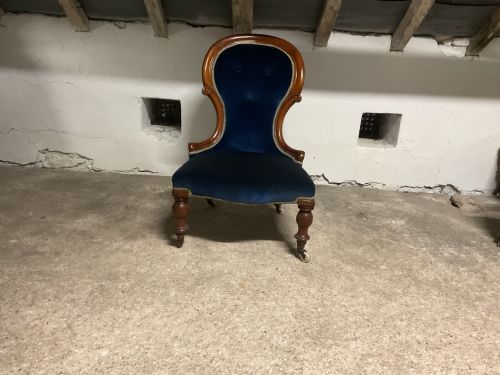
An antique button chair brings deep tufted upholstery and turned woodwork together in forms ranging from compact nursing seats to substantial library armchairs.
Antique Button Chair
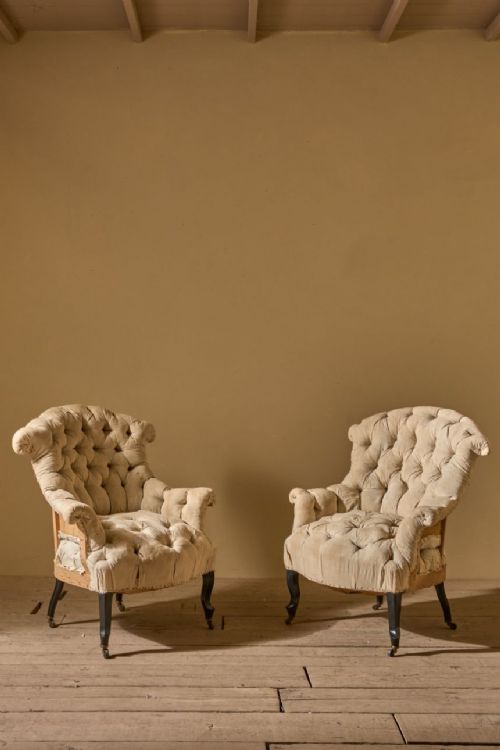
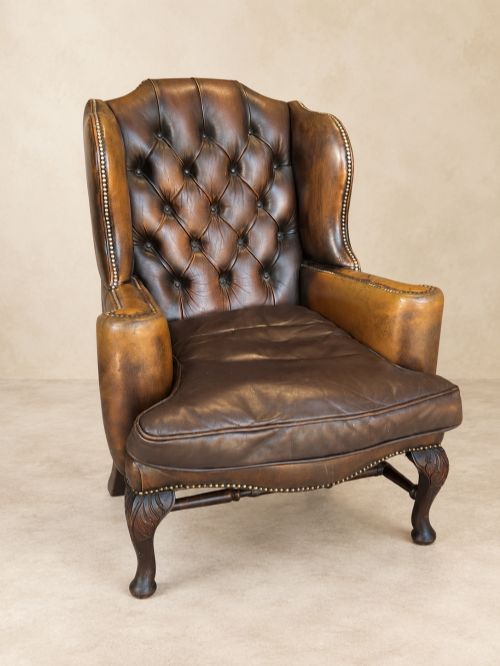
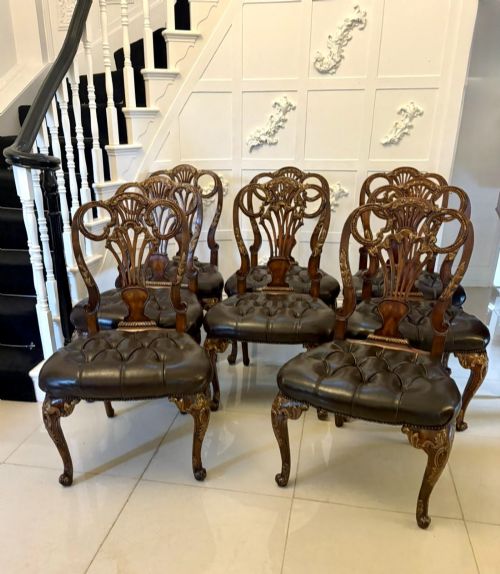
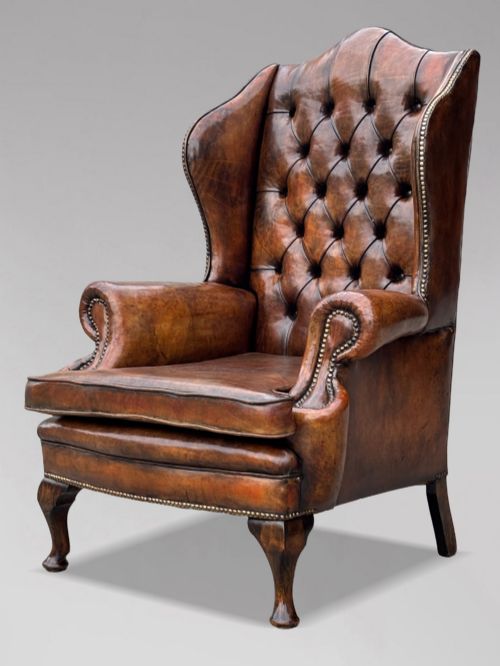
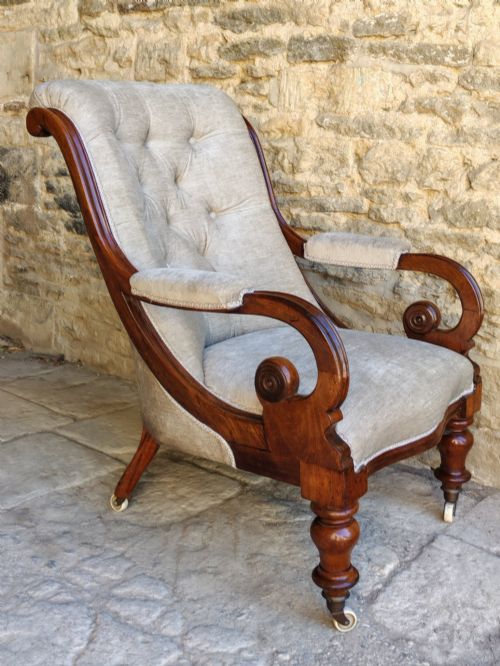
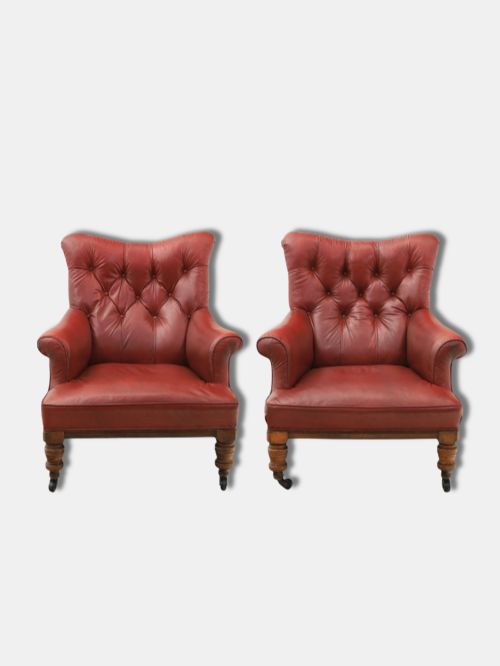
An antique button chair is defined by its deep buttoned upholstery, where tufting secures the padding and creates a distinctive geometric pattern across the backrest. The term covers a wide family of seating, from library armchairs and leather wing chairs to low nursing chairs and compact parlour seats.
The versions most commonly met on this page date from the nineteenth century and the Victorian period, though examples stretch from the Regency era into the early twentieth century. Makers of these periods applied buttoning to mahogany, walnut, and oak frameworks, often supported by turned wooden legs or brass castors.
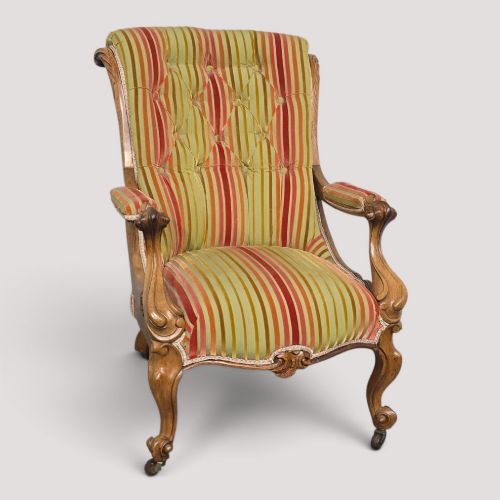
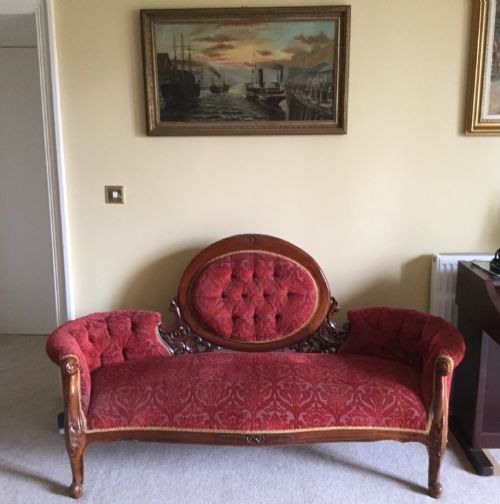
While many pieces use traditional leather or velvet, listings also record variants upholstered in calico, damask fabric, and rexine. Forms span armchairs, chaise longues, and desk chairs, reflecting how domestic seating evolved to prioritise padded comfort.
How they were made
Frames rely on sturdy timbers such as mahogany, walnut, oak, and rosewood, joined with traditional carpentry methods to support heavy internal padding. Cabinet makers shaped these woods into turned legs, carved walnut frames, and structural supports for heavy upholstery.
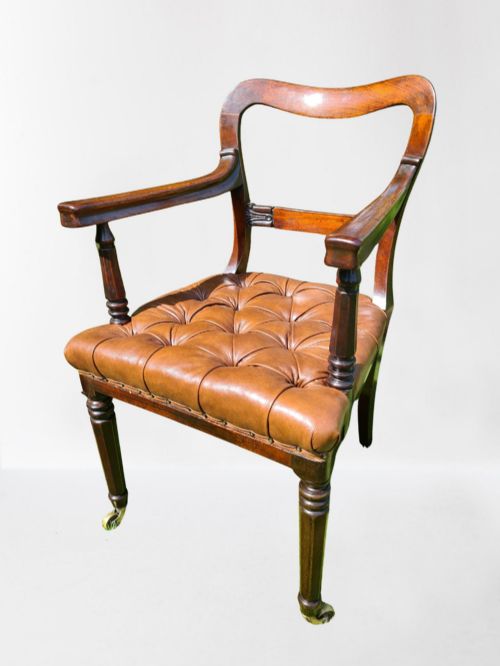
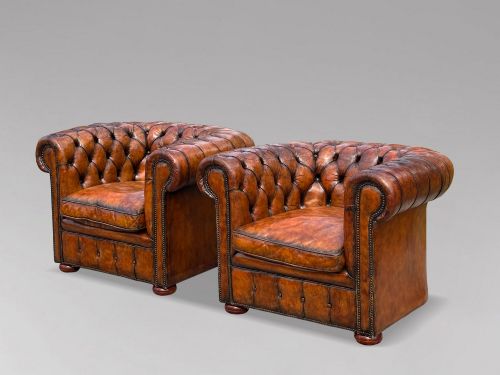
Deep buttoning involves pulling twine or thread through thick layers of stuffing and securing it to the internal webbing to create a firm, tufted surface. Upholsterers finished these chairs with leather, velvet, or fabric coverings, often adding brass studs or brocade trim along the borders.
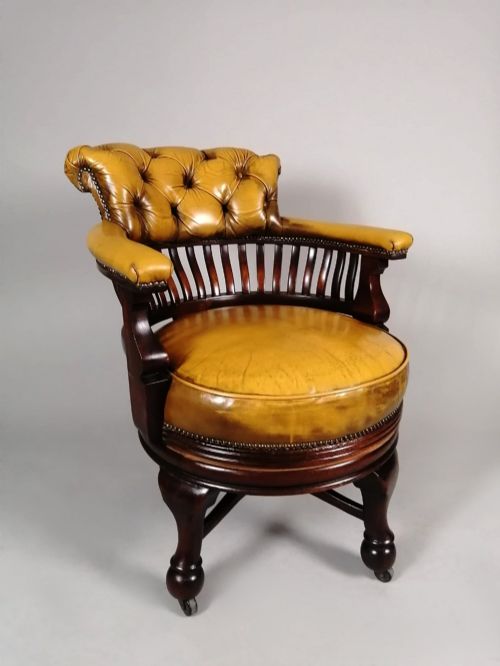
Listings demonstrate that mahogany and leather dominate nineteenth-century library and desk chair production.
What varies in quality
Quality rests in the integrity of the underlying timber frame and the depth of the cabinet work, particularly where carved walnut or polished mahogany is exposed. Heavier, dense frames from established workshops hold their structural rigidity better than lighter or later reproductions.
The execution of the buttoning and the choice of covering material dictate the refinement of the piece. Hand-tooled leather, deep pile velvet, and precise tufting separate standard commercial seating from finer library and drawing room examples.
Howard and Sons·Gillows
The Antique Button Chair Glossary
- Button back
- An upholstered chair back featuring deep tufting secured by rows of fabric-covered or leather buttons. This technique pulls the padding into regular diamond shapes.
- Nursing chair
- A low-seated Victorian chair designed for sitting comfortably near a fireplace or nursery hearth. These pieces often feature a padded back without arms to accommodate voluminous skirts.
- Wing armchair
- A high-backed seat featuring protective side panels designed to shield the occupant from draughts. They frequently appear upholstered in dark leather with deep buttoning.
- Cabriole leg
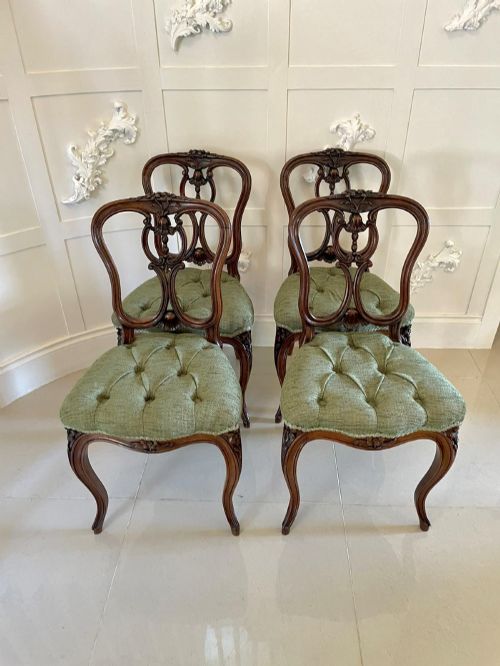
- A furniture leg that curves outward at the knee and tapers inward toward the foot, often ending in a scroll or pad. This shape appears on mid-Victorian walnut and mahogany seating.
- Brocade
- A rich, heavy shuttle-woven fabric featuring raised decorative patterns. It is frequently utilised in period upholstery to add texture and colour to drawing room chairs.
Antique Button Chair: Frequently Asked Questions
What is an antique button chair?
An antique button chair is a piece of period seating characterised by tufted upholstery where buttons pull the padding into a geometric pattern. These chairs range from leather library armchairs to low Victorian nursing chairs.
They were built across the nineteenth and early twentieth centuries using hardwood frames like mahogany and walnut. The style prioritises padded comfort and structural durability.
How do I date a button chair?
Dating relies on examining the timber frame, leg style, and upholstery materials used in construction. Mid-Victorian pieces often feature turned mahogany legs, while later Edwardian examples incorporate lighter carved walnut.
Looking beneath the upholstery can also reveal iron frames or webbing methods specific to certain decades. Comparing the woodwork style to known period designs helps narrow the manufacturing window.
Where were these chairs used?
Button chairs served various functions across different rooms in country houses and town residences. Library armchairs provided sturdy seating for reading, while lower nursing chairs sat comfortably in bedrooms and drawing rooms.
Desk chairs and revolving variants furnished studies and offices. Their robust construction suited heavy daily use in domestic and professional settings.
How do I care for leather button chairs?
Leather upholstery requires regular dusting and occasional treatment with appropriate conditioning balms to prevent cracking. Keeping the leather away from direct sunlight and heat sources preserves its suppleness.
The buttoned tufts accumulate dust over time, so gentle vacuuming with a soft brush attachment helps maintain the folds. Checking the tension of the buttons periodically ensures the tufting remains secure.