
Antique Burr Chest
An antique burr chest brings rich, swirling grain patterns and deep warmth into a room, offering practical storage disguised as a work of art.
Antique Burr Chest
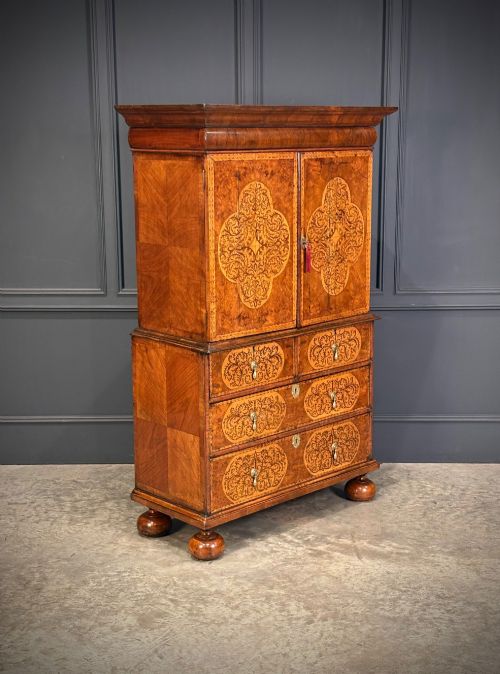
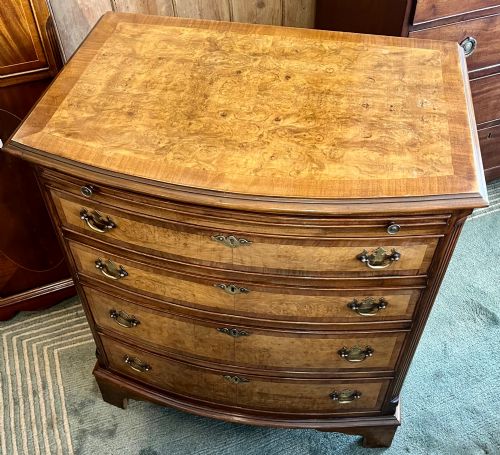
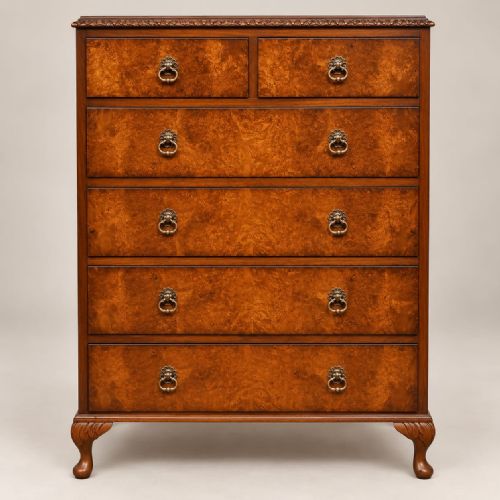
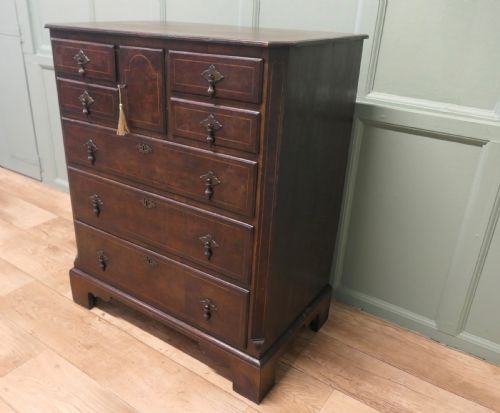
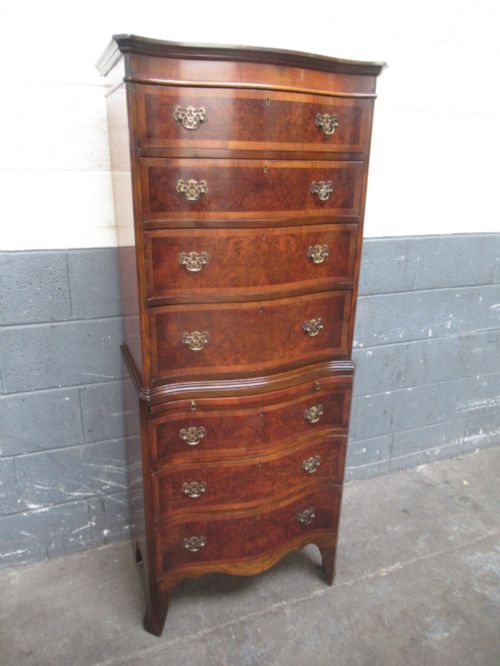
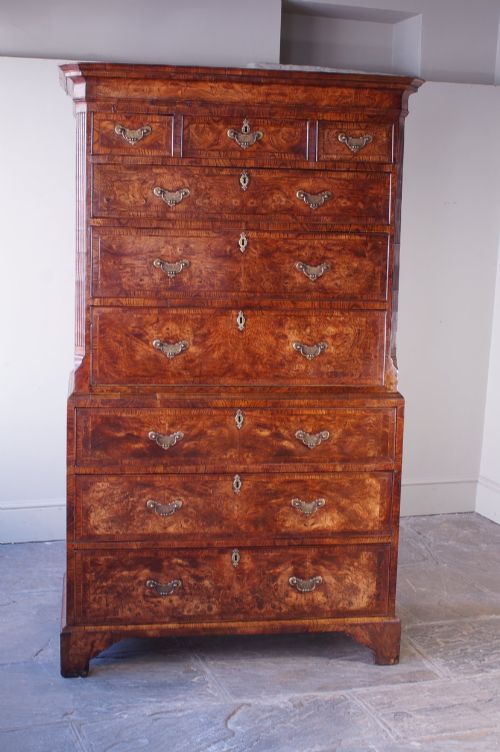
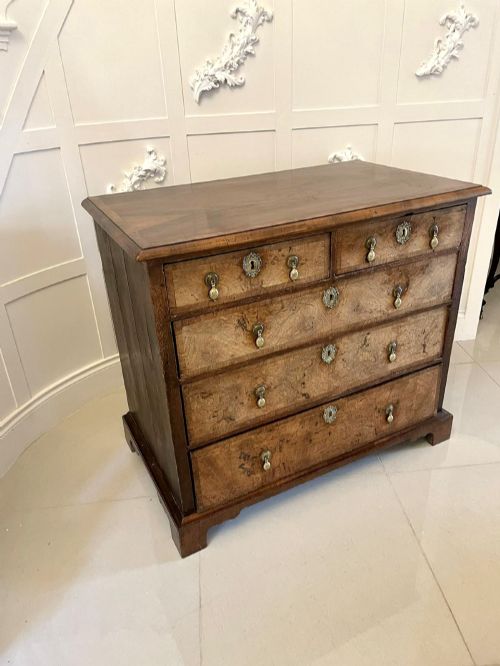
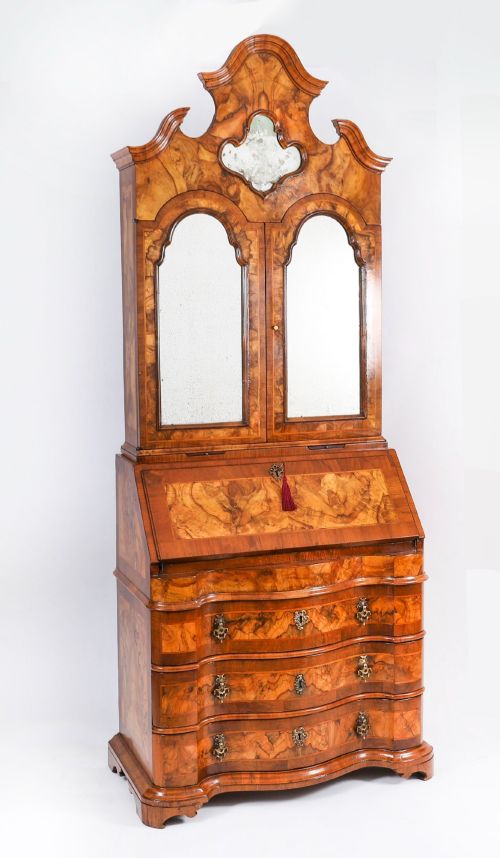
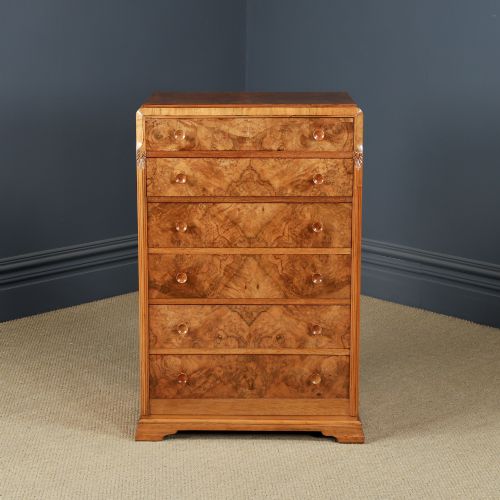
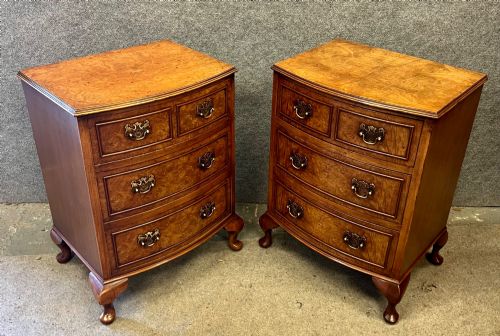
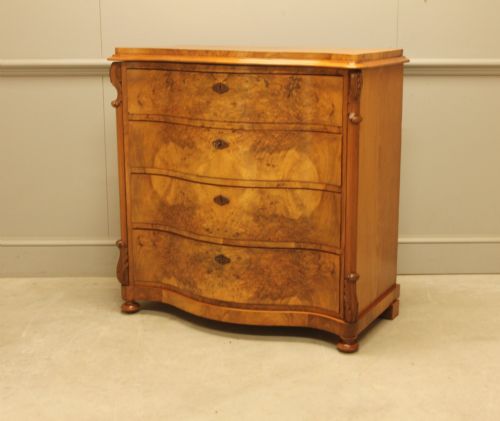
An antique burr chest encompasses a range of traditional storage forms built around striking figured timber, most frequently seen in chest of drawers, tallboys, and compact bedside tables.
Buyers browsing this selection encounter pieces stretching from the late seventeenth century through the Georgian and Victorian eras, alongside later twentieth-century revivals.
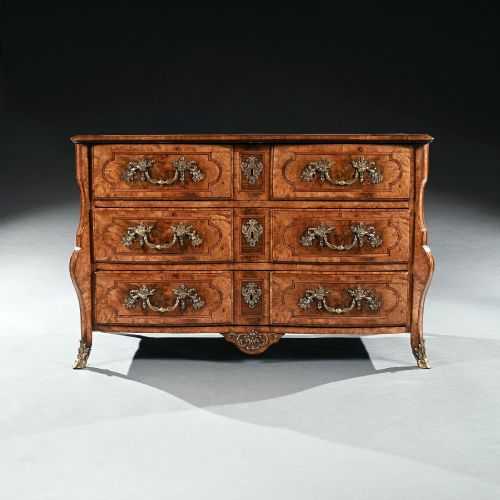
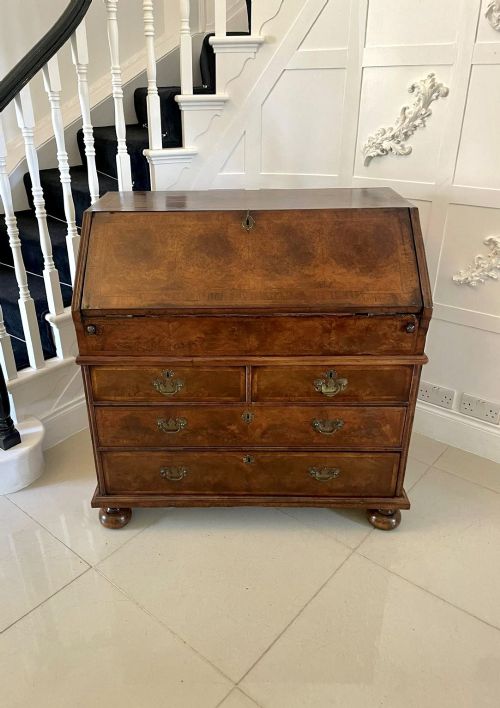
The standard chest of drawers remains the most common form, though variations such as chests on stands, bureau desks, and serpentine commodes regularly appear.
Materials and construction methods
Cabinetmakers utilised thin slices of burr walnut veneer, prized for its knotted and swirling grain, applied over solid secondary woods like oak or pine to form decorative surfaces.
Structural integrity relied on traditional joinery techniques, supplemented by details such as herringbone inlay, crossbanding, and brass hardware.
Secondary materials including glass, metal, and occasionally marble tops appear on specific forms like dressing tables and commodes from the nineteenth century onward.
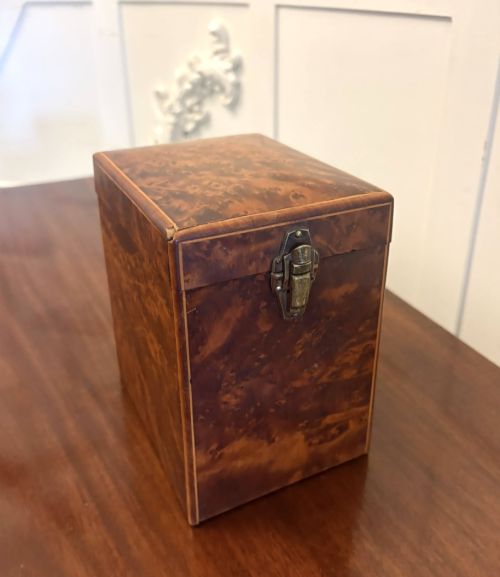
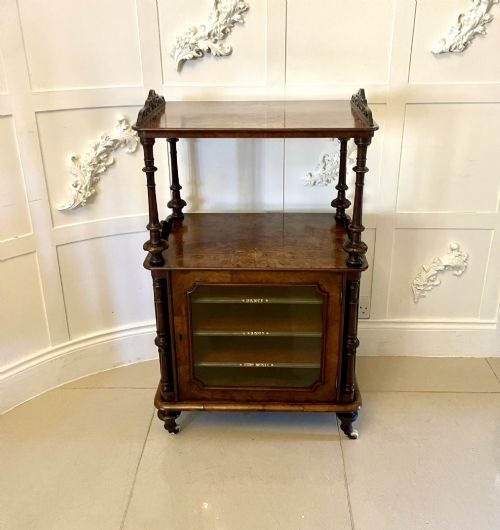
Among the storage pieces, a dedicated music filing cabinet offers a delightful reminder of Victorian parlour entertainment.
Distinctions in quality and execution
Superior examples display careful matching and book-matching of the burr veneer across the drawer fronts, ensuring symmetry and visual rhythm.
The crispness of inlay work, the thickness of the timber veneer, and the integration of secondary woods like oak distinguish higher-tier workshop production from standard commercial output.
The Antique Burr Chest Glossary
- Burr walnut
- A wood harvested from the wart-like growths on walnut trees, yielding complex, swirling grain patterns highly sought after by cabinetmakers. It is sliced into thin veneers for furniture facades.
- Tallboy
- A tall chest of drawers, often constructed in two distinct stacked sections such as a chest on chest. This form maximises storage space while maintaining a relatively small floor footprint.
- Herringbone inlay
- A decorative border pattern formed by small strips of veneer laid diagonally in alternating directions. It often frames the primary drawer fronts on walnut furniture.
- Crossbanding
- A strip of veneer applied around the perimeter of a drawer front or tabletop with the grain running perpendicular to the central panel. This technique creates a neat framing effect.
- Bombe
- A swollen or outwardly curving furniture shape associated with continental commodes and desks. This curved profile requires considerable woodworking skill to veneer successfully.
Antique Burr Chest: Frequently Asked Questions
What is an antique burr chest?
An antique burr chest is a wooden storage unit surfaced with highly figured walnut veneer derived from tree growths. These pieces range from seventeenth-century commodes to twentieth-century revival writing desks.
They combine functional drawer space with complex, swirling grain patterns that act as a visual focal point in traditional or contemporary interiors.
How do I date an antique burr chest?
Dating relies on examining the construction methods, secondary timbers like oak or pine, and the overall style of the piece. Eighteenth-century models often feature hand-cut dovetails and distinct proportions compared to later Victorian or 1920s revivals.
Hardware styles, timber thickness, and the type of veneer backing also provide clear clues to the period of manufacture.
Where should I place a burr walnut chest?
These chests suit bedrooms, living rooms, or hallways where their decorative grain can be appreciated in natural light. Bedside versions flank a bed, while larger chests of drawers serve well against primary walls.
Keep them away from direct sunlight and sudden temperature changes to protect the delicate walnut veneer from drying out.
How do I care for walnut veneer?
Maintain walnut veneer by dusting gently with a dry microfibre cloth and avoiding silicone-based polishes or harsh chemical sprays. Applying a light coat of traditional beeswax periodically helps nourish the timber.
Maintaining stable indoor humidity levels prevents the thin decorative veneer from lifting or cracking over time.