


Antique Bureau on Legs
An antique bureau on legs combines a sloping writing flap with elevated support, giving writing furniture a lighter footprint.
Antique Bureau on Legs
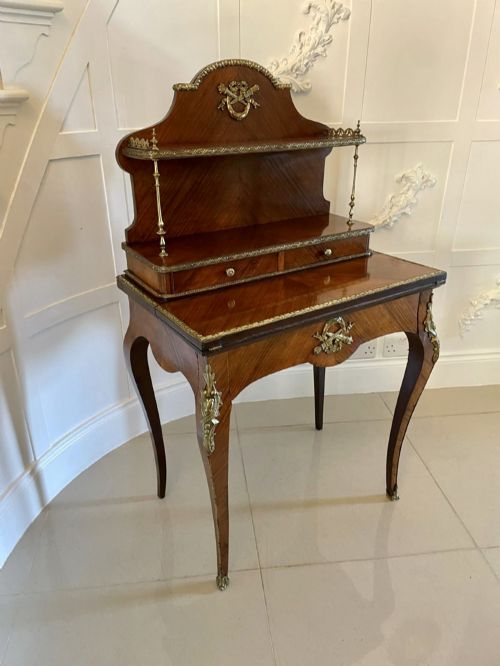
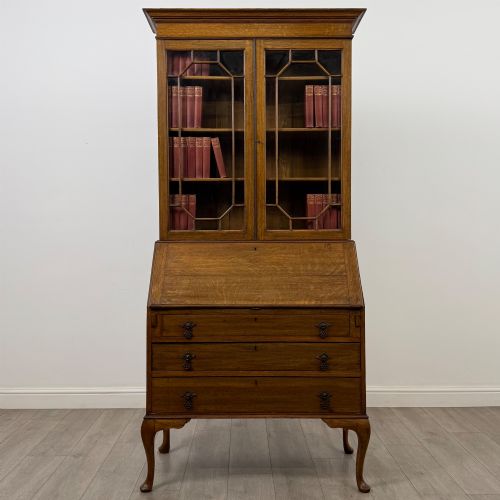
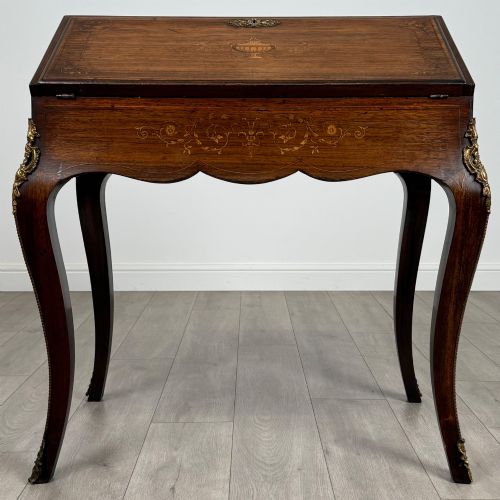
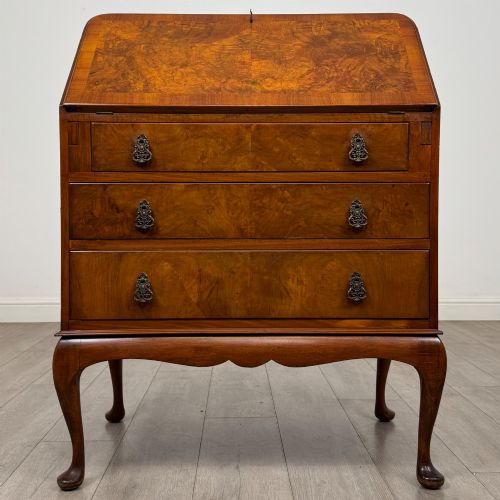
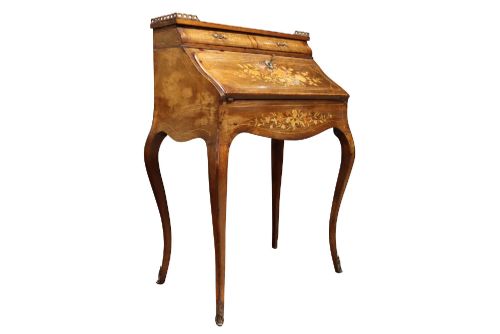
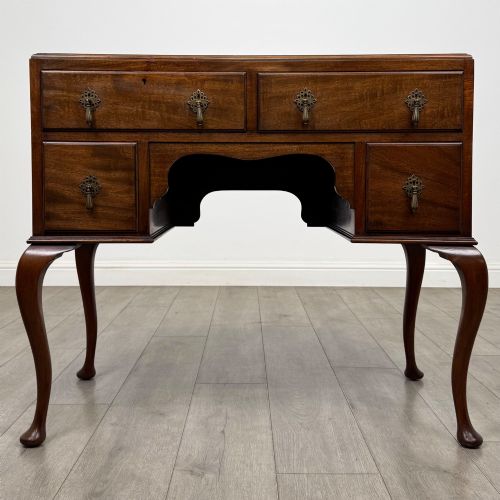
An antique bureau on legs is a writing desk featuring a fall-front or sloping flap that conceals fitted interior pigeonholes and small drawers. These pieces sit raised upon stands, legs, or cabriole supports rather than resting as solid box chests directly on the floor. Buyers encounter examples ranging from compact Edwardian mahogany versions to walnut pieces influenced by earlier Georgian and Queen Anne styles.
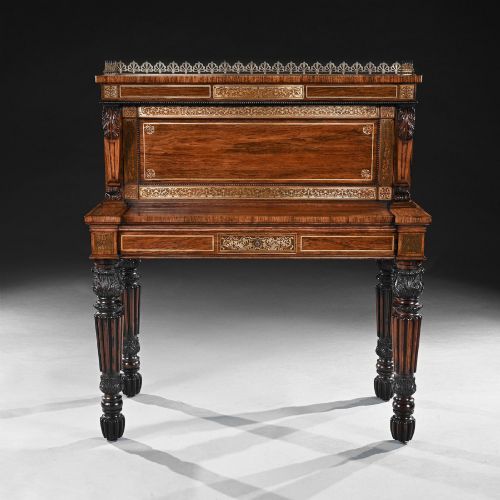
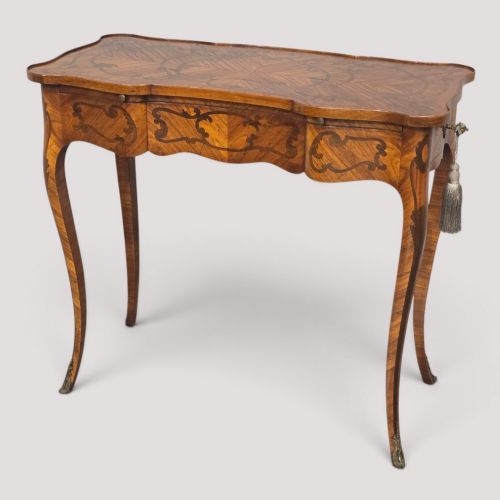
The form bridges the gap between a traditional floor-standing bureau and an elevated writing table. Listings show formats including bureaux on stands, writing desks with supporting legs, and bureau bookcases designed with raised lower sections. Woods like oak, walnut, and mahogany dominate the offerings, matched with revival styles spanning Louis XV, Louis XIV, and Jacobean aesthetics.
Distinguishing quality across examples
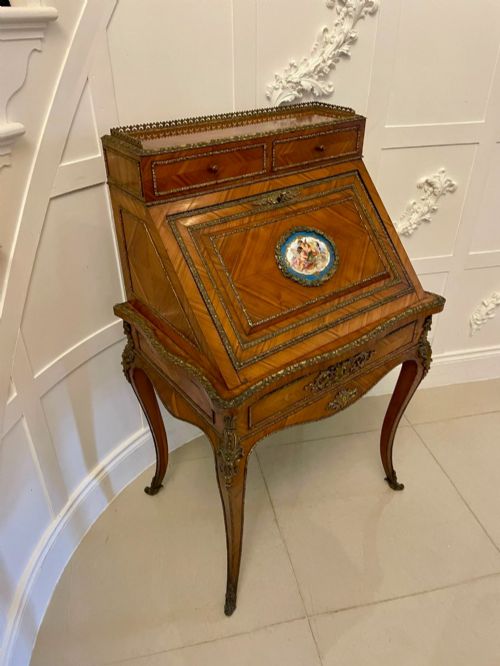
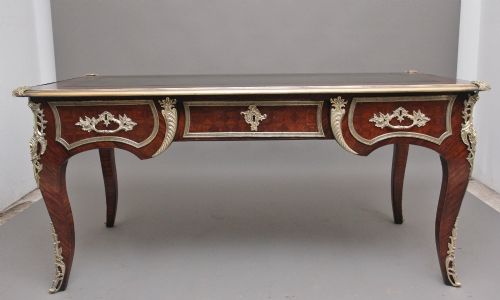
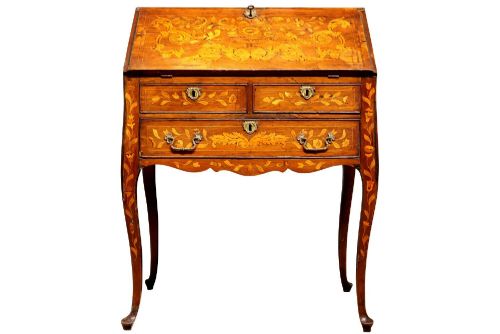
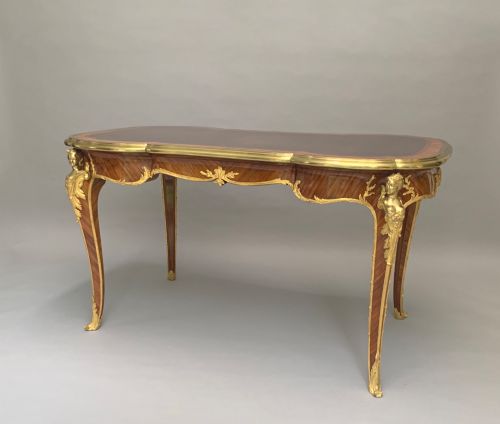
Quality rests significantly in the choice of timber and the precision of the veneer work. Pieces utilising highly figured burr walnut, amboyna, or elaborate floral marquetry demonstrate superior material selection by the maker. The crispness of carved details on cabriole legs and the quality of chased ormolu mounts further separate standard production from exceptional work.
Internal architecture reveals much about a piece's standard. Superior writing bureaux contain intricately arranged pigeonholes, secret compartments, and small drawers constructed with fine dovetailing. Original hardware, such as brass handles, working locks, and fitted leather writing surfaces, maintains the integrity and character expected at the higher end of the range.
Some clever writing desks hide secret drawers behind pigeonholes, built to keep love letters safe from prying eyes.
Gillows Oxford Street Workshop·Francois Linke·Edwards and Roberts·James Mein of Kelso
The Antique Bureau on Legs Glossary
- Bureau
- A writing desk featuring a sloping flap that opens to reveal internal compartments. This form evolved from standard chest designs into dedicated writing furniture.
- Cabriole leg
- A furniture leg that curves out and then in, mimicking animal limbs. It typically terminates in a pad, claw, or carved paw foot.
- Marquetry
- Decorative veneer work forming pictures or patterns using various tinted woods. Craftsmen applied these thin wood sections to the exterior surfaces of desks and cabinets.
- Ormolu
- Gilded bronze used for decorative mounts and ornamentation on furniture. This technique is frequently seen on French revival pieces.
- Pigeonhole
- A small, open compartment fitted inside a desk interior for sorting letters and papers. These compartments are often concealed behind the main writing flap.
Antique Bureau on Legs: Frequently Asked Questions
What is a bureau on legs?
A bureau on legs is a compact writing desk where the main storage and writing compartment is elevated on a distinct stand or set of legs rather than resting directly on the floor. This design creates a lighter visual weight in a room.
These pieces combine enclosed writing space with raised supports, drawing on design influences from the Georgian, Queen Anne, and Edwardian periods.
How were these desks used historically?
Historically, these desks provided a private space for correspondence, household record-keeping, and letter writing. The sloping flap served as a dedicated writing surface when lowered.
Inside, small drawers and pigeonholes kept stationery and documents organised, while the enclosed flap kept private papers out of sight when not in use.
How do I care for wood veneers?
Wooden surfaces and delicate veneers require stable room conditions away from direct sunlight and heat sources to prevent cracking or warping. Regular dusting with a soft, dry cloth preserves the finish.
Application of appropriate furniture waxes helps nourish timber like walnut and mahogany without building up heavy residues that dull the grain.
How can I tell Edwardian from Georgian styles?
Edwardian pieces often feature lighter framing, satinwood or marquetry details, and manufacturing methods typical of early twentieth-century production. They frequently utilise oak or mahogany with simpler proportions.
Georgian examples display heavier timber construction, hand-cut dovetails, and classic period forms such as cabriole legs or bracket feet reflecting eighteenth-century design standards.