
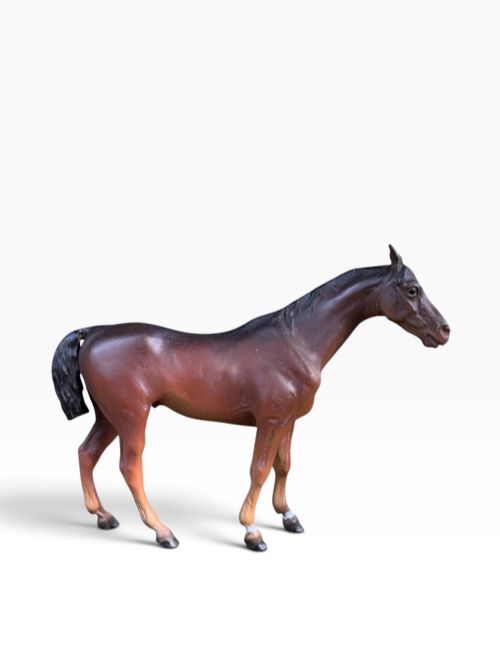
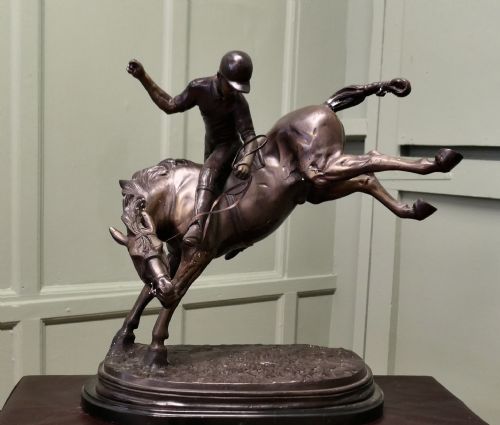
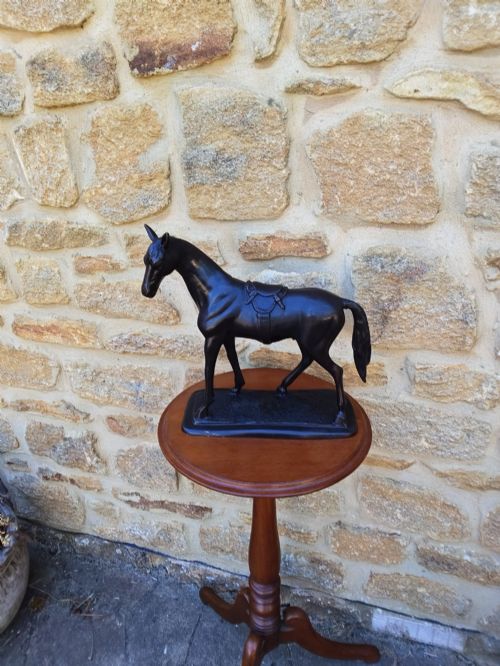
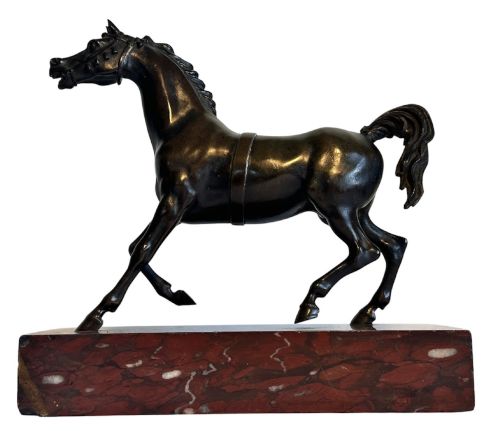


Antique Bronzed Horse Figure
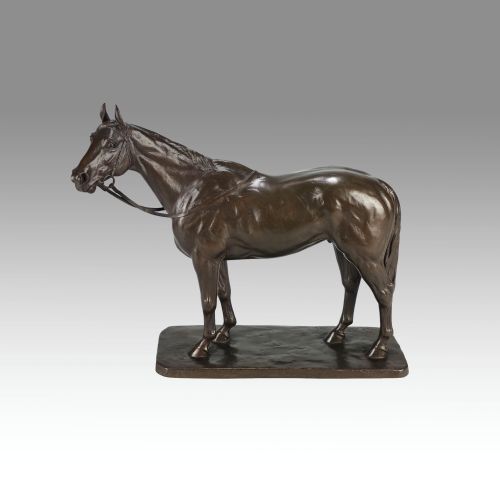
An antique bronzed horse figure brings the weight of the nineteenth century and the energy of the animalier movement directly into your study or hall.
Antique Bronzed Horse Figure
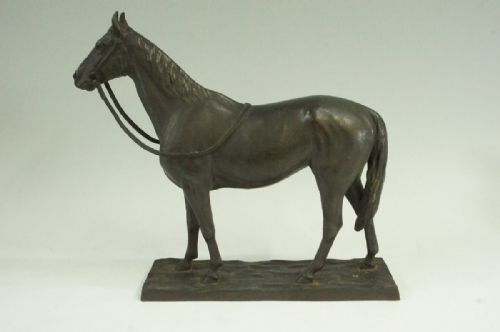
When you search for an antique bronzed horse figure, you are looking at small-scale sculptural studies of equines cast in metal, often finished with patination to resemble bronze or cast directly in the metal itself. These pieces range from French animalier casts of thoroughbreds and draft horses to cold-painted Austrian desk accessories and grand tour souvenirs.
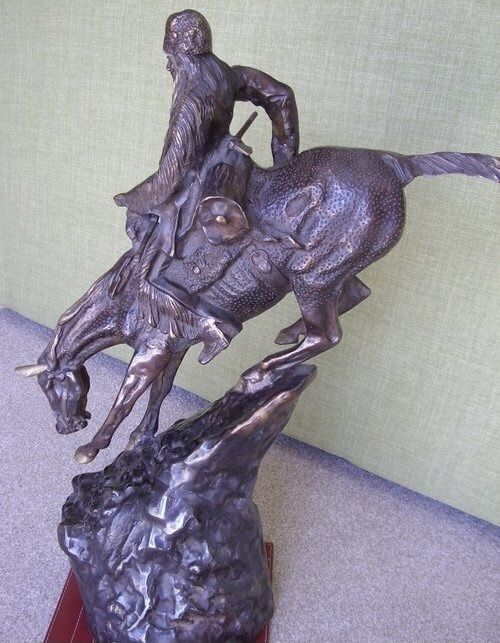
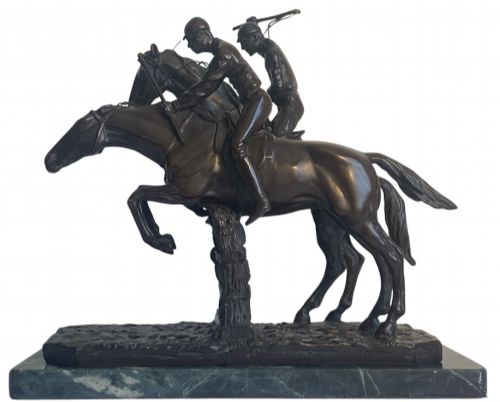
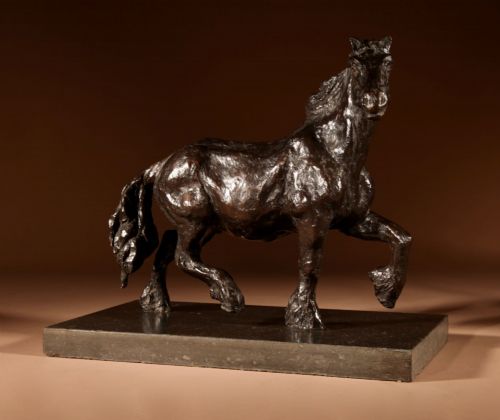
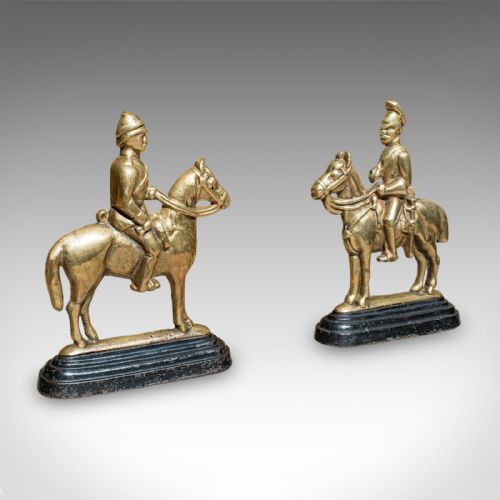
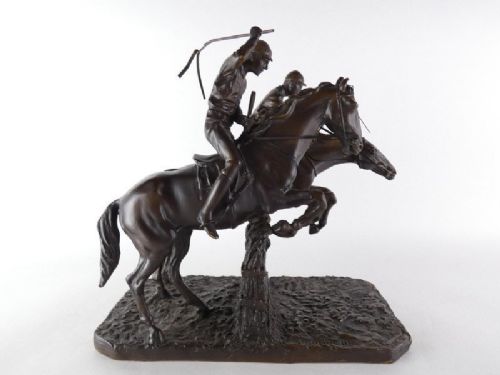
The version you are most likely to meet on this page is a nineteenth-century or early twentieth-century bronze, frequently mounted upon a marble, onyx, or wood base. Such works capture horses in motion, from steeplechase jumpers and rearing stallions to working draft animals and mounted riders.
Makers and foundries across France, Austria, and Japan produced these figures to satisfy a nineteenth-century appetite for realistic animal anatomy and heroic equestrian subjects. They served as mantel ornaments, bookends, and desk tidies for collectors who prized both fine art and equine subjects.
How they were made
Most of these pieces were produced using the lost-wax casting method or sand casting, which allowed foundries to capture fine muscle definition, mannes, and harness details. After casting, the metal surfaces received hand-applied patination ranging from deep brown and black to gilt or cold-painted polychrome finishes.
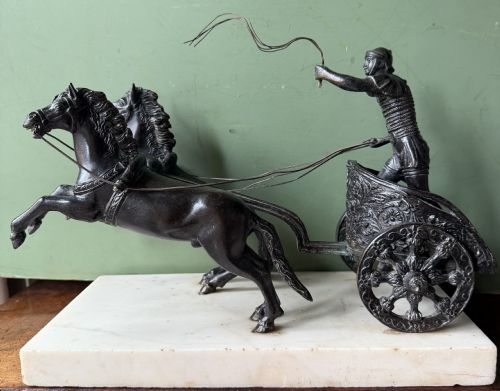
Plinths and bases formed an integral part of the construction, utilising contrasting materials such as white marble, onyx, olive wood, or slate to support the heavier bronze sculptures. Bookends and desk accessories incorporated these heavy stone and metal elements to ensure stability during daily use.
Listings feature works from the seventeenth century through to the Art Deco period, utilising bronze, gilt bronze, marble, and onyx.
What varies in quality
The quality of the patination and the choice of mounting materials also dictate the standing of a piece. Original patines applied by established foundries exhibit depth and stability, while bases executed in heavy marble or fine hardwoods demonstrate a higher grade of period manufacture than plain cast substitutes.
Franz Bergman·Kunio Itō·Pierre Jules Mêne·John Willis Good·E. Drouot
The Antique Bronzed Horse Figure Glossary
- Animalier
- A nineteenth-century artistic movement focused on the realistic depiction of animals, particularly horses, dogs, and wild beasts. Sculptors in this tradition studied live animals intensely to capture accurate musculature and movement.
- Cold-painted bronze
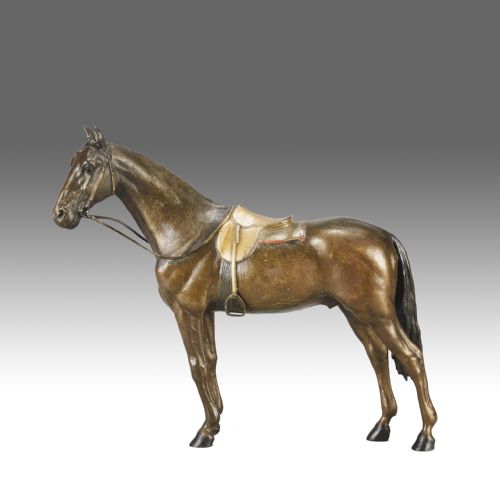
- A technique where bronze figures were painted with cold enamel colours rather than fired in a kiln. This method was particularly favoured by Viennese foundries for small desk items and realistic animal figures.
- Grand tour
- A cultural journey undertaken by wealthy young Europeans in the eighteenth and nineteenth centuries to study classical art and architecture. Souvenirs purchased on these trips often included small bronze sculptures of famous monuments or horses.
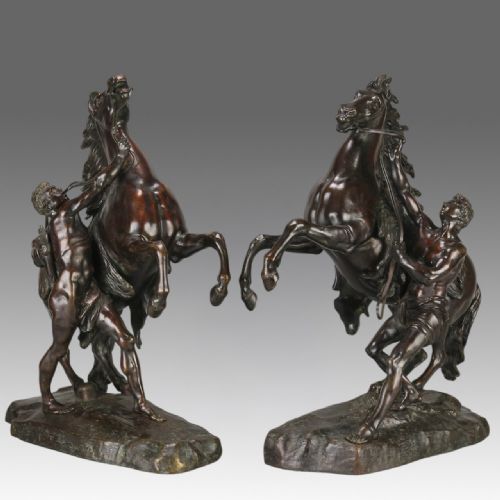
- Marly horses
- Two monumental marble statues commissioned by Louis XV for the watering place at the Château de Marly. Numerous nineteenth-century bronze reductions of these rearing horses were produced by French foundries after Coustou.
- Lost-wax casting
- A historic metalworking process where a model is used to create a wax replica, which is then melted out and replaced with molten bronze. This technique allows for intricate detail and undercut forms.
Antique Bronzed Horse Figure: Frequently Asked Questions
How do I identify a period bronze horse?
Period bronzes usually show hand-chased surface details, natural patination that has aged evenly over decades, and heavy construction appropriate to nineteenth-century casting techniques. Makers' signatures or foundry stamps often appear directly on the bronze or on the integral base.
Base materials also offer clues to age, with turned marble, slate, and olive wood commonly employed during the Victorian and Edwardian eras. Examining the underside often reveals patinated peg fixings or threaded screws typical of older assembly methods.
Where were most antique bronze horses made?
The majority of these sculptures originated in European workshops, with French foundries dominating the animalier market through artists like Mêne and Bonheur. Vienna also produced a distinct style of small cold-painted bronze figures and desk accessories.
Additionally, Japanese studios and Tokyo foundries created fine bronze horses during the Meiji and Taisho periods, combining traditional metalwork skills with Western equestrian subjects for export.
How should I care for an antique bronze figure?
Dust the sculpture gently with a soft, dry brush to prevent particulate buildup in the crevices of the mane and musculature. Avoid using chemical cleaners, polishes, or abrasive cloths that can strip the original patina.
Keep the piece away from direct sunlight and high humidity to protect both the metal finish and any fitted marble or wooden base. An occasional very light application of microcrystalline wax can help preserve exposed bronze surfaces.
What is the difference between a desk tidy and a sculpture?
Sculptures are standalone artistic representations intended purely for display on mantelpieces, pedestals, or shelves. Desk tidies and bookends incorporate functional elements such as inkwells, pen trays, or heavy structural supports while retaining equine decoration.
Both categories utilised similar casting methods and patination, but functional pieces often show signs of ink staining or wear specific to their use on nineteenth-century writing desks.