

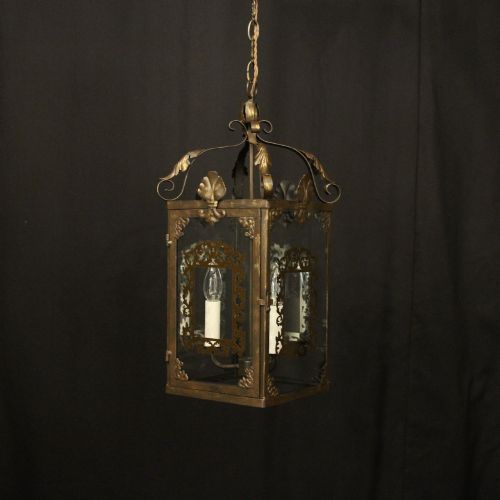
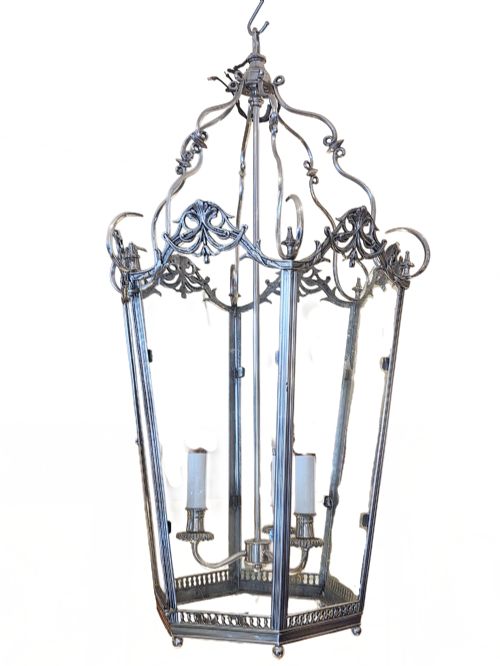
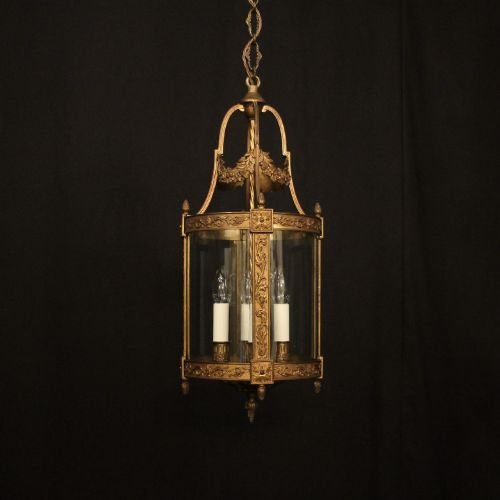
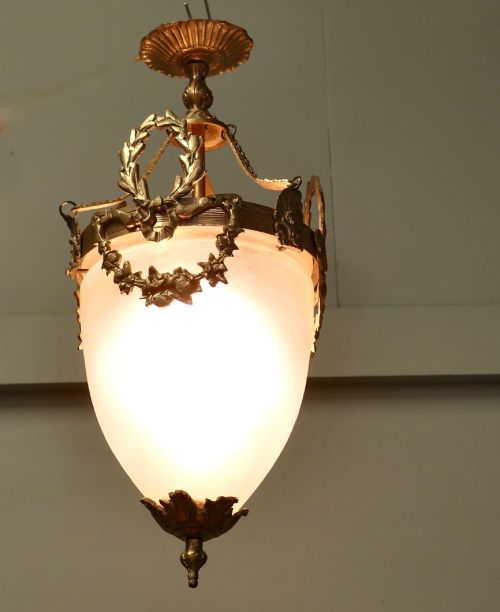
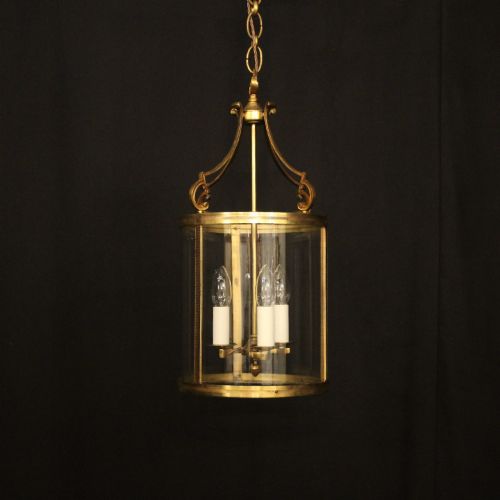

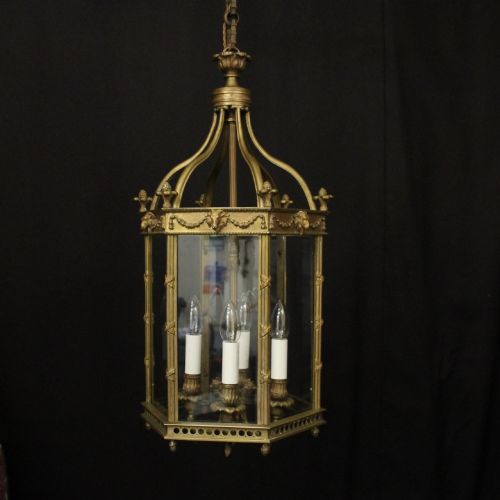
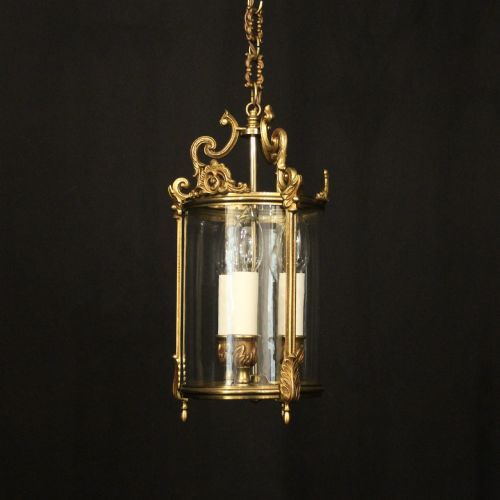
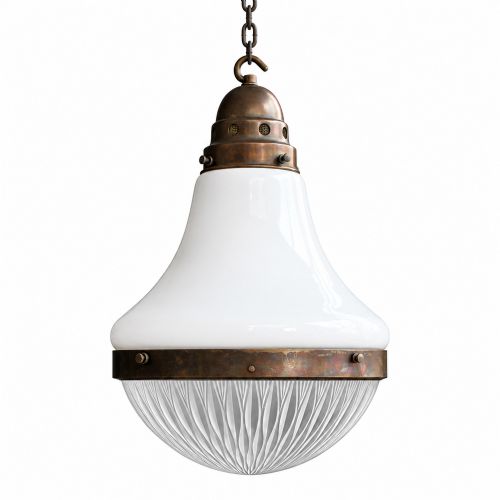
Antique Bronze Glass Lantern
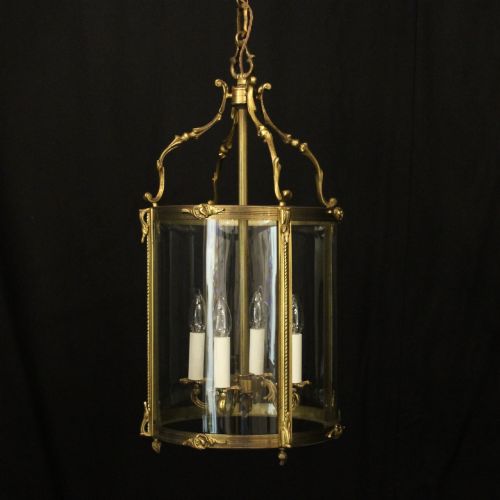
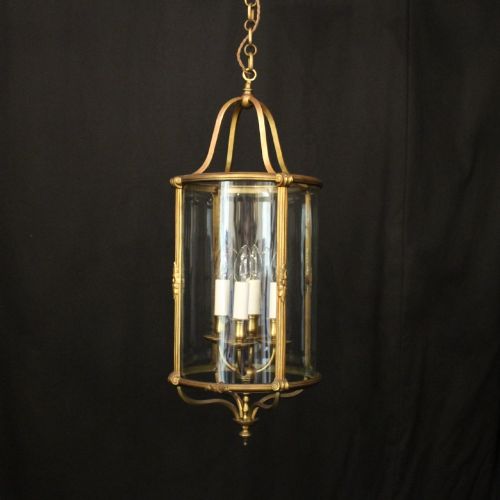
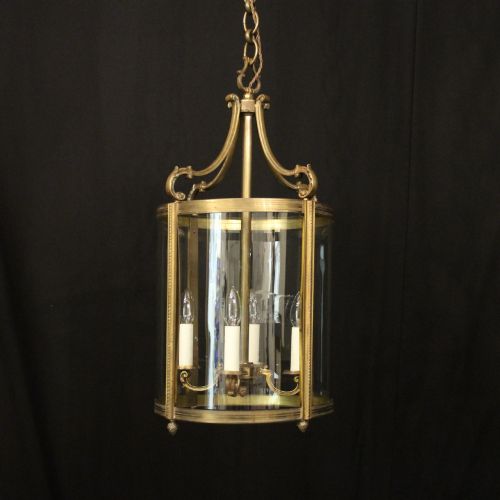
An antique bronze glass lantern casts a warm, historic glow in a hallway, bringing enduring metalwork and clear panes together.
Antique Bronze Glass Lantern
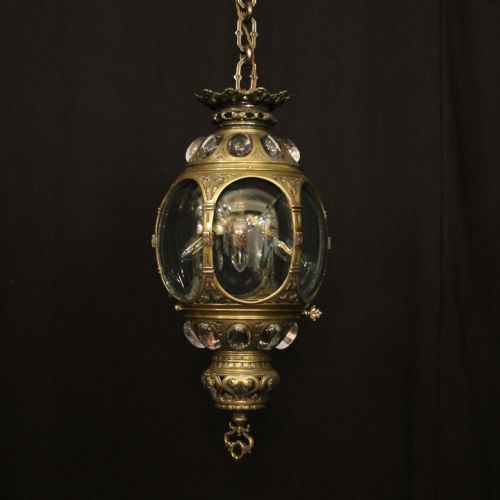
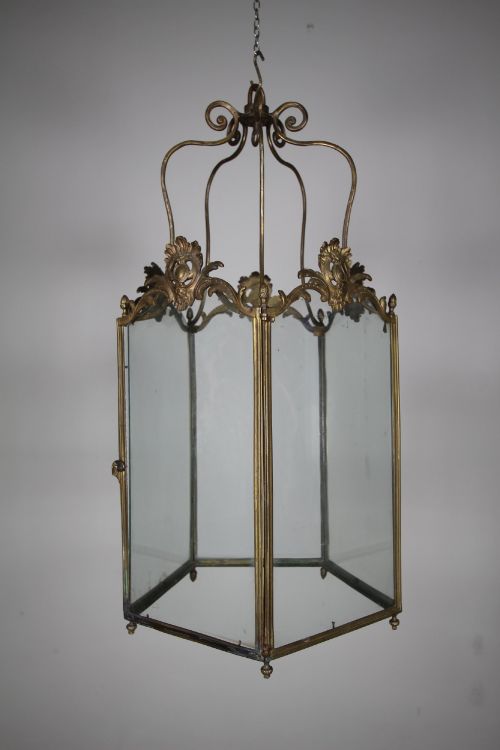
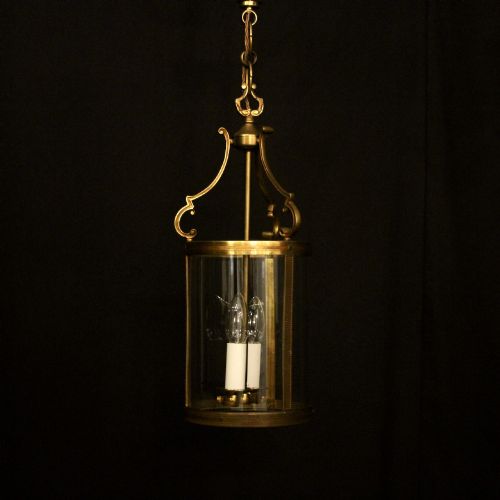
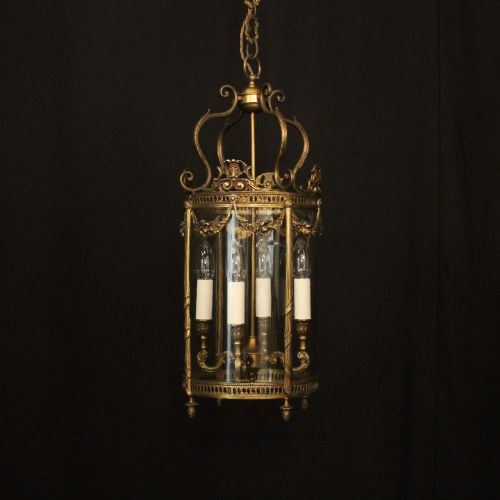
You are most likely to meet French designs on this page, particularly gilded bronze pieces originating from the 1920s and 1930s. Alongside these, English nineteenth-century examples appear frequently, often housing multiple internal lights. Styles lean toward French chateau, neoclassical, and rococo revivals, reflecting grand domestic interiors.
Makers such as Perry & Co occasionally contribute marked pieces to this category. The physical scale varies from small hanging lanterns suitable for modest corridors to monumental pairs designed for high ceilings. Glass configurations range from flat bevelled panes to convex panels and frosted or opaline textures.
Distinctions in Quality
Quality rests upon the crispness of the bronze casting and the depth of the original gilding. Finer pieces display sharply chased surface ornament, such as floral swags, acanthus leaves, or classical urn motifs, rather than soft or blurred contours. The weight and rigidity of the bronze frame also indicate superior craftsmanship.
The glass panels themselves contribute significantly to the standard of a piece. Bevelled edges, heavy convex curvature, and intact original glass without modern replacement panes distinguish better examples. Integrated construction where the metal frame snugly embraces every glass pane without excessive movement marks the upper tier of production.
Antique Bronze Glass Lantern Retail Price Guide 2026
Typical asking prices for bronze glass lantern among the pieces listed under this phrase on Sellingantiques today, from the lower quarter to the upper quarter. They describe what is for sale here now, not the wider market.
Some lanterns retain soot deposits inside their tops from the days when candles flickered behind the glass.
The Antique Bronze Glass Lantern Glossary
- Hall lantern
- A ceiling-suspended light fixture intended specifically for entrance passages, vestibules, and stairwells.
- Gilt bronze
- Bronze metal coated with a thin layer of gold leaf or applied gold paint to produce a bright, luminous surface.
- Convex glass
- Curved glass panels that project outward, designed to disperse light across a wider angle than flat panes.
- Bevelled glass
- Glass panes with angled edges cut and polished to create prismatic light refractions.
- Opaline glass
- A milky, semi-translucent white glass used to soften and diffuse interior illumination.
Antique Bronze Glass Lantern: Frequently Asked Questions
Where should I hang a bronze glass lantern?
These lanterns suit entrance halls, high-ceilinged corridors, and stairwells where overhead suspension is practical. Their vertical proportions draw the eye upward while directing light downward.
Ensure the ceiling height accommodates the drop of the chain and the physical length of the fixture. Larger models require substantial structural support in the ceiling due to the weight of bronze and glass.
How do I know if the gilding is original?
Original gilding typically shows microscopic wear patterns, gentle softening on high points, and integrated patination accumulated over decades. Bright, uniform reflectivity across recessed corners often points to later intervention.
Examining the metal underneath through minor gaps can reveal the historical application method. Older gilt surfaces feel integrated with the bronze rather than sitting as a modern paint layer.
Were these lanterns electrified originally?
Many surviving examples began life holding candles before being converted to gas or electricity during subsequent domestic modernisations. Listings include pieces once lit by candles alongside twentieth-century designs built for bulbs from the start.
Wiring within older lanterns is generally updated to meet contemporary safety standards during restoration. The internal cluster of lamp holders is usually a later adaptation inside an antique frame.
How do I distinguish French styles from English ones?
French pieces frequently exhibit rococo or neoclassical revival characteristics, such as elaborate scrolling foliage, gilded bronze mounts, and convex glass panels. English counterparts tend to employ simpler geometric lines or more austere metal frames.
Toleware and plain bronze configurations appear more frequently in English listings, whereas gilt bronze and ornate casting are strongly associated with French workshops.