


Antique Breakfast Silver
Antique breakfast silver brings together the refined metalwork of morning routines, offering toast racks, egg cruets, and revolving dishes shaped across the Georgian, Victorian, and Edwardian eras.
Antique Breakfast Silver
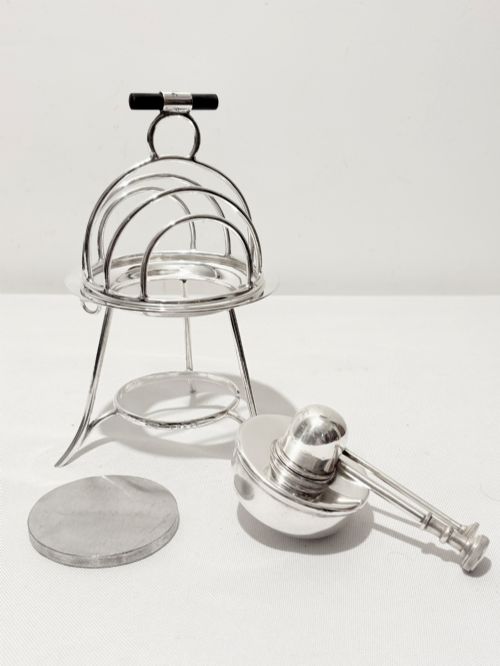
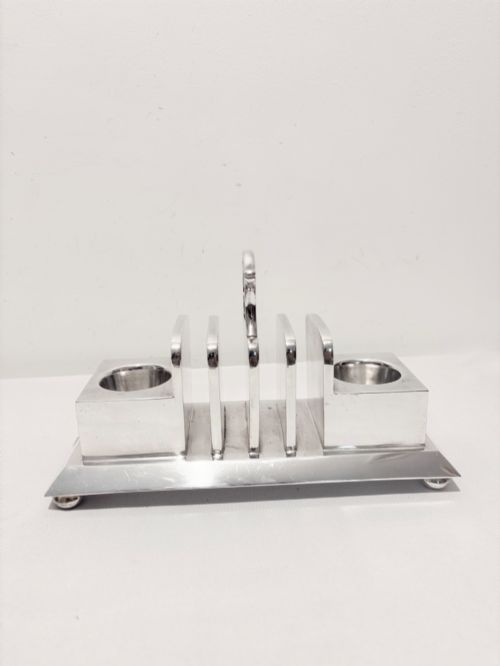
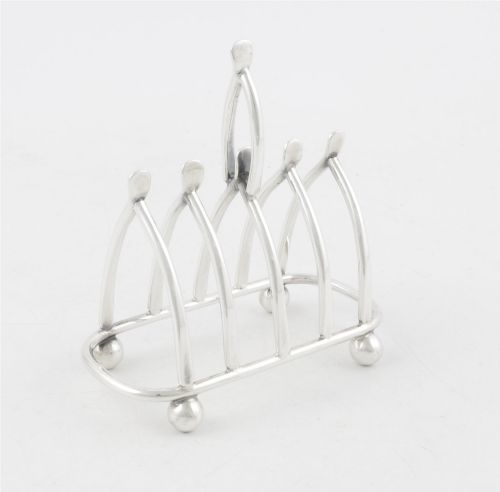
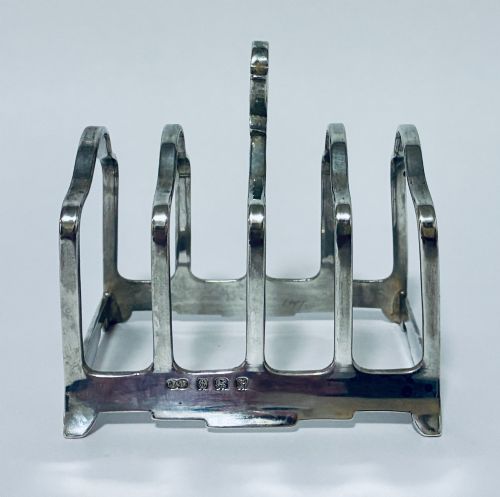
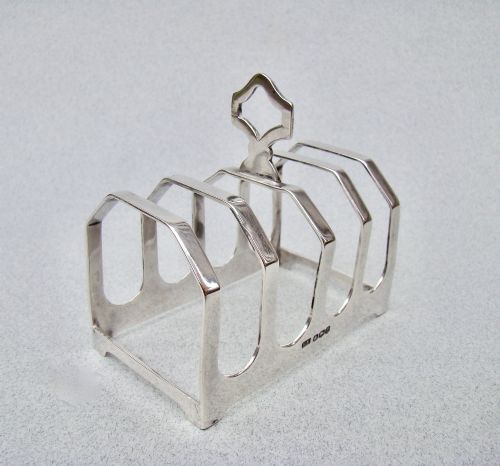
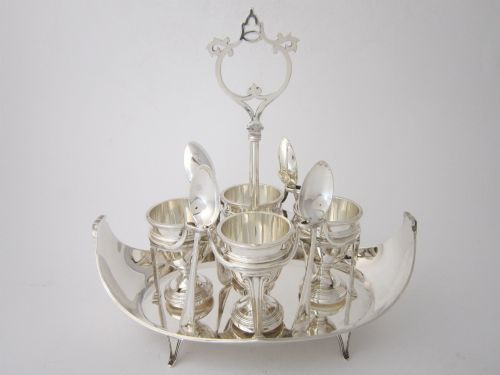
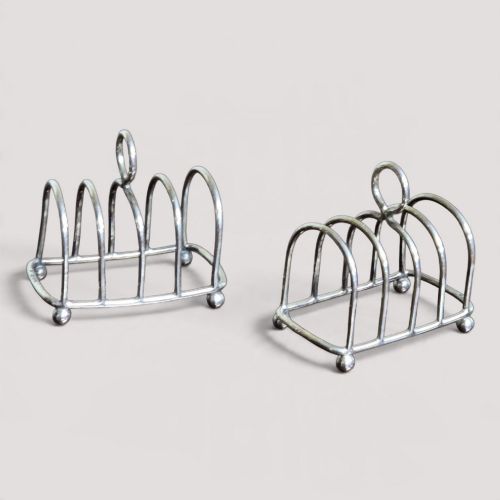
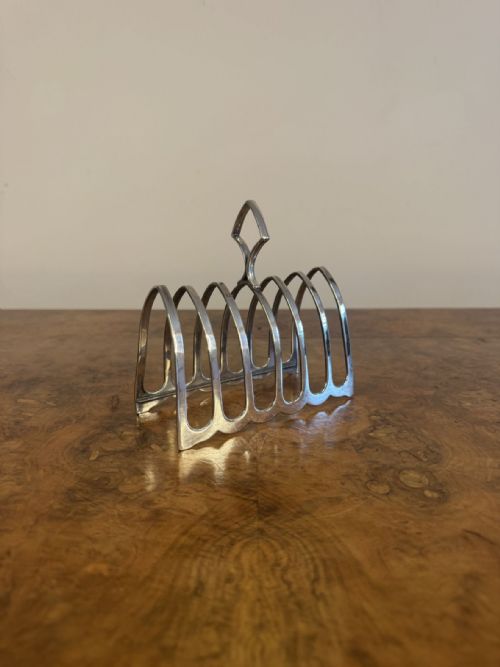
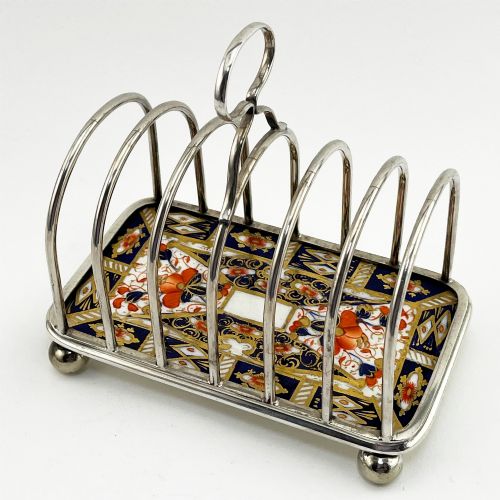
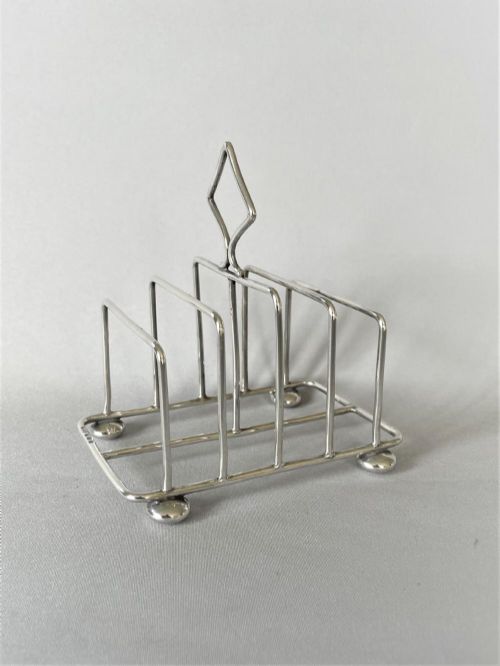
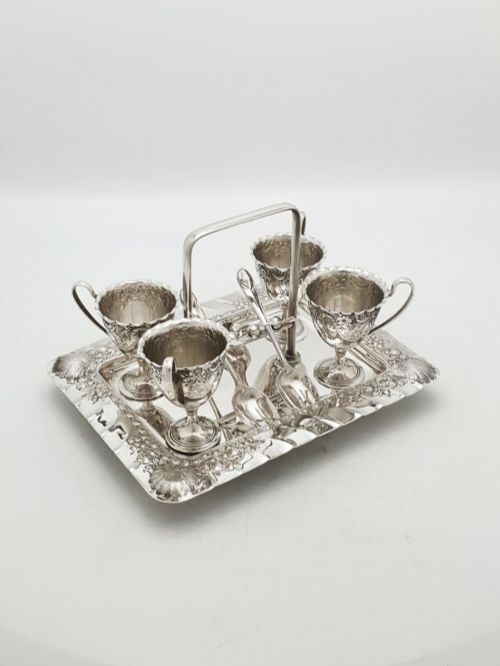
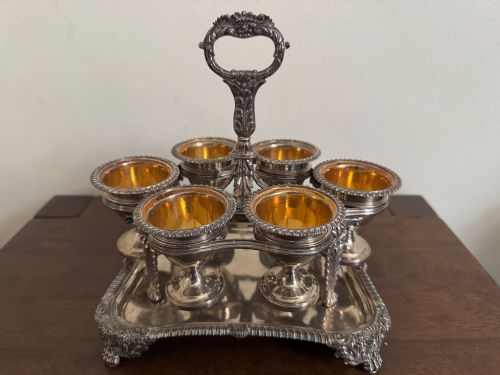
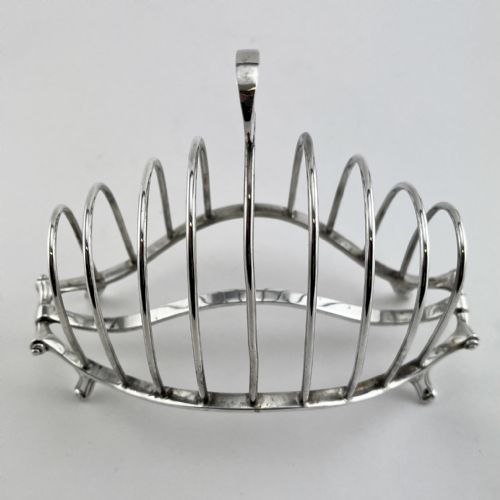
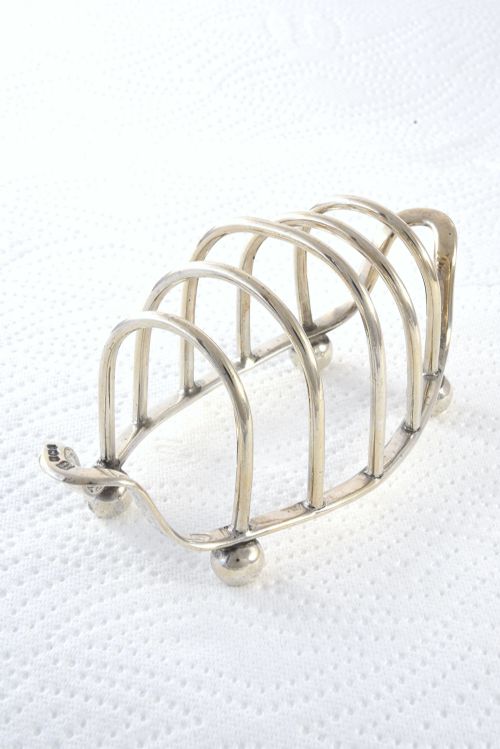
Antique breakfast silver encompasses specialised dining pieces designed for the morning meal, ranging from individual toast racks to elaborate revolving serving dishes. Buyers browsing this selection most frequently encounter silver-plated and sterling silver toast racks alongside multi-piece egg cruet sets from the Victorian and Edwardian periods.
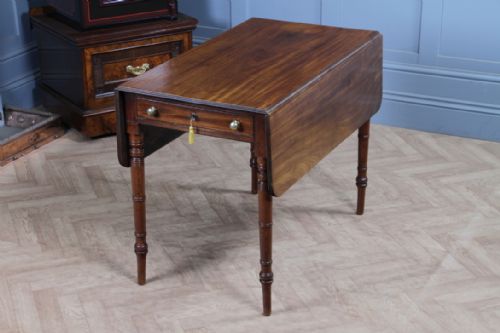
The assortment extends to practical table accessories including grapefruit spoons, butter dishes, and preserve pots alongside occasional larger furnishings such as Pembroke tables fitted with silver drawers. These objects reflect the formal dining habits of nineteenth and early twentieth-century households.
Georgian examples lean towards classic sterling silver construction with restrained forms, while later Victorian and Edwardian items often incorporate silver plate, oak elements, or novelty designs like wagons and equestrian motifs. This variety provides numerous ways to assemble a functional morning table service.
Materials and construction techniques
Makers utilised sterling silver and electroplated nickel silver as primary metals, applying gold gilt interior washes to pieces intended for eggs or preserves to prevent corrosion. Silver plating techniques developed rapidly through the nineteenth century, allowing firms to coat base metals securely for daily domestic use.
Construction frequently combined silver wirework and sheet metal with secondary materials such as cut glass inserts, oak bases, and mother-of-pearl handles. Silversmiths soldered individual arch wires for toast racks and cast heavier mounts for revolving breakfast dishes and cruet frames.
Antique Breakfast Silver Retail Price Guide 2026
Typical asking prices for breakfast silver among the pieces listed under this phrase on Sellingantiques today, from the lower quarter to the upper quarter. They describe what is for sale here now, not the wider market.
Materials across the inventory range from sterling silver and silver plate to oak, glass, and gold gilt.
Factors that distinguish finer pieces
Quality rests in the crispness of the chased or embossed ornament and the structural integrity of soldered joints on items like toast racks and cruet frames. Substantial gauge metal prevents flexing during daily handling and maintains cleaner definition along decorative borders.
Mechanical reliability dictates the standing of complex serving items, particularly revolving lidded breakfast dishes that depend on smooth hinges and balanced internal weights. Original glass liners, complete cruet bottles, and legible hallmarks elevate the integrity of a piece.
William Burwash·Mappin and Webb·Roberts and Belk·Hamilton and Inches·Elkington·John Round·Mark Willis
The Antique Breakfast Silver Glossary
- Toast rack
- A small table frame fitted with vertical dividers to hold slices of toast upright. This form keeps toast crisp by allowing air to circulate between pieces.
- Egg cruet
- A fitted stand holding multiple egg cups alongside matching spoons and sometimes salt cellars or pepper pots. These sets were central to formal Victorian and Edwardian breakfast service.
- Revolving breakfast dish
- A covered serving vessel featuring a roll-over or rotating lid mechanism that conceals interior entree pans. These pieces kept morning dishes warm on the sideboard.
- Silver plate
- A base metal, often nickel silver, coated with a thin layer of pure silver. This method offered the visual appeal of solid silver at a more accessible cost for larger household items.
- Sterling silver
- A silver alloy containing a fixed proportion of pure silver and copper to ensure durability. British pieces carry hallmark stamps verifying this standard.
Antique Breakfast Silver: Frequently Asked Questions
How do revolving breakfast dishes work?
Revolving breakfast dishes feature a cylindrical lid that rotates on side pivots or rolls backward into the body of the stand. This mechanism allows diners or servants to access warm food inside without removing and placing a separate lid.
These pieces were typically used on sideboards to keep hot meats, fish, or kidneys warm throughout a staggered morning meal. The internal liners are usually removable for easy cleaning.
Are toast racks marked with hallmarks?
Sterling silver toast racks carry official hallmarks stamped directly into the metal, indicating the maker, assay office, and year of manufacture. These small stamped marks provide reliable clues to the origin and age of the piece.
Silver-plated versions generally feature maker's marks or trade symbols rather than full assay office hallmarks. These secondary marks help identify the manufacturing firm and the plating quality used.
How can I date a piece of breakfast silver?
Dating relies heavily on official assay office date letters stamped on sterling silver items or stylistic indicators such as decorative motifs. Aesthetic Movement and Art Deco pieces display distinct design languages that align with specific decades.
Silver-plated items often lack precise date letters, requiring identification through maker's marks, patent dates, and overall manufacturing style. Comparing the form against known production periods helps narrow down the decade of origin.