




Antique Brassware Pair
These paired dual items in antique brassware pair matching sets bring domestic utility and ritual decor from past centuries straight into modern rooms.
Antique Brassware Pair
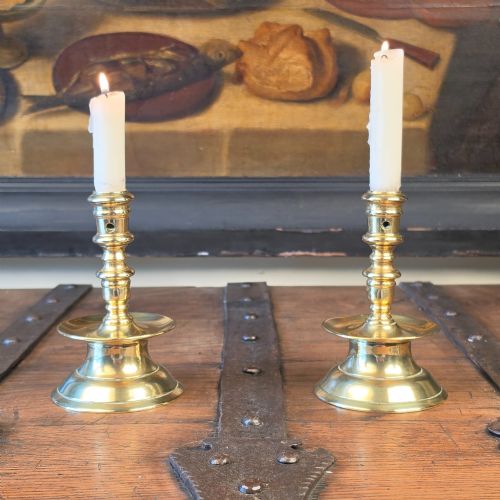
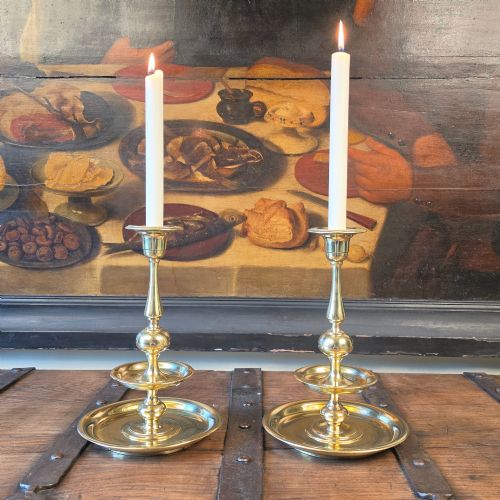
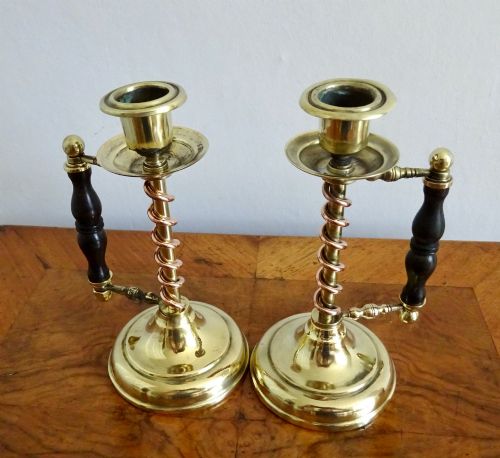
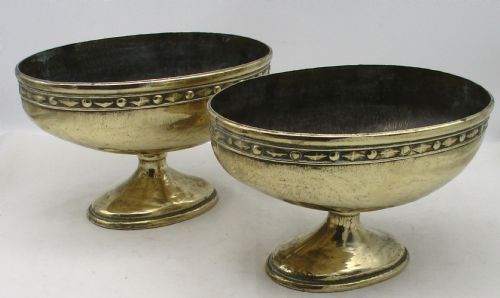
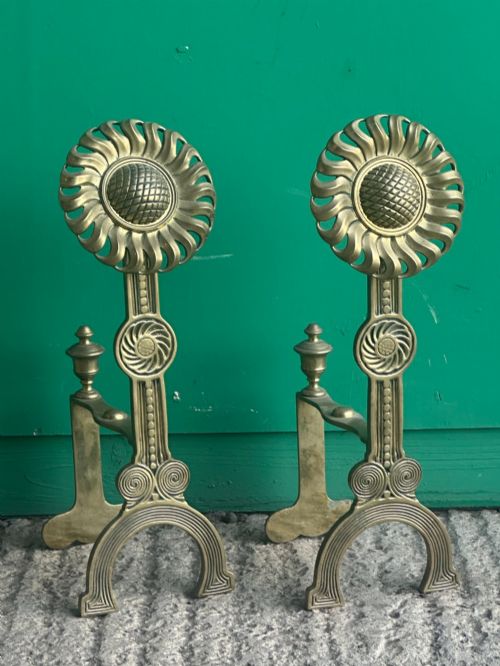
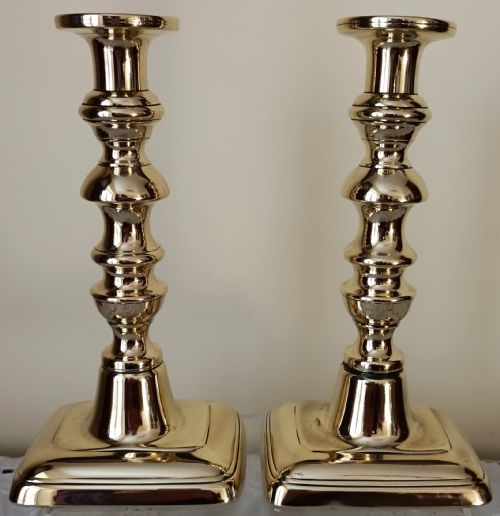
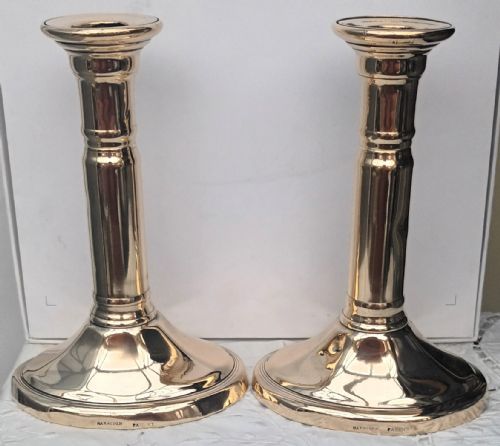
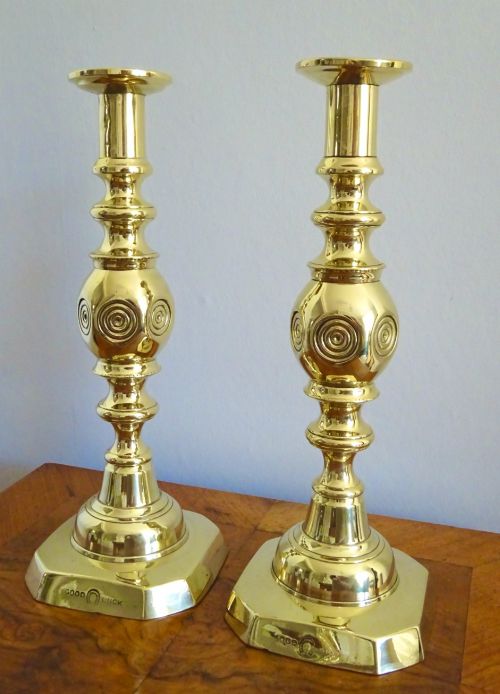
An antique brassware pair consists of matched twin items created primarily for lighting, heating, or display, spanning the 18th, 19th, and early 20th centuries. Candlesticks dominate the selection, alongside altar garnitures, andirons, vases, and basin taps.
Most examples hail from Victorian, Edwardian, and Georgian periods, incorporating styles from Gothic Revival to Arts and Crafts. Buyers encounter both domestic household items and ecclesiastical church fittings.
The objects serve functional roles in daily life, from desk illumination to fireplace management and bathroom plumbing. Matching pairs offer symmetry for mantelpieces, tables, and altars.
Methods of manufacture
Makers utilised brass, cast brass, and bell metal, frequently combining them with copper, bronze, enamel, and wood components. Seamed construction appears alongside heavy casting techniques.
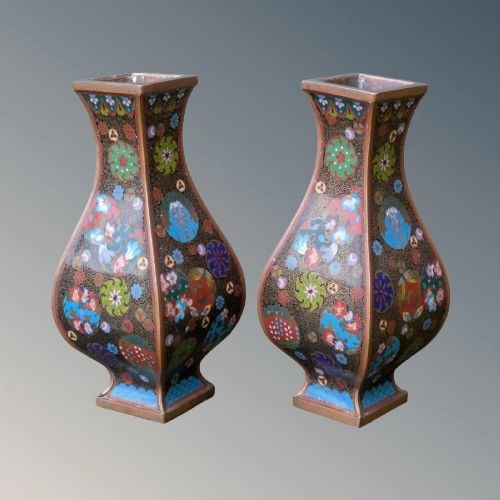
Specialised workshops produced items using patents such as telescopic mechanisms or ejector systems for removing candle stubs. Surface decoration includes piercing, chasing, and cloisonné enamel work.
Listings feature items spanning the 18th, 19th, and early 20th centuries, using brass, copper, bronze, and bell metal.
Judging construction and finish
Superior items display crisp detail in cast ornamentation, such as baluster turnings, floral motifs, and animal figures. Substantial weight indicates solid metal construction rather than thin sheet fabrication.
Maker marks, registered patent stamps, and attribution to known manufacturers elevate a pair's standing. Intricate hand finishing in piercing or enamelling distinguishes standard domestic items from high-end pieces.
William Tonks and Sons·Frederick J Smith and Co·H F Fearncombe and Co
The Antique Brassware Pair Glossary
- Ejector
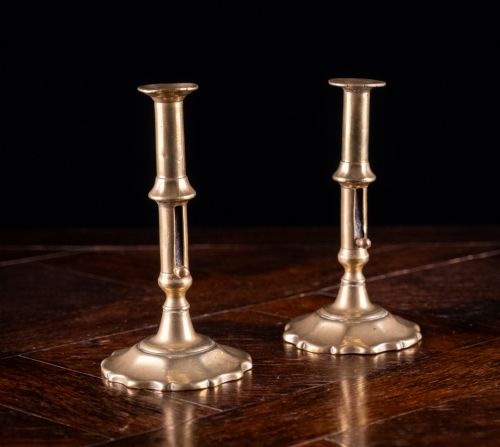
- A built-in internal mechanism found in candlesticks that pushes out the remaining candle stub. This device uses a sliding button on the stem.
- Baluster
- A vertical architectural form shaped like a vase or column with a swelling lower portion. It forms the central stem of many traditional candlesticks.
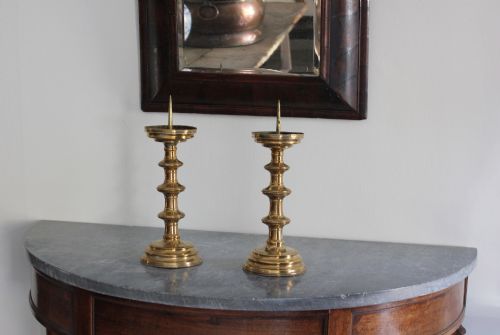
- Pricket
- A sharp metal spike set on a drip pan to hold a candle securely in place. This form appears frequently on ecclesiastical church candlesticks.
- Bidri ware
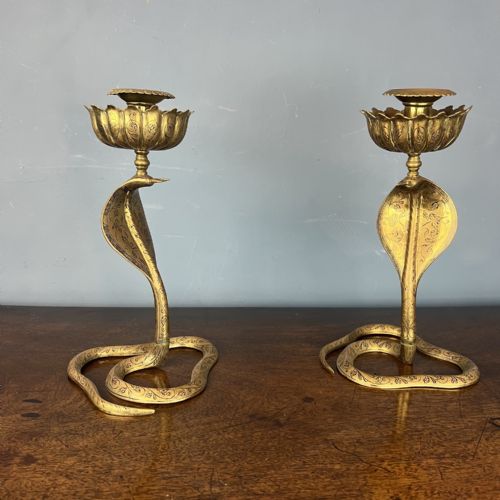
- Metal handicraft originating in India involving blackened alloy inlaid with contrasting sheet metal. Pieces often feature distinct snake or animal motifs.
- Cloisonne
- Enamelling technique where wires are soldered to a metal base to create compartments filled with paste. Firing produces vibrant decorative surface patterns.
Antique Brassware Pair: Frequently Asked Questions
What is an antique brassware pair?
An antique brassware pair comprises two matched decorative or functional objects manufactured from copper alloy during past centuries. They range from domestic table candlesticks to heavy church altar vessels.
Most surviving pairs date from the Georgian through to the Edwardian eras, reflecting changing domestic lighting and interior decoration needs.
How do I clean antique brass?
Maintenance depends on the desired surface finish, as many collectors prefer to leave an aged patina untouched. Gentle dusting with a dry cloth keeps accumulated grime at bay.
Harsh chemical polishes remove historical surface oxidation and can damage fine chased details or applied enamels on pieces like cloisonne vases.
How were ejector candlesticks used?
Ejector candlesticks provided a practical solution for clearing stubborn wax stubs from sockets without damaging the metal tube. Users slid a small side tab upwards to raise the internal platform.
This mechanism became particularly common during the mid 18th and 19th centuries in British households.
Are these items safe for daily use?
Most solid metal candlesticks and decorative vessels remain fully functional for holding modern taper candles or displaying stems. Taps and plumbing fixtures require professional assessment before modern installation.
Care should be taken with delicate enamel work or antique mechanisms to preserve their structural integrity during handling.