




Antique Brassware Candle Stands
These antique brassware candle stands bring heavy metalwork from the seventeenth century onward straight into modern rooms.
Antique Brassware Candle Stands
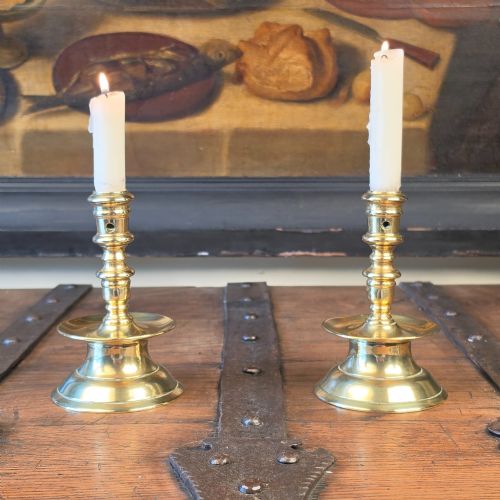
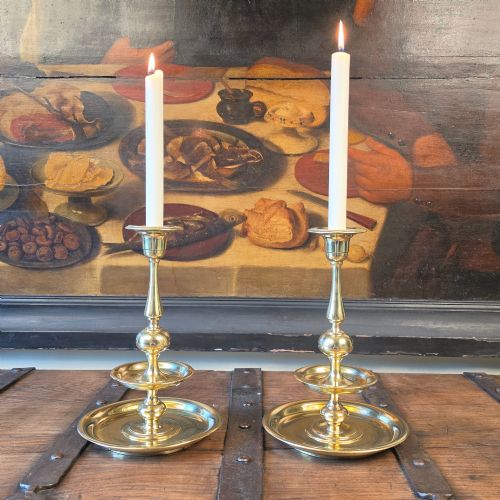
When you search for antique brassware candle stands, you encounter domestic candlesticks, tall church altar pieces, and multi-light candelabra. The selection spans utilitarian lighting from the eighteenth century, decorative Victorian household items, and experimental Arts and Crafts designs.
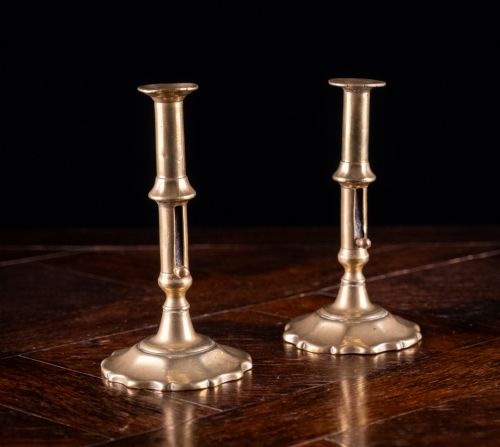
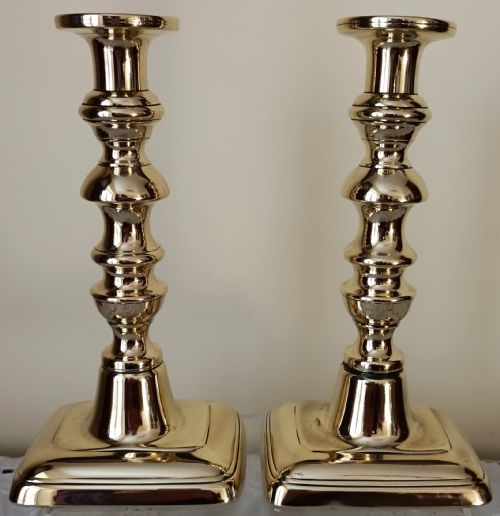
Domestic pairs dominate the offerings, particularly baluster forms and ejector types designed to push out spent wax stubs. You also find regional imports, including Indian Bidri ware and Persian hand-engraved vessels alongside Flemish pricket sticks.
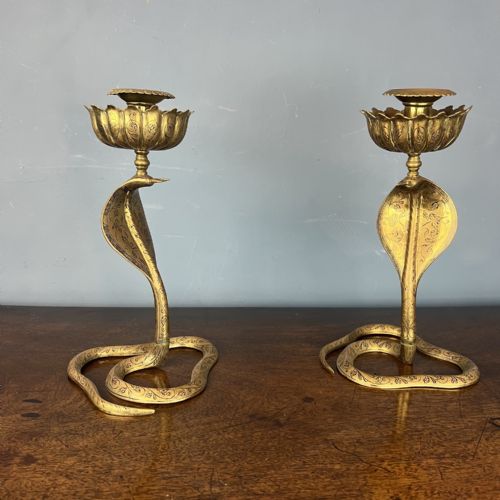
Periods stretch from pre-sixteenth century Syrian work through Georgian elegance to early twentieth-century production. The forms range from strict classical symmetry to novelty pug dogs and snake motifs.
How they were made
Metalworkers utilised casting techniques, pouring molten brass into moulds to create sturdy baluster stems and heavy bases. Many eighteenth-century examples rely on seamed construction, joining component parts together.
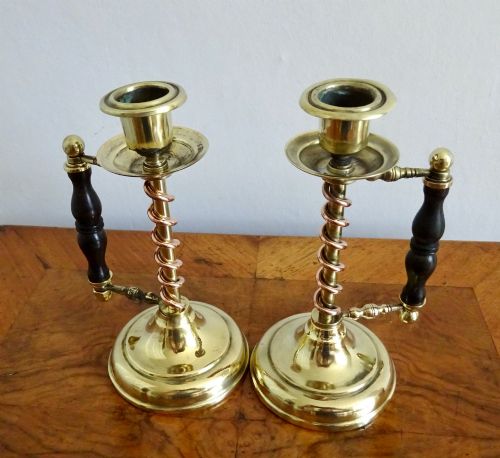
Makers integrated copper, iron, and wood into specific pieces to achieve contrasting tones or structural balance. Hand-engraving appears on Middle Eastern items, cutting intricate patterns directly into the metal surface.
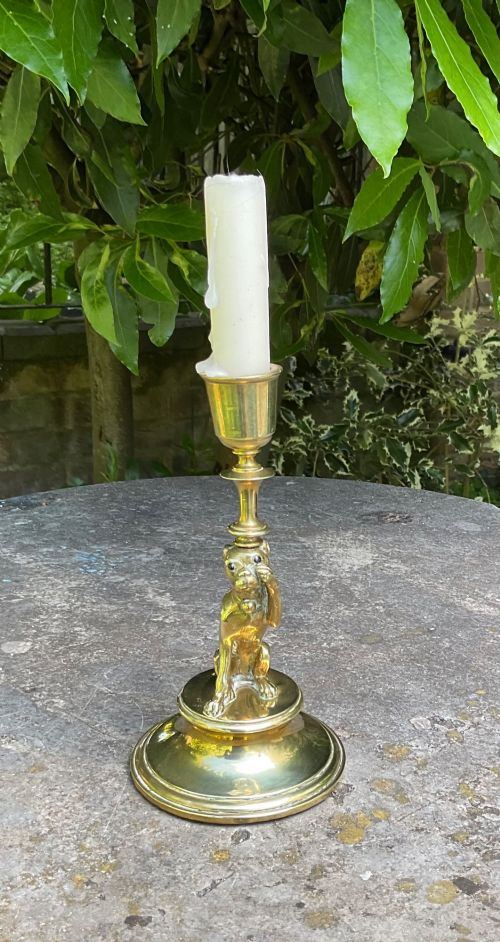
A pug dog serves as the stem for one unusual Victorian novelty candlestick.
What varies in quality
The definition of the casting and the crispness of turned mouldings separate standard production from superior examples. Sharper details on baluster rings and cleaner joints indicate higher craftsmanship.
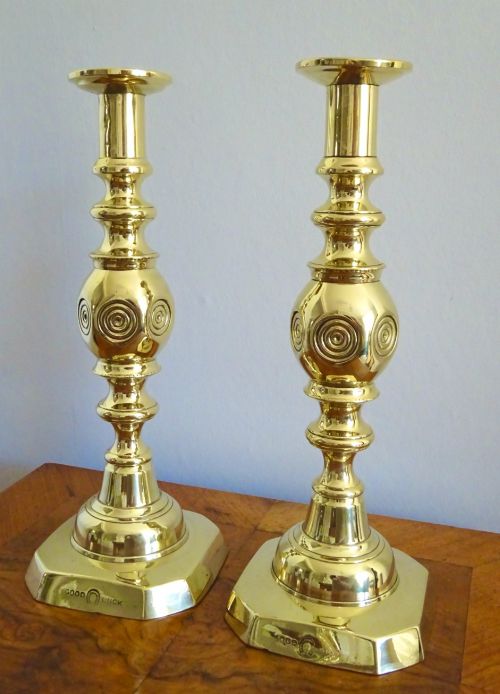
Originality of components dictates value, particularly on ejector mechanisms where internal push-rods must function correctly. Surface patination and the presence of makers' marks or stamps add historical weight to specific pieces.
J.T. & Co·Frederick J Smith & Co·Wm. Tonks & Sons
The Antique Brassware Candle Stands Glossary
- Ejector
- A mechanical candlestick featuring an internal push-rod that lifts the candle remnant out of the nozzle. This clever device became common during the eighteenth century.
- Pricket
- A spike on top of a candlestick designed to impale a candle rather than hold it inside a socket. Early ecclesiastical pieces frequently utilise this method.
- Baluster
- A moulded architectural column shape featuring a swollen lower portion tapering upward. This profile defines the silhouette of numerous Georgian and Victorian candlesticks.
- Bidri ware
- A metalwork technique originating in India involving a blackened alloy inlaid with contrasting sheet metal. These decorative objects display distinct regional motifs like snakes.
- Veneto-Saracenic
- A style representing metalwork produced in the Levant and Venice during the medieval and Renaissance periods. Pieces often exhibit complex engraved Islamic designs.
Antique Brassware Candle Stands: Frequently Asked Questions
What is an ejector candlestick?
An ejector candlestick contains an internal slide mechanism operated by a small thumb-piece on the side. Pushing this lever upward lifts the remaining candle stump clear of the socket.
This practical addition saved household staff from digging out stubborn wax residue. They appear frequently in eighteenth and nineteenth-century brassware.
How do I date a brass candlestick?
Dating relies on manufacturing techniques, base shapes, and the evolution of the stem profile. Seamed construction and solid cast bases typically point to earlier periods, while machine tooling indicates the nineteenth century.
Makers' stamps and stylistic clues like Gothic Revival or Arts and Crafts ornamentation narrow down the exact decade.
What are church candlesticks?
Church candlesticks are taller, heavier altar lights built for ecclesiastical settings rather than domestic use. They often incorporate pricket spikes or wide drip pans to catch heavy wax run-off.
Found in pairs or larger sets, these impressive pieces command significant vertical presence in a room.
Are brass candlesticks always found in pairs?
Many historical candlesticks were manufactured and sold in matching pairs to flank fireplaces or sideboards symmetrically. Surviving pairs remain highly sought after by collectors.
Single examples and larger sets of four also appear, reflecting different original uses in churches or grand dining rooms.