




Antique Brass Shelving
Antique brass shelving brings together the warm glint of metal and rich timber, offering a practical display space that grounds a room.
Antique Brass Shelving
When you search for antique brass shelving, you encounter a diverse range of furniture designed for display and storage, from open bookcases and wall-hanging shelves to multitiers and etagères. These pieces date across the nineteenth and early twentieth centuries, spanning Regency, Victorian, and Edwardian periods.
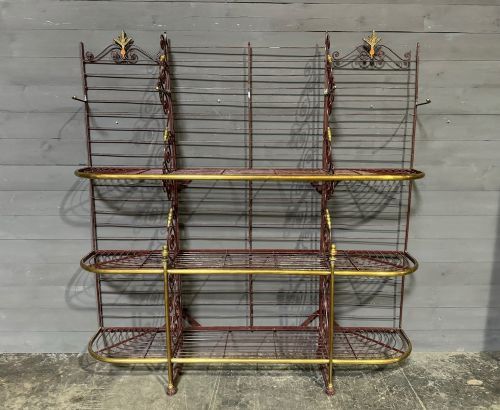
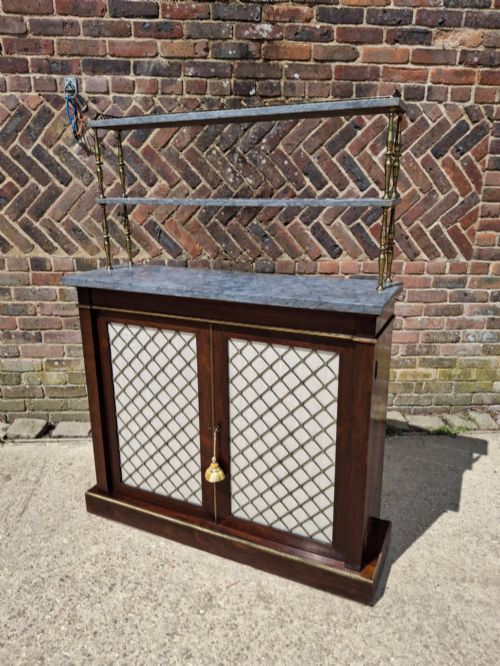
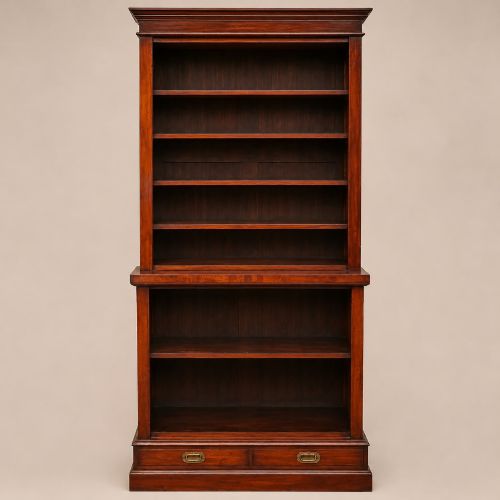
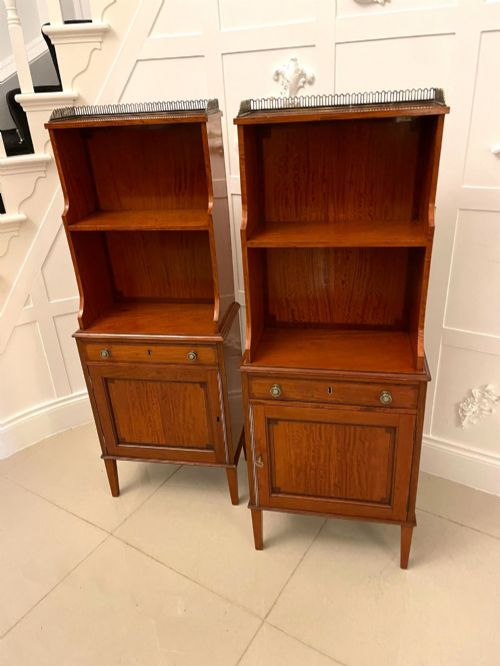
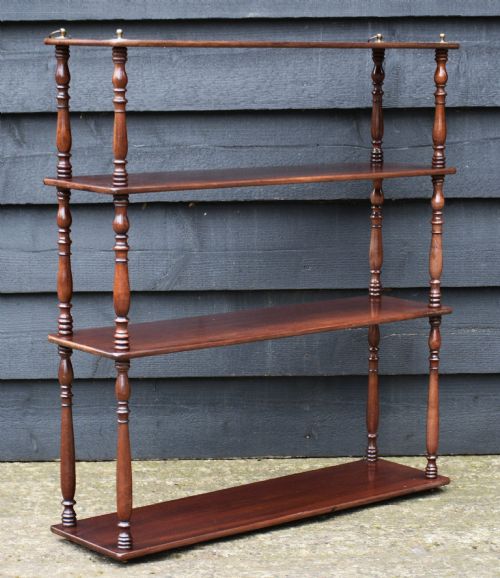
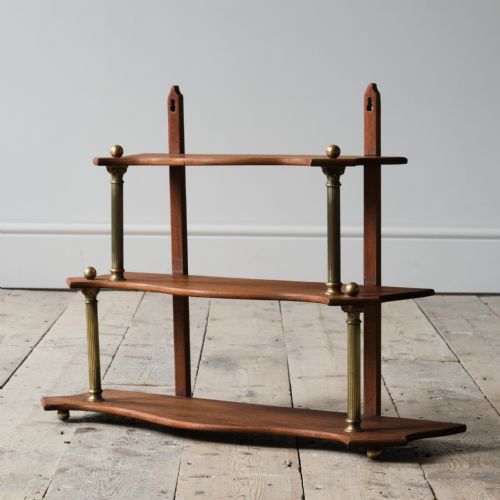
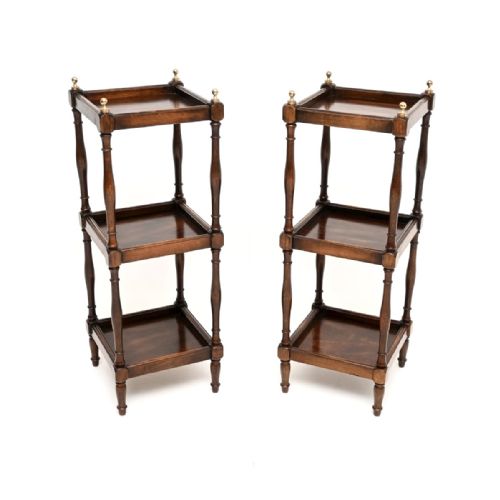
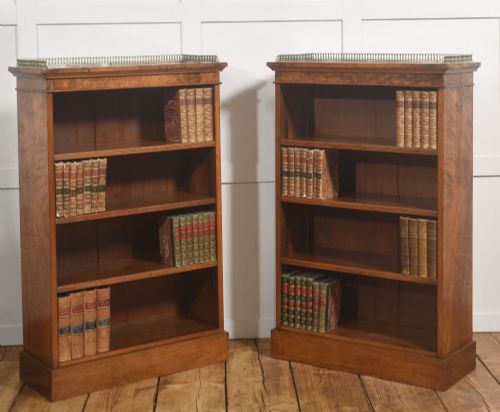
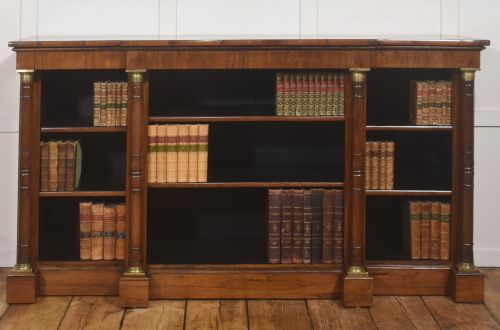
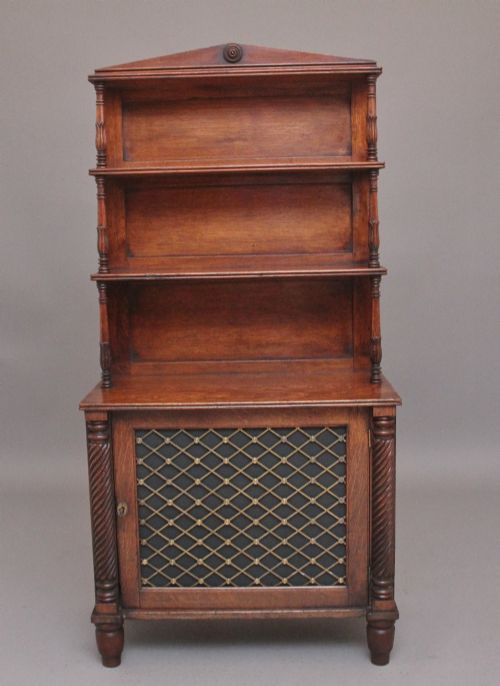
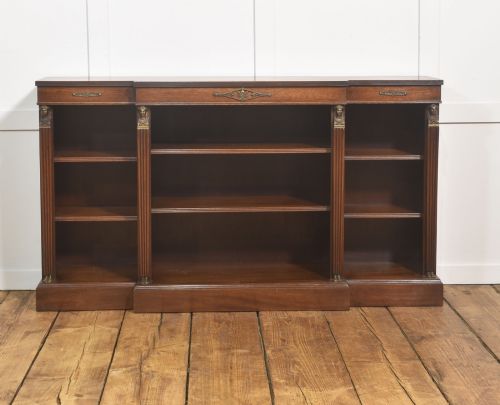
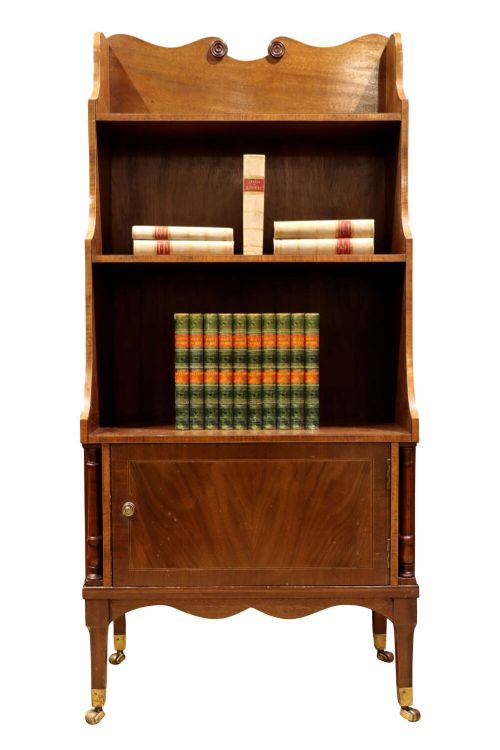
The version most likely to meet you on this page is the mahogany or rosewood open bookcase and whatnot, frequently detailed with brass galleries, wire grilles, or castors. Alongside these domestic pieces, industrial French baker's racks and patisserie racks appear, combining wrought iron and steel frames with brass details.
Makers and workshops from Britain and France produced these items, utilising timber frames accented with brass inlays, mounts, and supports. The form functions equally well for holding books or displaying objects, remaining a versatile addition to traditional and modern interiors.
Materials and construction methods
The foundation of these pieces relies on cabinet timbers such as mahogany, rosewood, walnut, and satinwood, frequently paired with secondary woods like oak or pine. Workshops constructed frames using traditional joinery, incorporating inlaid brass stringing or applying cast or chased ormolu mounts to the timber surfaces.
Metal components include cast brass galleries fitted to shelf tops, brass castors supporting table legs, and structural iron or steel frames seen in French baker's racks. Ebonised wood and kingwood also feature, providing dark contrasts that highlight the bright finish of the brass elements.
Antique Brass Shelving Retail Price Guide 2026
Typical asking prices for brass shelving among the pieces listed under this phrase on Sellingantiques today, from the lower quarter to the upper quarter. They describe what is for sale here now, not the wider market.
Listings feature eighteenth and nineteenth-century woods including mahogany, rosewood, and walnut paired with brass mounts.
Distinctions in craftsmanship and design
Quality separates through the crispness of the timber carving, the precision of the brass inlay, and the weight of the metal fittings. Finer examples display figured veneers, such as burr walnut or birdseye maple, combined with heavy, finely cast ormolu or brass mounts rather than stamped sheet metal.
Proportion and structural integrity define the upper tier of these items, where adjustable shelving mechanisms operate smoothly and frames remain rigid without excessive reinforcement. Pieces bearing stamps from known workshops or retaining original brass castors and galleries command greater attention from collectors.
Gillows·Dubois of Lyon·Robert Strahan
The Antique Brass Shelving Glossary
- Whatnot
- A piece of furniture consisting of a set of open shelves for displaying small objects, popular during the nineteenth century. These units often feature slender upright supports and tiered platforms.
- Étagère
- A piece of furniture with a series of open shelves for holding ornaments or books, typically French in origin. They appear in rosewood, mahogany, and ebonised finishes with brass mounts.
- Ormolu
- Gilt bronze mounted on furniture or decorative objects, created through a mercury gilding process. It provides a bright golden accent against dark timbers.
- Chiffonier
- A low cabinet, popular in the Regency and Victorian periods, often equipped with shelves on top or enclosed doors below. Brass inlays frequently decorate the frieze.
Antique Brass Shelving: Frequently Asked Questions
Are these shelves sturdy for heavy books?
Many bookcases and shelving units were built to support substantial volumes of heavy leather-bound books. Solid timber construction and sturdy uprights provide reliable load-bearing capacity for daily use.
Wall-hanging versions require secure fixing to solid wall studs to bear significant weight safely. Inspect the wall brackets and joints before loading shelves with heavy items.
Can I adjust the shelf heights?
Certain nineteenth-century bookcases feature adjustable shelf mechanisms using rack-and-pinion systems or wooden tooth strips. These allow you to alter shelf positions to accommodate varying book sizes.
Fixed shelves are also common, particularly in smaller etagères and wall units. Check the listing details to confirm whether the shelves are movable.
Where were baker's racks used?
French baker's racks originated in commercial bakeries and patisseries for cooling bread and pastries. Their robust iron and steel frames were designed for heavy industrial daily wear.
Today, these large racks find a place in kitchens or living spaces as open shelving. Their combination of metal and brass brings an industrial character to interiors.